Indonesia plans new July 2026 EV incentives that could shift Southeast Asia’s EV production and battery investments, changing 2027 prices for buyers.
Indonesia is moving again, and the timing matters. A new EV incentive push planned for July 2026 could do more than lift domestic sales. It could redraw where Southeast Asia’s affordable electric cars and batteries get built, priced, and exported.
Why Indonesia’s July 2026 EV incentives matter beyond its home market
The Indonesia EV incentives July 2026 package is expected to focus on two linked goals: accelerating EV adoption at home and pulling more assembly, battery processing, and component production into the country. That combination is what makes this policy shift more significant than a simple purchase subsidy. Indonesia is trying to turn consumer demand into industrial leverage.
The country already has a strong hand. It controls major nickel resources, has pushed hard to build a domestic battery value chain, and has become a priority market for Chinese, Korean, and regional EV brands. If Jakarta uses fresh incentives to reward locally assembled vehicles and battery investment, that raises the pressure on automakers deciding where to place their next Southeast Asia EV production lines.
That matters because the region is entering a more competitive phase. Early EV growth in Southeast Asia was driven by imports and government support. The next phase will be about local content, lower prices, and scale. Indonesia wants to be the market where those three factors meet first.
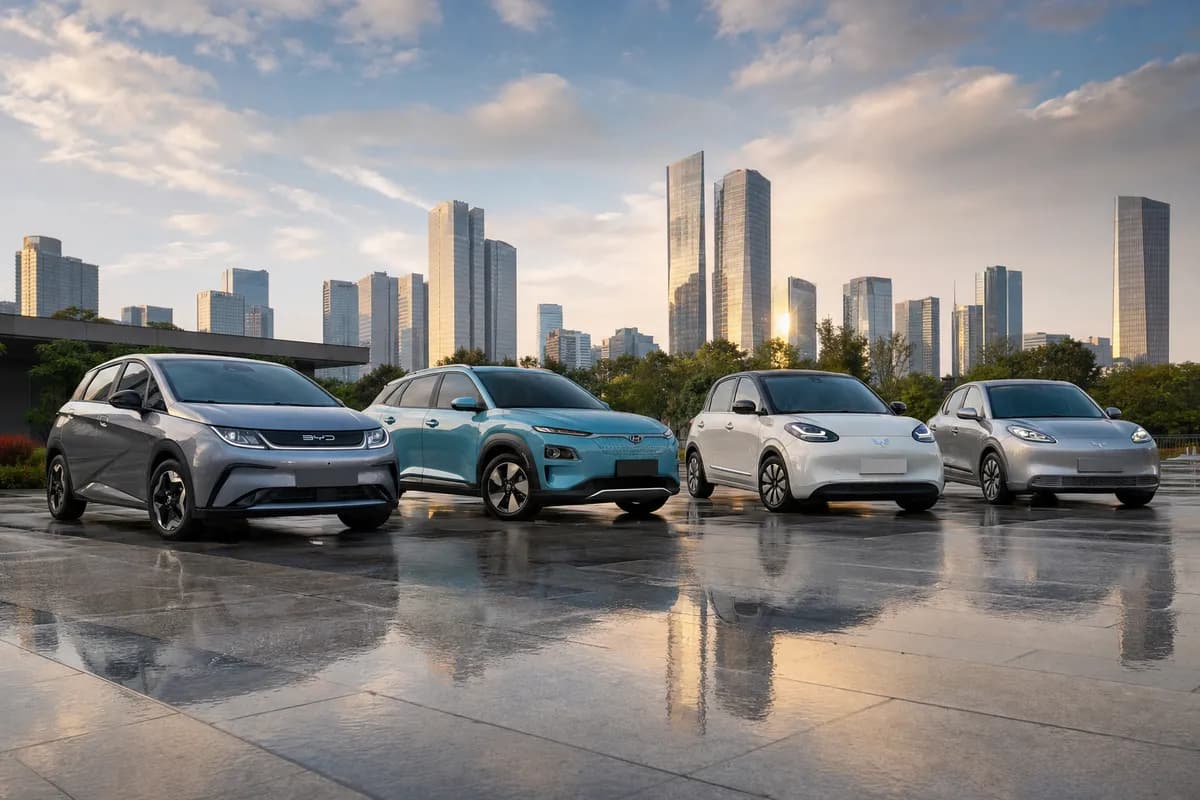
What the policy could mean for the 2027 BYD Dolphin, Hyundai Kona Electric Indonesia, and Wuling BinguoEV
Three nameplates help explain the stakes: the 2027 BYD Dolphin, Hyundai Kona Electric Indonesia, and Wuling BinguoEV. Each sits in a part of the market that could benefit directly from stronger local incentives, but each brand brings a different strategy.
BYD has moved quickly across Southeast Asia, using aggressive pricing and broad product coverage to gain share. The Dolphin is especially important because it targets the compact EV sweet spot: practical range, urban usability, and pricing that can pull mainstream buyers out of gasoline hatchbacks and small crossovers. If Indonesia’s July 2026 incentives favor local assembly or battery sourcing, the 2027 BYD Dolphin could become even more competitive if BYD deepens its local manufacturing footprint.
Hyundai approaches the region differently. It has already invested heavily in Indonesian production and battery-linked operations, giving the Hyundai Kona Electric Indonesia a stronger local-industry story than some rivals. That matters because incentive schemes tied to domestic value added often reward companies that already have factories, supplier networks, and long-term production commitments in place.
Wuling, meanwhile, has been one of the most disruptive players in ASEAN’s lower-cost EV space. The Wuling BinguoEV is aimed at buyers who care less about badge prestige and more about monthly payments, city driving, and feature value. In a market where subsidies can move an EV from “interesting” to “affordable,” Wuling is well positioned to turn policy support into volume.
| Model |
Market role in Indonesia |
Likely benefit from July 2026 incentives |
Main competitive pressure point |
| 2027 BYD Dolphin |
Mass-market compact EV with regional scale potential |
Higher if local assembly and battery sourcing qualify for added support |
Pricing pressure on Japanese and Korean compact rivals |
| Hyundai Kona Electric Indonesia |
Locally rooted mainstream EV with stronger manufacturing ties |
High if incentives reward domestic production and established supply chains |
Defending margin against lower-priced Chinese brands |
| Wuling BinguoEV |
Budget-focused urban EV for first-time buyers |
Very high if consumer purchase aid remains strong |
Winning entry-level buyers before rivals localize |
The real story is not just which model sells more units. It is which company can combine pricing, local production, and supply-chain depth fast enough to lock in a long-term position. Indonesia’s policy design will shape that race.
How local battery investment could reshape Southeast Asia EV production
Indonesia’s biggest structural advantage remains upstream materials, especially nickel. But raw materials alone do not guarantee leadership in Southeast Asia EV production. The next step is turning mineral strength into battery cells, packs, cathode materials, and integrated vehicle manufacturing.
If the July 2026 incentive push includes stronger benefits for EVs using locally produced batteries or battery components, that would give automakers one more reason to localize deeper. It would also reward companies already placing bets on Indonesian battery partnerships, refining capacity, and pack assembly.
That creates a regional ripple effect. Thailand has been a strong auto manufacturing base for decades. Vietnam has pushed its own EV ambitions. Malaysia remains active in high-value components and technology. But Indonesia has scale, resources, and a huge domestic market. Those factors together can tilt future investment decisions.
- For automakers: incentives tied to local content can justify new plants and supplier contracts.
- For battery companies: policy certainty helps unlock long-cycle investments in processing and cell production.
- For suppliers: more local assembly creates demand for motors, electronics, thermal systems, and charging hardware.
- For neighboring markets: Indonesian production could become an export base for lower-cost EVs sold across ASEAN.
The risk, however, is execution. Incentives work best when rules are clear, timelines are stable, and qualification standards are not constantly revised. If the July 2026 package is broad in headline terms but complicated in practice, some investment decisions could slow rather than accelerate.
The pricing battle buyers across the region should watch
For consumers, the most immediate effect of Indonesia’s EV push may be price competition. Incentives lower transaction prices directly, but they also push brands to localize faster, cut logistics costs, and chase volume. That can compress pricing not only in Indonesia, but across export markets in Southeast Asia.
The affordable EV segment is where this will be most visible. Models like the Wuling BinguoEV and BYD Dolphin are already forcing rivals to rethink how much equipment, range, and design they can offer at lower price points. If Indonesian production ramps and subsidy support stays strong into 2027, that pressure could intensify.
Hyundai faces a more complicated task. Local production gives it a foothold, but Korean brands generally have less room than Chinese rivals to wage prolonged price wars. For the Kona Electric, the challenge is to justify its positioning with quality, dealer support, warranty strength, and local credibility while staying close enough on price to avoid losing volume.
Buyers should also watch total ownership cost, not just the sticker price. Stronger local battery production can help parts supply, service support, and potentially replacement-pack economics over time. Those factors matter as the market shifts from early adopters to value-driven mainstream households.
| Factor |
BYD Dolphin |
Hyundai Kona Electric |
Wuling BinguoEV |
| Expected pricing pressure |
High |
High |
Very high |
| Advantage from local production incentives |
Potentially strong |
Already positioned well |
Strong in entry segment |
| Best fit for |
Mainstream compact EV buyers |
Buyers wanting established manufacturing backing |
Urban budget-conscious first-time EV buyers |
| Regional export potential |
High |
Moderate to high |
Moderate |
Verdict: Indonesia is pushing for regional EV leadership, not just higher domestic sales
Indonesia’s new incentive push looks like an industrial strategy disguised as a consumer policy. That is why it matters. If the rules favor local assembly, batteries, and supply-chain investment, the winners will not just be buyers getting cheaper EVs in 2026 and 2027.
The bigger winners could be the brands and suppliers that lock in early production scale. BYD can use Indonesia to deepen its regional compact-EV reach. Hyundai can strengthen its claim as a serious local manufacturing player. Wuling can tighten its grip on the entry-level market where volume growth may be fastest.
For Southeast Asia, this is the next real test of EV industrial competition. The fight is no longer only about launching new cars. It is about who builds them locally, who secures the battery chain, and who can keep cutting prices without losing strategic ground.
Frequently Asked Questions
What are the Indonesia EV incentives in July 2026 expected to include?
Details may still evolve, but the core focus is expected to be a mix of buyer support and stronger incentives for local production. That could include benefits linked to domestic assembly, battery sourcing, or higher local-content thresholds.
Will the 2027 BYD Dolphin get cheaper in Indonesia?
It could, especially if BYD qualifies for incentives tied to local manufacturing or battery localization. Final pricing will depend on policy design, production scale, and how aggressively BYD wants to compete on volume.
Is Hyundai Kona Electric Indonesia in a better position than imported rivals?
In many ways, yes. Hyundai’s existing investment in Indonesian manufacturing gives it an advantage if the new rules reward domestic production and established supply chains.
Why does local battery investment in Indonesia matter for Southeast Asia EV prices?
Battery costs are a major part of EV pricing, so local production can reduce import dependence and improve supply stability. Over time, that can help lower costs, support exports, and increase competitive pressure across the region.
Get the latest car reviews in your inbox
Join thousands of car enthusiasts. No spam, unsubscribe any time.



Comments
Leave a comment