Adventure EV owners are swapping tacky add-ons for smart OEM-plus upgrades—plan NACS adapters, prevent 12-volt issues, and tune tire load for real road trips.
The newest adventure-minded EV crossovers are creating a different kind of owner culture. Instead of chasing giant lifts and cartoonish accessories, 2026 Toyota bZ4X Touring, 2027 Subaru Trailseeker, and 2026 Kia EV5 owners are building smarter road-trip rigs with better charging plans, stronger 12-volt habits, and clean OEM-plus upgrades that actually help on dirt roads and camping weekends.
That shift matters because these vehicles are not trying to be rock crawlers. They are family-sized electric crossovers with usable range, decent ground clearance, and enough cargo room to replace the gas-powered soft-roaders that used to dominate the state park parking lot.
Why These Three EVs Are Pulling DIY-Minded Owners Together
The 2026 Toyota bZ4X Touring, 2027 Subaru Trailseeker, and 2026 Kia EV5 all land in a sweet spot. They are newer EVs with mainstream pricing ambitions, crossover packaging, and styling that can carry tasteful upgrades without turning into social-media cosplay builds.
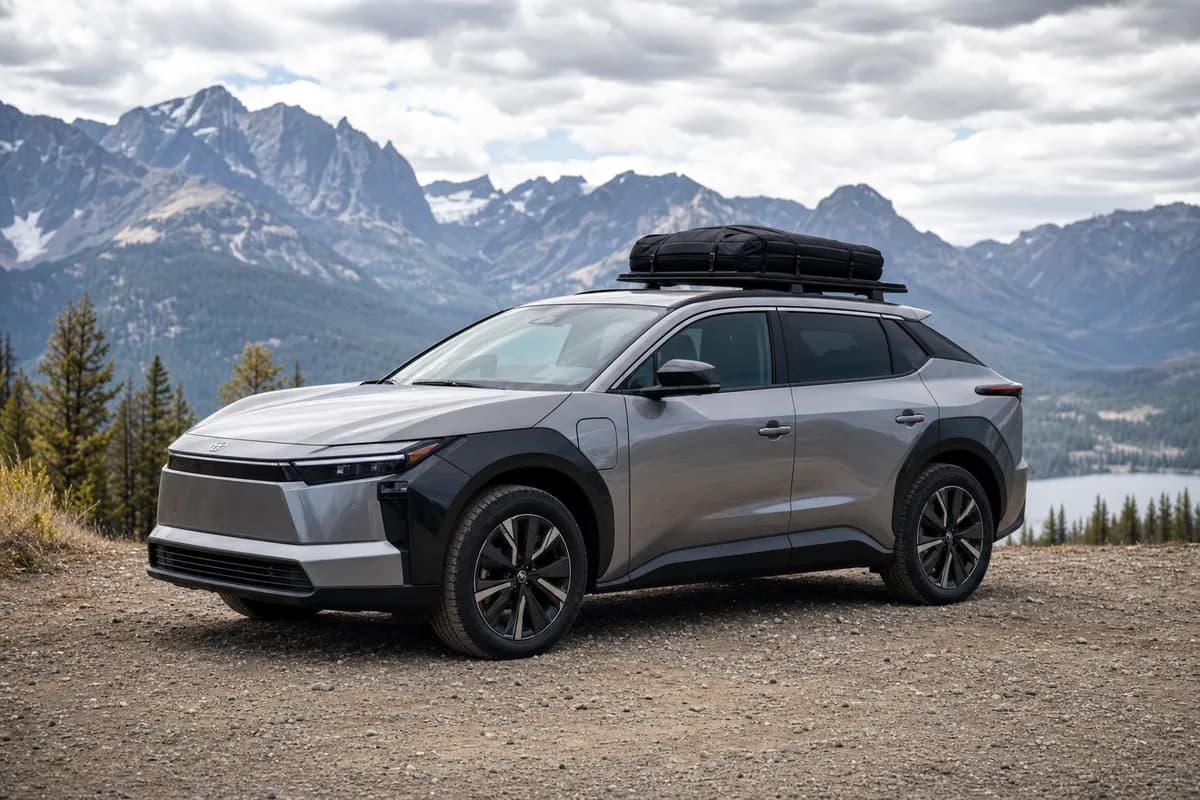
Toyota’s bZ4X Touring brings the wagon-ish, longer-roof approach that many road-trippers have been begging for. The 2027 Subaru Trailseeker leans into Subaru’s long-running outdoors identity, which means its owner base was always going to start talking about racks, tires, and camp setups the minute the wraps came off. The 2026 Kia EV5 rounds out the trio with boxier proportions and a cabin layout that already feels aimed at active-use buyers.
All three also benefit from the same broader trend: EV owners are getting past the first-wave novelty stage. They are now asking the same practical questions that RAV4, Outback, and CR-V owners have asked for years, just translated for battery-electric life.
- How do I plan charging for a national-park road trip?
- What tire size and load rating can I run without hurting efficiency too much?
- How do I avoid 12-volt headaches when camping?
- What mods improve utility without killing range, warranty peace of mind, or resale?
That is where the new DIY adventure-EV community is taking shape. It is less about ego and more about systems thinking.
NACS Adapter Road Trip Planning Is the New Glovebox Essential
If you own one of these crossovers in 2026 and beyond, charging strategy is part of the build sheet. A set of all-terrain tires might change how the vehicle drives, but access to more reliable fast charging changes whether a long trip feels easy or stressful.
This is why NACS adapter road trip planning has become such a big talking point. Many non-Tesla EV owners now expect to carry an approved adapter, know which networks their vehicle can authenticate with, and build routes around not just charger location, but charger uptime, pull-through room, and peak charging speed.
For these adventure-style EVs, the planning details matter more than they do for a commuter sedan. Roof racks, cargo boxes, extra passengers, and highway speeds all raise consumption, so owners are learning to build bigger margins into routes than the dashboard’s optimistic estimate suggests.
What smart owners are doing before a trip
- Confirm adapter compatibility with the vehicle and charging network, not just the plug shape.
- Test the adapter locally before a major trip instead of opening the box at a remote charger.
- Route with backups every 80 to 120 miles on long rural stretches.
- Watch real-world consumption in miles per kWh after adding tires, racks, or camping gear.
- Prefer chargers with amenities if traveling with kids or during overnight pushes.
That last point sounds minor until you have done a 900-mile weekend. Veteran EV road-trippers know that a charger beside a clean restroom and a coffee shop is a performance upgrade in its own right.
The best charging plan is not the fastest one on paper. It is the one that still works when weather changes, a station is full, or your efficiency drops 15 percent with gear on the roof.
12-Volt Prevention Is Becoming Basic Adventure-EV Ownership
Ask any tech who has spent time around modern EVs and plug-ins: the little 12-volt battery still matters. It powers control modules, contactors, locks, lighting, and startup logic, and when it gets weak, the vehicle can act far more broken than it really is.
Camping use makes this topic even more relevant. Repeated accessory use, doors open for long periods, interior lights cycling, and extended parked time can stress a marginal 12-volt battery faster than many new owners expect.
The DIY community around the 2026 Toyota bZ4X Touring, 2027 Subaru Trailseeker, and 2026 Kia EV5 is starting to treat 12-volt care the same way old-school overlanders treated spare tires and recovery boards: not glamorous, but essential.
Good 12-volt habits for EV crossover owners
- Check battery health annually, especially before road-trip season.
- Learn the vehicle’s DC-DC charging behavior so you know when the high-voltage pack is topping up the 12-volt system.
- Avoid leaving the hatch and doors open for hours while packing or setting up camp.
- Carry a compact jump pack rated for modern 12-volt systems.
- Update vehicle software when manufacturers release fixes tied to battery management or parasitic draw.
This is also one area where tasteful DIY beats random accessories. Hardwiring cheap add-ons, adding mystery LED strips, or using bargain-bin power inverters can create the kind of intermittent draw that makes diagnosis miserable later. Clean installs and fused circuits still matter, even if the propulsion system is electric.
Tire-Load Strategy Matters More Than Aggressive Tread Blocks
If there is one mod category where owners can make these EVs better or worse in a single afternoon, it is tires. Electric crossovers are heavy, torque-rich, and sensitive to rolling resistance, so the old gas-crossover habit of tossing on the chunkiest all-terrain tire that fits is usually a mistake.
The smarter approach is tire-load strategy first, tread pattern second. You want a tire with the right load index for a fully packed vehicle, stable sidewalls, and a tread design that works on gravel, washboard, and wet forest roads without hammering range and cabin noise.
What the community is learning about EV tire choices
- Load rating is non-negotiable. These crossovers carry serious curb weight before you add passengers and gear.
- Mild all-terrain or all-weather tires often beat aggressive A/Ts. They preserve efficiency and steering feel.
- Smaller wheel, taller sidewall setups can improve ride quality on rough roads if brake clearance allows.
- Unsprung weight matters. Heavy wheels and tires can dull acceleration, ride, and efficiency.
For light-duty adventure use, this usually means resisting the urge to copy body-on-frame truck builds. A quality all-weather tire with strong load capacity can be the sweet spot for owners who spend 90 percent of their time on pavement and the other 10 percent on fire roads, campsites, and snowy highways.
The same goes for alignment. After any wheel-and-tire change, get the alignment checked. A slight toe problem that might be annoying on a gas crossover can become an expensive range and tire-wear penalty on an EV.
OEM-Plus Mods That Actually Improve These EV Crossovers
The best-looking builds in this space are restrained. They look like something the factory could have offered as an adventure package, and that is exactly why they age well.
Owners are figuring out that a road-trip-ready EV does not need a six-inch lift, a fake hood snorkel, and a roof basket full of decorative fuel cans. It needs useful protection, efficient storage, and accessories that do not sabotage charging stops, aerodynamics, or visibility.
Best OEM-plus style upgrades for road trips and dirt-road duty
- Crossbars and low-profile cargo boxes for seasonal storage flexibility.
- Weatherproof floor liners and cargo mats that make muddy boots and wet dogs a non-issue.
- Splash guards and subtle mud flaps to protect paint without looking bulky.
- Underbody protection where available from reputable suppliers, especially for repeated rough-road use.
- Hitch-mounted bike or cargo solutions when approved by the manufacturer.
- Better interior lighting and organized 12-volt/USB power management for camping and night loading.
One caution from the shop-floor perspective: watch the weight and aero penalty of every mod. Roof tents, big baskets, and stacked accessories can hurt range dramatically at highway speed. On an EV, that cost is not abstract. You feel it at the next charger.
There is also a legality angle that mature builders are taking seriously. Tire coverage, lighting color and placement, plate visibility, and tow-rating compliance still apply. The strongest builds are the ones that can pass inspection, survive a warranty conversation, and still look good three years later.
Verdict: The New Adventure-EV Scene Is Growing Up Fast
The emerging community around the 2026 Toyota bZ4X Touring, 2027 Subaru Trailseeker, and 2026 Kia EV5 is refreshing because it is grounded in use, not posturing. These owners are building crossovers that can commute all week, fast-charge on Saturday, and handle a campsite access road on Sunday without turning into awkward theme builds.
That is why DIY EV crossover mods are getting so much attention right now. Done well, they solve real problems: better trip planning with a NACS adapter, fewer 12-volt surprises, tires matched to actual loads, and subtle upgrades that boost comfort and durability.
The old SUV aftermarket often rewarded excess. This new EV crowd is rewarding judgment. If that trend holds, the best adventure builds of the next few years will not be the loudest ones in the parking lot. They will be the clean, capable crossovers quietly heading farther from home with less drama.