Nissan and NACS finally align in July 2026, easing road-trip worry for 2027 Ariya shoppers and shaping how dealers message new EV plans.
Nissan’s move to the Tesla-style North American Charging Standard is more than a connector change. For U.S. shoppers in 2026 and 2027, it goes straight to the biggest EV anxiety that price cuts alone have not solved: confidence on a road trip.
That is why Nissan NACS July 2026 matters. It lines up the brand’s next phase of EVs with the charging network many mainstream buyers already trust, and it raises the stakes for how Nissan positions the 2027 Ariya and its coming Leaf replacement.
Nissan’s July 2026 NACS switch changes the conversation
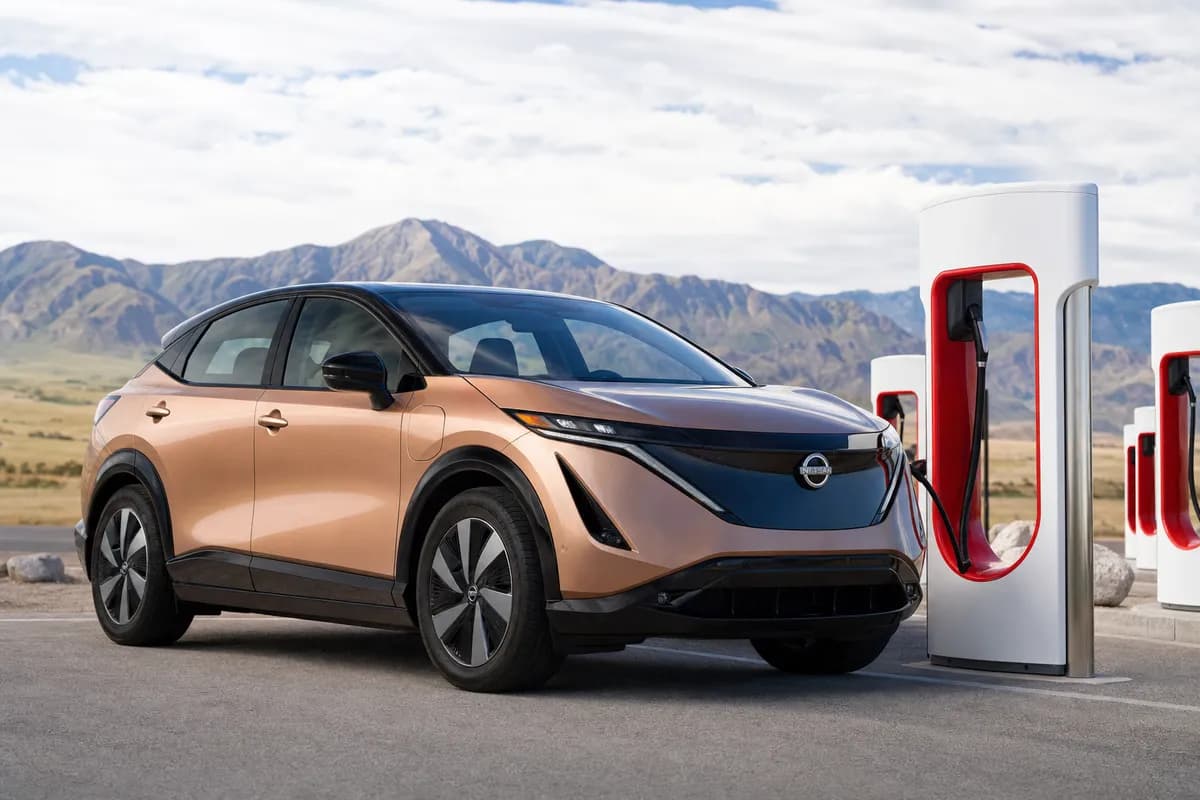
Nissan has said it will adopt NACS in the U.S. and Canada beginning in 2025, with access to Tesla Superchargers via an adapter first and a native NACS port on future EVs from 2025. By July 2026, that transition stops being an abstract future plan and becomes a real-world buying question for shoppers deciding whether to wait for newer Nissan EVs or buy what is on sale now.
The timing matters because Nissan is trying to bridge two different products. The current Ariya is already on sale, while the company is preparing a smaller, more affordable EV widely expected to serve as the 2026 Nissan Leaf successor in the U.S., replacing the aging hatchback with a crossover-like model on the CMF-EV architecture.
For years, Nissan’s EV story in America was split. The Leaf helped normalize affordable battery-electric driving, but its CHAdeMO fast-charging port became a dead end as the market moved to CCS and then rapidly toward NACS. Ariya arrived with CCS, better range, and more modern hardware, but it still entered a fragmented public charging landscape.
NACS narrows that gap. More than any single trim update or incentive campaign, broader and simpler access to the Tesla network gives Nissan a cleaner answer when customers ask the question that still decides many showroom visits: Where can I actually charge this on a trip?
Why Tesla Supercharger access matters more than another price cut
Price still matters. But in the mainstream EV market, charging reliability and route confidence are now competing directly with monthly payment as the make-or-break issue.
Tesla’s Supercharger network remains the benchmark in the U.S. because of scale, uptime perception, and location coverage along major corridors. Federal data and industry tracking vary by methodology, but Tesla still accounts for a large share of U.S. DC fast-charging ports and an even larger share of stations drivers actively seek out for intercity travel.
That is the practical meaning of Tesla Supercharger Nissan EV compatibility. Buyers are not just gaining another icon in a navigation app. They are gaining access to a charging system that many non-Tesla drivers see as the least risky option for long-distance travel.
- For first-time EV buyers: more visible charging options reduce fear of being stranded.
- For households replacing a gasoline car: easier highway charging makes a single-EV lifestyle feel more realistic.
- For Nissan dealers: charging becomes easier to explain in one sentence.
That last point is easy to overlook. Dealer messaging around public charging has often been muddled because it required explaining different ports, adapter timelines, third-party networks, and charger reliability. NACS gives sales staff a simpler script: this Nissan can use a much larger, better-known fast-charging network.
What it means for the 2027 Nissan Ariya and the Leaf successor
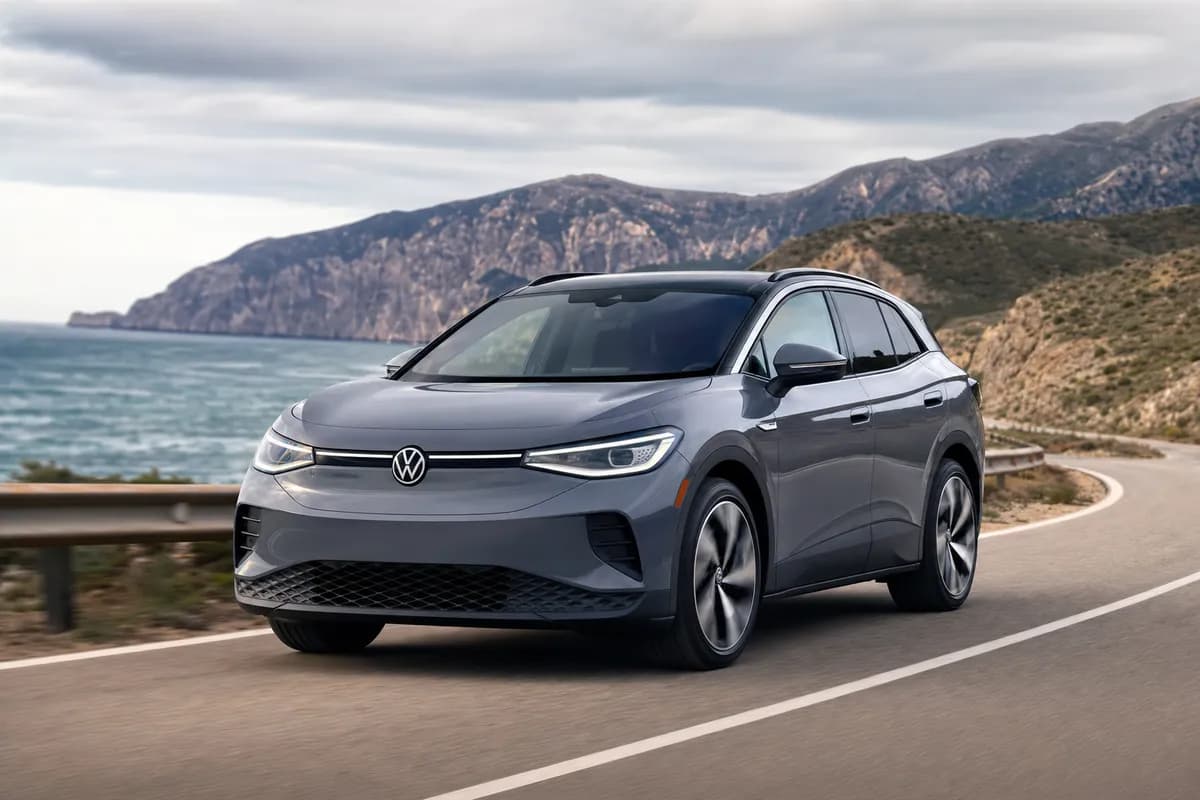
The current Ariya already competes in one of the market’s toughest segments. It sits against the Tesla Model Y, Hyundai Ioniq 5, Kia EV6, Ford Mustang Mach-E, Chevrolet Equinox EV, and Honda Prologue, all while carrying Nissan’s job of rebuilding EV momentum in the U.S.
That is where 2027 Nissan Ariya Supercharger access becomes strategically important. Even if the Ariya’s core hardware does not radically change, easier access to Tesla’s network materially improves the ownership proposition, especially for buyers cross-shopping on infrastructure trust rather than on range alone.
Ariya today offers EPA range figures up to roughly 304 miles depending on trim and drivetrain. That is competitive enough for many buyers, but range on paper means less if drivers do not trust the chargers waiting at the other end of the trip. Supercharger compatibility makes those 250- to 300-mile class numbers feel more usable.
The coming Leaf successor may benefit even more. Nissan is expected to move away from the current Leaf’s hatchback shape toward a compact crossover with better aerodynamics, newer battery tech, and much more modern software and charging capability.
If Nissan wants that vehicle to be a genuine volume player, charging access cannot be an asterisk. A next-generation Leaf replacement aimed at mainstream budgets will need to appeal to buyers who are curious about EVs but still nervous about relying on public charging away from home.
- Current Leaf: affordable legacy EV, but held back by old packaging and CHAdeMO.
- Ariya: modern EV with stronger range and performance, but still selling into charging fragmentation.
- Leaf successor: likely Nissan’s best chance to pair mainstream pricing with mainstream charging confidence.
The bigger issue: U.S. charging confidence still lags buyer interest
Consumer research has been consistent on this point. Many Americans like the idea of an EV. Many still do not trust the public charging experience enough to commit.
That makes U.S. EV charging confidence one of the most important variables in the market through 2027. Shoppers may compare lease specials and tax credits online, but their final decision often turns on whether they believe road-trip charging will be easy, fast, and dependable.
Nissan’s NACS transition lands at a moment when the market is sorting into winners and stragglers on infrastructure messaging. Automakers that can say “yes, you can use Tesla Superchargers” have an increasingly clear advantage over brands still asking customers to decode a patchwork of apps, plugs, and charger operators.
There are still limits, of course. Access can depend on adapter availability, software integration, charger compatibility, and whether specific Supercharger sites are open to non-Tesla vehicles. Native-port timing also matters, because buyers prefer not to manage extra hardware if they can avoid it.
But those are manageable details compared with the barrier Nissan is trying to remove. The real obstacle is not whether an EV can technically fast-charge. It is whether a hesitant buyer believes charging away from home will be predictable enough for family travel, holiday driving, and unplanned detours.
What Nissan dealers and buyers should be saying now
For dealers, the message should shift from abstract electrification promises to everyday use cases. Explain range, charging speed, and cost, but lead with where the car can charge and how easy that process will be on an interstate trip.
That is especially true as inventory spans multiple charging eras. A shopper comparing a discounted current-model Ariya, a remaining Leaf, and a future NACS-equipped Nissan EV needs a plain-language explanation of what changes in July 2026 and beyond.
- Be clear on ports: older Leaf models use CHAdeMO, Ariya uses CCS, newer Nissan EVs move to NACS.
- Be clear on timing: some vehicles may require an adapter before native NACS ports become standard.
- Be clear on value: charging convenience is part of ownership cost, not a side issue.
For buyers still hesitating over EV road trips, the takeaway is simpler. If public charging confidence has been your main objection to a Nissan EV, the company’s NACS shift is the strongest reason yet to take another look.
It does not erase every challenge in the public charging market. It does, however, bring Nissan closer to the infrastructure standard that many U.S. shoppers now see as essential.
Verdict: Nissan’s connector move is really a trust move
The story here is not just that Nissan is changing plugs. The bigger story is that mainstream EV adoption in the U.S. is increasingly being decided by charging access, charging reputation, and charging simplicity.
Nissan NACS July 2026 puts the brand on the right side of that shift. For the 2027 Nissan Ariya Supercharger access question, for the expected 2026 Nissan Leaf successor, and for broader U.S. EV charging confidence, this is the kind of move that can matter more than another small range bump or temporary discount.
Buyers have heard the EV sales pitch for years. What many of them want now is proof that road-trip charging will not be a gamble. Nissan’s convergence with NACS does not finish that job, but it makes the answer far more convincing.