Thailand’s $700 million EV fleet conversion plan in July 2026 could shift regional pricing and procurement for drivers and brands like BYD and Toyota.
Thailand is moving from EV promotion to direct market-making. A new $700 million fleet conversion plan expected to shape procurement in July 2026 could do more than clean up government and public-service transport fleets. It could reset the competitive map for automakers chasing scale in Southeast Asia.
Thailand’s EV plan is about more than fleets
The headline figure matters, but the mechanism matters more. A large state-backed procurement program gives manufacturers something retail demand often cannot: volume certainty. For brands already building, or planning to build, in Thailand, that can support higher factory utilization, better supplier economics, and faster price cuts.
That is why the Thailand EV plan July 2026 matters beyond Bangkok. If the government channels subsidies, financing support, or tender preferences toward locally assembled vehicles, it strengthens Thailand’s hand in the regional race for EV investment just as automakers decide where to add capacity for 2027 and beyond.
Thailand has long been Southeast Asia’s automotive manufacturing hub, especially for pickups and conventional passenger vehicles. The country now wants to translate that industrial base into EV leadership, using policy to pull demand forward while encouraging battery, component, and vehicle assembly investment.
In practical terms, a fleet conversion push tends to favor use cases that are easier to electrify first. That includes urban buses, municipal vehicles, official passenger cars, airport shuttles, logistics vans, and corporate fleets with fixed routes and centralized charging.
- Why fleets matter: high annual mileage makes EV economics easier to justify
- Why factories care: fleet orders create predictable demand for locally built models
- Why consumers should watch: larger production runs can feed into lower regional EV prices
Why BYD, MG, GWM, and Toyota all have something at stake in 2027
Thailand’s market is already one of the most closely watched EV battlegrounds in the region. Chinese brands moved early and aggressively, while Japanese incumbents have been more cautious, especially in battery EVs. A major fleet policy could reward whichever companies can deliver supply, service support, and local content at scale.
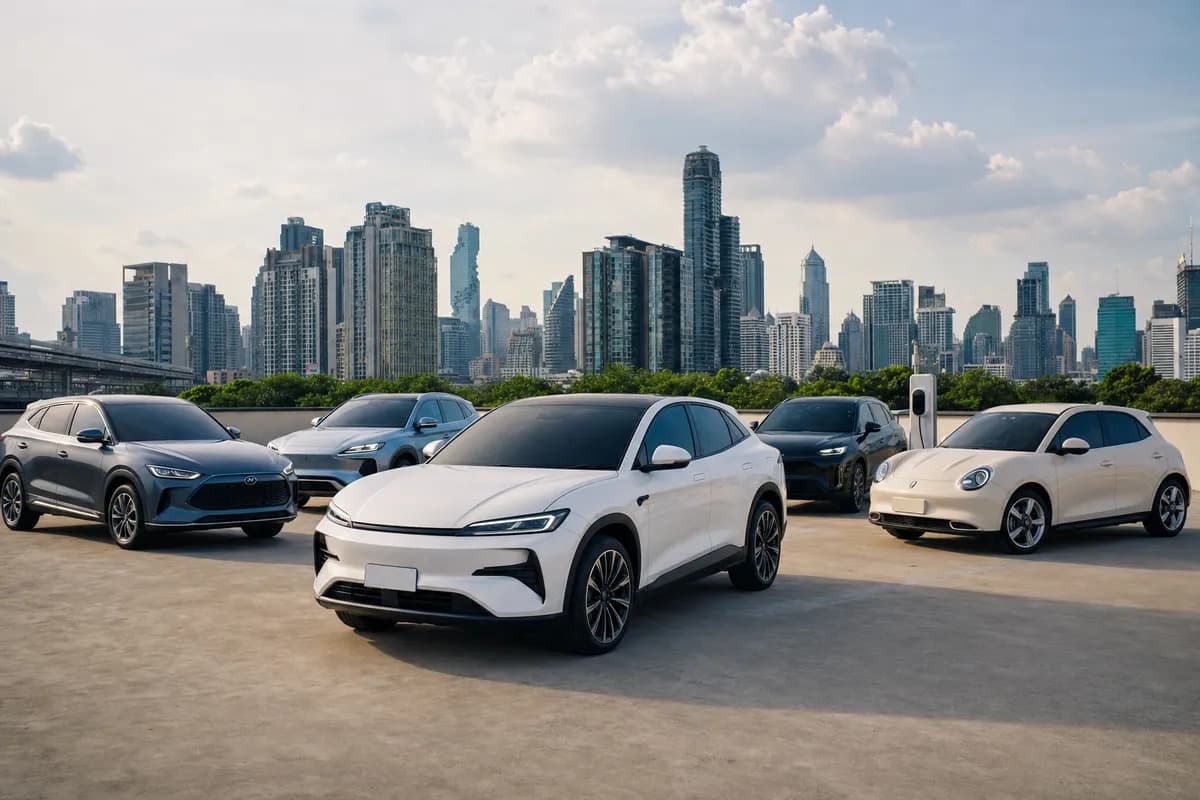
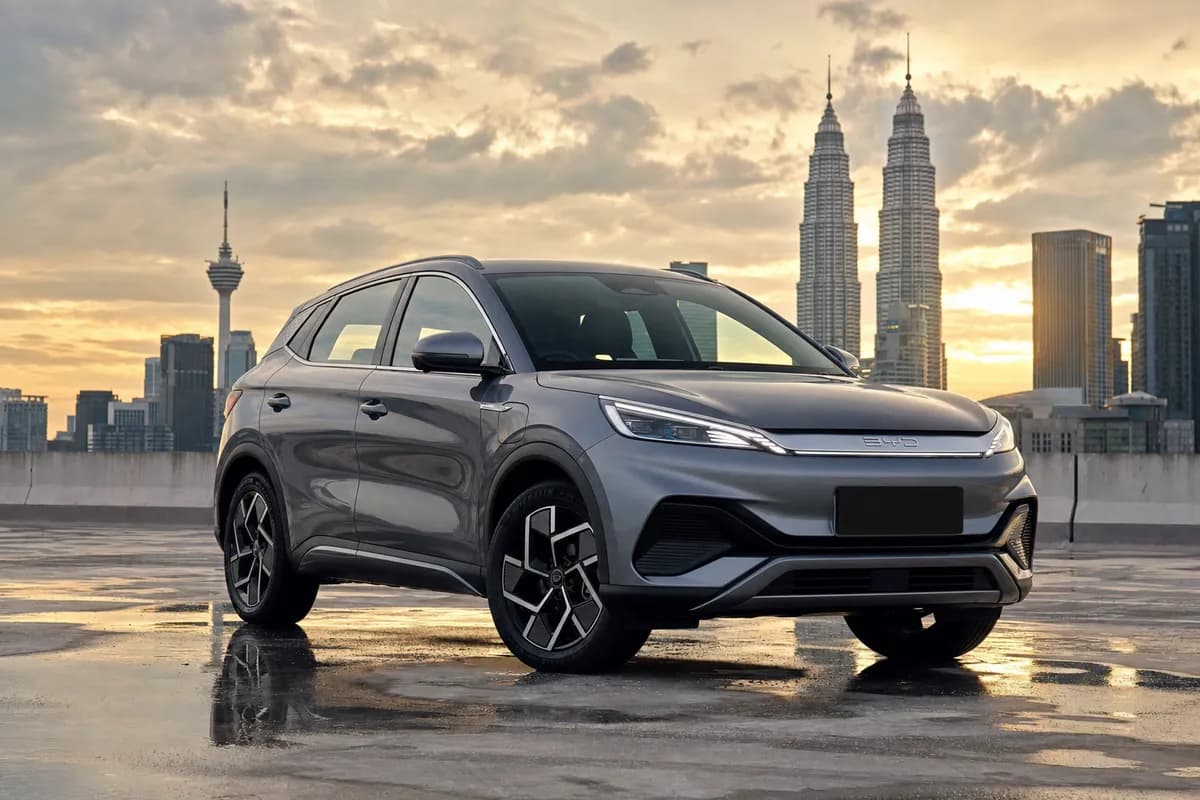
BYD is central to that story. The company has rapidly expanded across Southeast Asia, using a mix of competitive pricing, broad model coverage, and local production plans. For 2027 BYD Thailand strategy, the key question is not whether BYD will be present, but how deeply it can localize production and whether it can convert manufacturing scale into durable pricing power.
In Thailand, BYD’s model mix has typically centered on mass-market battery EVs like the Dolphin, Atto 3, and Seal. Those vehicles cover several price bands and give the brand flexibility if procurement expands beyond passenger sedans into broader fleet categories. If local assembly deepens, BYD gains room to defend margins while staying aggressive on retail pricing.
MG, backed by SAIC, also has a strong reason to push hard. MG has already built meaningful brand recognition in Thailand and has often competed on value. A government-supported fleet expansion could fit neatly with MG’s positioning if it can offer reliable supply, local assembly economics, and aftersales confidence.
Great Wall Motor enters the equation differently. GWM has invested in Thai production and has used the market as a strategic base for ASEAN operations. While the company is often associated with SUVs and hybrids, a bigger Thailand fleet-EV push increases the incentive to tailor more products and price points to institutional buyers.
Toyota may be under the most pressure strategically. The company remains a giant in Thailand and across the region, but its EV posture has leaned more heavily on hybrids than on full battery EVs. If July 2026 policy signals that government demand will increasingly favor zero-emission fleets, Toyota may have to accelerate battery EV localization or risk losing share in a market it historically dominated.
- BYD: strongest momentum in mainstream EVs, with scale and pricing leverage
- MG: value-focused brand with local relevance and procurement potential
- GWM: manufacturing base and regional ambition, but needs sharper EV fleet alignment
- Toyota: huge installed base and trust, but slower battery EV transition raises stakes
Local assembly could become the dividing line
The biggest industrial effect of the plan may be on Thailand local EV assembly. Incentives tied to domestic production, local content, or supply-chain investment would reinforce a pattern already visible across the region: imported EVs can open a market, but locally assembled EVs usually determine who wins it.
That matters because local assembly changes cost structures. It can lower tariff exposure, reduce logistics costs, improve currency resilience, and make it easier for brands to qualify for government programs. For fleet tenders, those advantages can be decisive.
Thailand already has several structural advantages in this race:
- an established automotive supplier base
- experience with export-oriented vehicle production
- existing industrial estates and logistics infrastructure
- a large domestic market by regional standards
- policy credibility built through prior auto-sector incentives
If the new plan is executed cleanly, it could pull more battery pack, power electronics, and component investment into the country. That would not guarantee Thailand dominates the Southeast Asia EV market, but it would strengthen its claim to be the region’s EV manufacturing center of gravity.
There is also a competitive policy angle. Southeast Asian governments are increasingly aware that EV adoption is not just an environmental issue. It is an industrial strategy issue tied to jobs, exports, and control over future automotive value chains. Thailand’s move raises the bar for neighbors trying to attract the same automakers and suppliers.
Charging expansion and pricing pressure will decide whether the plan spreads beyond fleets
Fleet conversion plans can jump-start volumes, but they do not automatically create a healthy mass market. For that, Thailand still needs charging expansion, stable policy, and enough competition to keep sticker prices moving downward. This is where the broader consumer impact starts to come into focus.
Charging is especially important because fleet depots and public networks solve different problems. A bus operator can install overnight charging at a depot. A private buyer in a condo or townhouse depends far more on public fast charging and reliable urban access.
Expect any serious July 2026 push to put more attention on:
- depot charging for buses, vans, and government fleets
- urban DC fast charging for taxis, ride-hailing fleets, and private users
- highway corridors linking Bangkok with major regional centers
- grid upgrades and smart charging to manage peak demand
The other big consumer question is price. Larger procurement volumes and stronger local assembly often produce spillover effects, especially when multiple brands are fighting for share. That could put downward pressure on regional EV prices in 2027, not only in Thailand but in nearby right-hand-drive markets watching the same supply base.
Drivers should not assume immediate cuts across the board. Prices still depend on battery costs, exchange rates, tax treatment, and how much subsidy support remains in place. But if Thailand becomes a stronger production and export base, it improves the odds that entry EVs and compact crossovers become more affordable across ASEAN.
There is precedent for this pattern in auto manufacturing. Once a country reaches sufficient scale, model variety expands, supplier costs improve, and export economics start to work. In EVs, that process can happen faster when one or two dominant brands force rivals to respond.
What this means for the Southeast Asia EV market in 2027
The likely outcome is not a simple Thailand win and everyone else loses. The region is too fragmented for that, and each market has different tax rules, consumer preferences, and infrastructure constraints. But Thailand’s $700 million fleet conversion push could give the country an edge at a critical moment, when automakers are deciding where to concentrate capital and volume.
If the policy favors locally assembled vehicles and is backed by real charging deployment, Thailand could tighten its grip on EV manufacturing leadership in mainland Southeast Asia. That would make the country even more important for brands such as BYD, MG, and GWM, while increasing pressure on Toyota and other incumbents to move faster on battery EVs.
For buyers, the most important signal is indirect. Government fleet tenders may sound distant from private car shopping, but they can shape factory economics, dealer confidence, charging growth, and ultimately showroom pricing. In a market where scale is still fragile, one big procurement policy can move the whole system.
Verdict: Thailand’s July 2026 EV fleet plan is not just a public-sector decarbonization move. It is a bid to lock in manufacturing scale, attract deeper local assembly, and influence regional EV prices heading into 2027. If execution matches ambition, the policy could make Thailand harder to ignore in the next phase of the Southeast Asia EV market.
Affiliate disclosure: This article contains affiliate links. RevvedUpCars may earn a small commission on qualifying purchases at no extra cost to you.