Ford’s EV reset hits July 2026 with fresh pricing pressure on the 2027 F-150 Lightning and growing questions about batteries and EV demand.
Ford’s EV reset is no longer a future plan. By July 2026, it is showing up in pricing pressure on the upcoming 2027 Ford F-150 Lightning, a tougher sales environment for battery vehicles, and a clearer reliance on hybrids to carry volume and margins. For buyers, dealers, and Ford itself, the message is simple: the company is slowing its EV sprint and trying to avoid getting caught with the wrong inventory.
Ford’s July 2026 EV picture is about discipline, not retreat
Ford EV sales July 2026 are being shaped less by product excitement than by economics. The automaker still has three core battery-electric nameplates in the U.S. mainstream market — the F-150 Lightning, Mustang Mach-E, and E-Transit — but each now faces a market that is more price-sensitive, less tax-credit-driven, and more crowded than it was even a year ago.
That matters because Ford has already learned the hard way that EV growth does not guarantee EV profit. The company spent the last two years trimming EV production plans, adjusting battery sourcing, and leaning harder into hybrids, especially in trucks and SUVs, where demand has proved steadier and incentives are less central to the sale.
The shift is not a retreat from electrification. It is a reset in pace and product mix. Ford still needs EVs to meet emissions targets, defend market share, and stay credible against Tesla and fast-moving Chinese and Korean competitors abroad, but it no longer appears willing to chase volume at any cost.
The 2027 F-150 Lightning enters a tougher pricing fight
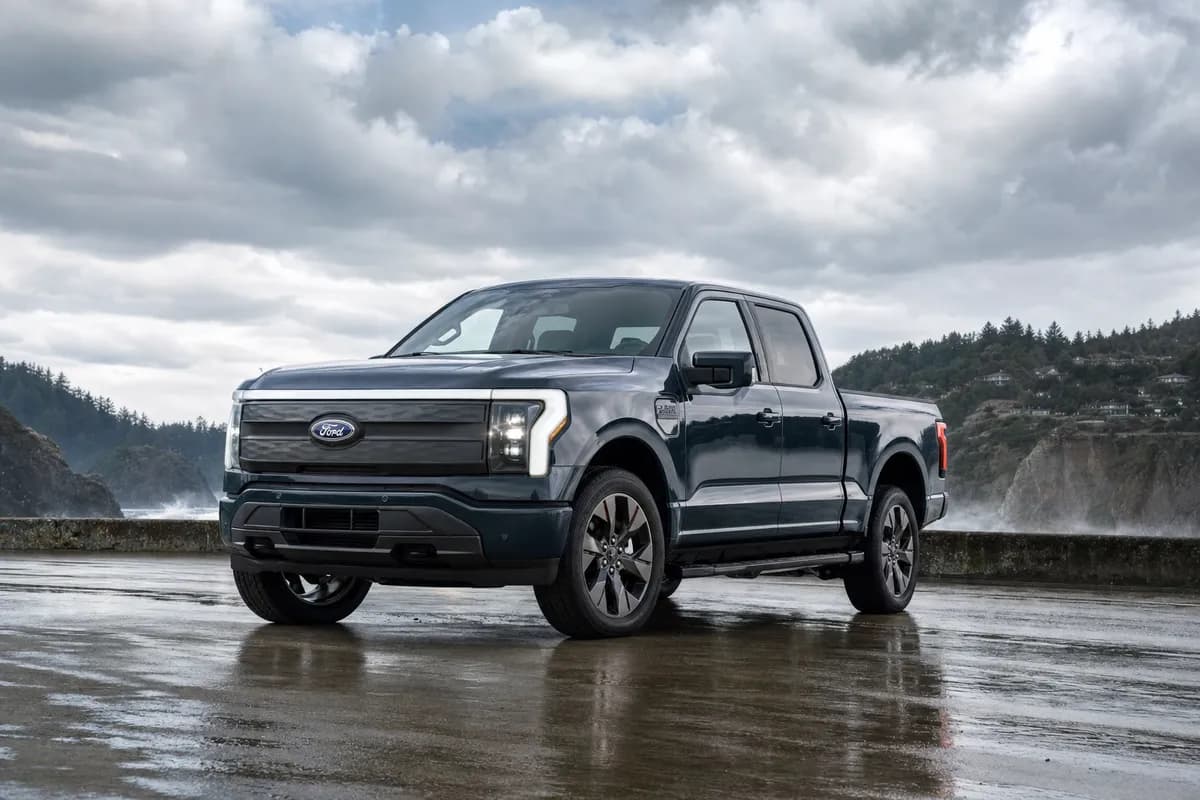
The biggest pressure point is the 2027 Ford F-150 Lightning. Electric pickups remain strategically important because they showcase technology and give Ford an answer to rivals in a segment it dominates with the gasoline F-Series. But they also remain expensive to build, sensitive to incentives, and harder to move when interest rates stay elevated and buyers can choose cheaper hybrid or gasoline trucks.
That puts pricing at the center of Ford’s next Lightning move. The current truck has already gone through multiple price resets since launch, swinging from early hikes tied to battery costs to later cuts and incentives aimed at restoring demand. For the 2027 model, buyers and dealers will be watching whether Ford can lower effective transaction prices without blowing up margins again.
Ford has a few levers, but none are easy:
- Battery cost reductions through chemistry changes, scale, or supplier negotiations
- Trim and feature simplification to protect entry pricing
- Stronger lease support to offset weaker retail demand
- Factory and dealer incentives to clear aging inventory
The risk is that the Lightning is being squeezed from both ends. At the high end, affluent early adopters are no longer buying simply because the truck is electric. At the lower end, mainstream truck shoppers still see a large premium versus a well-equipped gasoline F-150 or a hybrid alternative, especially if federal incentives are harder to access or less meaningful at the point of sale.
That is why battery strategy questions matter so much. If Ford cannot materially reduce pack costs for the next Lightning, it will have to choose between weaker margins and slower sales. Neither is attractive in a segment where its conventional truck business remains the company’s profit engine.
Mustang Mach-E and E-Transit show how uneven Ford’s EV demand has become
The same pressure does not hit every Ford EV in the same way. Mustang Mach-E pricing remains one of the clearest examples of how Ford has had to adapt in real time to a more competitive market. The Mach-E is no longer competing only on style, range, and performance; it is competing on monthly payment against Tesla price cuts, newer Hyundai-Kia EVs, and an expanding pool of discounted used EVs.
That means pricing discipline on the Mach-E now matters as much as product appeal. Ford can still use the crossover to hold EV share in a large retail segment, but the model has become a margin management exercise. If incentives get too rich, Ford moves metal but gives up profitability. If pricing stays firm, inventory can build quickly at dealers.
The E-Transit is a different case. Commercial EV demand is usually less emotional and more math-driven, based on route length, charging access, and operating costs. That gives Ford a clearer use case, but it also narrows the buyer pool because many fleet customers remain cautious on charging infrastructure and replacement cycles.
Together, the Mach-E and E-Transit highlight Ford’s core problem in mid-2026: EV demand still exists, but it is fragmented. One-size-fits-all pricing and production plans no longer work.
Where Ford’s current EV lineup is feeling the most pressure
- F-150 Lightning: high sticker prices, battery-cost sensitivity, and direct comparison with cheaper gasoline and hybrid trucks
- Mustang Mach-E: pricing pressure from Tesla and other crossover EV rivals, plus rising used-EV competition
- E-Transit: dependent on fleet charging readiness and total-cost-of-ownership calculations
Slower tax-credit demand is changing how Ford has to sell EVs
EV tax credit demand 2026 is not what it was when many automakers built their volume forecasts. Buyers have become more skeptical about treating the federal credit as the deciding factor, partly because transaction prices, lease programs, and interest rates often matter more in the monthly-payment calculation. The credit still helps, but it is no longer enough to overcome a product that feels too expensive.
For Ford, that creates a second challenge beyond battery cost. It must now sell EVs on mainstream value, not just on incentive-enhanced value. That is a harder proposition for electric pickups in particular, where towing, cold-weather range, charging speed on long trips, and resale perceptions still shape purchase decisions.
Leasing could become a bigger tool here, especially if Ford and its finance arm can use commercial or pass-through credit structures to lower monthly payments. But leasing solves affordability more than it solves conviction. If buyers are waiting for cheaper batteries, better charging access, or the next product update, lower lease payments may not be enough to accelerate demand.
Ford’s hybrid truck strategy is becoming the bridge, not the backup plan
The most important takeaway from Ford’s July 2026 positioning may be this: Ford hybrid truck strategy is moving from side bet to central pillar. Hybrids give Ford a way to improve fleet emissions, offer better fuel economy, and keep prices closer to what mainstream truck buyers will actually pay.
That logic is especially strong in the F-150 and Maverick ranges. A hybrid truck asks far less of the customer than a full EV does. There is no charging behavior to learn, no towing-range anxiety to explain, and no need to rely on tax credits to make the payment work.
For Ford, hybrids also help smooth the factory and inventory equation. They can absorb demand that might otherwise be lost between gasoline and EV offerings, and they reduce the pressure to force EV production into a market that may not clear it quickly. In a slower-growth EV environment, that flexibility is worth a great deal.
Why hybrids now matter more to Ford than before
- They broaden affordability without requiring major behavior changes from buyers.
- They protect truck volume in Ford’s most important profit segment.
- They reduce inventory risk if EV demand softens further.
- They buy time for battery costs, charging access, and next-generation EV platforms to improve.
What dealers and buyers should watch next
Dealer inventories will be a key signal through the second half of 2026. If Lightning and Mach-E supply begins to outpace demand, Ford will likely respond with more visible incentives, finance offers, or lease support before it makes dramatic sticker-price changes. That would be the clearest sign that the EV reset is deepening beyond production planning and into retail execution.
Buyers waiting for better EV deals are not wrong to be patient. The odds favor improved incentives on existing stock before a clean, cost-based breakthrough arrives on next-generation models. But the best deals may come on outgoing trims, specific regions, or lease offers rather than broad permanent price cuts.
For shoppers comparing a Lightning with a hybrid F-150, or a Mach-E with a well-equipped hybrid SUV, the decision in 2026 increasingly comes down to use case and payment, not ideology. Ford understands that now. Its strategy suggests the company is preparing for an EV market that will grow, but not on the easy terms many automakers once expected.
Verdict: Ford is protecting the business while waiting for EV economics to improve
Ford’s July 2026 EV reset looks pragmatic, not panicked. The company still needs the F-150 Lightning, Mustang Mach-E, and E-Transit, but it is no longer pretending that EV demand alone will carry them. Pricing pressure on the 2027 Ford F-150 Lightning, softer EV tax credit demand 2026, and tighter inventory management all point to a more cautious playbook.
The near-term winner inside Ford may be the hybrid lineup. It gives the automaker room to protect truck share, preserve margins, and avoid overcommitting to a still-uneven EV market. For buyers, that means better chances of selective EV deals ahead — but also a clear sign that Ford believes the smartest path to electrification in 2026 is no longer all-electric, all at once.
Affiliate disclosure: This article contains affiliate links. RevvedUpCars may earn a small commission on qualifying purchases at no extra cost to you.