Germany’s EV tipping point arrived in July 2026 as BEVs beat gas cars. What this shift could mean for the 2027 ID.3, ID.7, and more.
Germany’s car market just crossed a line that once looked years away. In July 2026, battery-electric vehicles moved ahead of gasoline cars in Europe’s biggest auto market. That matters less as a one-month headline than as a test of whether the EV shift can now keep going under its own power.
Germany EV sales July 2026: the milestone that changes the conversation
The key number is simple: BEVs outsold gas cars Germany in July 2026. In the country that remains the industrial heart of Europe’s auto sector, that is more than a statistical curiosity. It signals that electric demand is no longer confined to early adopters, fleet buyers, or subsidy-driven spikes.
Germany has seen EV momentum before, then setbacks. The market cooled sharply after the abrupt end of federal purchase incentives in late 2023, exposing how much demand had been pulled forward. What makes July 2026 more significant is that it arrives after that shock, with buyers returning in larger numbers even without the same level of direct support.
That does not mean the market is suddenly incentive-free. Company-car tax rules, lower operating costs, expanding charging access, and tougher EU fleet CO2 targets still shape buying behavior. But the July result suggests the center of gravity has shifted from “EVs can grow if supported” to “EVs can hold share because they increasingly fit mainstream demand.”
Why this is different from earlier EV surges
Germany’s EV market has been volatile because policy changes landed hard and fast. When generous subsidies were available, registrations jumped. When they ended, consumers hesitated, dealers struggled, and many brands leaned more heavily on fleet channels to keep volume moving.
July 2026 looks different for three reasons. First, the product mix is broader and better aligned with what German buyers actually want: compact hatchbacks, crossovers, wagons, and premium sedans with credible range. Second, price gaps have narrowed as manufacturers use platform scale, local production, and financing offers to bring monthly payments closer to combustion rivals.
Third, the charging story is less of a brake than it was even two years ago. Public fast-charging coverage has improved, home and workplace charging are more common, and buyers now have more real-world data on battery durability and winter performance. That reduces the perceived risk of switching.
- More competitive products: stronger range, faster charging, and better software than first-generation mass-market EVs.
- Better economics: lower running costs and more aggressive leasing support from automakers.
- Regulatory pressure: EU emissions rules still push brands to sell more EVs, even if consumer subsidies have faded.
- Infrastructure progress: denser fast-charging networks make one-car EV households more viable.
That mix is what makes Germany’s July 2026 result potentially durable. A one-month overtake can happen on fleet timing. A sustained lead needs product-market fit.
What it means for the 2027 Volkswagen ID.3, ID.7, Tesla Model Y, BMW iX1, and Mercedes CLA EV
If Germany has reached a true tipping point, the winners in 2027 will be the brands with the most complete mainstream offers, not just the most recognizable EV badges. That has direct implications for several key models already shaping the market.
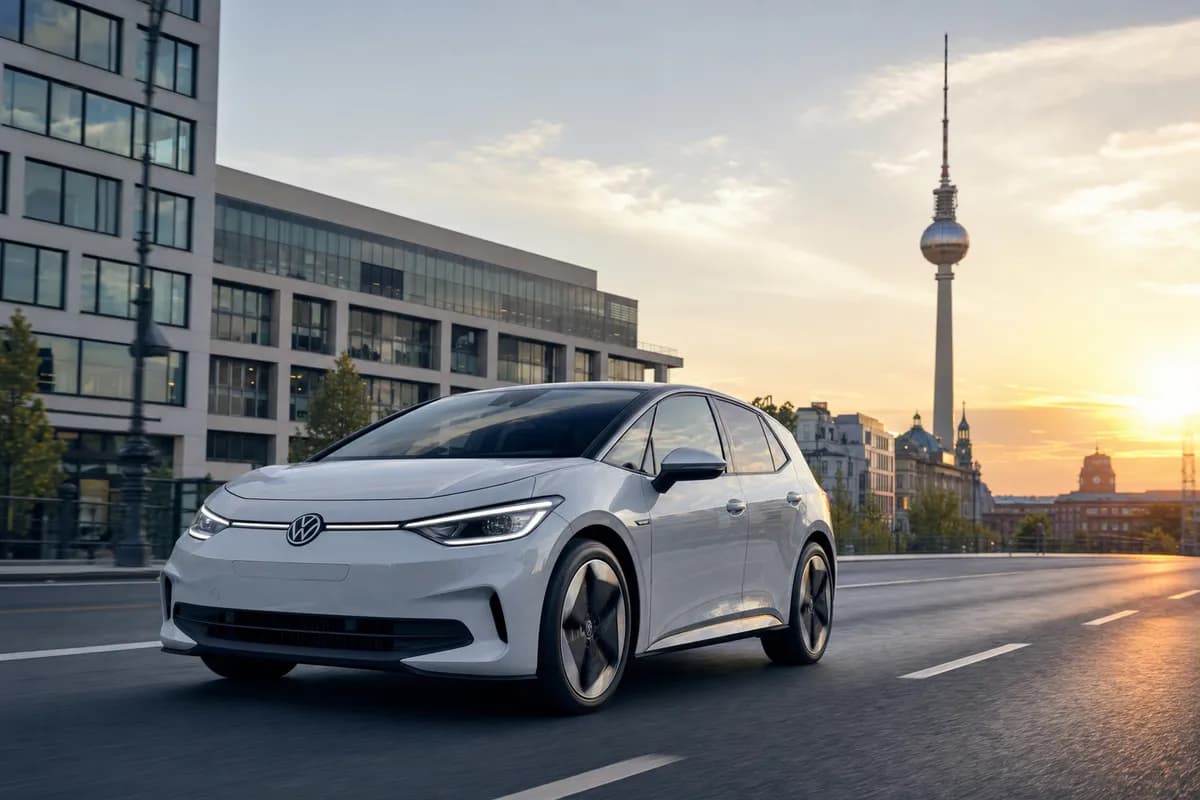
2027 Volkswagen ID.3
The 2027 Volkswagen ID.3 looks better positioned than the original car did at launch. Volkswagen has spent the last few years fixing software issues, improving interior quality, and making the ID.3 easier to understand as a Golf-class electric hatch rather than a tech experiment. In a Germany where BEVs are becoming the default urban and suburban family choice, that matters.
The challenge for the ID.3 is margin and positioning. It must stay close enough to compact combustion pricing to remain a volume car, while also defending itself against lower-cost Chinese rivals and used EVs entering the market in greater numbers. If July 2026 marks a durable shift, the ID.3 becomes less a niche compliance model and more a pillar of Volkswagen’s home-market strategy.
Volkswagen ID.7
The ID.7 benefits from a market that is learning to accept EVs as full substitutes, not second cars. For company-car drivers and high-mileage users, the model’s larger battery, strong efficiency, and Autobahn-friendly character make Germany an ideal test bed. It also fits the fleet market that remains crucial to BEV volume in Europe.
If electric adoption becomes self-sustaining, the ID.7 has room to grow beyond fleets. That would be a meaningful change. It would show that upper-mid-size buyers, long seen as a diesel stronghold, are moving on for good.
Tesla Model Y
Tesla Model Y Germany sales remain one of the clearest signals of market maturity. The Model Y has already proved that a BEV can compete at scale in Europe’s most demanding market, but Tesla no longer enjoys the field advantage it once had. Price cuts helped protect volume, yet they also reset expectations across the segment.
In a more stable German EV market, Tesla’s job changes. It no longer needs to create demand for the category. It needs to defend share against better local competition, especially from Volkswagen, BMW, and Mercedes, while continuing to use Berlin-built supply and charging-network brand strength as assets.
BMW iX1
The BMW iX1 may be one of the biggest beneficiaries of a durable shift. It sits in a sweet spot: premium badge, familiar crossover format, manageable size, and pricing that is still within reach for company-car users and higher-income households. In Germany, that combination is powerful.
The iX1 also shows why this tipping point matters beyond headline volume. When compact premium SUVs go electric in meaningful numbers, the market is broadening horizontally, not just growing through one or two standout nameplates.
Mercedes CLA EV Europe
The Mercedes CLA EV Europe rollout comes at a good time. Mercedes needs a smaller, more efficient EV with stronger design appeal and better affordability than some of its earlier EQ models delivered. The CLA EV has the potential to do that, especially if it combines real-world efficiency with the brand’s usual strength in leasing and fleet channels.
For Mercedes, Germany’s July 2026 milestone is a chance to reset its EV story. If the CLA EV lands well, it could help move the brand from expensive early-adopter EVs toward the core of the European premium market.
Is Europe’s electric shift finally becoming self-sustaining?
Germany matters because if EVs can establish a durable lead there, the case for a broader European tipping point gets stronger. This is not Norway, where policy support and market size make the comparison imperfect. Germany is bigger, more price sensitive, more industrially exposed, and more representative of the region’s mainstream auto demand.
There are real signs the shift is becoming self-sustaining. Consumers are increasingly buying on total cost of ownership, not just sticker price. Residual values are stabilizing for stronger EV models, and automakers have become more disciplined about matching battery size, range, and vehicle class to actual use.
Still, self-sustaining does not mean unstoppable. Europe faces weaker consumer confidence, uneven charging access across countries, and growing pressure from lower-cost imports. Brands may also be forced into heavier discounting if EV production rises faster than retail demand.
- Reasons for confidence: wider model choice, lower running costs, stronger charging coverage, and tighter emissions regulation.
- Reasons for caution: affordability, infrastructure gaps for apartment dwellers, and intense price competition.
- What to watch next: whether BEV share stays ahead of gasoline through multiple months, not just one summer result.
The biggest test will come in 2027. If BEVs keep gaining share without a return to large cash subsidies, then Germany’s July 2026 result will look like a genuine market turning point. If volumes slip back once tactical discounts fade, it will look more like a temporary alignment of regulation, fleet timing, and promotions.
Verdict: a tipping point, but not yet a finished transition
Germany’s July 2026 milestone is symbolic, but it is also substantive. When BEVs move ahead of gasoline cars in Europe’s largest car market, the debate changes. The question is no longer whether EVs can go mainstream in Germany. It is whether the industry can now make that mainstream demand profitable and durable.
For the 2027 Volkswagen ID.3, ID.7, Tesla Model Y, BMW iX1, and Mercedes CLA EV Europe, this is the opening phase of a harder contest. The market is bigger, but also less forgiving. Buyers expect better value, better software, better charging, and fewer compromises.
That is why July 2026 matters. It suggests Europe’s electric transition may finally be moving beyond dependence on short-term incentives and into something more resilient. Not complete, not guaranteed, but increasingly self-sustaining.
Affiliate disclosure: This article contains affiliate links. RevvedUpCars may earn a small commission on qualifying purchases at no extra cost to you.