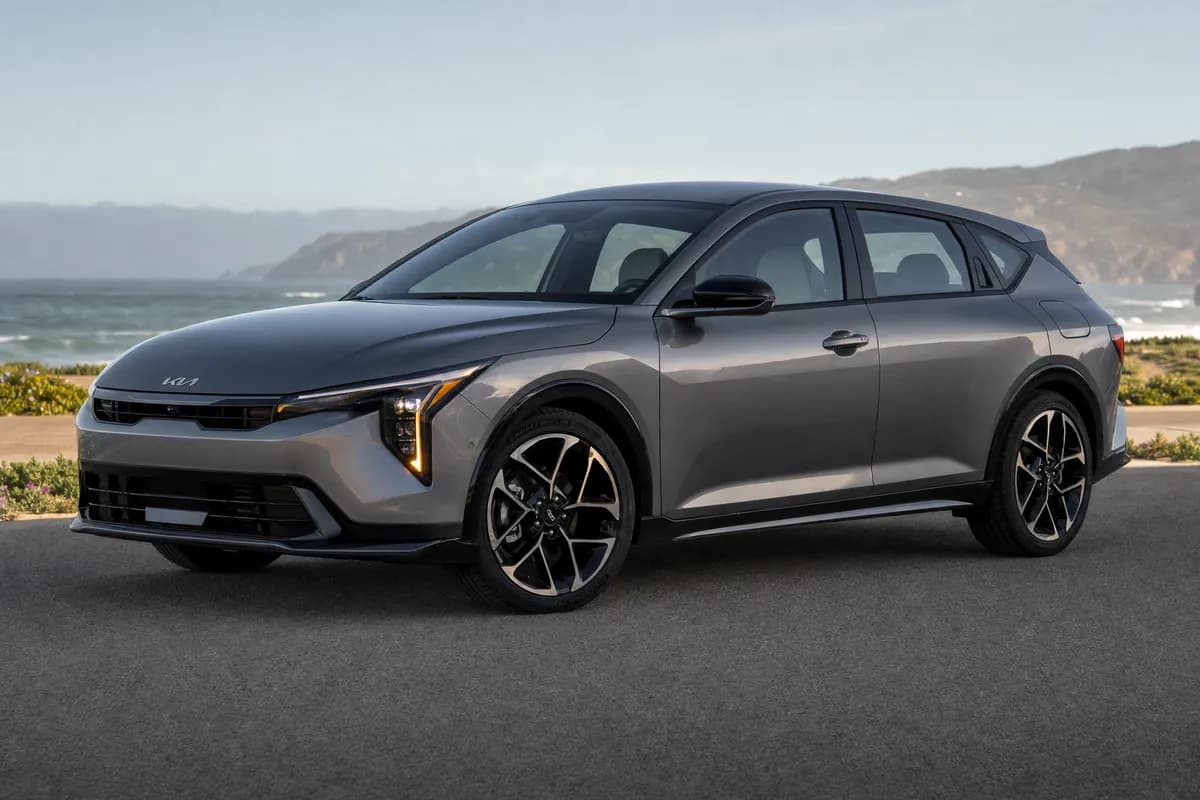
The new Kia K4 Hatchback aims at budget shoppers with surprising space and tech—can it take the fight to the Civic, Mazda3, and Corolla?
Cheap cars aren’t dead. They’ve just been hiding under a pile of bloated crossovers and monthly payments that look like rent. The 2026 Kia K4 Hatchback arrives at exactly the right moment, pitching style, space, and real equipment to buyers who’ve had enough of pretending a compact SUV is a smart financial decision.
A Compact Hatchback With Better Timing Than Most SUVs
This 2026 Kia K4 Hatchback review starts with the obvious: Kia knows the market better than some legacy brands still sleepwalking through lineup planning. Buyers want practicality, decent fuel economy, modern tech, and a price that doesn’t trigger heart palpitations. The K4 hatchback is aimed squarely at that gap.
Think of it as the more useful sibling to the K4 sedan. It keeps the same basic front-drive compact-car formula, then adds the one thing Americans always claim they want before buying a crossover anyway: cargo flexibility. Kia says the hatch offers substantially more usable luggage space behind the rear seats than the sedan, with the low load floor and wide opening making it genuinely useful rather than just brochure-friendly.
That matters because the rivals are not exactly pushovers. The Honda Civic Hatchback remains the class benchmark for all-around excellence, the Mazda3 Hatchback still wins on interior richness and road feel, and the Toyota Corolla Hatchback leans on Toyota’s usual reputation for thrift and durability. Kia isn’t trying to out-purist the Mazda or out-Honda the Honda. It’s trying to win the value war with a sharper blade.
Design, Cabin Space, and Why the Hatchback Body Matters
The K4 hatchback looks better than many budget cars have any right to. It borrows the sedan’s angular surfacing and wide stance, but the shorter rear overhang and swept roofline make it look tighter and less awkward. Some hatchbacks still resemble appliances with alloy wheels. This one actually has presence.
Inside, Kia leans hard into horizontal lines and screen-heavy presentation. The dashboard design mirrors the sedan, with a modern layout that makes a Corolla Hatchback look conservative and a Mazda3 feel slightly old-school in interface design. Material quality is solid for the class, if not quite as rich as the Mazda’s best trims.
Rear-seat room is one of the K4’s strongest cards. The underlying K4 platform already prioritizes cabin packaging, and the hatchback keeps that advantage. Adults fit in the back with less complaint than in the Toyota, and cargo access is vastly better than what you get from a conventional compact sedan trunk.
- Honda Civic Hatchback: still excellent for overall packaging, but often pricier once equipped the way most people want.
- Mazda3 Hatchback: premium vibe, tighter rear visibility, and less rear-seat friendliness.
- Toyota Corolla Hatchback: tidy and efficient, but smaller-feeling in the back and cargo area.
- 2026 Kia K4 Hatchback: likely the sweet spot for buyers who want maximum usefulness per dollar.
That’s the heart of the Kia K4 Hatchback real world value story. You’re not buying this car to post Nürburgring opinions online. You’re buying it because your life involves bags, people, commutes, and parking spaces that punish oversized vehicles.
On the Road: Comfortable First, Competent Second, Fun If You Choose the Right Engine
The Kia K4 Hatchback first drive experience is reassuring rather than revelatory. On standard powertrains, it behaves like a well-sorted modern compact should: stable at highway speed, easy to place in traffic, and calm over rough pavement. Kia has clearly tuned it for the broad center of the market, not for the handful of forum diehards who think every hatchback should corner like a warm hatch.
The base engine is expected to mirror the sedan’s 2.0-liter naturally aspirated four-cylinder, making 147 horsepower and 132 lb-ft of torque. That’s adequate, not exciting. In plain English, it will get the job done with less fuss than flair, much like the Corolla Hatchback’s 169-hp 2.0-liter but without pretending to be sporty.
The more interesting option is the available turbocharged 1.6-liter four-cylinder, rated at 190 horsepower and 195 lb-ft in the K4 sedan. If that engine carries over unchanged, it gives the Kia a meaningful shove the Toyota can’t match and puts it right in the Civic Hatchback’s orbit, depending on trim. More importantly, it turns freeway merges and two-lane passes from calculated events into casual ones.
Steering feel is accurate but not chatty. Body control is tidy enough, and the ride quality is one of the car’s better traits, especially on broken urban pavement where oversized wheels often ruin budget compacts. Kia has resisted the industry’s bad habit of making affordable cars feel artificially “sporty” by simply making them too stiff.
If you want the sharpest driver’s car here, buy the Mazda3. If you want the most polished all-rounder, the Civic is still the one to beat. But if you want a hatchback that feels grown-up, easy, and more refined than its price suggests, the K4 is very much in the fight for best budget hatchback 2026.
Tech, Features, and the Stuff Buyers Actually Notice Every Day
Kia has become ruthlessly good at one thing: making mainstream rivals look stingy. Expect the K4 hatchback to carry over the sedan’s wide digital display setup, with available dual 12.3-inch screens and a clean, contemporary interface. In a segment where buyers stare at the dashboard every day, that matters more than a tenth of a second in a 0-60 run.
Wireless Apple CarPlay and Android Auto, multiple USB-C ports, available wireless charging, and a healthy suite of driver-assistance tech should all be part of the package. Kia’s infotainment systems are generally quicker and less annoying than Toyota’s, less fussy than Mazda’s rotary-controller setup for some users, and competitive with Honda’s straightforward interface.
Safety tech is also likely to be a selling point. Kia’s latest compact offerings typically include forward collision avoidance, lane-keeping assist, adaptive cruise control on higher trims, and blind-spot monitoring availability that doesn’t require climbing into absurd price territory. That’s not glamorous, but it is exactly how value is built in the real world.
- Expected base power: 2.0-liter I-4, 147 hp, 132 lb-ft
- Expected upgrade engine: turbo 1.6-liter I-4, 190 hp, 195 lb-ft
- Likely transmission mix: CVT with base engine, automatic for turbo models
- Key rivals: Honda Civic Hatchback, Mazda3 Hatchback, Toyota Corolla Hatchback
- Core selling points: cargo flexibility, rear-seat space, strong tech value, likely aggressive pricing
And yes, pricing will decide how hard this car lands. Kia hasn’t earned a win merely by showing up with sharp styling and big screens. The K4 hatchback needs to undercut a similarly useful Civic Hatchback by enough to matter, while offering more substance than the smaller-feeling Corolla Hatch.
2026 Kia K4 vs Honda Civic Hatchback, Mazda3, and Toyota Corolla Hatchback
Here’s the blunt version of the 2026 Kia K4 vs Honda Civic Hatchback question: the Honda is still likely the better all-around car, but the Kia may be the smarter buy. The Civic drives with more polish, has an outstanding cabin layout, and carries years of hard-earned goodwill. It also tends to get expensive fast once you move beyond the entry trims.
Against the Mazda3, the K4 hatchback takes the practical route. The Mazda still feels more premium and more engaging on a good road, but it gives up interior openness and some day-to-day usability. If your priorities are aesthetics and steering feel, get the Mazda. If your priorities are passengers, cargo, and equipment per dollar, the Kia makes a stronger case.
The Corolla Hatchback is the easiest target here. It’s a fine car, but a conservative one, and it feels smaller and less ambitious. Toyota’s reliability halo is real, yet the Kia appears set to offer a roomier cabin, bolder design, and a more convincing tech story without asking buyers to settle for penalty-box vibes.
Buy the Civic if you want the class benchmark. Buy the Mazda3 if you still care how a compact car feels in your hands. Buy the Corolla Hatchback if you want to make the safest possible choice. Buy the K4 Hatchback if you want the most metal, space, and tech for the money without sliding into crossover bloat.
Verdict: One of the Smartest New Cars for Normal People
The 2026 Kia K4 Hatchback review verdict is simple: this is the kind of car the market needs more of and the industry keeps pretending buyers don’t want. It’s stylish without being silly, practical without being dull, and loaded with the sort of features people actually use. Best of all, it doesn’t force you into an SUV just to get decent cargo space and back-seat room.
If Kia prices it aggressively, the K4 hatchback could become the default recommendation for buyers who’ve been priced out of compact crossovers and don’t want to compromise with a stripped sedan. The Civic Hatchback may remain the gold standard, but the Kia looks poised to be the sharper value play. In a market starved for honest, affordable usefulness, that’s not a small win. That’s how you build a budget hero.
Affiliate disclosure: This article contains affiliate links. RevvedUpCars may earn a small commission on qualifying purchases at no extra cost to you.