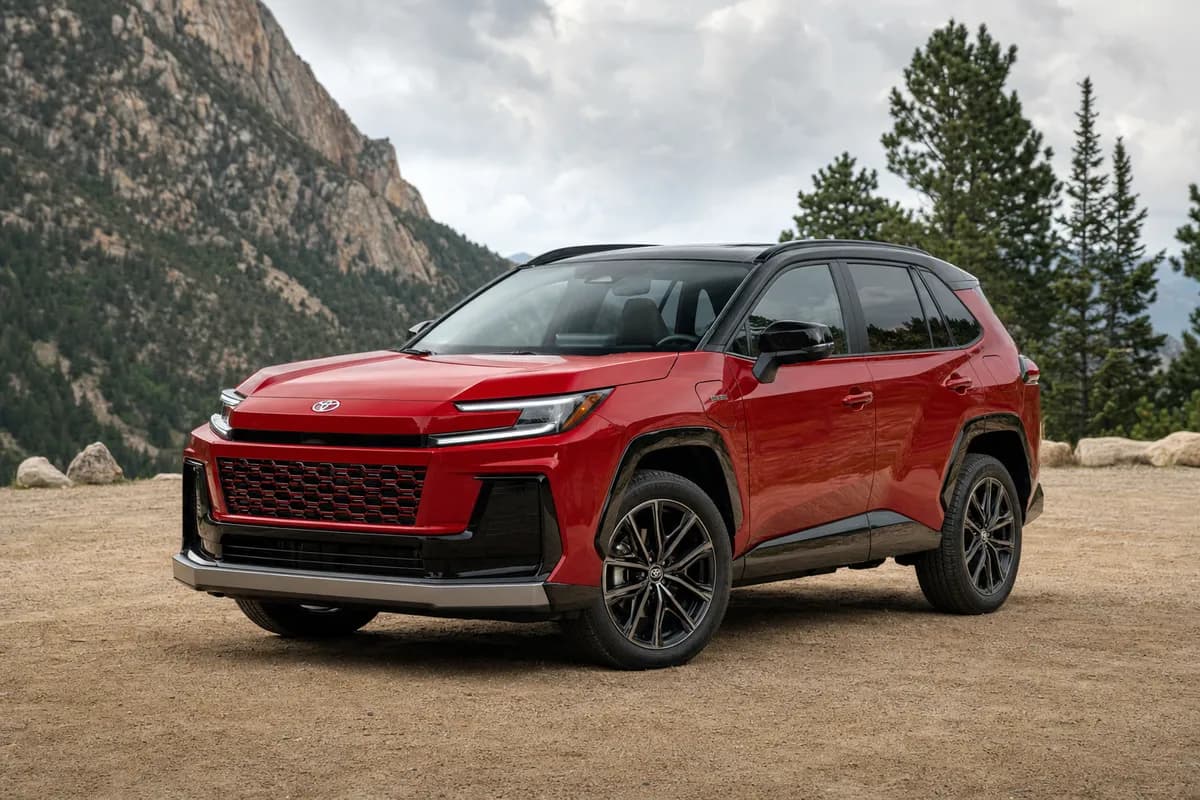
Toyota’s refreshed RAV4 PHEV targets true weekday EV driving with better power and smarter packaging, aiming to top the Outlander, Tucson, and Sportage.
The old RAV4 Prime was already the plug-in hybrid that made most rivals look half-baked. The redesigned 2026 Toyota RAV4 PHEV arrives with more power, smarter packaging, and the same mission: let families do weekday EV driving without suffering through weird compromises. The question is whether it still rules a class that finally has credible alternatives.
A quicker, more polished RAV4 PHEV — and that matters
The headline numbers are strong. The 2026 Toyota RAV4 PHEV packs a 2.5-liter four-cylinder, dual electric motors, standard electronic all-wheel drive, and a larger battery than before, with total system output landing at 320 horsepower. Toyota says 0-60 mph takes about 5.7 seconds, which is properly quick for a compact family SUV and still enough to embarrass plenty of supposedly sporty crossovers.
More important than the launch-control brag is how the thing moves in normal life. In EV mode, the power delivery is smoother and less abrupt than the old model, with better throttle calibration at low speeds and cleaner transitions when the gas engine wakes up. That matters more than a tenth here or there, because plug-in hybrids live or die by how seamlessly they blend two personalities.
Ride quality is also more mature. The new RAV4 PHEV feels better damped over patchy pavement than the outgoing car, and road noise is reduced at suburban speeds where owners will spend most of their time. It still does not feel luxurious, but it no longer gives off that slightly brittle, appliance-on-stiff-sneakers vibe some Toyotas have been guilty of.
Steering remains accurate rather than fun, and that is perfectly fine. Nobody is cross-shopping a RAV4 PHEV with a GR Corolla unless they have suffered a recent head injury. What buyers want is confidence, easy visibility, and a chassis that does not fall apart when hustled onto a wet on-ramp, and this one delivers all three.
Electric range, charging, and real commuting usefulness
This is where the 2026 Toyota RAV4 PHEV first drive gets serious, because electric-only usability is the whole point. Toyota targets about 50 miles of EV range, a useful bump over the old RAV4 Prime’s 42 miles. That puts the new RAV4 PHEV right at the sharp end of the segment for drivers who want to commute all week on electricity and burn gasoline only on longer weekend runs.
That number matters because many plug-in hybrids still offer just enough electric range to feel symbolic. Fifty miles means a lot of owners can do school drop-offs, errands, and a round-trip commute without waking the engine. In the real world, that is the difference between a PHEV that changes your fuel bill and one that merely flatters your environmental conscience.
Charging remains straightforward rather than groundbreaking. On a Level 2 home charger, expect a full refill in roughly 2.5 to 3 hours, depending on onboard charging spec and battery size. Toyota still does not chase the gimmick parade here, but for a family SUV, quick overnight or midday top-ups matter more than splashy DC fast-charging claims that few PHEV owners actually use.
Fuel economy in hybrid mode should remain a core RAV4 strength. Official EPA figures were still pending at drive time, but Toyota is targeting efficiency close to or better than the outgoing model once the battery is depleted. That is crucial, because a plug-in hybrid becomes a bad joke if it turns into a thirsty lump after the electrons are gone.
- 2026 Toyota RAV4 PHEV: about 50 miles EV range, 320 hp, standard AWD
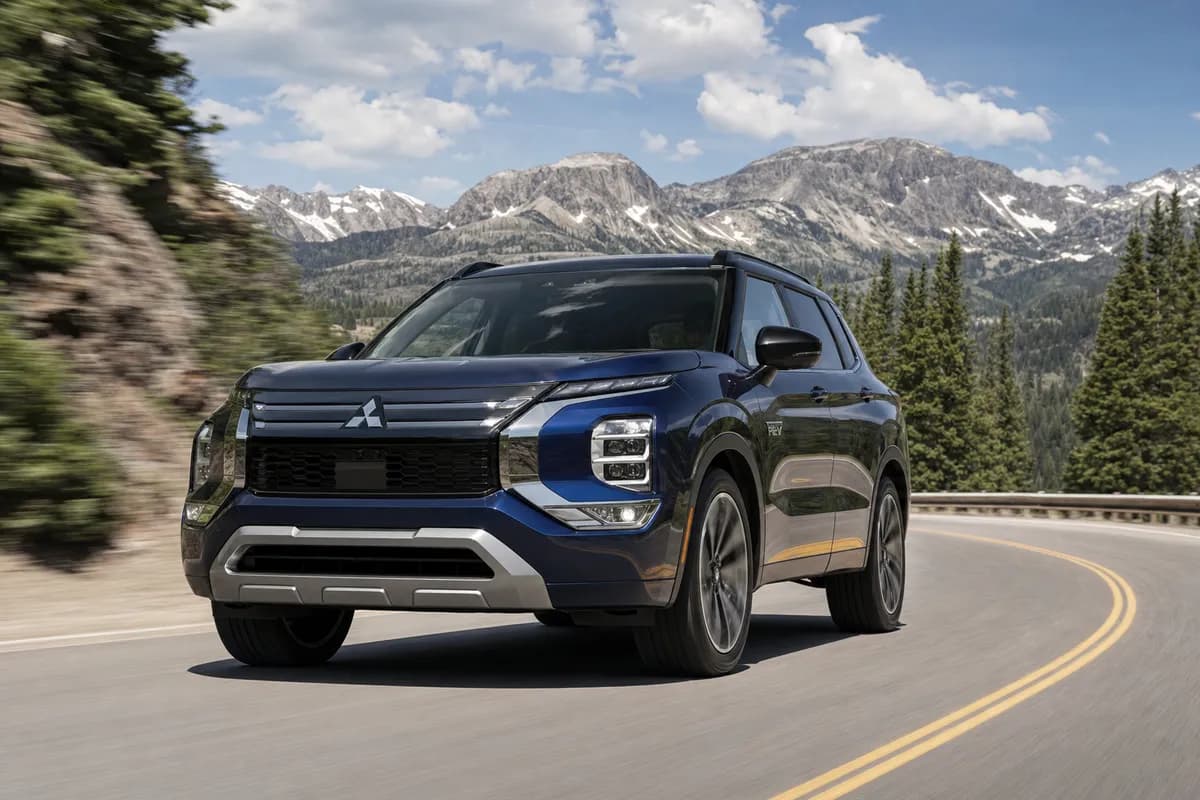
- Mitsubishi Outlander PHEV: 38 miles EV range, 248 hp, standard AWD
- Hyundai Tucson Plug-In Hybrid: 33 miles EV range, 261 hp, standard AWD
- Kia Sportage PHEV: 34 miles EV range, 261 hp, standard AWD
On electric range alone, the Toyota looks like the class benchmark. The Mitsubishi has a bigger-cabin feel and a more premium interior in upper trims, but its EV range deficit is not trivial. The Hyundai and Kia twins remain excellent all-rounders, yet both lag the Toyota badly if your buying decision hinges on maximizing gasoline-free miles.
Cabin practicality and tech: Toyota finally stops coasting
The outgoing RAV4 sold on reputation and efficiency, not interior charm. This new one is better. Material quality is improved, the center console is more thoughtfully shaped, and Toyota has finally embraced a cleaner infotainment layout with faster responses and fewer moments that make you want to jab the screen with a car key.
Rear-seat room remains competitive, and the cargo area still makes square-backed family sense. That is a bigger deal than it sounds, because some electrified crossovers sacrifice usable packaging in the name of style or battery placement. The RAV4 PHEV keeps the boxy, useful shape buyers actually need.
Toyota also deserves credit for keeping controls intuitive. There are physical switchgear pieces where they matter, the driving position is easy to dial in, and visibility is better than in some coupe-ish crossovers that seem designed by people hostile to parking lots. You buy a RAV4 because life is chaotic enough already.
Safety tech is comprehensive, with the latest Toyota driver-assistance suite bringing adaptive cruise, lane-centering, blind-spot monitoring, rear cross-traffic alert, and the usual alphabet soup. As ever, Toyota’s systems are best when left to assist rather than dominate. They are generally less fussy than some Korean rivals, which occasionally behave like overcaffeinated hall monitors.
RAV4 PHEV vs Outlander PHEV, Tucson Plug-In Hybrid, and Sportage PHEV
The RAV4 PHEV vs Outlander PHEV fight is the interesting one because Mitsubishi came at this segment with real ambition. The Outlander PHEV feels substantial, has a genuinely handsome interior in higher trims, and offers a third-row seat in theory. In practice, that third row is a punishment bench, and the Mitsubishi gives up too much EV range and straight-line performance to the Toyota to claim victory.
The Hyundai Tucson Plug-In Hybrid and Kia Sportage PHEV remain the value-savvy alternatives. Both offer excellent packaging, strong feature content, and polished road manners, and both often feel more upscale inside than Toyota’s historically conservative cabins. But they are down roughly 16 to 17 miles in EV range, and that gap is not academic if you charge regularly and want to avoid fuel stops.
If you are comparing these four on family usability, here is the pecking order:
- Best EV commuting: Toyota RAV4 PHEV
- Best cabin ambiance: Mitsubishi Outlander PHEV
- Best feature-per-dollar play: Kia Sportage PHEV
- Best all-round design balance: Hyundai Tucson Plug-In Hybrid
Where does that leave the Toyota? On top, mostly because it attacks the brief with less compromise. The others all do at least one thing very well, but the RAV4 PHEV is the one that most convincingly behaves like an EV for short trips and a normal hybrid for everything else.
Price, value, and the final verdict
Pricing had not fully settled at the time of this first drive, but expect the 2026 RAV4 PHEV to land in the mid-$40,000 range before options, with well-equipped trims climbing past $50,000. That is not cheap, and Toyota’s dealers have not always been shy about adding a little entrepreneurial nonsense on hot electrified models. If markups return, value gets a lot murkier.
Still, judged at sane sticker prices, this looks like one of the smartest mainstream electrified SUVs on sale. The formula is brutally effective: meaningful electric range, quick acceleration, standard AWD, solid cargo space, easy ergonomics, and Toyota’s long-earned reputation for durability. That is not romantic, but it is exactly why these things will be everywhere.
The 2026 RAV4 PHEV does not reinvent the plug-in hybrid SUV. It just does the job better than most rivals, with fewer compromises and more electric usefulness than anything else in the mainstream class.
So, is it the best plug-in hybrid SUV 2026 contenders have to beat? Right now, yes. The Outlander PHEV is attractive and more premium-feeling, while the Tucson and Sportage PHEVs remain easier to recommend for buyers who prioritize features over max EV range. But if you want the best blend of speed, efficiency, daily usability, and real-world value, the Toyota RAV4 plug-in hybrid review ends the same way most of its rivals probably feared: the Toyota is still the one to beat.
Affiliate disclosure: This article contains affiliate links. RevvedUpCars may earn a small commission on qualifying purchases at no extra cost to you.