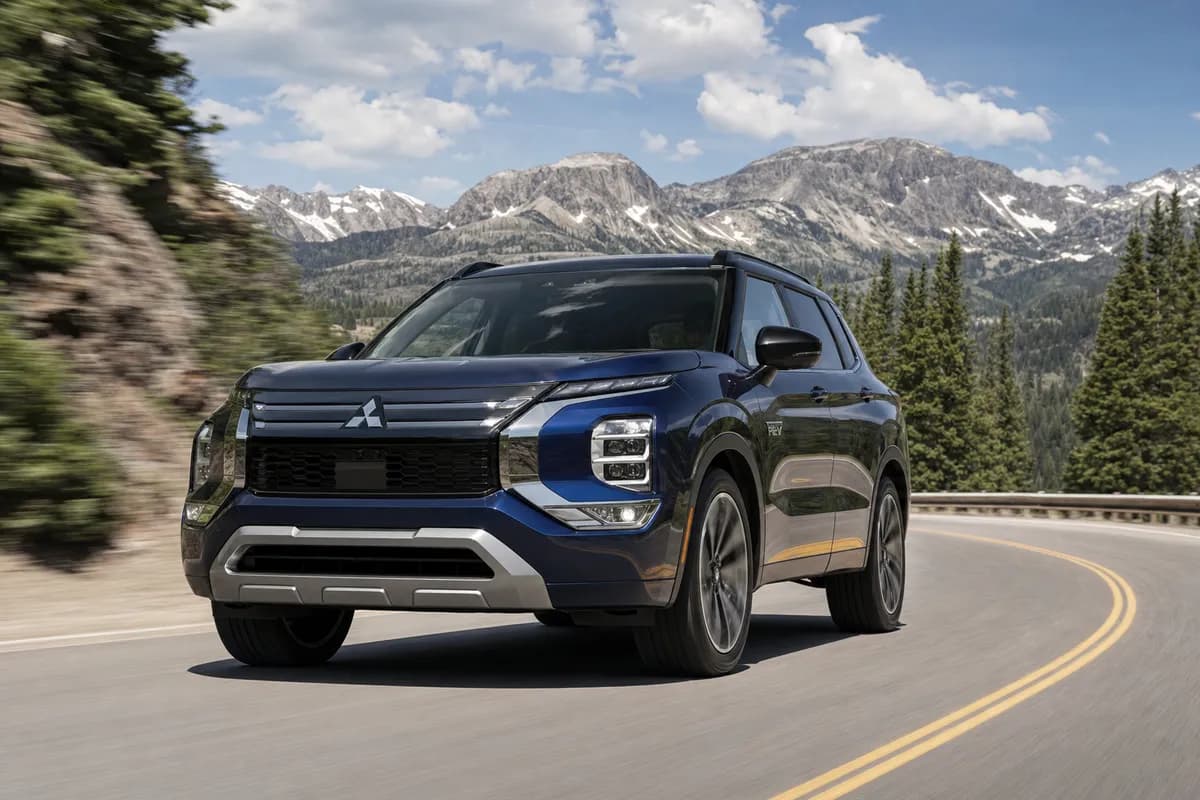
The 2026 Mitsubishi Outlander PHEV is updated, but does it finally deliver real-world value and ride comfort against the RAV4 Prime and rivals?
Mitsubishi’s Outlander PHEV has always looked smart on paper. In the real world, it too often felt like a well-equipped answer to a question the Toyota RAV4 Prime had already answered better. The updated 2026 model arrives with sharper priorities: more polish, more confidence, and a serious shot at becoming the best family PHEV SUV for buyers who care about comfort as much as electric range.
What’s New for the 2026 Mitsubishi Outlander PHEV?
The basic recipe stays familiar. The 2026 Mitsubishi Outlander PHEV remains a compact three-row-ish family SUV with a naturally aspirated 2.4-liter four-cylinder, dual electric motors, standard all-wheel drive, and a battery pack large enough to handle real daily commuting without firing the engine every five minutes.
For 2026, Mitsubishi focuses on the weak spots that kept the old car from truly troubling the class leaders. The updates center on chassis tuning, cabin refinement, software calibration, and general drivability. That matters, because the old Outlander PHEV was competent but occasionally clumsy, with a ride that could feel busy and a powertrain that wasn’t always seamless when the gas engine joined the party.
On first drive, the revised calibration is obvious. Low-speed transitions between electric and hybrid operation are smoother, throttle response is less rubber-band-ish, and the steering feels less like it was tuned by committee. No, this isn’t suddenly a Mazda CX-70 PHEV in the corners, but it no longer feels like it’s apologizing for its own mass.
- Powertrain: 2.4-liter four-cylinder plus dual motors, standard AWD
- Battery: usable EV range remains a core selling point, around the high-30-mile mark depending on trim and test cycle
- Charging: Level 2 capability remains useful for overnight home charging, and Mitsubishi still offers DC fast-charging via CHAdeMO in some markets
- Focus for 2026: ride quality, refinement, and smoother real-world operation
Range, Performance, and the Outlander PHEV vs RAV4 Prime
If you’re shopping this class, you are absolutely comparing this thing with the Toyota RAV4 Prime. You should be. The Toyota has been the benchmark because it mixes about 42 miles of EPA electric range with genuinely quick acceleration, posting 0-60 mph runs in the low six-second bracket. That is hot-hatch pace in a practical family crossover, which remains faintly ridiculous and deeply effective.
The 2026 Mitsubishi Outlander PHEV does not beat the Toyota on outright shove. Expect total system output in the same basic 248-hp neighborhood as before, which is respectable but not thrilling. In instrumented terms, the Mitsubishi is typically around a second slower to 60 mph than the RAV4 Prime, and you feel that deficit most during highway merges and uphill passing.
But straight-line performance is only part of the story. Mitsubishi’s trick has always been the way it uses its twin-motor setup to deliver clean, predictable low-speed electric driving. Around town, the Outlander often feels more EV-like than some rivals, with smooth initial response and less of the frantic engine flare that plagues lesser hybrids.
Range is closer than the old hierarchy suggests. The RAV4 Prime still holds the headline advantage with its EPA-rated 42 miles of electric range, while the Outlander PHEV sits just behind at roughly 38 miles in current form. That gap matters on a spec sheet, but in real suburban use it is the difference between getting home with a little charge left and getting home with slightly less charge left. It is not the difference between useful and useless.
- Toyota RAV4 Prime: 302 hp, 42 miles EPA EV range, quickest in class
- Mitsubishi Outlander PHEV: 248 hp, roughly 38 miles EV range, smoother and more relaxed than before
- Mazda CX-70 PHEV: 323 hp, about 26 miles EV range, strong punch but shorter electric leash
- Kia Sorento PHEV: 261 hp, about 32 miles EV range, larger footprint and genuine third-row utility
Ride Quality, Cabin Comfort, and Family Use
This is where the 2026 update makes its strongest case. The old Outlander PHEV was decent, but on broken pavement it could feel fidgety, especially on larger wheels. The revised suspension tuning settles the body more cleanly over sharp edges and reduces the secondary motions that used to make it feel busier than a family SUV should.
Against the RAV4 Prime, the Mitsubishi now has a real comfort argument. The Toyota is efficient and brutally effective, but it can still ride with the sort of clipped firmness that reminds you Toyota tuned it for broad competence, not indulgence. The Outlander is calmer and more grown-up over rough city streets, and for parents hauling kids, backpacks, and low-grade domestic chaos, that matters more than a heroic 0-60 sprint.
The Mazda CX-70 PHEV is still the driver’s choice if you value steering precision and a premium-cabin vibe. It feels richer inside and more rear-drive in its responses, but it is also thirstier when the battery is depleted and far less convincing if your daily mission depends on maximizing electric miles. The Kia Sorento PHEV, meanwhile, offers the most useful packaging if you truly need a third row, though that third row remains best for children or people you mildly dislike.
Mitsubishi’s cabin remains one of the pleasant surprises here. Material quality is solid, front-seat comfort is good, and the overall design no longer feels budget-bin. The tiny third row is still a legal fiction more than a transportation solution, but folded flat, it gives the Outlander a flexibility edge over two-row rivals.
Where the Outlander Still Comes Up Short
Not every old complaint has vanished. The gas engine can still sound coarse when pushed hard, and under full throttle the powertrain is more dutiful than delightful. Toyota’s system feels stronger, and Mazda’s feels more premium.
The infotainment and interface story is improved but not class-leading. Some rivals offer slicker graphics, faster menu logic, and more intuitive control layouts. Mitsubishi also continues to lean heavily on value and warranty reassurance, because it still cannot win a pure badge battle against Toyota or Mazda.
Real-World Value: The Smart Buy or the Sensible Compromise?
Value is where the 2026 Mitsubishi Outlander PHEV review gets interesting. Mitsubishi has long understood that this vehicle does not need to dominate every category. It needs to give families enough EV range, standard AWD, a nicely finished cabin, and a generous equipment list at a price that does not trigger marital negotiations.
Assuming pricing stays in line with the outgoing model, the Outlander PHEV should undercut or closely match key rivals while offering more features than some base competitors. That matters in a segment where option packages can turn a “practical” plug-in hybrid into a $50,000 lesson in self-delusion. A strong warranty also remains part of Mitsubishi’s pitch, giving budget-conscious buyers a little more peace of mind.
For buyers cross-shopping on monthly payment rather than internet bragging rights, the Mitsubishi makes a lot of sense. The RAV4 Prime is still the numbers king, but dealer markups and limited availability have often made it more theoretical than attainable. The Outlander PHEV tends to be easier to find, easier to buy, and easier to justify.
- Choose the Outlander PHEV if: comfort, cabin quiet, standard AWD, and strong feature content matter most
- Choose the RAV4 Prime if: you want the quickest, most efficient all-rounder and can actually get one at a sane price
- Choose the Mazda CX-70 PHEV if: you prioritize style, road manners, and upscale ambiance over EV range
- Choose the Kia Sorento PHEV if: you need more space and occasional real third-row use
Verdict: Can the 2026 Outlander PHEV Beat the Class Leaders?
The blunt answer is not quite. The 2026 Mitsubishi Outlander PHEV still does not beat the Toyota RAV4 Prime on range, acceleration, or sheer drivetrain brilliance. If your decision is based on peak efficiency and best-in-class speed, the Toyota remains the hammer in this toolbox.
But this Mitsubishi no longer feels like the consolation prize. The updated ride quality is better, the overall refinement is better, and its family-friendly character is finally coherent enough to make a persuasive case. In the real world, where people care about comfort, equipment, and whether they can actually buy the thing without a scavenger hunt, the Outlander PHEV is far more dangerous to its rivals than before.
That makes this Mitsubishi Outlander first drive a positive one. It is not the class champion, but it may be the class’s smartest compromise. And in the crowded plug-in hybrid SUV 2026 field, a smart compromise with genuine daily usefulness is often exactly what wins driveways.
Final call: The 2026 Outlander PHEV is not the outright segment king, but it is now one of the easiest plug-in family SUVs to recommend. If you want a polished, practical, comfortable alternative in the Outlander PHEV vs RAV4 Prime fight, Mitsubishi has finally shown up with more than good intentions.
Affiliate disclosure: This article contains affiliate links. RevvedUpCars may earn a small commission on qualifying purchases at no extra cost to you.