Malaysia’s July 2026 EV milestone shows BEVs beating hybrids. Here’s what it means for 2027 BYD Atto 3, Tesla Model 3, Proton eMas 7 and buyers.
Malaysia’s EV market has crossed a line that matters. In July 2026, battery-electric vehicle sales moved ahead of hybrids for the month, marking the clearest sign yet that the country’s plug-in shift is no longer a niche story. For buyers, brands, and charging operators, that changes the conversation heading into 2027.
Malaysia EV sales in July 2026 mark a real turning point
The headline is simple: Malaysia EV sales July 2026 beat hybrid sales for the month. That does not mean EVs now dominate the full market, but it does show that fully electric cars are starting to win against the technology many buyers once saw as the safer middle ground.
That matters because hybrids were supposed to be the bridge. In Malaysia, they offered lower fuel use without the range anxiety, charging questions, or upfront cost shock that came with early EV adoption. If EVs are now outselling hybrids in a monthly snapshot, buyers are showing they are more comfortable with the trade-offs than they were even a year ago.
Several forces are pushing that shift at once:
- More choices at key price points, especially from Chinese brands and local players.
- Better public charging coverage on major urban corridors and highways.
- Stronger awareness of total running costs, with lower energy and maintenance bills helping EVs make sense beyond early adopters.
- Higher visibility of EVs on the road, which reduces the novelty factor and builds buyer confidence.
Malaysia is not suddenly becoming Norway. Internal-combustion cars still carry the market by volume. But the July result suggests EV adoption has moved from curiosity to credible mainstream contender, especially in the compact SUV and executive sedan classes.
What this means for the 2027 BYD Atto 3 Malaysia and Tesla Model 3 Malaysia
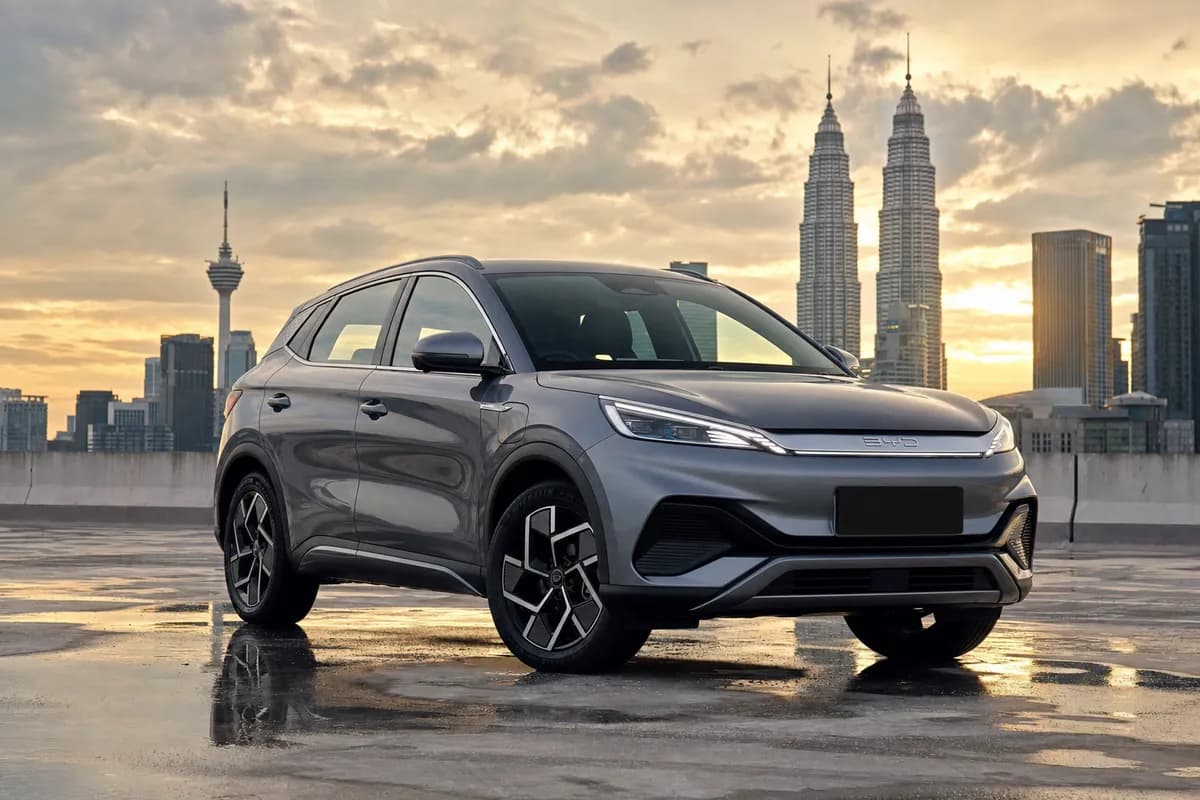
The first clear implication is demand support for established EV nameplates. The 2027 BYD Atto 3 Malaysia outlook looks stronger if July’s sales crossover proves repeatable in the second half of 2026. BYD already benefits from brand familiarity, dealer presence, and a model that sits in the heart of the family EV market.
The Atto 3’s appeal has always been straightforward. It is a practical compact crossover with enough range, enough cabin space, and fewer brand barriers than early EV entrants faced. In a market where EVs are now outselling hybrids for at least a month, that formula becomes even more powerful.
Expect the 2027 Atto 3 story in Malaysia to revolve around three questions:
- Will BYD keep pricing aggressive as competition grows?
- Will local assembly or deeper regional sourcing improve cost stability?
- Can software, charging speed, and aftersales support keep pace with newer rivals?
Tesla Model 3 Malaysia demand could also benefit, though the effect is different. Tesla is less about first-time budget-conscious buyers and more about aspirational mainstream EV shoppers who now feel the market has matured enough to make the leap. The Model 3 remains one of the cleanest benchmark products in the segment, especially for buyers focused on efficiency, performance, and the Tesla ecosystem.
Still, Tesla’s challenge in Malaysia is not awareness. It is value relative to increasingly capable Chinese rivals, plus how much buyers care about service access, insurance costs, and practical ownership questions. A rising EV market lifts Tesla, but it also makes the comparison shopping tougher.
In short, both BYD and Tesla stand to gain from the July inflection point. BYD is better placed to capture broad-volume family demand, while Tesla remains a strong pull for buyers who want a more premium EV identity.
Why Proton eMas 7 and Perodua EV plans matter more now
The biggest long-term implication may be for local brands. If EVs can overtake hybrids even temporarily, then the case for national players to accelerate electric plans gets stronger. That is where the Proton eMas 7 and Perodua EV plans become central to the next phase of the market.
Proton’s eMas 7 is important because it helps normalize EV ownership through a familiar domestic badge. For many Malaysians, trust in aftersales support, parts access, and nationwide dealer networks still matters as much as range figures or charging times. A local-brand EV with visible backing can do more to reassure undecided buyers than another imported launch headline.
The eMas 7 also matters politically and industrially. It ties EV demand to local manufacturing ambition, supplier development, and the country’s broader aim to capture more value from the clean-mobility transition. If volumes build, the model becomes more than a product. It becomes evidence that Malaysia can participate in EV production, not just consumption.
Perodua’s incoming EV plans may be even more consequential for the mass market. Perodua has unmatched reach among value-focused buyers, and its eventual EV strategy will be watched closely because it could determine how quickly electric mobility moves below the upper-middle price bands.
Key questions around Perodua’s EV approach include:
- Price discipline: Can Perodua deliver an EV that stays true to its affordability brand promise?
- Urban practicality: Will range and battery size be optimized for daily commuting rather than headline numbers?
- Scale: Can local sourcing and production help create meaningful volume rather than a symbolic entry?
If Malaysia’s EV sales momentum continues, Perodua may face more pressure to move from concept-stage signaling to a clearer product roadmap. Once buyers see EVs beating hybrids in the monthly sales race, waiting too long becomes a strategic risk.
Charging expansion is now a market requirement, not a side issue
Sales momentum only holds if charging keeps up. That is the hard reality behind July’s numbers. Once EV adoption starts moving into the mainstream, charger reliability, queue times, payment simplicity, and apartment access become more important than raw charger-count headlines.
Malaysia has made visible progress on charging expansion, especially across Klang Valley and on key intercity routes. DC fast-charging access has improved, and more retail locations now treat charging as a customer draw rather than a novelty feature. That said, the network still needs to deepen well beyond flagship sites.
The next phase of charging expansion should focus on practical gaps:
- Condominium and apartment charging, where many urban buyers still face the biggest ownership barrier.
- Redundant highway fast charging, so a single occupied or offline unit does not derail long-distance travel.
- Simpler roaming and payment systems, reducing the need for multiple apps and accounts.
- Regional coverage outside major metros, so EV ownership feels viable beyond early-adopter zones.
This is also where local manufacturing ambitions and infrastructure policy intersect. Carmakers can sell more EVs only if charging becomes boring, predictable, and easy. The market does not need perfection. It needs enough confidence that the average buyer stops treating public charging as a gamble.
Should Malaysian buyers go electric now or wait for 2027?
For many buyers, the answer is now clearer than it was six months ago. If your daily driving is predictable, home charging is available, and the upfront numbers work, buying an EV in Malaysia now is increasingly rational rather than experimental. July 2026’s sales crossover reinforces that point.
But not every buyer should rush. Those living in apartments without charging access, regularly traveling through underserved routes, or shopping at the lowest end of the market may still be better served by waiting for the next wave of lower-cost EVs and better infrastructure.
Here is the practical split:
- Buy now if you can charge at home, drive mostly in urban areas, and are considering proven models such as the BYD Atto 3 or Tesla Model 3.
- Wait and watch if you want a more affordable local-brand option and are interested in how the Proton eMas 7 and Perodua EV plans evolve.
- Hold off if your ownership pattern depends heavily on public charging that is still inconsistent in your area.
The broader verdict is straightforward. Malaysia’s EV market overtaking hybrids in July 2026 does not settle the race, but it does mark a credible inflection point. It strengthens the case for the 2027 BYD Atto 3 Malaysia, supports continued interest in the Tesla Model 3 Malaysia, raises the stakes for the Proton eMas 7, and puts more pressure on Perodua EV plans to become concrete.
Most of all, it shows the market is maturing. The next winners will not just be the brands with the flashiest launches. They will be the ones that combine price, service, charging confidence, and local relevance at the exact moment Malaysian buyers decide electric is normal.
Affiliate disclosure: This article contains affiliate links. RevvedUpCars may earn a small commission on qualifying purchases at no extra cost to you.