A softer 2026 ZEV mandate in the UK could shift 2027 EV prices, affect hybrid timelines, and change what buyers from Ford to MG see next.
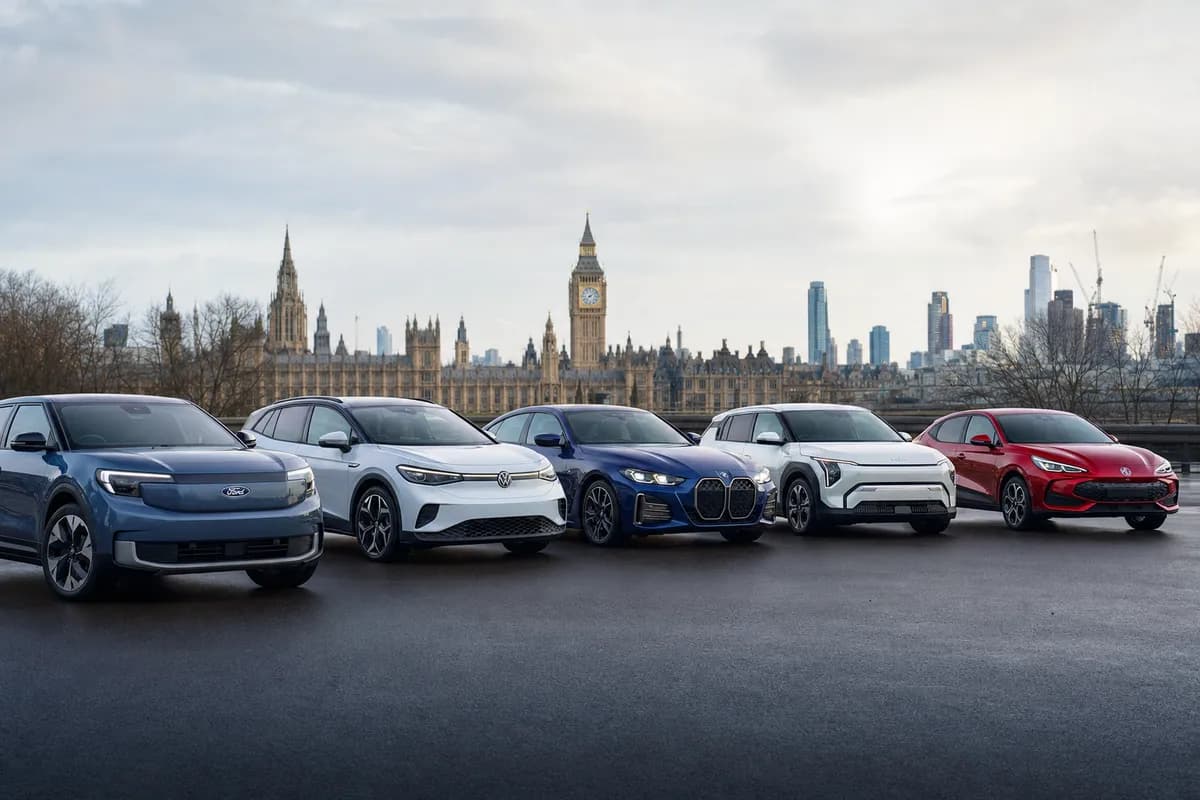
Britain’s electric-car rules are moving again, and the timing matters. If ministers weaken the 2026 phase of the UK’s ZEV mandate, the effect will not stay in Whitehall. It could show up quickly in 2027 showroom prices, hybrid launch plans, and the mix of Ford, Volkswagen, BMW, Kia, and MG models offered to UK buyers.
Why the UK ZEV mandate 2026 fight matters now
The UK’s Zero Emission Vehicle mandate forces carmakers to hit annual EV sales targets or buy credits, bank surpluses, or pay penalties. The system was designed to push supply into the market ahead of the 2030 ban on new pure petrol and diesel cars. For 2026, the compliance bar rises again, which is why pressure is building from brands, dealers, and some politicians who argue demand has not kept pace with regulation.
That backlash has turned the UK ZEV mandate 2026 into more than a policy debate. Carmakers make production, import, and pricing decisions far in advance. If they believe the government will soften the rules, they can change 2027 plans now by scaling back discount-heavy EV volumes, stretching combustion and hybrid lifecycles, and prioritising higher-margin models.
The core issue is simple. Under a strict mandate, brands may need to cut EV prices or stuff the market with registrations to hit UK EV sales targets. Under a softer one, they get more freedom to protect margins, which could mean fewer bargains for buyers who have become used to generous finance offers on electric cars.
What a softer mandate could do to 2027 electric car prices UK
If compliance pressure eases, the first likely change is pricing discipline. Through 2024 and 2025, several brands leaned on deposit contributions, cheap PCP rates, and tactical fleet deals to keep EV volumes moving. Those incentives were not always sustainable, especially as interest rates stayed elevated and residual-value risk remained a concern.
For 2027, that means 2027 electric car prices UK could hold firmer than many shoppers expect. List prices may not jump sharply, but the real transaction price matters more. If a weaker mandate reduces the need to chase EV volume at any cost, discounts could narrow even if sticker prices remain broadly flat.
That has a direct effect on monthly payments. A £3,000 to £5,000 swing in support on a mainstream EV can reshape affordability far more than a modest list-price tweak. Buyers waiting for another round of aggressive EV discounting in 2027 may find the market less generous if ministers give manufacturers more breathing room.
- Strict ZEV pressure: more EV incentives, lower effective prices, stronger fleet deals.
- Softer ZEV pressure: fewer tactical discounts, tighter supply, more margin protection.
- Buyer impact: less urgency for brands to undercut rivals on EV monthly payments.
The used market also matters here. If brands register fewer EVs into fleets and rental channels to satisfy compliance, the flow of nearly new stock into 2027 and 2028 weakens. That could support residual values, which is good for finance companies, but it also limits supply of cheaper second-hand EVs.
Hybrid launch plans 2027 could get a fresh push
The second big shift is product strategy. If EV targets become easier to meet, manufacturers gain more room to keep hybrids in the spotlight for longer. That could shape hybrid launch plans 2027, especially in segments where EV demand remains uneven, such as compact crossovers and family hatchbacks bought by private customers rather than fleets.
Britain’s post-2030 rules still allow new hybrids and plug-in hybrids until 2035 in some form, depending on the final framework. Any relaxation before then gives carmakers a stronger case for adding or extending hybrid variants instead of rushing every volume nameplate into full battery-electric form. For buyers, that means more choice, but also a slower shift to all-electric pricing parity.
Expect brands to focus on three kinds of hybrid moves:
- Lifecycle extensions: keep existing hybrid or plug-in hybrid versions on sale longer.
- New trims and powertrains: add hybrid options to core SUVs and family cars.
- UK-specific allocation: send more hybrid stock to Britain if EV pressure falls.
That matters because hybrids often deliver stronger margins than discounted EVs, particularly when battery costs stay volatile and charging concerns continue to limit private-buyer demand. A softer mandate does not kill EV launches. It does, however, make the business case for more cautious rollouts much easier to defend in boardrooms.
What Ford, Volkswagen, BMW, Kia, and MG UK buyers should watch
The clearest signs will come from how major brands adjust trim strategy, supply, and financing. For Ford Volkswagen BMW Kia MG UK shoppers, the key is not just which models arrive, but how hard each company needs to push electric volume.
Ford
Ford has been rebuilding its European EV range around the Explorer and Capri electric crossovers, with the Puma Gen-E set to broaden the offer. If the UK eases compliance pressure, Ford could avoid chasing low-margin EV registrations and give more room to hybrid and mild-hybrid products where available. That would make electric Fords less likely to be sold with the kind of heavy support buyers often expect during a transition period.
Volkswagen
Volkswagen has a broad EV lineup already, from the ID.3 and ID.4 to the ID.7, but it also has a huge installed base of combustion models in Britain. A softer target environment would let VW manage the pace of the switch more carefully, especially on private-retail channels. UK buyers should watch incentives on the ID.3 and ID.4 in particular, because those models are often used to balance volume and margin.
BMW
BMW has generally been better placed than some volume brands because it can absorb EV costs higher up the market, with models such as the i4, iX1, i5, and iX. Even so, weaker ZEV pressure could reduce any need to use aggressive offers on electric versions of key 3 Series- and X1-sized products. It may also strengthen BMW’s case for keeping plug-in hybrids prominent in the UK mix deeper into 2027.
Kia
Kia’s UK EV push has been one of the strongest in the mainstream market, led by the EV6, EV9, and newer EV3, with the EV5 expected to broaden its footprint. If the rules loosen, Kia still has every reason to stay ambitious, but it may not need to price so sharply to defend share. Buyers looking at EV3 versus Niro Hybrid-style alternatives should pay close attention to finance support rather than list price alone.
MG
MG has been a disruptive force because it has combined relatively low pricing with high EV visibility, notably through the MG4, ZS EV, and newer MG S5 EV. A softer mandate could benefit MG if rivals pull back from discounting and leave more room between mainstream and value-led offers. But MG buyers should also watch whether the brand doubles down on hybrids and conventional crossovers if the market gives it permission to diversify its UK sales mix.
- Most likely to hold EV prices firmer: Ford, Volkswagen, BMW.
- Most likely to keep pushing EV volume anyway: Kia, MG.
- Most exposed buyer metric: monthly finance cost, not headline list price.
The wider market effect: fewer distortions, but slower EV momentum
Supporters of a softer approach argue the current system can distort the market. They say carmakers are pushed into discounting EVs more heavily than demand justifies, while dealers struggle to explain why a subsidised electric model can sometimes cost less per month than a petrol equivalent. A reset, in that view, would create a healthier transition with less forced volume.
Critics see the opposite risk. They argue weaker UK EV sales targets would slow adoption, reduce model availability, and undermine investment in charging and supply chains. If manufacturers no longer need to fight as hard for EV share, consumers may face fewer offers, less urgency from retailers, and a market that stays more expensive for longer.
Both sides have a point. The UK new-car market still depends heavily on fleets, business users, and finance-driven retail demand. That means regulation has a direct influence on what gets promoted, what gets discounted, and what ends up visible in dealership forecourts.
Verdict: buyers may have a short window before 2027 gets less generous
If ministers water down the 2026 rules, expect the effect to show up quickly in 2027 planning. Carmakers will have less reason to flood the market with discounted EV stock and more freedom to stretch hybrid programmes. That would be good for margins and arguably for supply discipline, but not necessarily for bargain-hunting motorists.
For buyers, the practical takeaway is straightforward. If you are considering an EV from Ford, Volkswagen, BMW, Kia, or MG, the best pricing may come while compliance pressure is still high and brands are still eager to bank volume. If the mandate softens, 2027 could bring a broader mix of hybrids, steadier EV residuals, and fewer headline-grabbing electric deals.
A weaker ZEV mandate would not stop Britain’s shift to electric cars. It would likely slow the pressure that has been making EVs cheaper to buy right now.
Get the latest car reviews in your inbox
Join thousands of car enthusiasts. No spam, unsubscribe any time.



Comments
Leave a comment