Tesla hits 10 million vehicles, but EV growth is cooling. What this could change for 2027 Model Y pricing, Supercharger access, and robotaxi plans.
Tesla’s 10 million-vehicle production milestone is a major industrial achievement. It also arrives at an awkward moment: EV demand is still growing, but no longer at the pace Tesla’s valuation and product roadmap once appeared to assume.
For shoppers, the message is less about a commemorative factory photo than a practical question. Buy a Model 3 or Model Y now, or wait for the next pricing move, hardware update, or robotaxi-driven shift in Tesla’s priorities?
Ten Million Vehicles Is a Real Manufacturing Feat—But It Does Not Solve the Growth Question
Tesla 10 million vehicles is a milestone few automakers have reached with a single powertrain strategy. The company moved from low-volume Roadsters and early Model S sedans to a global production footprint built around the Model 3 and Model Y, with factories in California, Texas, Shanghai and Berlin.
The pace of that climb matters. Tesla produced its first million vehicles over roughly 17 years, then added successive millions far faster as Shanghai and the Model Y became central to its business. The Model Y, in particular, turned Tesla from a premium-EV disruptor into a high-volume global manufacturer.
Yet production volume and sales momentum are no longer interchangeable. Tesla EV sales 2026 are being judged against a more competitive market, higher interest rates in several regions, weaker incentive support in some countries, and a lineup that is aging in key segments.
- More competition: Legacy manufacturers and Chinese EV brands now offer credible alternatives at more price points.
- Product-cycle pressure: The refreshed Model Y has helped, but it cannot carry every market alone.
- Pricing sensitivity: Buyers increasingly compare monthly payments, insurance costs and charging access—not just range and acceleration.
- Execution risk: Tesla’s autonomy promises remain central to its valuation, but robotaxi deployment is harder than launching a new vehicle trim.
The milestone therefore has two meanings. It validates Tesla’s manufacturing scale, while also raising the standard for what comes next: sustained volume growth, healthier margins, and products that can compete without constant price cuts.
What a 2027 Tesla Model Y Could Need to Deliver
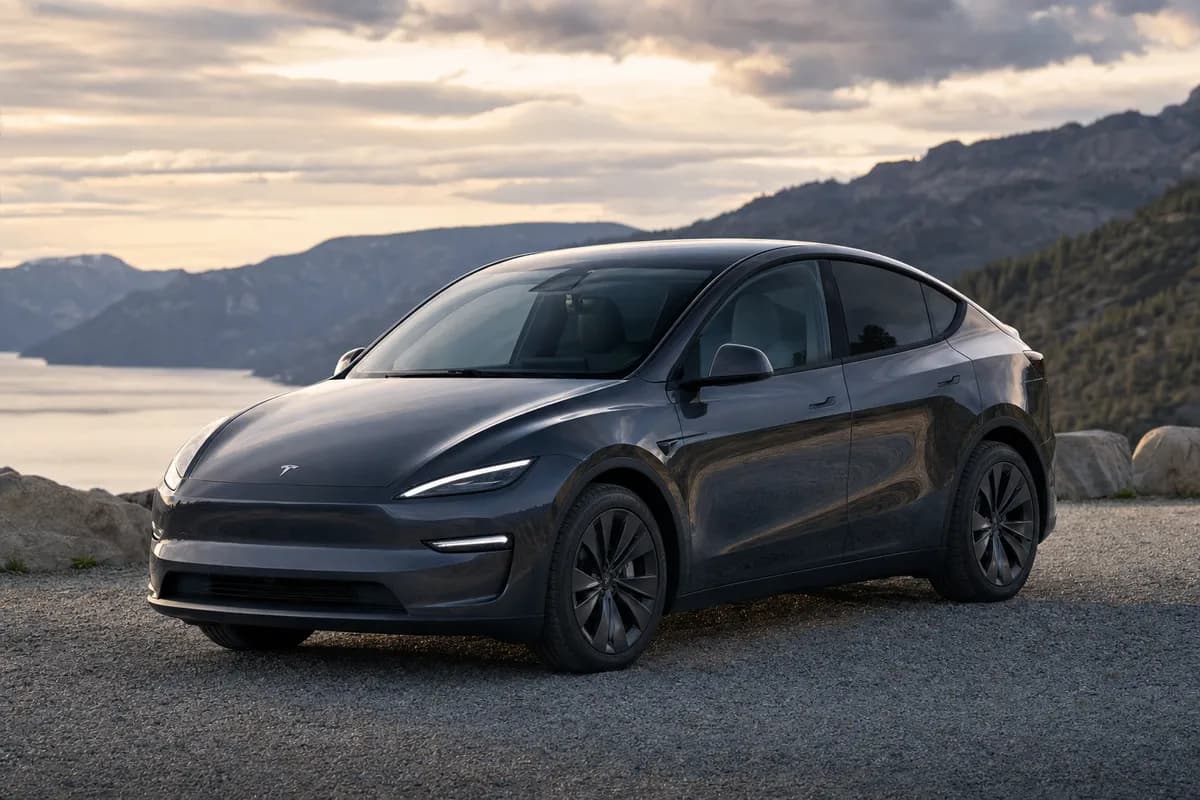
The current Model Y refresh has addressed several visible weaknesses, including cabin refinement, ride quality, noise insulation and interior design. But a 2027 Tesla Model Y cannot rely on cosmetic changes alone if Tesla wants to keep the crossover at the center of its volume strategy.
Buyers waiting for a 2027 Tesla Model Y should separate confirmed changes from speculation. Tesla has not formally detailed a 2027 model-year vehicle plan, and the company often changes equipment, software features and pricing with little warning rather than following traditional annual model-year schedules.
The likely pressure points are clear. Tesla needs to improve real-world efficiency, charging convenience, cabin usability and perceived quality while protecting the Model Y’s cost advantage.
| Buyer priority |
Current Model Y position |
What a 2027 update would need to improve |
| Range and efficiency |
Competitive, but no longer uniquely dominant |
More usable range and stronger cold-weather efficiency |
| Interior and comfort |
Improved after the refresh |
More physical controls, storage flexibility and premium materials |
| Technology |
Strong software ecosystem and app integration |
Clearer hardware roadmap and more reliable driver-assistance capability |
| Value |
Highly dependent on transaction price and incentives |
Stable pricing and better-equipped lower-cost versions |
A meaningful next upgrade could also depend on battery supply. Tesla’s lower-cost lithium iron phosphate packs are important for entry-level vehicles, while higher-energy chemistries remain necessary for longer-range and performance models. Battery advances matter most when they reduce price or improve charging performance, not when they only add a small headline range increase.
For most buyers, waiting solely for a named 2027 model is risky. Tesla can introduce meaningful running changes at any time, but there is no confirmed evidence that a near-term Model Y redesign will suddenly make today’s refreshed vehicle obsolete.
Tesla Model 3 Pricing Is Now as Important as the Car Itself
Tesla Model 3 pricing has become one of the company’s strongest sales levers and one of its biggest sources of buyer uncertainty. Tesla’s direct-sales model allows it to adjust prices quickly, but that flexibility can frustrate owners who buy immediately before a discount, financing offer or inventory incentive appears.
The Model 3 remains Tesla’s best answer for buyers who do not need SUV space. Its sedan shape is generally more efficient than the Model Y, and it offers a lower entry point in markets where Tesla maintains a meaningful price gap between the two models.
Shoppers should compare total transaction cost rather than the headline MSRP. A lower sticker price can be offset by a higher loan rate, expensive insurance, a less favorable trade-in offer, or lost eligibility for a local EV incentive.
| Vehicle |
Best fit |
Key buying consideration |
| Tesla Model 3 |
Drivers prioritizing efficiency and lower purchase cost |
Often the strongest Tesla value when incentives and financing align |
| Tesla Model Y |
Families and buyers needing cargo space |
Higher utility, but usually a higher monthly payment |
| Hyundai Ioniq 5 |
Buyers wanting a conventional cabin and fast charging |
Lease deals and equipment levels can make it highly competitive |
| Ford Mustang Mach-E |
Buyers seeking familiar dealer support and crossover styling |
Check local inventory discounts and charging-adapter availability |
There is no reliable reason to assume Tesla will keep cutting prices. Repeated reductions can stimulate demand, but they also pressure residual values and margins. A better buyer strategy is to set a target monthly payment, compare in-stock inventory with custom orders, and monitor financing promotions for several weeks before committing.
Robotaxi Strategy Is Tesla’s Biggest Opportunity—and Its Most Unproven Bet
Tesla robotaxi strategy is increasingly important because the company wants investors to view it as more than an automaker. The long-term idea is straightforward: use Tesla vehicles, cameras, onboard computing and Full Self-Driving software to build a network of autonomous rides.
The difficult part is proving that the system can operate safely and consistently without human supervision across real cities. That requires technical capability, regulatory approval, insurance arrangements, remote-assistance systems, fleet operations and a response plan for edge cases that software cannot anticipate.
Tesla’s next chapter will be judged less by what its cars can demonstrate in controlled conditions and more by whether its autonomy system can operate safely at scale in public.
For current car buyers, robotaxi ambitions should not be the primary reason to purchase a Tesla. Full Self-Driving remains a supervised driver-assistance product for customer vehicles in many markets, and future autonomous-use economics remain uncertain.
That does not make the strategy irrelevant. If Tesla establishes a viable robotaxi service, it could create recurring revenue and help justify continued investment in AI hardware. But it will not automatically increase the resale value or autonomous capability of every existing Tesla.
Supercharger Access Remains a Major Tesla Advantage, Even as It Becomes Less Exclusive
Tesla’s Supercharger network remains one of the clearest reasons to consider the brand, especially for drivers who make frequent long-distance trips. Reliable site locations, integrated route planning and simple payment remain meaningful advantages over fragmented public-charging networks.
However, broader access changes the equation. More non-Tesla EVs can now use parts of the Supercharger network through the North American Charging Standard, manufacturer agreements and compatible adapters. That is good for EV adoption, but it gradually reduces Tesla’s exclusive charging advantage.
Buyers should check the details before treating Supercharger access as guaranteed. Vehicle compatibility, adapter availability, charging speed, station access rules and congestion vary by model and region.
- Confirm whether the vehicle has a native NACS port or requires an adapter.
- Check charging-station availability on the routes you actually drive.
- Factor in home charging, since it is cheaper and more convenient than public fast charging.
- Review insurance and tire costs alongside electricity costs.
Verdict: Buy the Tesla That Fits Your Needs, Not the One Promised by the Next Narrative
Tesla’s 10 million-vehicle mark proves the company can manufacture EVs at a scale once considered improbable. But slowing growth means Tesla now has to compete on the fundamentals that matter to mainstream buyers: price, quality, charging, service, financing and model freshness.
The Model 3 remains the better choice for value-focused sedan buyers, while the refreshed Model Y is the practical pick for families who need space. Waiting makes sense only if a buyer can comfortably keep their current vehicle and is specifically holding out for a confirmed feature, a better incentive, or a meaningful change in charging or autonomy capability.
Do not buy a Tesla today on the assumption that robotaxi revenue or a future software update will transform the ownership experience. Buy it because the vehicle, charging network and total cost work for your life now.
Frequently Asked Questions
Has Tesla really produced 10 million vehicles?
Tesla’s reported 10 million-vehicle milestone reflects the company’s rapid expansion from niche EV production to global high-volume manufacturing. The Model 3 and Model Y account for the overwhelming majority of that output, with Shanghai playing a critical role in scaling production.
Should I wait for the 2027 Tesla Model Y?
Wait only if you are comfortable delaying a purchase and want a feature that Tesla has formally confirmed. Tesla frequently makes smaller running changes, but there is no guarantee that a 2027 Tesla Model Y will bring a major redesign or a dramatically lower price.
Will Tesla Model 3 pricing drop again in 2026?
Tesla can change prices, financing offers and inventory discounts quickly, so no future reduction should be assumed. Compare the final purchase or lease payment, available incentives and trade-in value instead of waiting indefinitely for a lower MSRP.
Can non-Tesla EVs use Tesla Superchargers?
Many newer non-Tesla EVs can access eligible Supercharger stations, though compatibility depends on the vehicle, connector, adapter and local network rules. Tesla owners still benefit from the company’s integrated navigation and charging experience, but access is becoming less exclusive.
Get the latest car reviews in your inbox
Join thousands of car enthusiasts. No spam, unsubscribe any time.


Comments
Leave a comment