Europe’s EV race is tightening as BMW’s Neue Klasse push and strong i4/iX demand challenge Tesla, reshaping what 2027 could look like.
Europe’s EV leaderboard is shifting. In 2026, BMW is increasingly being framed as the premium brand with real electric momentum, while Tesla faces a tougher mix of slower growth, fiercer pricing pressure, and a more crowded market. That matters because the battle now is less about who started first and more about who is best positioned for 2027.
BMW’s Europe EV push is starting to look like a broader trend
The key change in the BMW Europe EV sales 2026 story is that this no longer looks like a one-model spike. BMW’s gains are being supported by a wider lineup, stronger fleet appeal in major markets, and sustained demand for models already on sale, especially the i4 and iX. In a European market where incentives differ sharply by country, that breadth matters.
The i4 has become one of BMW’s most effective products because it sits in a sweet spot. It offers familiar 3 Series and 4 Series-adjacent positioning, competitive range, and a more conventional premium-sedan shape than many early EVs. For buyers moving out of diesel company cars or premium plug-in hybrids, it feels less like a leap.
The iX plays a different role. It is not a volume product in the same way, but it helps BMW defend the high-margin end of the market and reinforces the brand’s EV credibility. In Europe, where premium SUV demand remains strong despite softer consumer sentiment, that still counts.
BMW’s current EV portfolio also benefits from being spread across several body styles and price points. That gives it more resilience than a strategy tied too heavily to one or two headline products.
- BMW i4: a core volume driver in the premium midsize EV segment
- BMW iX1 and iX2: compact premium electric crossovers with broad European appeal
- BMW i5: a key fleet and executive-car offering
- BMW iX: a halo SUV that supports margins and brand image
That lineup mix is why the BMW story in 2026 is more credible than a simple monthly registration headline. BMW is not just selling EVs into one niche. It is building share across several of Europe’s most contested premium segments.
Tesla’s slowing momentum in Europe is about more than demand alone
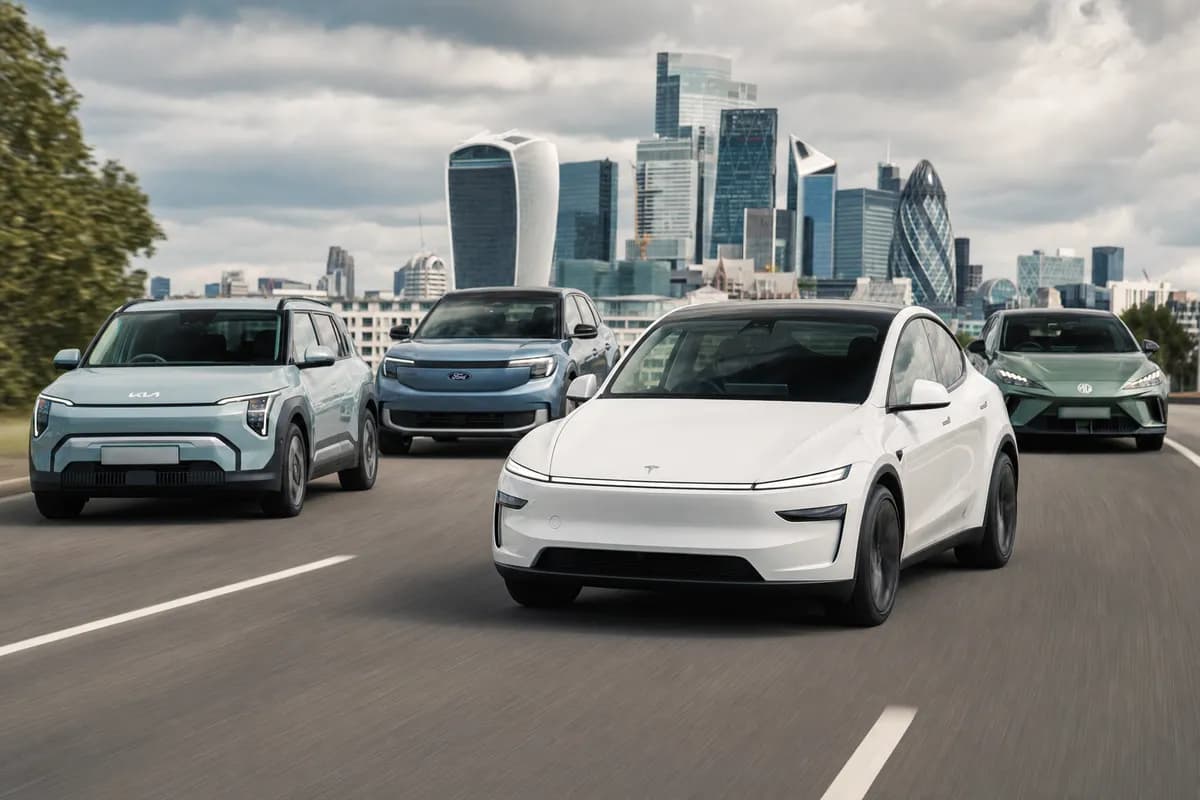
The Tesla Europe slowdown 2026 narrative should be handled carefully. Tesla remains a major force in the region, and the Model Y is still one of Europe’s most important EVs. But the company’s momentum now looks less automatic than it did when rivals had fewer competitive alternatives.
Part of the issue is product cadence. Tesla’s core lineup in Europe has not expanded at the same pace as the rest of the market, and fresh competition now surrounds the Model 3 and Model Y from both legacy brands and fast-moving Chinese manufacturers. Price cuts can help volumes, but they also signal that demand is no longer effortlessly outrunning supply.
Tesla also faces a different operating environment in Europe than in the US. Incentive regimes change frequently, local brands have stronger fleet and leasing relationships, and buyers often have a wider choice of efficient compact and midsize EVs. That weakens Tesla’s old advantage as the obvious default option.
Several factors are feeding the shift in the BMW vs Tesla EV market conversation:
- Tesla’s lineup remains relatively narrow in Europe’s most competitive segments
- BMW has stronger exposure to premium fleet and business leasing channels
- European consumers now have more EV choices with acceptable range and charging performance
- Brand loyalty is fragmenting as EVs become mainstream products rather than novelty buys
None of that means Tesla is collapsing. It means the company is competing in a normalizing market, where execution, product freshness, and segment coverage matter more than first-mover advantage.
The Neue Klasse rollout could be BMW’s biggest advantage heading into 2027
The most important strategic reason BMW may be gaining traction now is what comes next. The Neue Klasse rollout is not just another model launch cycle. It is BMW’s next-generation EV architecture, software, efficiency, and manufacturing reset.
For Europe, that matters because 2026 is increasingly being seen as the setup year for a broader 2027 surge. If BMW can carry current momentum with the i4, iX1, i5, and iX, then layer Neue Klasse products on top, it enters 2027 with something Tesla currently lacks in Europe: a visibly new chapter.
BMW has signaled that Neue Klasse vehicles will bring meaningful gains in efficiency, digital capability, and production flexibility. The platform is also expected to support better battery packaging and lower costs over time. Those are not abstract engineering wins. In Europe, they directly affect pricing power, lease rates, and real-world competitiveness.
What makes the Neue Klasse rollout especially significant is the timing. Europe’s EV market is entering a phase where consumers are becoming more selective, not less. Buyers increasingly compare charging speed, winter efficiency, cabin technology, depreciation, and monthly finance cost, not just headline range.
If Neue Klasse delivers on expected improvements, BMW could strengthen its hand in several ways:
- Refresh its EV image without abandoning familiar premium brand cues
- Improve margins while keeping pricing competitive
- Offer newer in-car software and user experience against Tesla and Mercedes-Benz
- Create a clearer bridge from today’s EV buyers to repeat BMW EV customers in 2027
That last point is easy to miss. Europe’s next phase of EV competition will not be won only through conquest sales. It will also be won through retention, especially among business users and premium households replacing their first electric car.
Why regional demand in Europe favors BMW’s current strategy
Europe is not one EV market. Germany, France, the UK, the Netherlands, Norway, Sweden, Italy, and Spain all have different tax rules, charging networks, fleet dynamics, and consumer preferences. BMW’s spread across multiple sizes and price bands gives it a practical advantage in that environment.
In Germany and other core premium markets, BMW benefits from strong brand familiarity and established dealer and leasing networks. That still matters in EVs, particularly for company-car buyers and customers comparing service support alongside charging access. Tesla’s direct-sales model remains distinctive, but it does not solve every local-market challenge.
There is also the issue of body style. Europe still leans heavily toward compact and midsize crossovers, practical liftbacks, and executive sedans with strong lease economics. BMW’s EV lineup maps more directly onto those preferences than it did a few years ago.
BMW’s European demand drivers in 2026 look relatively well aligned:
- Fleet relevance: i4 and i5 are well suited to business leasing channels
- SUV demand: iX1, iX2, and iX cover multiple crossover price points
- Brand trust: buyers know the badge, dealer network, and residual-value story
- Product familiarity: BMW’s EVs feel evolutionary enough for cautious mainstream premium buyers
That does not make BMW unbeatable. Mercedes-Benz, Audi, Volvo, Hyundai-Kia, Volkswagen Group brands, and Chinese entrants are all fighting hard for share. But it does explain why BMW’s 2026 gains look structurally grounded rather than purely promotional.
Verdict: 2027 electric car competition in Europe could look very different
BMW overtaking Tesla in parts of Europe’s EV race in 2026 would not mean Tesla is finished. It would mean the market has entered a more mature phase, where premium buyers reward lineup depth, replacement timing, and regional execution. On those measures, BMW appears to be improving at exactly the right moment.
The bigger point is what happens next. Tesla still has scale, strong brand recognition, and the ability to reset pricing quickly, but its European playbook looks less dominant than before. BMW, by contrast, is combining current demand for the i4 and iX family with the promise of the Neue Klasse rollout, giving it a plausible route to stronger positioning in the 2027 electric car competition.
That is why the BMW vs Tesla EV market story in Europe now deserves more than a monthly sales snapshot. BMW’s momentum looks increasingly tied to product cadence and local-market fit, while Tesla is being pulled into a more crowded, less forgiving competitive landscape. If those trends hold, 2027 may be remembered as the year Europe’s premium EV hierarchy stopped revolving around one brand.
Affiliate disclosure: This article contains affiliate links. RevvedUpCars may earn a small commission on qualifying purchases at no extra cost to you.