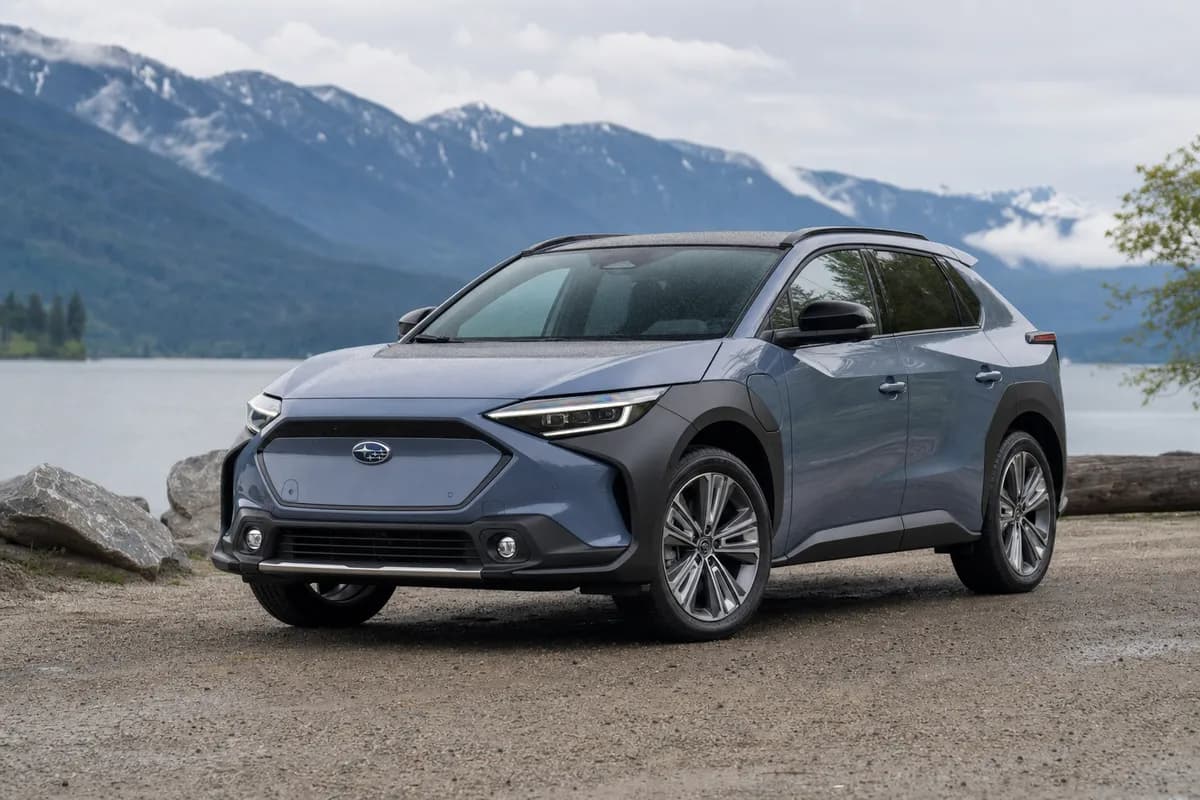
Subaru is trimming 2027 Solterra pricing to stay eligible for Canada’s EV rebate. See how it could reshape costs, competition, and dealer stock.
Subaru just made a very targeted move in Canada. By cutting 2027 Solterra prices in July 2026, the brand is trying to keep its electric SUV under the ceiling for the Canadian EV incentive program at the exact moment affordability is becoming a bigger sales tool than range bragging rights.
That matters beyond one model. The 2027 Subaru Solterra Canada rebate story shows how automakers are now adjusting trims, packaging, and MSRP in real time to protect incentive eligibility, defend dealer throughput, and stay close to rivals such as the Toyota bZ4X.
Why Subaru cut Solterra pricing in July 2026
The core issue is simple: incentives drive payments, and payments drive showroom traffic. Subaru’s Subaru Solterra price cut July 2026 is less about generosity and more about preserving access to a federal rebate that can materially change a monthly lease or finance quote.
Under Canada’s incentive framework, battery-electric vehicles must stay below a base-MSRP cap to qualify, with some flexibility for higher trims up to a separate threshold. When a vehicle drifts too close to those limits, automakers have two choices: lose eligibility or rework pricing and content. Subaru chose the second path.
That is a rational move for the Solterra. It competes in a crowded compact electric SUV segment where buyers cross-shop heavily on transaction price, not just brand loyalty. A rebate-eligible sticker can be worth more in the real world than a modest feature advantage.
For Subaru retailers, the timing also makes sense. If dealers were facing slower EV turnover or pressure from incoming 2027 inventory, lowering MSRP to keep the Solterra incentive-eligible becomes a cleaner solution than relying only on ad hoc dealer discounts.
What the move means for Canadian buyers
For shoppers, the biggest takeaway is straightforward: the headline MSRP is only part of the equation. If the 2027 Solterra stays within rebate rules, the effective purchase price becomes more competitive immediately.
That can narrow the gap between “interested” and “ready to buy.” In Canada’s current market, many EV buyers are payment-sensitive and willing to compromise on extras if it means qualifying for federal or provincial support where available.
- Lower effective cost: Rebate eligibility can reduce the out-of-pocket price or lease cost more meaningfully than a small factory discount alone.
- Better trim value: Subaru may shift equipment between grades so an entry trim qualifies while higher trims remain attractive.
- More predictable pricing: A factory MSRP adjustment is easier for buyers to understand than temporary dealer cash or opaque finance offers.
- Potentially faster purchase decisions: Incentive-qualified inventory tends to move quicker once pricing is clear.
There is also a broader psychological effect. Buyers who were worried that EVs were slipping out of rebate range now have proof that some automakers are willing to adapt rather than let a model become too expensive for its segment.
The caution is that lower MSRP does not automatically mean lower ownership cost in every case. Buyers still need to compare finance rates, freight charges, insurance, winter range performance, and charging access.
Toyota bZ4X vs Subaru Solterra 2027: why this rivalry matters
The Solterra does not exist in isolation. Any pricing decision on Subaru’s side lands directly against the Toyota bZ4X vs Subaru Solterra 2027 comparison, because the two vehicles remain closely linked in platform, size, and mission.
Both models come from the same basic EV architecture and target the same compact electric crossover buyer. Both also face the same market reality: shoppers know they are related, so price and equipment differences get scrutinized fast.
That makes Subaru’s move strategically significant. If the Solterra preserves rebate eligibility while a comparable bZ4X trim is priced less aggressively, Subaru gains a clean talking point in dealer showrooms. If Toyota matches or undercuts the adjustment, the rivalry tightens again.
- Platform similarity: Solterra and bZ4X share much of their underlying hardware, so pricing becomes a bigger differentiator.
- Brand positioning: Subaru leans on standard all-wheel-drive credibility and loyal outdoor-oriented buyers.
- Toyota scale: Toyota has more volume flexibility and may be able to respond quickly if needed.
- Trim strategy: Packaging decisions can matter as much as MSRP, especially when rebate ceilings are involved.
For buyers, that is good news. When two near-twins fight over incentive eligibility, consumers often get sharper pricing, cleaner trim structures, or added standard equipment.
For Subaru, the risk is obvious too. If the Solterra still trails the bZ4X on perceived value, charging curve, feature mix, or availability, a rebate-friendly MSRP alone will not be enough to swing buyers.
What this says about dealer inventory and EV pricing in Canada
The July 2026 Solterra adjustment is really a window into a larger industry problem. EV supply has improved, but demand is no longer guaranteed by novelty alone. In many segments, dealers need price discipline and incentive alignment to keep inventory moving.
That is why EV price cuts Canada 2026 is becoming a real theme rather than a one-off headline. Automakers are discovering that crossing a rebate threshold, even by a modest amount, can hurt competitiveness more than they expected.
Several forces are converging:
- Affordability pressure: Higher borrowing costs have made monthly payments a bigger hurdle.
- Incentive sensitivity: Federal and provincial rebates still shape demand, especially below the luxury tier.
- Inventory balancing: Dealers need cleaner ordering and faster stock turns on EVs that are expensive to floorplan.
- Competitive compression: More compact electric SUVs now offer similar range, performance, and technology.
This is changing trim strategy as much as list prices. Automakers can remove expensive standard features, create a cheaper qualifying base model, or reshuffle equipment so a popular trim lands just inside the rebate window. That is often more effective than broad, permanent discounting.
Subaru’s move fits that pattern. It suggests the company believes rebate qualification is a stronger selling tool than trying to defend a higher MSRP and leaning on later incentives to do the work.
Will more automakers slash EV prices next?
Probably, but not always in the form of obvious headline cuts. The more likely pattern is selective adjustment: one trim gets cheaper, option bundles are simplified, or standard content changes so a model qualifies for incentives without looking stripped down.
Expect automakers selling mainstream EVs in Canada to keep watching three things closely: rebate thresholds, rival pricing, and dealer days’ supply. If any one of those moves in the wrong direction, MSRP strategy can change quickly.
Brands most exposed are those selling compact and midsize EV crossovers near rebate caps. That part of the market is crowded, price transparent, and highly competitive. A few thousand dollars can alter a buyer’s shortlist overnight.
Luxury brands are less likely to chase incentive eligibility at all costs, because their customers are less rebate-dependent. Mainstream brands do not have that luxury. For them, the rebate often remains part of the product’s value story.
Subaru’s July 2026 Solterra cut is not just a pricing tweak. It is a signal that EV makers in Canada are now managing MSRP, trim content, and incentive eligibility as one combined strategy.
Verdict: a smart move, and likely not the last
The 2027 Subaru Solterra Canada rebate decision looks like a pragmatic response to today’s market. It improves the Solterra’s odds with cost-conscious buyers, puts pressure on the Toyota bZ4X, and gives dealers a clearer value proposition.
More importantly, it shows where the EV market is heading. In Canada, success is no longer just about launching an electric SUV with decent range and a recognizable badge. It is about landing the right MSRP, the right trim mix, and the right incentive outcome at exactly the right time.
Buyers should pay attention, because this will not stop with Subaru. If rival brands see rebate-friendly pricing translating into faster inventory turns and stronger showroom traffic, more EV price cuts Canada 2026 headlines are likely to follow.
Affiliate disclosure: This article contains affiliate links. RevvedUpCars may earn a small commission on qualifying purchases at no extra cost to you.