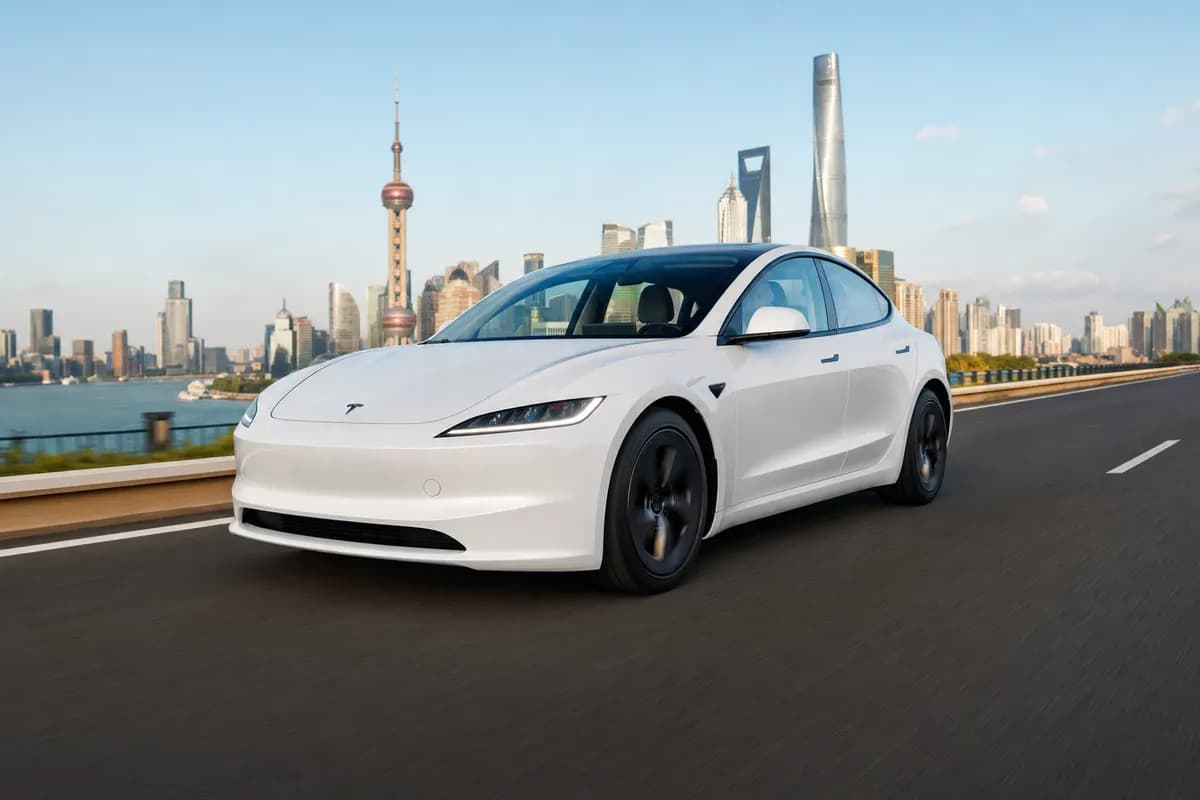
Tesla’s China-made EV sales rebounded 24.4% in June 2026, reshaping expectations for the 2027 Model 3 and Model Y, exports, and Europe prices.
Tesla’s China-made EV sales snapped back hard in June 2026. The 24.4% year-over-year jump matters far beyond one monthly report, because Shanghai is still the company’s key export hub for the Model 3 and Model Y.
That rebound could shape how quickly the 2027 Tesla Model 3 and 2027 Tesla Model Y reach buyers, how aggressively Tesla prices cars in Europe, and how much pressure rivals like BYD and Volkswagen face in the second half of the year. For buyers watching inventory and discounts, June’s result is more than a headline.
Tesla China sales June 2026: why the rebound matters
According to China Passenger Car Association data, Tesla sold 71,599 China-made vehicles in June 2026, up 24.4% from a year earlier. The number covers domestic deliveries in China plus exports from Tesla’s Shanghai plant.
That distinction is critical. Shanghai does not serve only Chinese buyers. It also feeds overseas markets, especially in Europe and parts of Asia-Pacific, making any swing in China production and wholesale volume relevant to buyers well outside China.
The June result suggests Tesla regained momentum after a softer spring. That does not automatically mean demand problems are gone, but it does show the company can still quickly lift volume when production, incentives, and market timing align.
For Tesla, the China factory remains one of its most important assets for four reasons:
- Scale: Shanghai is one of Tesla’s highest-volume plants.
- Exports: It supports Tesla exports Europe and other overseas markets.
- Cost: China-made vehicles have historically helped Tesla stay competitive on pricing.
- Model mix: The factory is central to global supply of the Model 3 and Model Y.
What this could mean for the 2027 Tesla Model 3 and 2027 Tesla Model Y
When Shanghai volume rises, Tesla gains more flexibility. It can allocate more vehicles to export markets, reduce delivery wait times, and better manage the transition between current inventory and future model-year production.
That matters for the 2027 Tesla Model Y and 2027 Tesla Model 3. Buyers often assume a new model year means a dramatic redesign, but Tesla usually works differently. The company tends to roll out running changes, software updates, feature adjustments, and region-specific spec changes rather than sticking to a traditional Detroit-style model-year schedule.
Even so, stronger June output improves Tesla’s ability to do three things ahead of 2027 model-year availability:
- Keep current Model 3 and Model Y supply flowing while preparing updated configurations.
- Clear older inventory with selective incentives rather than broad production cuts.
- Shift mix between domestic China sales and exports depending on where margins and demand are stronger.
For buyers waiting on a 2027 Tesla Model 3 or 2027 Tesla Model Y, that likely means better availability, not necessarily a major visible overhaul. Tesla may use Shanghai’s output strength to smooth out handoffs between trims, battery variants, and market-specific packages.
If demand in China stays firm, Tesla can keep factory utilization high without relying entirely on exports. If local demand cools again, the same plant can redirect more units abroad. That flexibility is part of why one month of stronger China sales can have global effects.
How Shanghai affects Tesla exports to Europe and price pressure there
Europe is one of the clearest places where Shanghai’s rebound could be felt. Tesla has production capacity in Berlin, but Shanghai still plays a major role in balancing supply across European markets, especially when the company needs to respond quickly to demand shifts or trim-level shortages.
More supply from China can translate into more aggressive pricing. Tesla has repeatedly shown that it will use price cuts, financing offers, and inventory discounts to keep volume moving when competition tightens.
That raises the odds of continued Europe price pressure in the second half of 2026. If June’s sales rebound reflects stronger production momentum rather than a one-off monthly spike, Tesla could have more room to push vehicles into export channels and defend share.
For European buyers, the main watch points are straightforward:
- Inventory levels: Higher Shanghai output can increase vehicle availability faster than local production alone.
- Discounting: Tesla may use tactical cuts or finance deals instead of formal list-price reductions.
- Delivery times: Export flow from China can help shorten waits on some Model 3 and Model Y variants.
- Residual values: More frequent pricing moves can put used EV values under pressure.
This is where the June number matters most. A strong Shanghai month does not just lift Tesla’s headline sales. It can give the company extra leverage in Europe, where buyers are already trained to watch for quarter-end deals and sudden inventory offers.
Why BYD and Volkswagen should care
The bigger competitive story is not just Tesla versus local Chinese brands. It is also about how Tesla uses China scale to compete globally against BYD and Volkswagen.
In the BYD vs Volkswagen EV market debate, BYD still has the broader advantage in China on sheer lineup breadth and fast product cycling. It spans lower-cost EVs, plug-in hybrids, and premium sub-brands, giving it more ways to capture demand across price bands.
Volkswagen, meanwhile, is still trying to strengthen its EV position in both China and Europe while protecting margins. That is a tougher task when Tesla can ramp Shanghai output and use pricing strategically across multiple regions.
Here is how the competitive picture looks:
- Tesla: Strong brand pull, efficient manufacturing, and the ability to move China-made Model 3 and Model Y volume into export markets.
- BYD: Wider portfolio, intense domestic strength in China, and growing export ambition with aggressive pricing.
- Volkswagen: Broad European footprint and scale, but more pressure to prove its EV lineup can hold share without damaging profitability.
If Tesla’s June rebound continues into the third quarter, BYD faces a rival with renewed momentum in the world’s biggest EV market. Volkswagen faces the risk of more price stress in Europe just as it tries to stabilize demand for its ID-family models and newer electric offerings.
The pressure point is simple. Tesla does not need to beat every rival in every segment. It only needs enough demand and enough Shanghai output to keep Model 3 and Model Y visible, available, and competitively priced in the markets that matter most.
What buyers should watch next
One strong month does not settle the whole year. But June gave a useful read on Tesla’s ability to rebound quickly, and that has direct implications for inventory, pricing, and timing.
Buyers tracking Tesla should watch a short list of signals over the next few months:
- Monthly CPCA data: This will show whether Tesla China sales June 2026 was the start of a trend or a temporary lift.
- Export mix from Shanghai: Rising exports would point to more overseas supply pressure.
- European incentives: Finance offers and inventory deals often move before official list prices do.
- Model-year changes: Watch for quiet spec revisions tied to the 2027 Tesla Model 3 and 2027 Tesla Model Y.
- BYD and Volkswagen response: Competitors may answer with their own discounts, feature upgrades, or launch timing changes.
The clearest takeaway is that Tesla’s Shanghai plant remains a global pricing and supply lever. When China-made sales rise sharply, the effects can show up in European showroom deals, delivery schedules, and competitive pressure across the EV market.
Verdict
Tesla’s 24.4% jump in China-made EV sales in June 2026 was not just a local win. It signaled that Shanghai still gives Tesla a powerful way to balance domestic demand, support exports, and apply pressure in overseas markets.
For buyers waiting on the 2027 Tesla Model Y or 2027 Tesla Model 3, the likely result is better supply flexibility and continued pricing tension rather than a guaranteed major redesign. For Europe, more output from China could mean more inventory and more competitive deals.
And for rivals in the BYD vs Volkswagen EV market, the message is clear: when Tesla’s China engine is running strongly, the impact is rarely contained to China. It tends to ripple across the global EV market fast.
Affiliate disclosure: This article contains affiliate links. RevvedUpCars may earn a small commission on qualifying purchases at no extra cost to you.