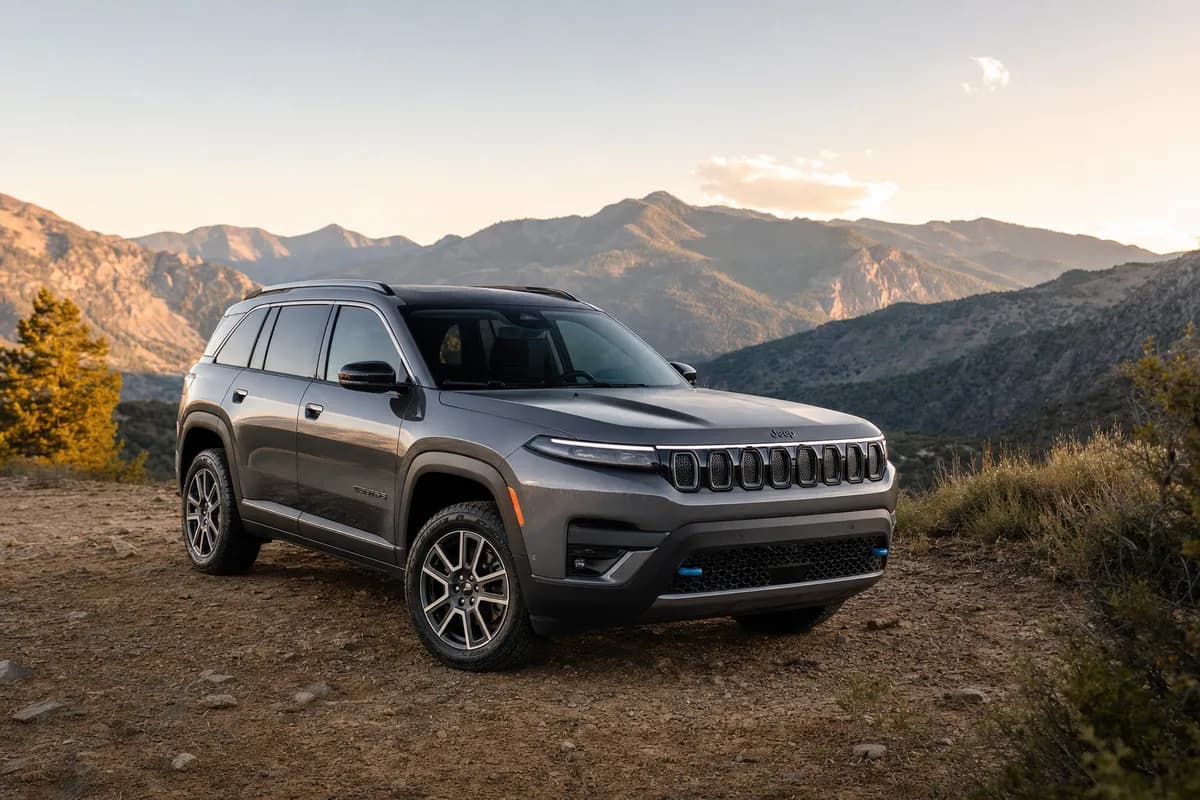
Mazda’s 6e makes EVs feel stylish again—rear-drive bias, real driving impressions, and range questions against the Model 3, BYD Seal, and Ioniq 6.
Electric sedans are having a second wind, and Mazda wants back in with style rather than spreadsheet warfare. The 2026 Mazda 6e arrives as a sleek, rear-drive-biased alternative to the Tesla Model 3, BYD Seal, and Hyundai Ioniq 6. The big question is simple: does it merely look expensive, or does it actually drive like a proper Mazda and go far enough to matter?
A handsome EV in a market full of jellybeans
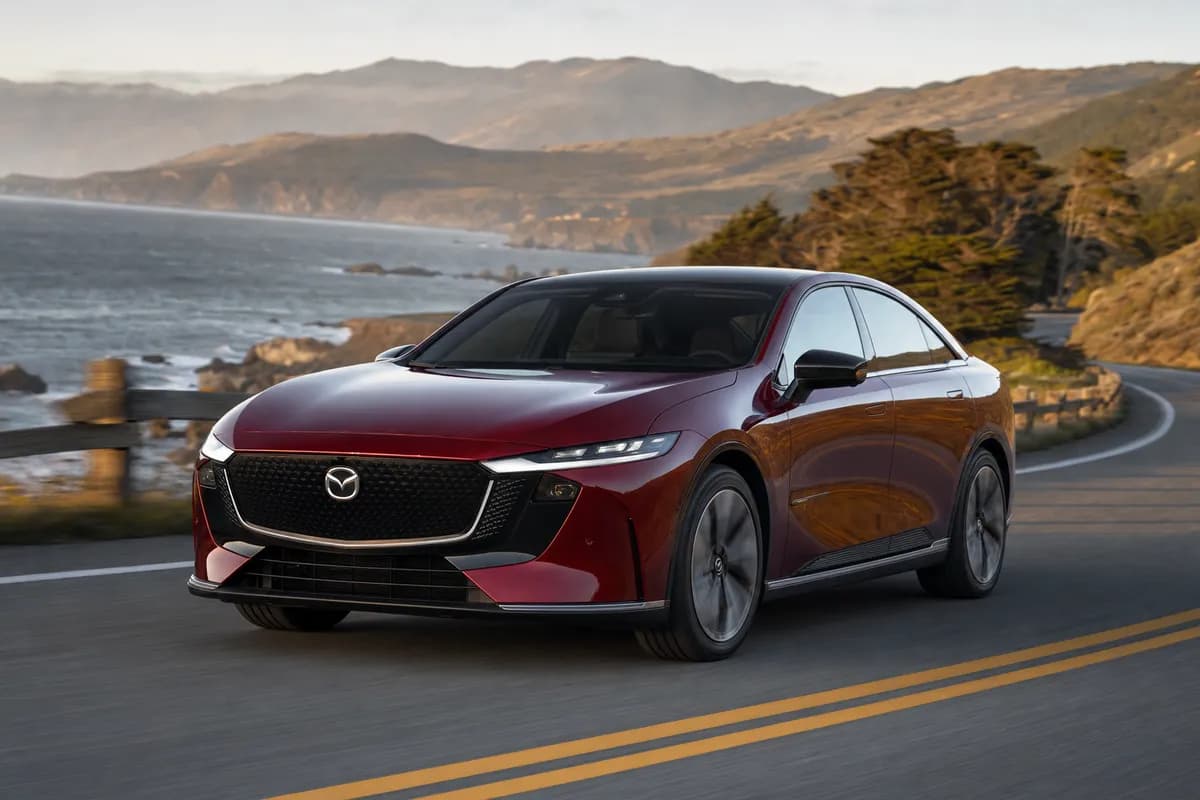
The 2026 Mazda 6e is the brand’s most convincing electric design yet. It sits low, wide, and clean, with the long-hood, cab-rearward proportions Mazda loves, even if there’s no inline-six under there. In a parking lot full of bulbous EVs, this thing looks tailored.
That matters because the rivals are strong but hardly subtle. The Tesla Model 3 Highland is cleaner than before, yet still generic. The Hyundai Ioniq 6 is aero-efficient to the point of looking like it was drawn in a wind tunnel by committee. The BYD Seal is arguably the closest visual competitor, but the Mazda has the more restrained, premium shape.
Dimensionally, the 6e lands right in the heart of the class. It measures roughly 4,920mm long, making it a touch larger than a Tesla Model 3 and BYD Seal, and very close to the Ioniq 6. That extra length helps the car look elegant rather than stubby, though it does not fully translate into limo-like rear space.
Inside, Mazda finally remembers that a premium cabin is more than deleting buttons and gluing on a giant screen. The dashboard is clean without feeling barren, materials look richer than the Tesla’s, and the driving position is spot-on. You still get a prominent center display and modern digital interfaces, but thankfully the car does not force every basic function through a touchscreen hostage negotiation.
Powertrains, battery sizes, and where the numbers land
Mazda is launching the 6e with two battery options and a familiar EV playbook: one for value, one for range. The standard car uses a 68.8kWh battery and a single rear motor with 258PS. Step up to the long-range version and you get an 80kWh battery, though peak output drops to around 245PS.
That output strategy is slightly odd but not unprecedented. Mazda is clearly prioritizing efficiency and usable range over headline acceleration, and honestly, that is the right call for a sedan meant to compete with the best daily EVs. Not every electric car needs to pretend it is a Nürburgring special.
- 2026 Mazda 6e Standard Range: 68.8kWh battery, 258PS, rear-wheel drive, up to about 300 miles WLTP
- 2026 Mazda 6e Long Range: 80kWh battery, around 245PS, rear-wheel drive, up to about 345 miles WLTP
- DC fast charging: up to roughly 165kW on smaller-battery versions, lower peak on the long-range model depending on market spec
On paper, that puts the Mazda 6e in the fight, but not at the top of every column. A Tesla Model 3 Long Range remains the benchmark for efficiency and outright usable range, with up to roughly 390 miles WLTP in some specifications. The Hyundai Ioniq 6 also posts huge official numbers, reaching around 338 miles to 382 miles WLTP depending on version, while the BYD Seal typically sits in the 323-mile to 354-mile bracket.
Acceleration is brisk rather than brutal. Expect 0-62mph in the low-to-mid 7-second range for the single-motor Mazda, depending on battery size and final homologation. That is slower than a Tesla Model 3 Long Range, comfortably behind dual-motor BYD Seal variants, and nowhere near the lunacy of performance EVs, but for a mainstream sedan it is quick enough.
The first drive: finally, an EV that feels like a Mazda
This is where the 2026 Mazda 6e review gets interesting. Plenty of electric sedans are fast. Fewer are genuinely satisfying at sane road speeds, and that has always been Mazda’s trick.
The 6e steers with more natural weighting than the Tesla Model 3 and more consistency than some over-assisted rivals. Turn-in is clean, the body stays well controlled, and the rear-drive balance gives it a subtle eagerness that is increasingly rare in EVs tuned by software accountants. It does not feel light, because of course it is not light, but it feels disciplined.
Ride quality is another pleasant surprise. The Mazda rounds off sharp edges better than the BYD Seal, which can fidget on broken surfaces, and it avoids the occasional brittle thump you get in larger-wheel Model 3s. The Ioniq 6 is still one of the comfort leaders in the class, but the Mazda gets closer than expected while feeling more tied down in corners.
Brake blending, the usual EV nuisance, is mostly well judged. Pedal response is predictable, regenerative braking is easy to modulate, and the car does not lurch like a learner driver every time you transition between regen and friction braking. That may sound like faint praise, but in EV-land it is a genuine compliment.
It is not perfect. The power delivery is smooth, but the single-motor setup lacks the instant punch buyers now expect after sampling even mid-spec Teslas or dual-motor Chinese rivals. If you want neck-snap acceleration for traffic light theatrics, the Mazda 6e is not your drug. If you want a car that feels engineered rather than gamified, it absolutely has a point.
Mazda 6e vs Tesla Model 3, BYD Seal, and Hyundai Ioniq 6
The key to any electric sedan comparison in 2026 is understanding what each car actually does best. Tesla still dominates in software, charging network integration, and efficiency. BYD keeps winning on equipment-per-dollar. Hyundai remains the aerodynamic science project that somehow became a very good car. Mazda, meanwhile, is betting that design and driving feel still matter.
- Mazda 6e vs Tesla Model 3: Mazda wins on cabin warmth, steering feel, and visual presence. Tesla still wins on efficiency, charging ecosystem, and performance value.
- Mazda 6e vs BYD Seal: Mazda feels more polished dynamically and looks more upscale inside. BYD usually undercuts it on price and offers stronger straight-line pace in upper trims.
- Mazda 6e vs Hyundai Ioniq 6: Mazda is the prettier, more conventional sedan and the more engaging steer. Hyundai offers class-leading efficiency, rapid 800V charging, and a roomier-feeling cabin.
The charging question matters in the real world more than brochure poetry. Mazda’s maximum DC charge rates are competitive, but not class-leading, and the long-range version may actually charge slower at peak than the smaller-battery car. Hyundai’s 800V architecture remains a major advantage for road-trip speed, while Tesla’s Supercharger experience is still the least annoying in day-to-day use.
Real-world range should be respectable rather than revolutionary. Based on the official figures and what this class typically returns, the standard 6e should realistically deliver around 220 to 250 miles in mixed use, with the long-range model closer to 260 to 290 miles if driven sensibly. That is enough for most buyers, but it will not rewrite the rules or make a Model 3 owner feel insecure.
Verdict: a credible electric sedan, but not the class assassin
The Mazda 6e first drive shows a car with genuine character in a segment that too often confuses speed with personality. It looks expensive, rides well, steers properly, and has a cabin that feels designed by humans rather than interface zealots. That alone makes it more appealing than several rivals.
But let’s not get carried away. The 2026 Mazda 6e does not beat the Tesla Model 3 on efficiency, charging convenience, or outright performance. It does not smash the Hyundai Ioniq 6 on charging tech or the BYD Seal on value. If your buying decision starts and ends with numbers, there are sharper tools in the box.
Still, cars are not bought on kilowatts alone. The Mazda 6e is for buyers who want their EV to feel like a proper car first and an appliance second. In that role, it succeeds brilliantly.
Final verdict: The 2026 Mazda 6e is not the segment leader on paper, but it may be one of the most desirable electric sedans to actually live with and drive. If Mazda prices it sensibly, this is the EV for people bored of touchscreen minimalism, cynical aero blobs, and one-dimensional straight-line bragging rights.
Affiliate disclosure: This article contains affiliate links. RevvedUpCars may earn a small commission on qualifying purchases at no extra cost to you.