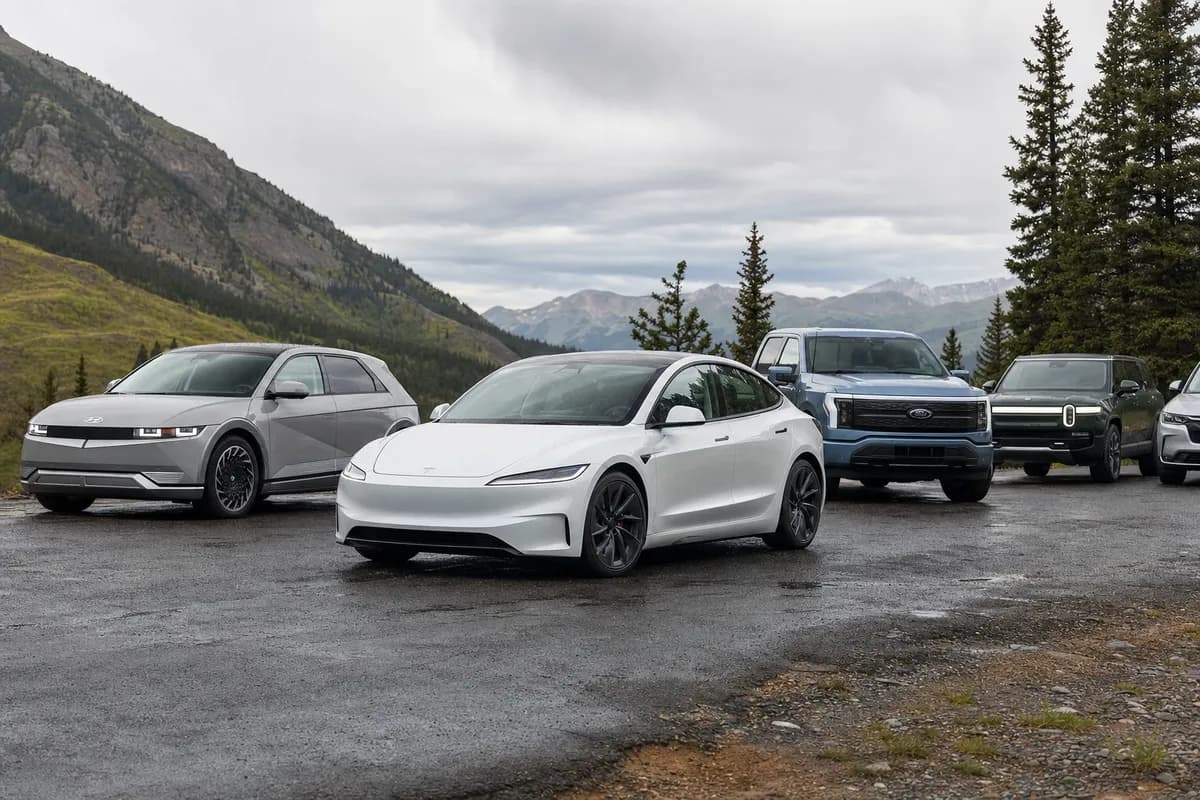
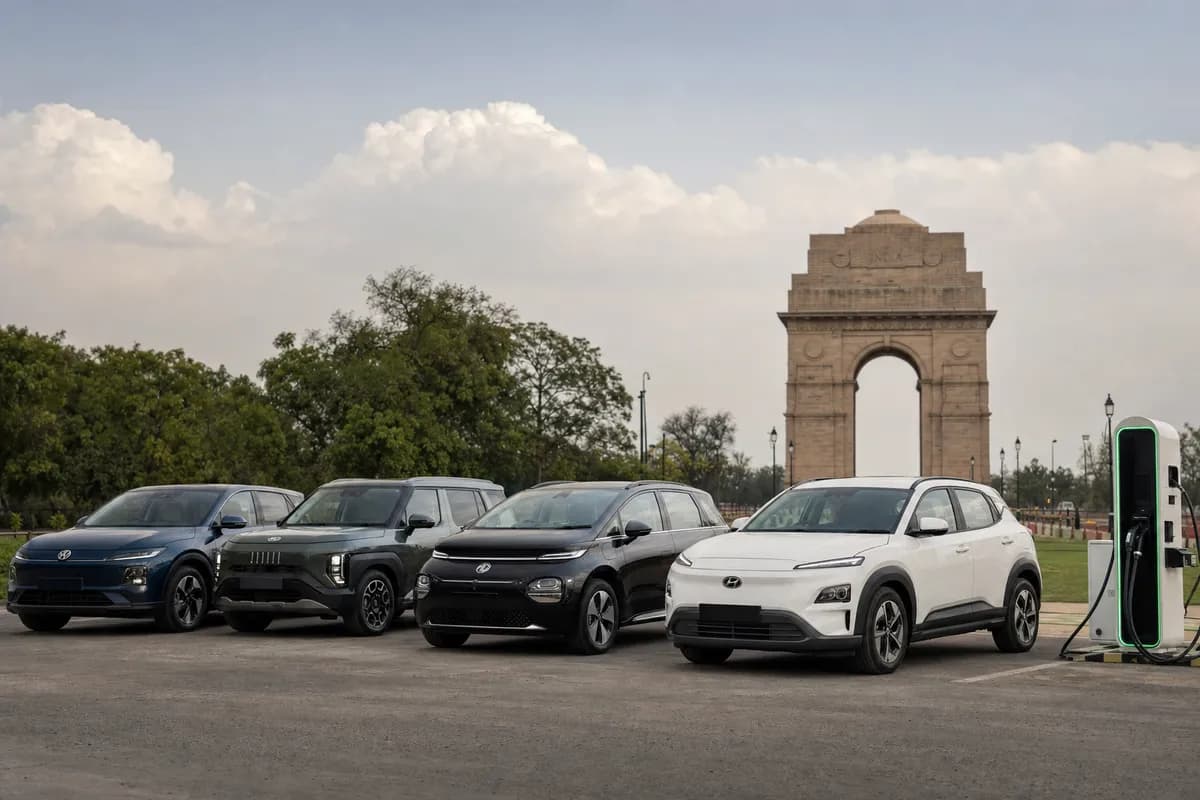
April’s 9.8% EV registration drop signals a cooling market, reshaping 2027 pricing and this summer’s buyer deals for Tesla, Hyundai, Ford, Chevy, and Rivian.
America’s EV market cooled hard in April. After a first-quarter pull-forward tied to tax-credit anxiety and year-end incentive shopping, U.S. EV registrations fell 9.8% year over year, giving buyers a very different market heading into July 2026.
That slowdown matters because softer registrations usually show up next as more dealer inventory, longer days on lot, and sharper discounts. For shoppers eyeing a 2027 Tesla, Hyundai, Ford, Chevrolet, or Rivian, summer 2026 could be the moment when pricing gets more negotiable than the headline sticker suggests.
April’s registration drop signals a market reset
The key number is straightforward: U.S. EV registrations in April 2026 fell 9.8% from a year earlier. That does not mean EV demand collapsed, but it does show the market lost momentum after an incentive-driven surge earlier in the year.
The backdrop is familiar. Buyers rushed to lock in federal tax-credit eligibility, brand-specific incentives, and outgoing model-year deals before policy changes and pricing resets took hold. Once that demand was pulled forward, April exposed a softer underlying market, especially for higher-priced EVs and trims that depend on aggressive lease support.
For automakers, registrations are not the same as production or wholesale deliveries. But they are one of the clearest real-world signals of what is actually moving off lots and into driveways. When registrations fall after a rush, the next phase usually includes higher inventory, more tactical incentives, and pressure on 2027 EV pricing.
Why the slowdown could improve summer 2026 EV deals
This is where the market gets practical for shoppers. If demand cools faster than automakers cut output, inventory builds. And when inventory builds, dealers and brands start using the tools they know best: cash on the hood, subsidized leases, lower APR financing, and bigger trade-in support.
That does not mean every EV will suddenly become cheap. High-volume nameplates with broad supply are more exposed to discounting than low-volume or recently refreshed models. But for mainstream and near-premium EVs, the EV tax credit slowdown is likely to create more room for negotiation than buyers saw during the first-quarter scramble.
- More dealer flexibility: Slower traffic can make stores more willing to discount in-stock units.
- Better lease math: Brands may use lease subvention to preserve transaction prices while lowering monthly payments.
- Model-year overlap: 2026 and early 2027 inventory on the same lot often creates pricing pressure.
- Regional disparities: States with stronger EV adoption may still have tighter supply than slower-turn markets.
The biggest distinction this summer will be between direct-sales brands and dealer-franchise brands. Tesla and Rivian can adjust pricing nationally and quickly. Hyundai, Ford, and Chevrolet rely more on a mix of factory programs and local dealer execution, which can create bigger market-to-market variations in final transaction prices.
What it means for 2027 Tesla, Hyundai, Ford, Chevrolet, and Rivian inventory
Tesla
Tesla remains the market’s pricing benchmark, even in a softer environment. If registrations are cooling, Tesla’s usual playbook is to defend volume with targeted finance offers, inventory discounts on specific configurations, and occasional price adjustments rather than letting inventory age too long.
For 2027 Model 3 and Model Y shoppers, the key is inventory timing. Tesla often moves fastest when quarter-end delivery targets approach, so July can be less aggressive than late September, but a soft spring market raises the odds of localized inventory incentives. The risk for buyers is that Tesla can also reset pricing quickly, making patience useful but never guaranteed to pay off.
Hyundai
Hyundai has been one of the most consistent non-Tesla EV players, with the Ioniq 5 and Ioniq 6 staying competitive on range, charging speed, and lease appeal. In a cooling market, Hyundai dealers may have more latitude on 2027 inventory, especially if 2026 models remain on the ground alongside newer builds.
The brand’s strength is incentive flexibility. Hyundai can support deals through lease cash, promotional rates, and dealer markdowns, which makes it one of the likelier candidates for strong summer 2026 EV deals. Buyers should watch for differences between SE, SEL, and Limited trims, where inventory mix often matters more than MSRP alone.
Ford
Ford’s EV lineup still revolves around the Mustang Mach-E and F-150 Lightning, and both are sensitive to pricing in a softer market. The Mach-E competes directly in one of the most crowded EV segments, while Lightning remains a higher-ticket purchase that can slow quickly when incentives fade and interest rates stay elevated.
That combination could leave Ford leaning harder on dealer cash and financing support for 2027 model-year stock. For shoppers, the opportunity is strongest on well-equipped Mach-E trims and selected Lightning configurations that have been sitting longer. The challenge is that option-heavy trucks can still carry stubborn pricing if supply is uneven.
Chevrolet
Chevrolet is positioned to benefit if buyers trade down from pricier EVs. The Equinox EV, Blazer EV, and Silverado EV cover a wide pricing spread, and the Equinox in particular is the kind of value-focused model that can keep moving even when the market cools.
Still, Chevrolet’s dealer network means incentives may show up unevenly. One market may advertise attractive lease terms on a 2027 Equinox EV, while another still asks close to sticker. Buyers willing to cross-shop multiple dealers should have leverage, especially if local inventory builds on front-wheel-drive mainstream trims.
Rivian
Rivian plays in a narrower and more premium slice of the EV market. That can insulate it from some mainstream discounting, but it also means demand softness matters more when buyers become payment-sensitive.
For 2027 R1T and R1S shoppers, Rivian is less likely than legacy brands to flood the market with old-school rebates. Instead, expect targeted financing, occasional inventory offers, and possible configuration-specific pricing moves if production outpaces demand. Rivian’s challenge is balancing premium brand positioning with a market that is becoming far less tolerant of high monthly payments.
How buyers should shop 2027 EV pricing this summer
Shoppers should treat the next few months as a negotiation window, not a panic buy. The registration slowdown suggests brands will need to work harder to convert interest into contracts, and that usually benefits buyers who compare real transaction prices rather than advertised base MSRPs.
- Cross-shop lease and finance quotes: Some brands will hide the best deal in the lease structure, not in sticker discounts.
- Ask for in-stock VIN pricing: Factory orders often carry less flexibility than units already on the lot.
- Watch aged inventory: Cars that have sat 60 to 90 days tend to be the best negotiation targets.
- Compare nearby markets: Dealer EV supply can vary sharply by region.
- Check tax-credit pass-through rules: On leases, the effective savings may still be better than a purchase incentive.
There is also a timing question. July can be strong if dealers need to clear 2026 stock before more 2027 units arrive, but August and September may bring more pressure if registrations stay soft. Buyers who do not need a car immediately may gain leverage by watching whether inventory expands through late summer.
Among these brands, Hyundai and Chevrolet look best placed to offer broad-based mainstream value, while Ford may have some of the most negotiable higher-trim inventory. Tesla will remain the wild card because it can change national pricing faster than anyone else. Rivian is the least likely to advertise dramatic cuts, but selective offers are more plausible in a slower market.
Verdict: softer demand is shifting power back to buyers
The U.S. EV registrations April 2026 decline is not just a sales statistic. It is an early sign that the post-credit rush market is cooling, and that cooling should feed directly into 2027 EV pricing, dealer inventory behavior, and the deal environment buyers see this summer.
For Tesla, Hyundai, Ford, Chevrolet, and Rivian, the next move is not only about building compelling EVs. It is about matching supply to a more cautious buyer base. That should create a better opening for shoppers, especially on in-stock vehicles, lease-heavy models, and trims where dealers are carrying too much metal.
The short version is simple: if you are shopping this summer, do not assume the first price is the real price. In a market shaped by an EV tax credit slowdown and softer registrations, patience, comparison shopping, and inventory awareness may be worth more than waiting for a headline-grabbing MSRP cut.
Affiliate disclosure: This article contains affiliate links. RevvedUpCars may earn a small commission on qualifying purchases at no extra cost to you.