Owners are dialing suspension geometry, fitting 35-inch tires, adding onboard air, and doing street-legal mods that look factory-clean and trail-ready.
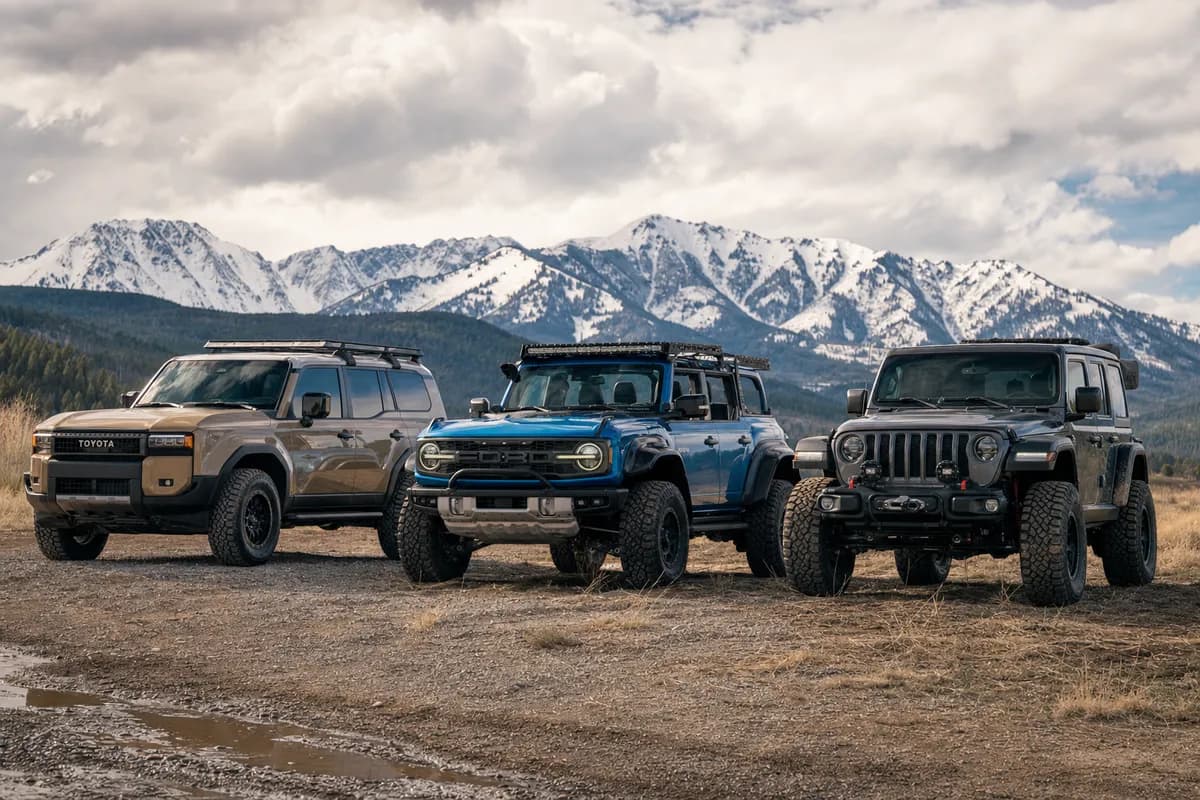
The new off-road sweet spot is not bigger, louder, or wilder. It is smarter. Owners of the 2026 Toyota Land Cruiser, 2027 Ford Bronco, and 2026 Jeep Wrangler are building trail rigs that look factory-clean, drive better on pavement, and still work hard in the dirt.
That shift is creating a fresh DIY OEM-plus off-road community. These owners want suspension geometry that stays sane, 35-inch tire fitment that does not butcher fenders, onboard air that tucks away cleanly, and street-legal off road modifications they can live with every day.
The OEM-Plus Off-Road Crowd Is Growing for a Reason
For a lot of enthusiasts, the social-media era of giant lifts, angry wheel poke, and bolt-on clutter is losing appeal. Modern SUVs and 4x4s are already good from the factory, and that changes the upgrade math. A 2026 Land Cruiser 250, late-model Bronco, or JL Wrangler starts with locking diffs, decent approach angles, advanced traction control, and strong aftermarket support.
That means the smartest path is often refinement, not reinvention. The new goal is more tire, a little more clearance, better damping, practical recovery gear, and factory-like integration. If a mod adds noise, ruins ADAS calibration, or gets attention from inspection stations, OEM-plus owners tend to skip it.
This trend also lines up with the June 2026 spike in search interest around legal versus tacky modifications. Truck and SUV owners are asking better questions now: Will this setup rub at full lock? Does this bumper block sensors? Are my tires covered by the flares? Can I reverse the build when I sell it?
Suspension Geometry Matters More Than Lift Height
The old formula was simple: add a big lift, then figure out the problems later. On these newer rigs, that gets expensive fast. Steering feel, CV angles, caster, brake dive, and electronic stability systems all respond to suspension changes, so a sloppy lift can make a $60,000 truck drive worse than stock.
That is why the best 2026 Toyota Land Cruiser mods, 2027 Ford Bronco DIY upgrades, and 2026 Jeep Wrangler OEM plus mods usually start with modest lift heights and high-quality dampers. In the real world, a well-tuned 1.5- to 2.5-inch setup often outperforms a cheap 4-inch kit. You keep better alignment numbers, easier driveline angles, and less wear on ball joints and bushings.
What smart suspension upgrades usually include
- Progressive or matched-rate springs that support added weight without riding like a dump truck
- Quality shocks from brands like Bilstein, Fox, Old Man Emu, or Icon, tuned for mixed street and trail use
- Upper control arms on IFS vehicles when needed to restore caster and droop travel
- Correct bump stop spacing to protect tires, fenders, and shock travel
- A real alignment, not a “good enough” toe set after installation
The Land Cruiser 250 is the clearest case here because its IFS front end rewards restraint. A mild coilover lift and proper alignment preserve the calm highway manners that make the truck so appealing in the first place. Go too tall without correcting geometry, and you can lose the planted feel that separates the Land Cruiser from older-school body-on-frame rigs.
The 2027 Bronco has more room to play, especially in Sasquatch and Badlands trims, but it still likes thoughtful tuning. Independent front suspension can work brilliantly off-road when the damping is sorted and the ride height stays realistic. The Wrangler, with its solid axles, tolerates lift differently, but even there, control arm angles, track bar geometry, and steering correction matter more than internet bragging rights.
35-Inch Tire Fitment: The Right Way to Do It
A clean 35 inch tire fitment guide starts with an honest goal: fit the tire with full steering travel and usable up-travel, not just enough clearance to look good in a parking lot. The best OEM-plus builds avoid excessive trimming, goofy offsets, and the kind of poke that throws rocks down the side of the vehicle. If the tire barely clears standing still, it does not fit.
For most owners, the sweet spot is a true or near-true 35 on a wheel width and offset close to factory logic. That usually means avoiding super-negative offsets. Push the tire too far outboard and you increase scrub radius, stress wheel bearings, and invite fender contact in places a centered tire would miss.
Quick fitment reality check by platform
- 2026 Toyota Land Cruiser 250: 35s typically need a mild lift, careful wheel offset selection, and attention to inner fender and body mount clearance depending on tire brand and actual measured size.
- 2027 Ford Bronco: Sasquatch-equipped trucks are already close to the target. Many owners can fit 35s with minimal drama, but crash bar clearance, wheel offset, and articulation still matter.
- 2026 Jeep Wrangler JL: Sport, Willys, Rubicon, and 392 setups vary, but 35s remain one of the most proven OEM-plus upgrades when bump stops, backspacing, and suspension travel are addressed properly.
Best practices for 35s without the tacky look
- Choose the tire first, then build around its actual dimensions.
- Keep wheel offset conservative to limit poke.
- Cycle the suspension or at least check full lock and compression clearance.
- Recalibrate for tire size so speedometer, shift logic, and ADAS behavior stay happy.
- Match spare tire mounting capacity to the heavier wheel-and-tire package.
Also remember the weight penalty. A factory wheel and all-terrain package can jump dramatically when you move to a 35-inch mud-terrain on an aftermarket wheel. That extra unsprung and rotational mass affects braking, acceleration, damping, and even how the tailgate or rear door ages over time.
Onboard Air and Recovery Gear Are the New Gold Standard
If there is one upgrade category that defines this movement, it is hidden utility. Onboard air is a perfect example. Instead of flashy light bars and decorative hardware, OEM-plus builders are spending money on compact compressors, tidy hose routing, and quick-connects mounted where they are easy to reach but hard to notice.
Airing down to 18 to 22 psi can transform ride quality and traction on dirt, sand, and rocks. Airing back up quickly matters just as much if the vehicle still sees commuter duty. A clean compressor install under the hood, in a cargo side panel, or under a seat is the kind of mod you appreciate every trip, not just in photos.
Practical OEM-plus upgrades owners are choosing
- Single or twin onboard compressors with fused wiring and proper mounting
- Hidden recovery points or factory-style rated hooks instead of ornamental shackles
- Low-profile skid plates that protect without killing cooling airflow
- Modular roof solutions that avoid excessive wind noise and weight
- Factory-switch integration for accessories where possible
There is also a maturity to the recovery side now. More owners are carrying kinetic ropes, soft shackles, tire repair kits, and portable deflators before buying steel bumpers that add 150 pounds. That is a good sign. A lighter vehicle with better tires and smarter prep often goes farther than a heavy one packed with cosmetic “overland” gear.
Street-Legal Off-Road Mods Separate Good Builds From Bad Ones
The phrase street legal off road modifications sounds boring until you get pulled over, fail inspection, or discover your insurance company has opinions. OEM-plus builders pay attention to fender coverage, bumper height rules, lighting laws, mud flap requirements in some states, and how modifications affect safety systems. That caution keeps the truck usable and valuable.
Lighting is one of the biggest traps. Auxiliary lights can be useful, but uncovered or improperly aimed lights are one of the fastest ways to make a nice build look amateur. The same goes for loud exhausts, exposed tread past the fenders, and suspension lifts that leave headlights and ADAS cameras out of spec.
Rules of thumb for legal, clean-looking mods
- Keep tires covered by flares or mud guards where required.
- Use DOT-compliant lighting and covers where local law demands them.
- Do not delete catalytic converters, emissions equipment, or safety gear.
- Maintain headlight aim after lift or tire changes.
- Choose reversible mods that do not require cutting visible body panels.
The best modern trail rig is the one that still feels engineered, not improvised.
That is really the heart of the movement. A Land Cruiser with a subtle 2-inch lift, 35s tucked under proper flares, hidden air, and clean underbody protection looks better in five years than a trend-chasing build covered in accessories. Same for a Bronco or Wrangler that drives straight, clears obstacles, and does not announce every modification from two blocks away.
Verdict: Capability Wins, but Clean Execution Wins Bigger
The rise of the OEM-plus off-road community makes perfect sense. Today’s 4x4s are too good to ruin with random parts, and owners are figuring that out. The smartest 2026 Toyota Land Cruiser mods, 2027 Ford Bronco DIY upgrades, and 2026 Jeep Wrangler OEM plus mods add real function while protecting ride quality, legality, and resale value.
If you are planning your next trail build, start with geometry, tire fitment, and air management. Keep the lift moderate, fit 35s the right way, wire accessories cleanly, and stay on the right side of local laws. You will end up with a more capable rig, a better daily driver, and a build that looks factory-right instead of internet-loud.
Affiliate disclosure: This article contains affiliate links. RevvedUpCars may earn a small commission on qualifying purchases at no extra cost to you.