Volkswagen’s reported June 2026 restructuring could reshape 2027 ID.3 and ID.4 production, EV supply, and European car prices for waiting buyers.
A reported Volkswagen restructuring plan for June 2026, including up to 100,000 job cuts and possible plant closures, would not just be a labor story. It could reshape where the group builds its electric cars, how quickly cheaper EVs arrive, and what buyers pay across Europe in 2027.
Why the reported Volkswagen cuts matter beyond the factory gate
If Volkswagen follows through on cuts of this scale, it would mark one of the most aggressive cost-reduction moves in modern European auto manufacturing. The core question for buyers is simple: does this help Volkswagen build affordable EVs faster, or does it reduce capacity and keep prices higher for longer?
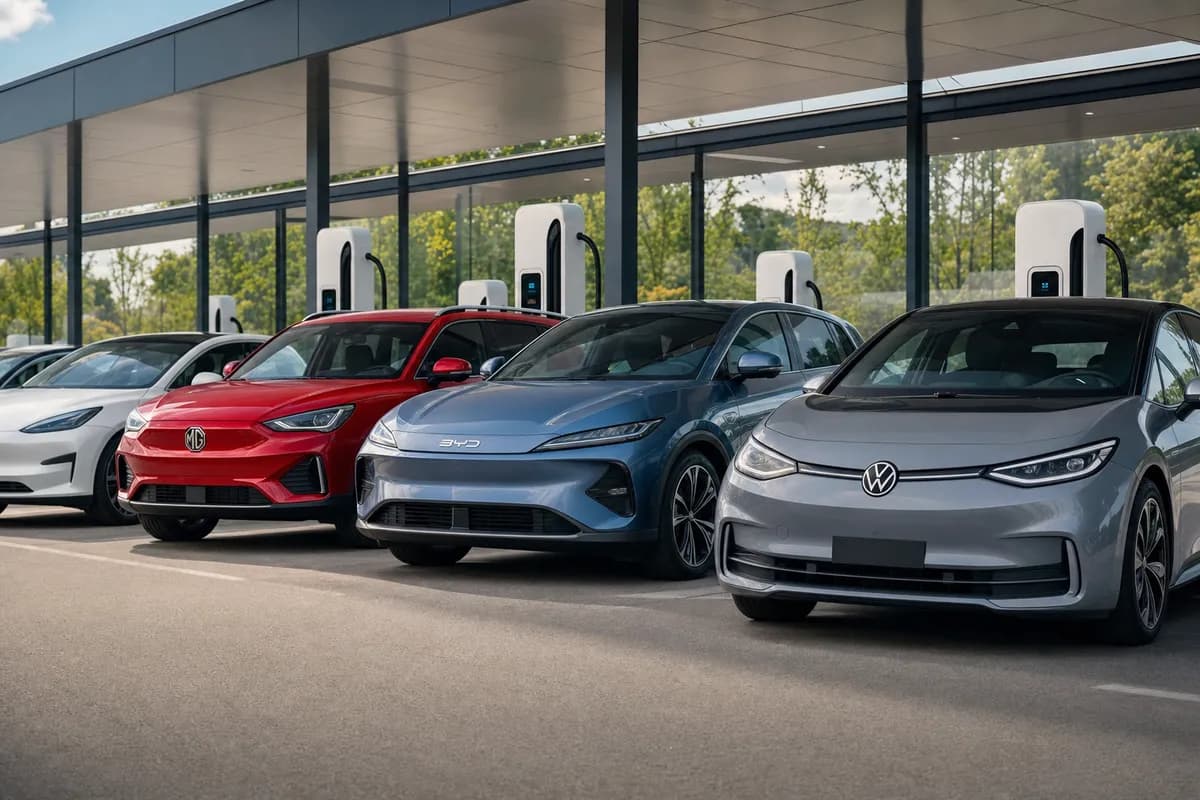
The group has been under pressure on several fronts. EV demand growth in Europe has cooled from its earlier surge, Chinese brands are pushing harder into the region, and software delays have already complicated some product plans. At the same time, Volkswagen still needs to fund battery plants, next-generation platforms, and lower-cost models for mass-market buyers.
That is why any Volkswagen job cuts 2026 report matters far beyond payroll. It is really about whether VW can lower fixed costs enough to defend margins while finally bringing cheaper electric cars to market at scale.
Which 2027 VW, Skoda, and Audi EVs could be affected
The most immediate impact would likely fall on high-volume MEB-based electric models and the factories that build them. For buyers tracking the 2027 VW ID.4 production picture, the key issue is whether Volkswagen consolidates output into fewer plants to improve utilization and reduce cost per vehicle.
Today, Volkswagen Group’s EV production in Europe is spread across several sites and brands. That broad footprint made sense when the company was trying to ramp quickly. It becomes harder to justify if factories are underused or if several plants are building overlapping models.
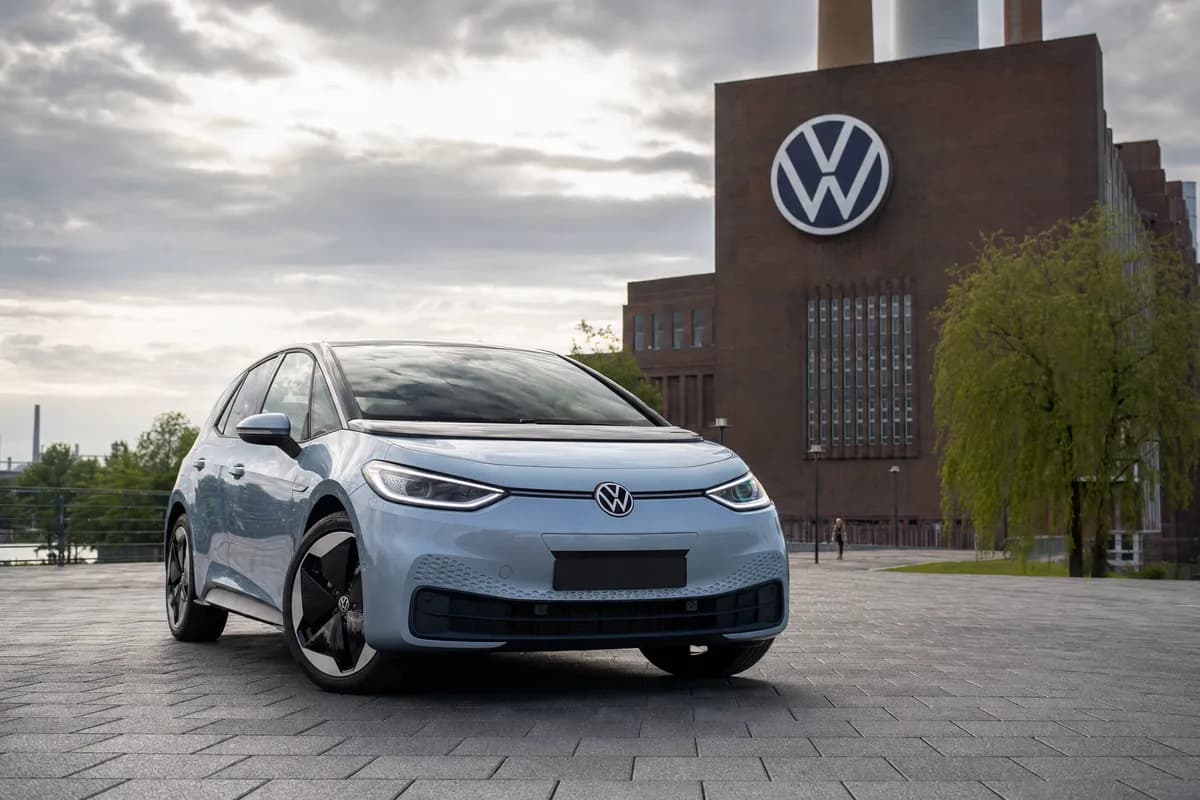
- Volkswagen ID.3: A candidate for production reshuffling if VW wants to centralize compact EV output in fewer facilities.
- Volkswagen ID.4: One of the group’s most important mainstream electric crossovers, making it a priority model for 2027 volume planning.
- Volkswagen Golf EV successor: Any future electric Golf strategy would be closely tied to platform cost and factory efficiency.
- Skoda Enyaq and related models: Skoda’s role as a value-focused brand could expand if the group leans harder into lower-cost EV production.
- Audi Q4 e-tron and other compact Audi EVs: Premium models may be protected, but overlapping capacity could still be reviewed.
The biggest production question is whether Volkswagen would protect its strongest-selling EVs and cut around them, or use the disruption to reassign them entirely. If a plant closure hits a site producing ID-family or related Skoda and Audi models, 2027 supply could tighten before it stabilizes.
That does not automatically mean fewer cars long term. In many restructurings, output is shifted rather than eliminated. But factory transfers usually bring short-term friction, including retraining, logistics changes, supplier renegotiations, and launch delays.
What plant closures in Europe could mean for supply and pricing
Reports of possible VW plant closures Europe would be especially sensitive because European car manufacturing is already under strain from high energy costs, wage pressure, and intense EV competition. Closing a plant can cut costs on paper, but it can also reduce flexibility just when demand is unpredictable.
For buyers, the pricing effect could go in two very different directions. If Volkswagen cuts excess capacity and simplifies production, it may lower manufacturing cost per vehicle and get more aggressive on price. If it closes too much capacity or faces disruption during the transition, supply could tighten and discounts could shrink.
That matters for European EV prices 2026 and into 2027 because Volkswagen sits in the middle of the market. It is one of the few groups trying to cover mainstream hatchbacks, family SUVs, fleet cars, and premium EVs under one corporate umbrella.
- Best-case scenario for buyers: VW closes inefficient operations, concentrates production, lowers costs, and passes some savings into lower lease rates and sticker prices.
- Neutral scenario: Short-term supply hiccups offset long-term efficiency gains, leaving prices mostly stable.
- Worst-case scenario: Plant disruption, labor conflict, and delayed launches keep volumes tight and affordable EVs arrive later than promised.
In practical terms, the ID.3 and ID.4 are the models to watch most closely. Those vehicles sit at the center of Volkswagen’s mainstream electric business. If they become cheaper to build, VW has a chance to defend market share against Tesla, Renault, Hyundai-Kia, Stellantis, and low-cost Chinese entrants. If not, pressure on pricing will intensify.
Will this help Volkswagen deliver cheaper electric cars?
That is the real test of the wider Volkswagen EV strategy. Buyers do not care much about restructuring charts. They care whether the company can offer a credible family EV at a lower monthly payment than today.
Volkswagen has long argued that scale will make its EVs more affordable. The problem is that scale only works when platforms, software, batteries, and factories are all aligned. Over the past few years, Volkswagen has had mixed results, with strong model recognition but uneven execution on software, cost control, and product timing.
If the reported cuts are paired with a clearer model strategy, the group could come out stronger by 2027. That would likely mean fewer overlapping trims, less factory duplication, more shared parts across VW, Skoda, and Audi, and a stronger focus on the highest-volume EV segments.
For example, Skoda could become even more important as the group’s value brand in Europe. A lower-cost Skoda EV closely related to the ID.3 or ID.4 formula could appeal to buyers who want space and practicality without paying for premium branding or extra technology packages.
Audi is a different case. Premium buyers are less price-sensitive, so Audi EV production may be less exposed to immediate affordability pressure. But even Audi cannot ignore factory efficiency if the wider group is cutting deeply to fund its next phase.
- If VW executes well: Cheaper entry EVs become more realistic by 2027, and ID.3/ID.4 pricing could improve.
- If VW executes poorly: Affordable EV promises slip, and buyers may keep turning to rivals with simpler lineups and lower production costs.
- If the market weakens further: Volkswagen may prioritize margin over volume, limiting how far prices fall.
What buyers waiting for 2027 models should do now
Anyone delaying a purchase in hopes of a much cheaper Volkswagen EV in 2027 should be careful about assuming a straight line from cost cuts to lower showroom prices. Restructuring often creates winners and losers across the lineup. Some models become sharper value propositions. Others see slower availability or fewer incentives.
For shoppers considering the ID.3, ID.4, Skoda Enyaq, or Audi Q4 e-tron, the smartest approach is to watch three things over the next 12 months. Factory allocation matters. Battery sourcing matters. Incentive strategy matters.
- Track production location announcements. If Volkswagen confirms model transfers or plant closures, expect temporary supply disruptions on affected vehicles.
- Watch for platform and battery updates. Cost reductions often come from chemistry changes, simplified packs, or more shared components.
- Compare lease deals, not just list prices. Automakers often use financing support to protect volume before cutting sticker prices.
Buyers looking for a bargain may actually benefit if Volkswagen uses aggressive incentives to keep factories busy during a transition. On the other hand, if a closure reduces output of a popular trim or battery version, that deal may disappear quickly.
The headline risk is disruption. The long-term opportunity is a leaner Volkswagen that can finally build lower-cost EVs in volume.
Verdict: a risky reset that could define Volkswagen’s 2027 EV position
If the reported June 2026 plan becomes reality, it would be a high-stakes reset for Europe’s biggest automaker. The logic is clear: cut costs, raise efficiency, protect core models, and free up cash for the next generation of EVs. The execution risk is just as clear.
For the 2027 VW ID.4 production outlook, and for the ID.3, future electric Golf strategy, Skoda EVs, and Audi compact electric models, the likely result is more consolidation and less duplication. That could eventually help Volkswagen compete harder on price. But in the short term, plant closures and job cuts could create supply friction and delay the exact affordability gains buyers are waiting for.
The bottom line for European buyers is simple. A leaner Volkswagen could be good news for EV prices by 2027. But until the company shows it can translate restructuring into cheaper, better-timed products, shoppers should treat any promise of significantly lower-cost electric Volkswagens with caution.
Affiliate disclosure: This article contains affiliate links. RevvedUpCars may earn a small commission on qualifying purchases at no extra cost to you.