Europe’s EV market rebounded in June 2026, and Chinese brands kept surging. Here’s how faster growth could reshape 2027 prices for major makers.
Europe’s electric-car market found its footing again in June 2026. Battery-electric sales accelerated, Chinese brands took another step forward, and the region’s biggest automakers now face a sharper pricing fight heading into 2027.
That matters beyond one strong month. If faster demand growth holds through the second half, it will reshape Volkswagen Renault Tesla EV competition, give Chinese EV brands Europe more room to expand, and put fresh pressure on margins just as buyers expect lower-cost EVs.
Europe EV sales in June 2026: demand picks up after a choppy start
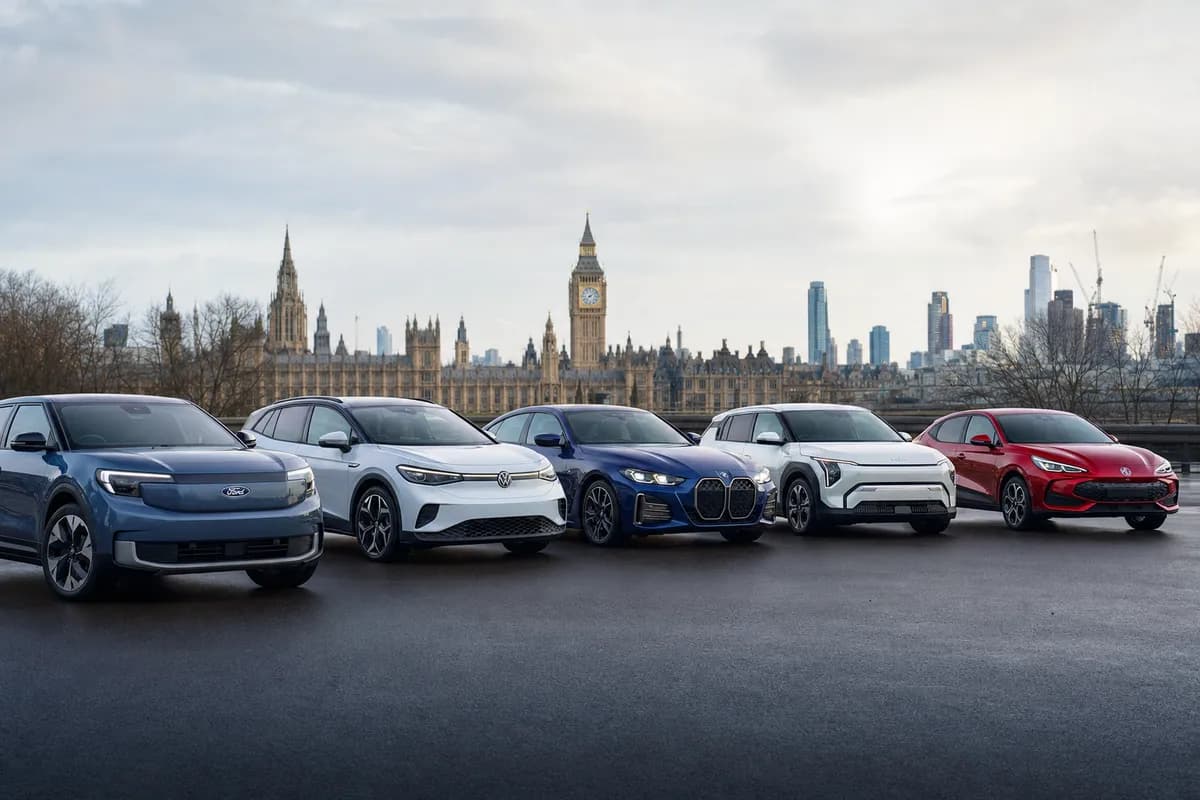
The key story in Europe EV sales June 2026 is simple: growth returned, and it returned broadly. Across the major EU markets plus the UK, battery-electric registrations rose at a markedly faster pace than the overall car market, helped by improved supply, more aggressive incentives in selected countries, and a larger mix of compact and mid-priced EVs reaching dealers.
Early market tallies from national registration bodies and industry trackers point to double-digit year-on-year BEV growth in June across several of Europe’s largest markets. Germany, the UK, France, Spain, Italy, the Netherlands, and Belgium all contributed, though not equally. The strongest gains came where fleet demand improved and where automakers pushed channel incentives to clear stock before the second-half launch cycle.
The rebound also reflects a market that looks more normal than it did a year ago. Interest rates remain a drag, but supply constraints have eased, delivery times have shortened, and buyers now have a wider spread of choices below the premium end of the market.
- Germany: BEV registrations improved from weak 2025 comparisons, though private demand stayed uneven.
- UK: One of the region’s strongest EV markets again, supported by fleet channels and a broad model range.
- France: Growth held up, but local-content rules and bonus changes continued to influence model mix.
- Southern Europe: Spain and Italy remained smaller EV markets by volume, but both showed better momentum than a year earlier.
That combination matters because it suggests the recovery is not resting on one country alone. Europe is still a fragmented EV market, but June showed signs of synchronized growth, and that gives scale players a real opportunity.
Chinese EV brands in Europe are no longer a niche story
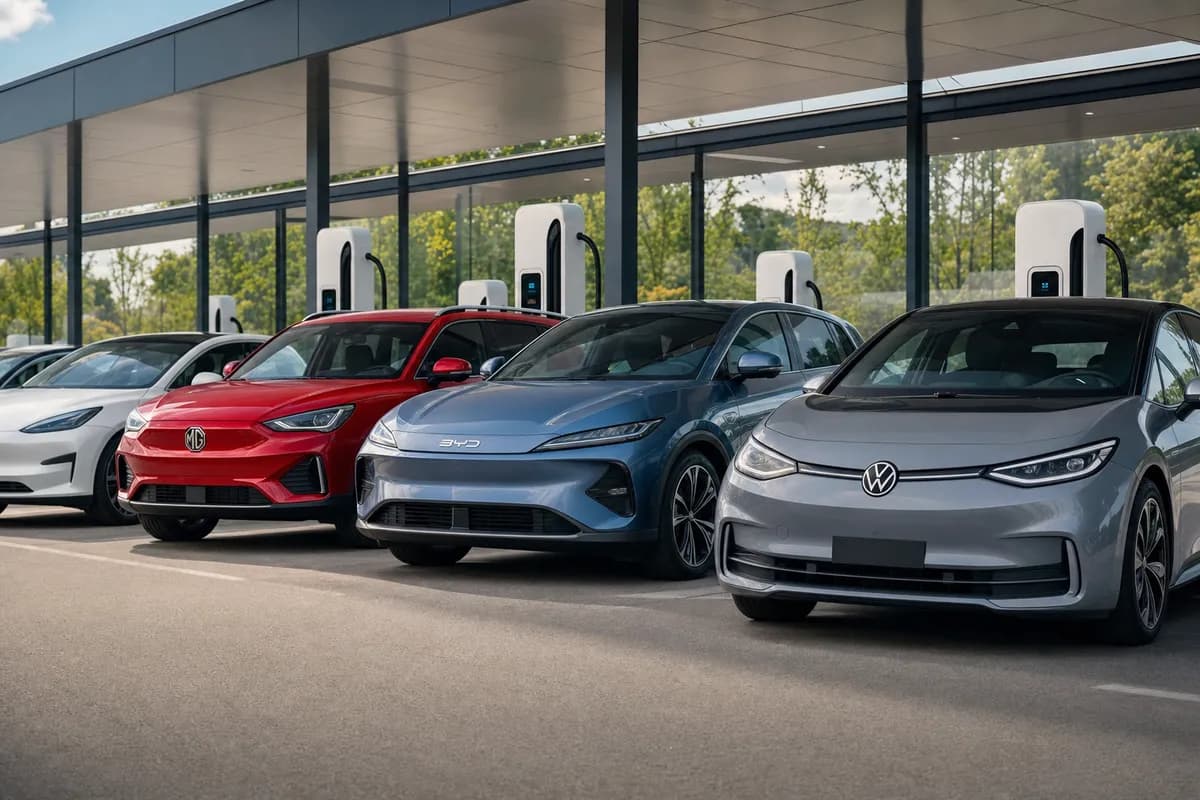
The second big shift is the steady rise of Chinese EV brands Europe. BYD, MG, XPeng, Leapmotor-backed distribution efforts, and other China-linked players are adding share not only through headline-grabbing launches, but through relentless coverage of price-sensitive segments.
MG remains the clearest example. The brand has built traction with practical, familiar products like the MG4 Electric, ZS EV, and MG5 estate, giving European buyers something many incumbents struggled to offer at scale: an EV that feels mainstream and affordable rather than experimental.
BYD is taking a different route. It has expanded with a broader lineup that now spans compact, midsize, and premium-adjacent models, including the Dolphin, Atto 3, Seal, and Seal U. That allows it to compete across more customer groups, from first-time EV buyers to company-car users and families moving out of combustion crossovers.
BYD MG Europe market share remains well below the region’s biggest legacy brands in absolute terms, but the direction is what matters. Chinese and China-linked brands collectively are now large enough to influence transaction prices, dealer discounting, and equipment expectations in a way they could not even two years ago.
- MG’s advantage: strong value perception, accessible pricing, and a proven compact hatchback in the MG4.
- BYD’s advantage: broader lineup, vertical battery integration, and growing brand awareness.
- European incumbents’ problem: too many EVs still sit above the market’s comfort zone on price.
This is where the competitive pressure sharpens. Chinese brands do not need to dominate volumes to change the market. They only need to keep winning enough buyers in compact hatchbacks, small SUVs, and fleet-friendly crossovers to force rivals into tougher pricing decisions.
What it means for Volkswagen, Renault, Tesla, BYD, and MG
For Volkswagen, a faster-growing market is both a relief and a challenge. Models like the ID.3, ID.4, ID.5, and ID.7 still give the group broad coverage, and the refreshed software and cabin updates have helped. But Volkswagen needs stronger execution in lower price bands, because that is where MG, BYD, and incoming rivals are most disruptive.
Renault may be better positioned than some peers if it can convert product momentum into volume. The Renault 5 E-Tech has become a critical model because it targets a part of the market Europe desperately needs: compact EVs with recognizable branding, urban-friendly size, and pricing that can move beyond early adopters.
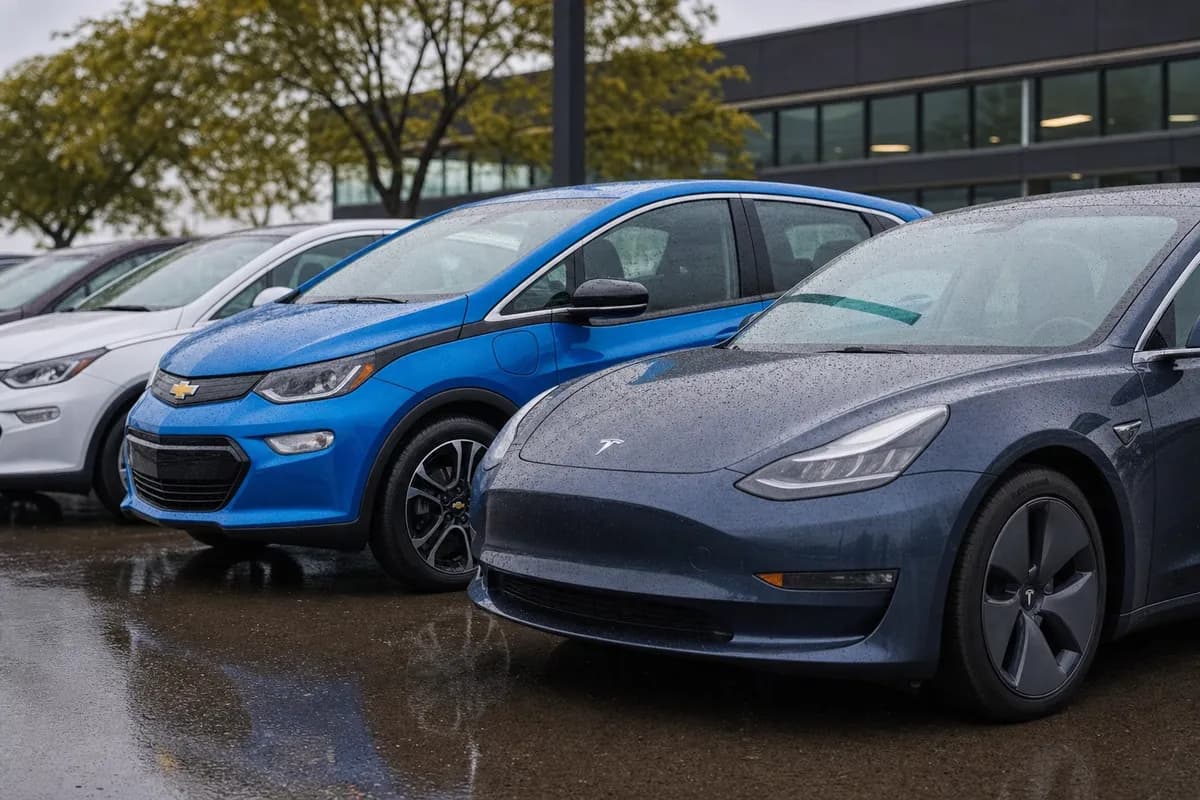
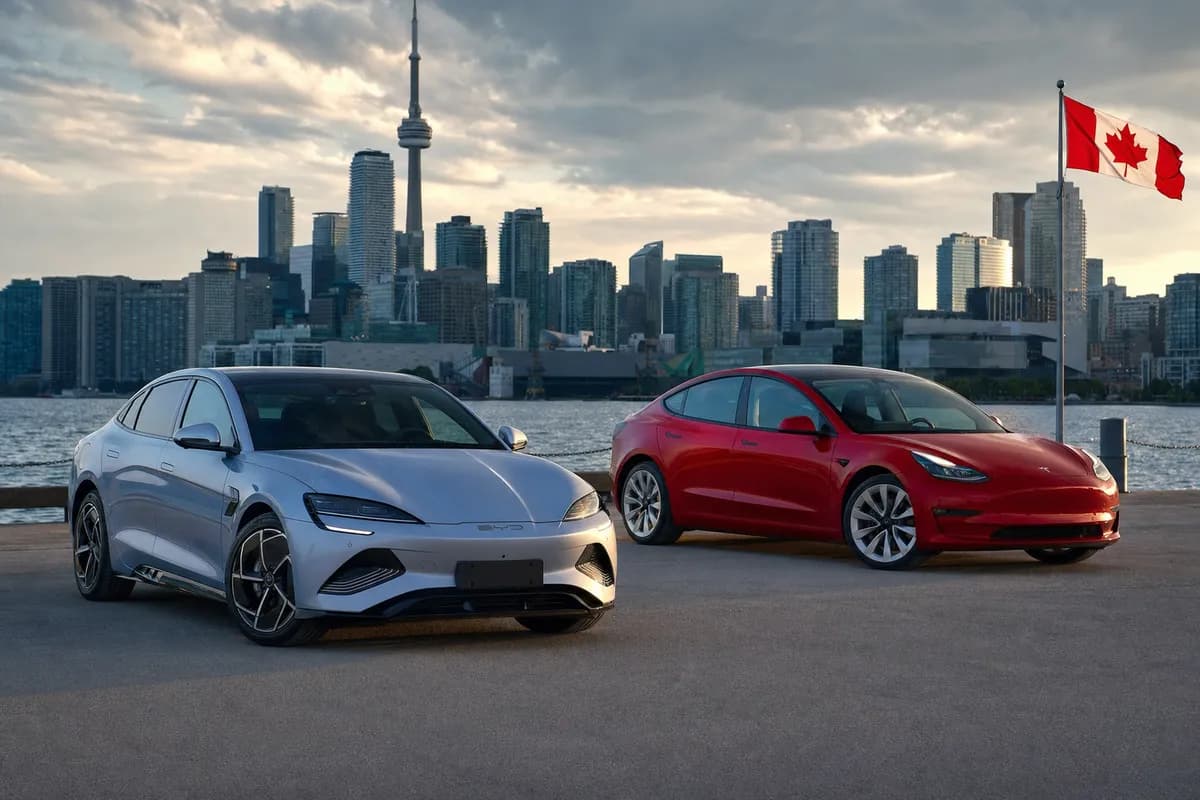
Tesla remains a major force, but the market around it has changed. The Model Y is still one of Europe’s defining EVs, and the Model 3 continues to sell, yet Tesla no longer dictates the pace as easily as it did when rivals had thinner lineups and slower factories. More competition means more frequent incentives, more financing offers, and less room for broad-based price leadership.
BYD enters this next phase with momentum. Its battery scale, in-house technology stack, and willingness to fill multiple segments make it one of the most credible challengers to Europe’s legacy groups. If it expands local distribution and aftersales fast enough, it can push from being a fast-growing outsider to a mainstream buying option.
MG’s role is slightly different, but no less important. It has shown that Europe will respond to a well-priced EV with decent range, usable packaging, and simple trim structures. That formula puts pressure on brands that still rely on expensive option lists or fail to offer true entry-level battery-electric alternatives.
- Volkswagen: needs stronger affordability and better margin discipline.
- Renault: has a shot at leadership in compact EVs if the Renault 5 scales smoothly.
- Tesla: remains powerful, but now competes in a crowded, promotion-heavy market.
- BYD: can grow share quickly if distribution and trust keep improving.
- MG: continues to set the benchmark for value-led EV positioning.
Why this rivalry could lower 2027 electric car prices
The most immediate effect of stronger June demand is not that automakers can suddenly raise prices. It is the opposite. If the market is growing faster and more brands believe they can win share, the temptation will be to fight harder on monthly payments, lease rates, and standard equipment.
That is why the debate over 2027 electric car prices is increasingly about competition, not just battery costs. Battery pack prices are still a major variable, and local production rules will matter more after Europe’s tariff and trade measures on China-made EVs. But customer-facing prices depend just as much on how aggressively brands use discounts to fill plants and hit emissions targets.
Several trends point toward lower effective prices by 2027, especially in the compact and lower-midsize segments:
- More sub-€30,000 EV launches from European and Chinese brands.
- Higher use of entry trims with smaller battery packs.
- Stronger leasing support as automakers chase volume.
- Better battery chemistry mix, including wider use of LFP cells in mainstream models.
- More local assembly or regional sourcing to offset tariff exposure.
That does not mean sticker prices will collapse across the board. Premium EVs will stay expensive, and some brands will protect list prices while increasing incentives in quieter ways. But for mainstream buyers, especially in B- and C-segment cars, the pressure should move toward lower monthly ownership costs by 2027.
Buyers should also expect more segmentation. One group of EVs will chase price and simplicity, with modest range and strong value. Another will focus on software, charging speed, and larger batteries, where brands try to preserve margins.
The verdict: Europe’s EV recovery is real, and 2027 could be cheaper for buyers
June 2026 did not settle the European EV race, but it clarified it. Demand is improving, competition is widening, and Chinese entrants now have enough presence to influence how the market prices, packages, and sells electric cars.
For Volkswagen and Renault, the task is clear: get affordable EVs into volume segments fast, without destroying profitability. For Tesla, the challenge is to defend scale and brand pull in a market where rivals are finally numerous and credible. For BYD and MG, the goal is to turn value and momentum into durable market share.
The likely result is good news for consumers. If Europe’s EV rebound continues and the current rivalry intensifies, 2027 electric car prices should become more competitive in real-world terms, especially through leasing and transaction discounts. That would not just lift sales. It would move Europe’s EV market closer to mass adoption.
Affiliate disclosure: This article contains affiliate links. RevvedUpCars may earn a small commission on qualifying purchases at no extra cost to you.