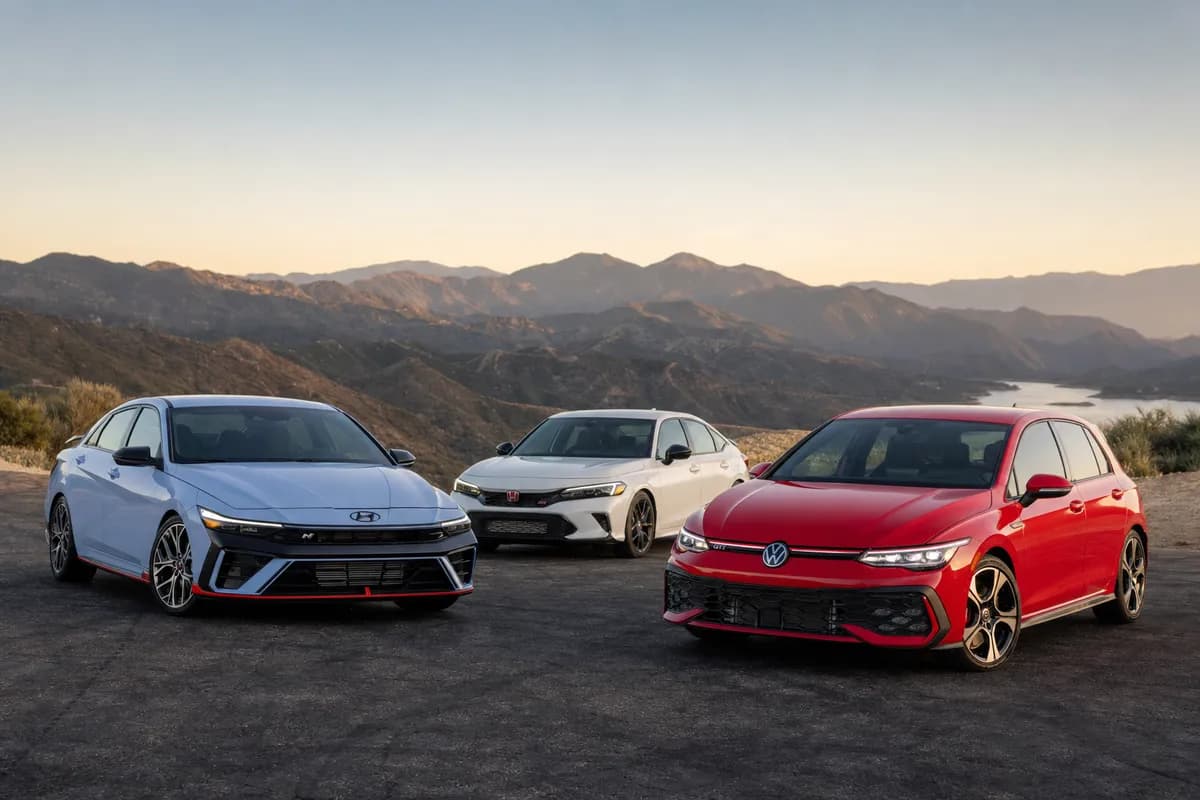
GTI, Civic Si, and Elantra N owners are building a smarter DIY sport-compact scene with brake fluid, summer tires, and OEM-plus upgrades that actually look right.
The hottest new tuner scene in 2026 is not chasing giant wings, crackle tunes, or cartoon camber. It is growing around cars you can still daily, still warranty intelligently, and still drive hard on a back road or at a local track night: the Volkswagen GTI, Honda Civic Si, and Hyundai Elantra N.
What makes this crowd different is the mindset. Owners are building cleaner, smarter, reversible cars with better brake fluid, better tires, sharper shifters, and OEM-plus mods that make modern front-drive performance cars faster and more fun without looking tacky.
The New Sport-Compact DIY Culture Is About Taste, Not Theater
The 2026 Volkswagen GTI mods crowd, the 2027 Honda Civic Si DIY crowd, and the 2026 Hyundai Elantra N maintenance crowd all overlap in one big way: they want real gains they can feel from the driver’s seat. These owners are less interested in social-media gimmicks and more interested in confidence, consistency, and clean execution.
That shift makes sense. Today’s FWD performance cars are already strong from the factory, with limited-slip differentials or torque-managing electronics, excellent chassis tuning, and usable power. A Mk8.5 GTI, an 11th-gen Civic Si, and an Elantra N all start from a much higher baseline than sport compacts did 15 or 20 years ago.
That also changes what “modded” means. Instead of tearing into a brand-new car with irreversible body kits and bargain coilovers, more owners are choosing manual transmission sport compact upgrades that preserve factory refinement. Think brake pads and fluid before big power, a square set of quality summer tires before loud exhaust, and shift feel improvements before cosmetic clutter.
The new rule is simple: if a mod makes the car nicer to drive every day and stronger at a track night, it stays. If it only looks loud in a parking lot, it probably goes.
Start With Brake Fluid, Pads, and Tires Before You Touch Power
If you ask experienced track-day drivers what the first real mod should be, the answer is rarely an intake or tune. It is usually brake fluid and tires. That may not sound glamorous, but it is the difference between a car that feels heroic for two laps and one that stays consistent all session.
The GTI, Civic Si, and Elantra N each respond well to this approach. The GTI is quick and polished, but like most modern turbo hatchbacks, it benefits from better high-temp fluid once repeated braking loads climb. The Civic Si is lighter on consumables and beautifully balanced, yet it still rewards better pads and a proper max-performance summer tire. The Elantra N has serious factory capability, though owners who use N mode often find the stock setup comes alive with stickier rubber and a fluid upgrade.
Best first-step prep for street and occasional track use
- Brake fluid: Move to a quality DOT 4 performance fluid with a higher dry boiling point.
- Pads: Use a street-performance compound if the car is a commuter, or a dual-purpose pad for regular lapping.
- Tires: Prioritize max-performance summer tires over all-seasons if temperatures and climate allow.
- Alignment: Add a touch more negative camber where possible to protect outer shoulders.
- Inspection: Check rotor thickness, hose condition, and caliper slide movement before any event.
On tires, fitment matters as much as brand. Many owners step up carefully from factory sizing to a slightly wider package that keeps sidewall support and steering precision intact. On these cars, that usually means resisting the temptation to oversize wheels and instead putting money into better compounds.
Smart summer-tire fitment trends for modern FWD cars
- Volkswagen GTI: 18-inch wheels remain the sweet spot for ride quality, tire cost, and response.
- Honda Civic Si: A modest width increase can sharpen front-end grip without making the car tramline.
- Hyundai Elantra N: Sticky 19-inch replacements work well, but many owners prefer downsizing for cheaper, lighter track tire options.
The theme here is restraint. A tasteful wheel in an OEM-style finish with proper offsets does more for the car than a flashy oversized setup ever will. It also keeps replacement costs sane, which matters when you actually drive the thing.
Manual-Transmission Care Is the Heart of the New DIY Scene
One reason this community feels fresh is that it is built around driver involvement. These are still enthusiast cars where the shifter, clutch take-up, rev match, and pedal feel are part of the experience. That makes manual-transmission care a real part of ownership, not just a maintenance line on a service sheet.
For the 2027 Honda Civic Si DIY crowd, this is familiar territory. Si owners have always obsessed over shift action, clutch feel, and bushing quality, and the modern car is no different. The same goes for GTI owners who want cleaner throws without ruining the factory slickness, and Elantra N owners looking to tighten engagement while keeping the car comfortable in traffic.
DIY manual-transmission care that actually pays off
- Change transmission fluid on a realistic schedule. If you drive spiritedly, do not wait forever just because the factory interval seems generous.
- Inspect clutch hydraulic fluid condition. Dark fluid and a vague pedal can make even a healthy gearbox feel worse.
- Check shift-linkage adjustment and bushings. Small play here adds up fast at the knob.
- Use a quality short shifter carefully. Good kits reduce slop. Bad ones increase effort and wear.
- Do not ignore motor mounts. A modest OEM-plus insert or upgraded mount can improve shift consistency under load.
This is where manual transmission sport compact upgrades shine. A weighted knob, improved bushings, and a well-engineered short-shift kit can transform how the car feels at legal speeds. You enjoy the car more every single day, and nothing about the outside screams for attention.
As a shop guy, I like this trend because it respects the machine. Owners are learning that a transmission that shifts beautifully is often the result of maintenance, adjustment, and one or two smart parts, not a pile of random catalog mods.
OEM-Plus Mods That Improve the Car Without Ruining the Design
OEM-plus used to be a niche term. In 2026, it is basically the language of this whole community. The idea is simple: choose upgrades that look factory-correct, fit well, and improve the car in ways the original engineers probably would have approved if they had another point on the budget sheet.
For 2026 Volkswagen GTI mods, that often means subtle spoilers, Euro-style trim pieces, better wheel-and-tire packages, and software coding for small convenience features rather than noisy visual add-ons. For 2027 Honda Civic Si DIY builds, it often means a cleaner shift setup, a better rear motor mount solution, improved brake feel, and maybe a factory-style lip kit. For 2026 Hyundai Elantra N maintenance and upgrades, owners are leaning into forged wheels, more track-capable pads, and mild chassis tweaks that preserve the N car’s playful balance.
OEM-plus FWD performance car mods that make sense
- High-quality summer tires in factory-friendly sizes
- Performance brake fluid and pads matched to actual use
- Short shifter, bushings, or weighted shift knob
- Subtle wheel upgrades in silver, graphite, or machined OEM-like finishes
- Mild suspension improvements such as a rear sway bar or quality springs, not ultra-low setups
- Factory-style aero that complements body lines instead of fighting them
- Reversible software tweaks where legal and reliable
The key word is reversible. Owners want to enjoy the car now without boxing themselves into a future headache when it is time to sell, trade, or handle warranty work. That mindset is bringing a lot more maturity to the FWD tuning world, and frankly, the cars look better for it.
Why GTI, Civic Si, and Elantra N Owners Are Building Something That Will Last
These three cars hit a rare sweet spot. The GTI offers polish and torque in a hatchback that still feels grown up. The Civic Si remains one of the best driver’s cars for the money, with sharp controls and low operating costs. The Elantra N brings a bigger personality, serious capability, and a willingness to play that few new sedans can match.
That makes them ideal platforms for a new DIY community built on owner skill instead of spectacle. People are learning how to flush brake fluid, select the right summer tire, service a manual gearbox, and choose OEM-plus FWD performance car mods that improve the car instead of overwhelming it. Those are the habits that create long-term enthusiasts, not short-term trend followers.
Verdict
The best thing happening in sport-compact culture right now is not extreme horsepower or wild bodywork. It is the return of disciplined, hands-on ownership. The 2026 and 2027 GTI, Civic Si, and Elantra N crowd is proving that tasteful, street-legal upgrades and solid maintenance can make a modern FWD car more rewarding than ever.
If this scene keeps growing, that is good news for everybody. Better-prepped cars are safer, better-driven cars are more fun, and cleaner builds age a whole lot better than whatever loud trend comes next.
Affiliate disclosure: This article contains affiliate links. RevvedUpCars may earn a small commission on qualifying purchases at no extra cost to you.