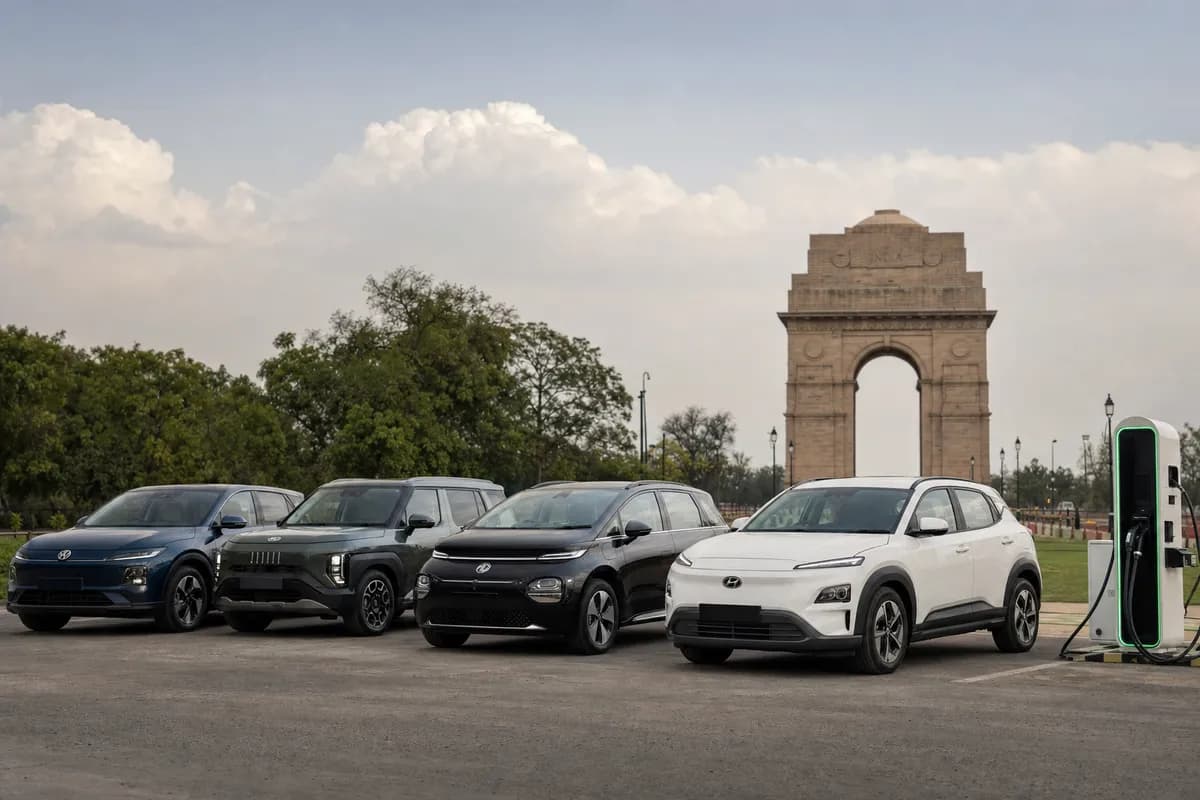
Delhi’s EV Policy 2026 draft hints at incentives, charging targets, and scrappage rules that may redefine 2027 pricing and model plans across India.
Delhi’s next EV policy is more than a local subsidy plan. If the draft measures now being widely praised translate into final rules, they could shape how automakers price, equip, and launch electric cars across India in 2027.
That matters because Delhi is not just another state market. It is one of India’s most closely watched urban mobility labs, where incentives, charging mandates, and fleet rules can quickly influence buying patterns and push brands like Tata, Mahindra, MG, and Hyundai to adjust strategy far beyond the capital.
Why Delhi EV Policy 2026 matters beyond Delhi
The Delhi EV Policy 2026 is being discussed as a stronger follow-up to the city’s earlier EV push, which helped lift electric adoption in two-wheelers, three-wheelers, and commercial fleets. The new direction appears more ambitious on charging, stricter on older polluting vehicles, and more targeted at mainstream private buyers and urban operators.
For the wider industry, the real story is scale and signaling. Delhi does not represent the whole Indian car market, but it does represent the kind of dense, high-visibility, regulation-heavy city where EVs make the most practical sense first. If the policy lowers ownership costs and improves charger access, automakers will have a stronger case to prioritize urban EV variants, battery leasing offers, and city-focused product mixes for 2027 electric cars India.
That could feed into decisions in other states as well. Once one major market standardizes incentives, public charging expectations, and scrappage-linked benefits, competing states often face pressure to respond with their own India EV incentives or risk losing investment and cleaner fleet growth.
What the new incentives could mean for EV pricing and monthly ownership costs
State-level incentives rarely make an expensive EV suddenly cheap, but they can make the monthly math more manageable. That is especially true in a city like Delhi, where buyers are more likely to compare EVs on running cost, parking convenience, and access to charging rather than highway range alone.
If the final policy includes direct purchase subsidies, registration or road-tax relief, and added support for women buyers, delivery fleets, or scrappage-linked purchases, the effect will be most visible in the entry and mid-price bands. That is where Tata, MG, and Hyundai are trying to win buyers who are moving up from premium hatchbacks and compact SUVs.
In practical terms, the brands most likely to benefit are those already selling EVs around the mass-premium sweet spot:
- Tata Motors: Tiago EV, Punch EV, Nexon EV, Curvv EV
- Mahindra: XUV400, with newer born-EV models expected to expand its lineup
- MG Motor India: Comet EV, ZS EV, and the Windsor EV in the growing urban family segment
- Hyundai: Creta Electric and Kona Electric legacy positioning, with future local EV strategy likely to matter more than imported niche products
Tata is best placed if incentives continue to reward lower upfront prices. The Tiago EV and Punch EV sit closest to the volume center of the market, while the Nexon EV remains one of the most familiar electric nameplates in India. A subsidy or tax break of even modest size can materially change EMI calculations in these segments.
MG could gain in a different way. The Comet EV already fits Delhi’s urban use case with its compact footprint and short-trip profile, while larger MG EVs benefit if charging confidence improves. Hyundai, meanwhile, needs policy support to help bridge the gap between brand appeal and actual EV affordability in India’s price-sensitive market.
Mahindra’s opportunity is more strategic. It has strong EV ambitions and a growing SUV identity, but policy support in Delhi could help it sharpen a cleaner value proposition for urban buyers who want more space and performance without stepping into premium import-level pricing.
Charging targets could be the biggest market-shaping piece
Subsidies get attention, but Delhi charging infrastructure may be the more important long-term lever. Buyers can adapt to range limits if home or neighborhood charging is easy. They do not adapt well to uncertainty, long queues, broken chargers, or poorly located public points.
If Delhi’s policy mandates more chargers in residential colonies, commercial buildings, office campuses, malls, parking lots, and fuel stations, it could directly affect what kinds of EVs sell best in 2027. Better urban charging tends to favor smaller-battery, lower-cost models because buyers no longer feel forced to pay extra for maximum range they rarely use.
That would be good news for compact and city-first EVs. It would also give automakers room to tune variants differently, offering lower-cost trims with smaller battery packs or fewer premium features for urban fleets and budget-conscious households.
Here is how stronger charging deployment could alter model strategy:
- Tata: More confidence in entry EV volumes, especially Tiago EV and Punch EV
- MG: A stronger case for the Comet EV and mid-range family EVs in dense city use
- Mahindra: More room to position future EVs as practical daily SUVs, not just aspirational tech products
- Hyundai: Better odds for premium-leaning urban EVs if public charging becomes predictable
Charging mandates also matter to apartment residents, who make up a large share of Delhi’s middle-class car market. Many potential buyers can afford an EV but cannot install a private charger easily. If the policy forces clearer rights-of-way for charger installation and expands shared charging in housing complexes, that removes one of the market’s biggest real-world barriers.
Scrappage rules could accelerate replacement demand and change who wins it
The tougher side of the Delhi EV Policy 2026 is likely to involve older internal-combustion vehicles. Delhi already has some of India’s strictest restrictions on ageing petrol and diesel vehicles. If the new policy links scrappage incentives more directly to EV purchases, replacement demand could become a major driver of sales by 2027.
This matters because scrappage-linked buyers are not always first-time EV adopters. Many are existing car owners replacing an older hatchback, sedan, or compact SUV. They are likely to compare total cost, reliability, brand trust, and after-sales support more closely than early adopters did.
That gives an advantage to companies with broad service networks and familiar badges. Tata is strong here because of market presence and EV volume. Hyundai also benefits from after-sales confidence, while Mahindra’s SUV brand strength may help if it can offer compelling urban-electric replacements.
MG’s challenge is different. Its EV lineup is credible, but scrappage buyers often want easy service access and low ownership friction more than standout design or novelty. Expanding service confidence and financing support will matter if Delhi’s scrappage rules start pulling conventional-car owners into the EV funnel.
Potential effects of tighter scrappage-linked EV rules include:
- Higher demand for sub-Rs 15 lakh electric cars and compact SUVs
- More trade-in and exchange schemes tied to state benefits
- Greater focus on warranty, battery assurance, and resale value
- Pressure on automakers to localize more components to protect margins
What urban drivers should watch heading into 2027
For buyers, the key question is not whether EVs will get cheaper in absolute terms. The more realistic question is whether policy support can make them easier to live with and easier to justify against petrol hybrids, CNG cars, and efficient compact ICE models.
Urban drivers should watch four things over the next year:
- Final subsidy structure: Direct grants, tax relief, and scrappage bonuses do not affect all price bands equally
- Charger rollout quality: The count matters less than uptime, location, and access
- Housing rules: Apartment charging access could decide whether many households buy an EV at all
- OEM pricing moves: Brands may quietly adjust ex-showroom pricing, feature packaging, or finance offers in response
There is also a wider industry implication. If Delhi successfully combines incentives, infrastructure targets, and scrappage pressure, automakers may start planning products not just for “India” in the abstract, but for a cluster of high-adoption metro markets with similar rules. That can shape battery sizing, trim strategy, charging speed, and software features.
Verdict: a city policy with national consequences
The likely impact of Delhi’s new EV push is not that it will single-handedly transform India’s car market overnight. The stronger case is that it could help define the next stage of mainstream urban EV adoption, where convenience and replacement economics matter more than novelty.
For Tata Mahindra MG Hyundai EV strategy, that means Delhi is a proving ground. Brands that can pair sharp pricing with reliable charging access, practical range, and strong exchange support will be best placed in 2027.
For drivers, the message is simple. If Delhi delivers meaningful India EV incentives, better Delhi charging infrastructure, and credible scrappage-linked benefits, electric cars become less of a policy idea and more of a practical urban purchase. And once that shift happens in Delhi, the rest of India’s metro markets are unlikely to ignore it.
Affiliate disclosure: This article contains affiliate links. RevvedUpCars may earn a small commission on qualifying purchases at no extra cost to you.