New DIY soft-roader owners are building clean, capable Outback Wilderness, Passport TrailSport, and Traverse Z71 rigs with smarter tires, skid checks, and hitch basics.
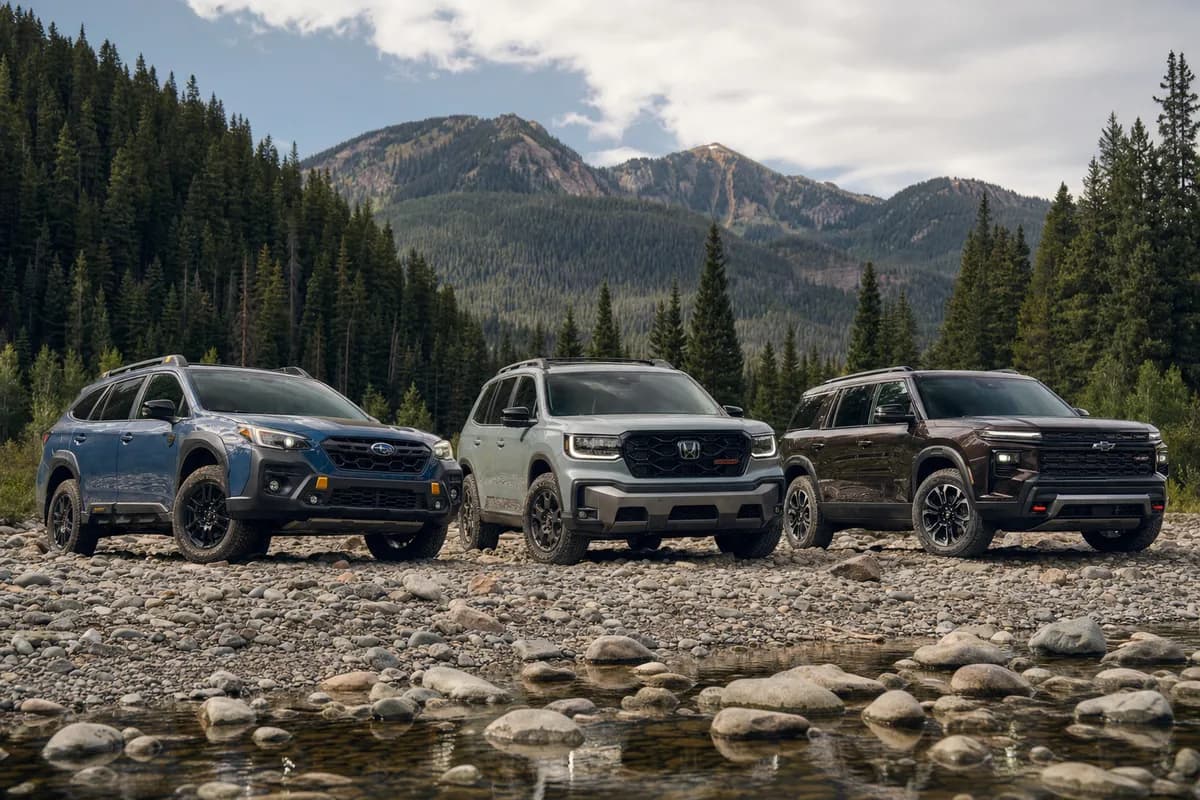
The new soft-roader crowd is not pretending a family crossover is a rock buggy. That is exactly why this scene works. Owners of the 2026 Subaru Outback Wilderness, 2027 Honda Passport TrailSport, and 2026 Chevrolet Traverse Z71 are building smarter, cleaner rigs for forest roads, trailheads, camp trips, and ugly weather, not for flex shots on boulders.
The Rise of the 2026 Soft-Roader Community
There is a clear shift happening in the enthusiast world. Buyers who want one vehicle for school runs, Costco duty, highway travel, and light dirt use are skipping flashy mall-crawler builds and choosing practical, reversible upgrades instead. That has created a new soft-roader community 2026 built around OEM quality, real utility, and keeping the vehicle livable every day.
The formula makes sense. The 2026 Subaru Outback Wilderness brings roughly 9.5 inches of ground clearance, all-terrain-ready gearing, and a factory lift. The 2027 Honda Passport TrailSport leans on a roomy two-row package, genuine trail-minded tuning, and Honda reliability, while the 2026 Chevrolet Traverse Z71 gives families a larger three-row platform with more room for people and gear than the other two.
What these owners share is more interesting than what separates them. Most are not chasing massive lifts, roof baskets piled to the sky, or angry light bars bolted everywhere. They want quiet road manners, intact warranties, better approach to bad roads, and mods that do not make the vehicle look like a catalog exploded on it.
All-Terrain Tire Fitment: The Upgrade That Changes Everything
If you do one thing to a modern adventure crossover, make it tires. A quality all-terrain tire does more for dirt traction, puncture resistance, and confidence on loose surfaces than almost any cosmetic bolt-on. It also changes the look in a way that feels factory-correct instead of forced.
For 2026 Subaru Outback Wilderness mods, the sweet spot is usually staying close to the factory overall diameter and adding a slightly more aggressive all-terrain tread. The Outback Wilderness already comes better prepared than most wagons, so owners who jump too far in size often create rubbing at full lock, hurt fuel economy, and dull the CVT’s response. A modest upgrade from stock works better than internet bravado.
For the 2027 Honda Passport TrailSport DIY crowd, there is more room to work with, but the same rule applies. A tire that is one step tougher, not two sizes bigger, preserves steering feel and keeps road noise low enough for long family drives. The Passport is one of the better candidates for an OEM-plus wheel-and-tire package because it has the wheelwell space and suspension character to carry it well.
The 2026 Chevrolet Traverse Z71 off-road upgrades conversation is a little different because this is the largest, heaviest vehicle here. That means load rating matters more than sidewall aesthetics. Owners need to watch both tire weight and rolling diameter, because adding too much mass can make a big crossover feel slower, less efficient, and busier over broken pavement.
- Best approach: choose a reputable all-terrain tire in the stock diameter or within about 3 percent.
- Look for: severe snow rating if you deal with winter, reinforced sidewalls, and moderate tread voids.
- Avoid: heavy E-load truck tires on crossovers that do not need them.
- Check: full-lock clearance, rear suspension compression clearance, and spare-tire compatibility.
Popular options in this category usually include mild all-terrain designs from Falken, Yokohama, Toyo, and BFGoodrich, depending on exact OE sizing. The winning setup is the one that stays balanced. More grip on gravel and mud is great, but not if the crossover drones like a mud truck at 75 mph.
Skid Plates, Underbody Protection, and the Reality Check Most Owners Need
Skid plates are the most misunderstood part of the current crossover adventure trend. Many factory “underbody protection” packages are really stone shields or splash protection with limited impact resistance. They help, but they are not permission to drag a 4,500-pound family hauler over ledges.
The Outback Wilderness has a real head start here because Subaru designed it with more off-pavement intent than the average wagon. Even then, owners should inspect what is actually protecting the oil pan, transmission, rear diff area, and fuel tank zone before assuming the badge tells the whole story. A tough front plate and good approach judgment go together.
The Passport TrailSport is attractive because Honda has leaned into trail credibility more than it used to. Still, a simple driveway inspection tells the truth fast. If the vulnerable bits sit lower than the visible plate, or the plate mounts to brackets that would fold on a hard hit, you are looking at limited protection.
The Traverse Z71 presents the biggest reality check. It can absolutely handle rough access roads, washboard, shallow ruts, and weather-beaten camping routes, but its size works against it in breakover and departure situations. On a vehicle this long, smart wheel placement matters more than bolt-on armor.
- Protect first: engine oil pan, transmission area, lower radiator zone, and exposed evap or fuel lines.
- Inspect mounting: a thick plate is useless if the mounts are weak.
- Watch airflow: poorly designed aftermarket plates can trap heat.
- Remember: skid plates are for mistakes and surprises, not as a primary driving strategy.
Hitch Recovery Basics: Useful, Legal, and Less Sketchy Than Tow-Strap Guesswork
One of the smartest upgrades in the OEM-plus crossover adventure mods world is a properly rated hitch setup. Not because these crossovers should recover full-size trucks from axle-deep mud, but because a hitch receiver provides a known, engineered point for light recovery, shackle mounting, bike racks, cargo trays, and small trailers. That is real utility.
Too many owners still hook straps to suspension arms, tie-down loops, or random sheetmetal points. That is how parts bend, straps slip, and people get hurt. If your crossover has a factory or properly installed aftermarket receiver, use a rated recovery insert and a quality strap matched to the vehicle’s weight.
There are limits here. A unibody crossover is not a body-on-frame 4x4, and violent snatch recoveries are a bad idea. Gentle pulls on stable ground are one thing. Shock-loading a crossover buried in deep muck is another.
- Use only rated recovery gear from known brands.
- Inspect the hitch rating and mounting hardware before every trip.
- Use soft shackles or properly rated hardware sized to the recovery point.
- Keep bystanders clear and never stand over a loaded strap.
- Favor slow, controlled recoveries over aggressive jerks.
For these vehicles, a hitch is also one of the best legal and reversible upgrades you can make. It does not scream for attention, and it adds useful capability every single week, not just on the occasional dirt-road weekend.
The Best OEM-Plus Mods for Family Adventure Crossovers
The best builds in this new scene are subtle. They look like a trim level the manufacturer forgot to offer. That means clean fitment, factory-style finishes, and parts that improve how the vehicle works without making it obnoxious to drive or park.
For the Outback Wilderness, think practical protection and storage. Mud flaps that do not drag, a hatch-area cargo system, seatback protection, a compact air compressor, and a full-size spare plan do more than rooftop fashion accessories. Add tasteful lighting only if you actually need it, and keep it compliant with local road-use laws.
For the 2027 Passport TrailSport DIY crowd, one of the strongest plays is suspension restraint rather than lift obsession. A carefully chosen tire, useful recovery gear, a hitch, interior organization, and maintenance upgrades like better brake pads and fresh alignment settings can make the Honda feel more confidence-inspiring on every surface. Sometimes the best mod is simply correcting what hard use and miles have knocked out of spec.
Traverse Z71 owners should focus on payload discipline and travel efficiency. A roof setup should stay light, because every pound up high hurts handling and fuel economy. Better floor liners, rear cargo management, a compact fridge slide if the family camps often, and strong tire choices make more sense than trying to cosplay a full-size overland build.
- Worth doing: all-terrain tires, hitch receiver, recovery insert, compressor, cargo organization, full-size spare strategy, quality floor protection.
- Usually worth it: selective skid plates, mild wheel upgrades, compliant auxiliary lighting, upgraded brake pads for loaded trips.
- Usually not worth it: giant lifts, fake beadlocks, heavy steel bumpers, oversized roof tents, and universal-fit cosmetic junk.
Maintenance also belongs in this conversation. Adventure use means more dust, more heat cycles, and more underbody grime. If you drive washboard roads often, shorten inspection intervals for tires, sway bar links, brake components, and alignment, and rinse the underbody after mud or road salt exposure.
Verdict: Capability Without the Costume
The reason this new crossover crowd is growing fast is simple. These owners have figured out that a well-driven, well-equipped soft-roader is more fun and more useful than a tacky build stuffed with fake toughness. The 2026 Outback Wilderness, 2027 Passport TrailSport, and 2026 Traverse Z71 all respond well to the same disciplined formula: tires first, protection where it counts, real recovery points, and mods that preserve daily comfort.
That is the heart of the soft-roader community 2026. It is practical, informed, and refreshingly honest about what these vehicles are. Build within the platform’s limits, keep the upgrades reversible and legal, and you end up with a family adventure crossover that works better everywhere and still looks right in the school pickup line.
Affiliate disclosure: This article contains affiliate links. RevvedUpCars may earn a small commission on qualifying purchases at no extra cost to you.