July 2026 brings another dip in China EV deliveries, hinting at softer demand and harsher discounts that could reshape prices globally.
China’s electric-car market is losing momentum again in July 2026, and that matters far beyond Beijing, Shanghai, or Shenzhen. Early delivery trends point to softer demand, fiercer discounting, and a new phase in the price war that is already rippling into exports and global EV planning for 2027.
July 2026 is shaping up as another weak month for China EV deliveries
The latest channel checks and weekly insurance-registration data suggest that China EV deliveries July 2026 are running below the pace many automakers needed after a mixed second quarter. That does not mean the market is collapsing. It does mean the easy growth era is over, especially for brands chasing volume with similar crossovers and sedans.
The weakness is showing up in a familiar pattern. Retail traffic has softened after a burst of first-half promotions, inventory pressure is building at some dealers, and more brands are leaning on cash incentives, subsidized financing, and insurance offers rather than clean sticker-price cuts.
For investors and buyers, the key issue is not just one soft month. It is what another slowdown says about margins, production planning, and whether Chinese brands will push even harder into export markets in the second half of 2026.
- Demand: Slower-than-expected summer retail demand after heavy first-half discounting
- Pricing: Incentives remain widespread, especially in the mass-market battery EV segment
- Inventory: Pressure is rising on dealers and regional sales networks
- Exports: Carmakers have stronger incentive to move excess output overseas
What it means for BYD, Nio, Xpeng, and Li Auto
The biggest question in BYD Nio Xpeng Li Auto sales this month is not who leads on volume. BYD still dominates the market in absolute terms. The bigger issue is which companies can defend margins and product mix as consumers become more price-sensitive.
BYD: scale still helps, but the pressure is real
BYD remains the most resilient Chinese EV player because it has the broadest lineup and unusual control over its supply chain, from batteries to semiconductors. Models such as the Seagull, Dolphin, Yuan Plus, Song Plus DM-i, and Qin Plus still give it reach across several price bands.
But BYD is not insulated from a slower market. Its plug-in hybrid range has helped cushion pure-EV volatility, yet that same flexibility could force it to work harder on promotional spending to keep factories running near capacity. If domestic demand remains soft, BYD has every reason to push more vehicles into Europe, Southeast Asia, Latin America, and the Middle East.
Nio: premium positioning is harder in a discount market
Nio’s challenge is sharper. The company’s premium strategy, battery-swapping ecosystem, and models like the ET5, ET5 Touring, ES6, and EC6 stand out technologically, but premium EV demand in China is not immune to discount fatigue.
When mass-market brands cut aggressively, buyers start expecting more content for the same money across the board. That squeezes Nio, because its path to profitability depends on holding pricing discipline better than lower-cost rivals can.
Xpeng: stronger products, tougher market
Xpeng has been more competitive recently thanks to models including the Mona M03, G6, X9, and updated smart-driving features. The brand has improved execution, and its value equation looks better than it did two years ago.
Even so, a broad global EV demand slowdown and weaker domestic sentiment make life difficult for a company that still needs sustained scale gains. Xpeng can win share in a weak market, but that does not guarantee healthy profits if each incremental sale requires more incentives.
Li Auto: less exposed, but not untouched
Li Auto has benefited from its large extended-range SUVs, including the L6, L7, L8, and L9. That lineup has held up well because it targets family buyers who want space and convenience without relying fully on public charging.
Still, Li Auto cannot ignore a cooling market forever. If Chinese consumers become more cautious on big-ticket purchases, even the strongest family-SUV niche can soften, especially as more rivals add large three-row electrified models.
- BYD: Best positioned on scale and cost, but likely to export more if China weakens further
- Nio: Most exposed to premium-demand softness and pricing pressure
- Xpeng: Better product momentum, but margin risk remains high
- Li Auto: More insulated thanks to EREV focus, though not immune to slower consumer spending
Tesla’s China strategy in 2026 looks more complicated than it did a year ago
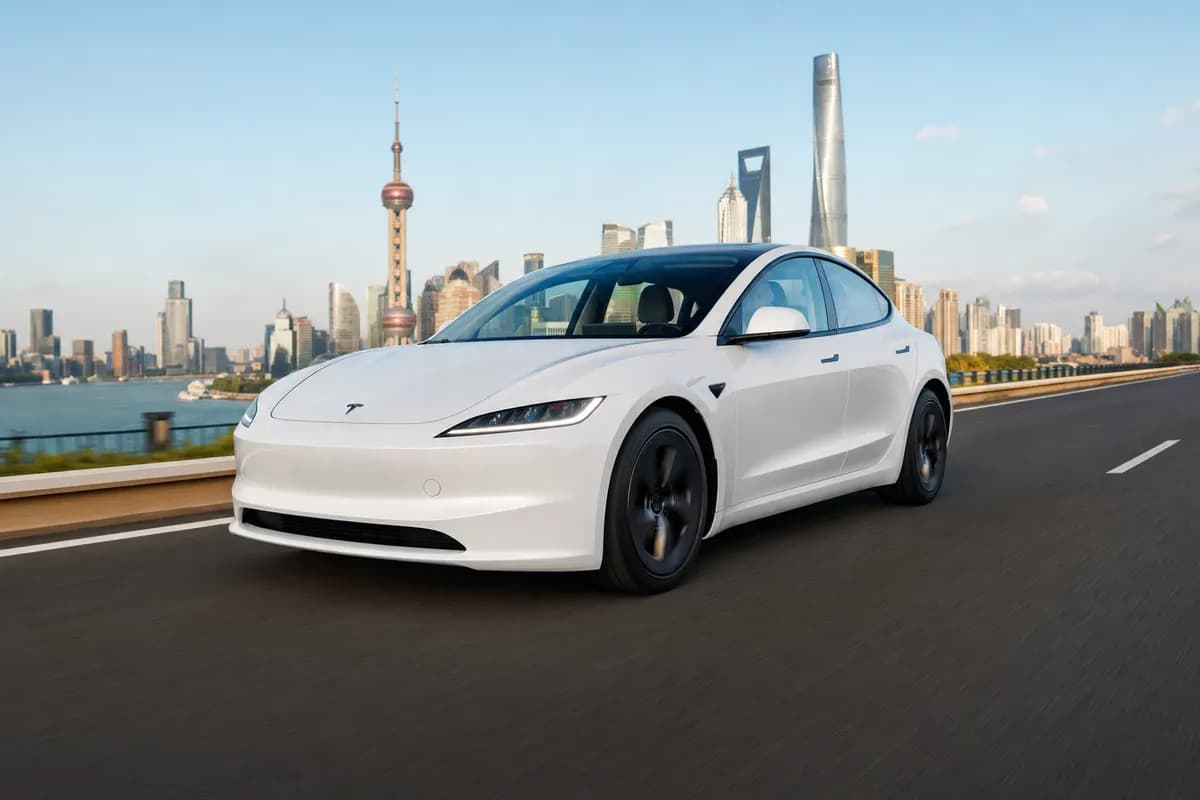
Tesla China strategy 2026 is no longer just about maximizing Shanghai output and using the factory as a profit engine. It is now about balancing local competition, export economics, and how much pricing flexibility Tesla can afford without damaging margins globally.
China remains critical to Tesla for two reasons. First, the Shanghai plant is still one of the company’s most important manufacturing hubs for the Model 3 and Model Y. Second, China is the world’s most intense EV battleground, which means any pricing move there can quickly influence buyer expectations elsewhere.
Tesla has already learned that Chinese rivals can respond faster and more aggressively in software, financing, and feature bundling. BYD and others are increasingly competitive on driver-assistance features, cabin tech, and perceived value, especially in the heart of the Model Y market.
If July stays weak, Tesla has a few likely options:
- Lean harder on limited-time financing and insurance subsidies rather than headline price cuts
- Adjust Shanghai export allocation depending on overseas demand and tariff exposure
- Use feature updates and trim changes to defend transaction prices
- Protect Model Y volume while accepting thinner margins in China
The problem is that Tesla cannot treat China in isolation. A weaker Chinese market can force more aggressive export behavior from domestic brands, which in turn puts pressure on Tesla in Europe and other international markets.
Why China’s slowdown could reshape 2027 electric car prices worldwide
This is where the July 2026 delivery slowdown becomes a global story. If Chinese automakers face excess capacity at home, they will keep looking abroad for growth. That increases the odds of more low-cost or aggressively priced EVs reaching overseas markets in late 2026 and through 2027.
That does not mean every market will suddenly get cheap Chinese EVs. Tariffs, local-content rules, shipping costs, and political restrictions still matter. But in open or semi-open markets, a soft China market usually translates into more export pressure and more price competition.
For 2027 electric car prices, there are three main scenarios.
- Price declines in open markets: Southeast Asia, Latin America, parts of the Middle East, and Australia could see stronger competition from Chinese brands, pulling EV prices lower.
- Price compression without full cuts in protected markets: In Europe and North America, automakers may rely more on incentives, leasing support, and trim repositioning than dramatic sticker-price reductions.
- Better equipment at the same price: Even where tariffs block major price cuts, buyers may get larger batteries, more standard safety tech, or better software for similar money.
Battery costs are also part of the equation. Slower demand growth can reduce pressure on raw materials and cell pricing, which helps lower costs over time. But weak demand alone does not guarantee lower consumer prices if automakers use the savings to protect margins instead.
A softer China market in 2026 is not just a local sales story. It is a trigger for tougher export competition, more selective discounting, and a global reset in how EVs are priced and equipped for 2027.
Verdict: the July slowdown looks manageable for now, but the consequences could be wide
China’s July 2026 EV delivery weakness does not yet look like a collapse. It looks like a market that is maturing, saturating in some segments, and becoming less forgiving for brands without scale, clear differentiation, or strong balance sheets.
BYD is still best placed to absorb the shock. Li Auto looks relatively protected. Nio and Xpeng face tougher execution tests, even with improving products. Tesla, meanwhile, has to defend share in China while also watching what Chinese rivals do in export markets.
The bigger takeaway is global. If China’s domestic market stays soft into the second half, 2027 could bring more affordable EVs, richer standard equipment, and sharper competitive pressure worldwide. For consumers, that may be good news. For automakers chasing profits, it is a far harder road.
Affiliate disclosure: This article contains affiliate links. RevvedUpCars may earn a small commission on qualifying purchases at no extra cost to you.