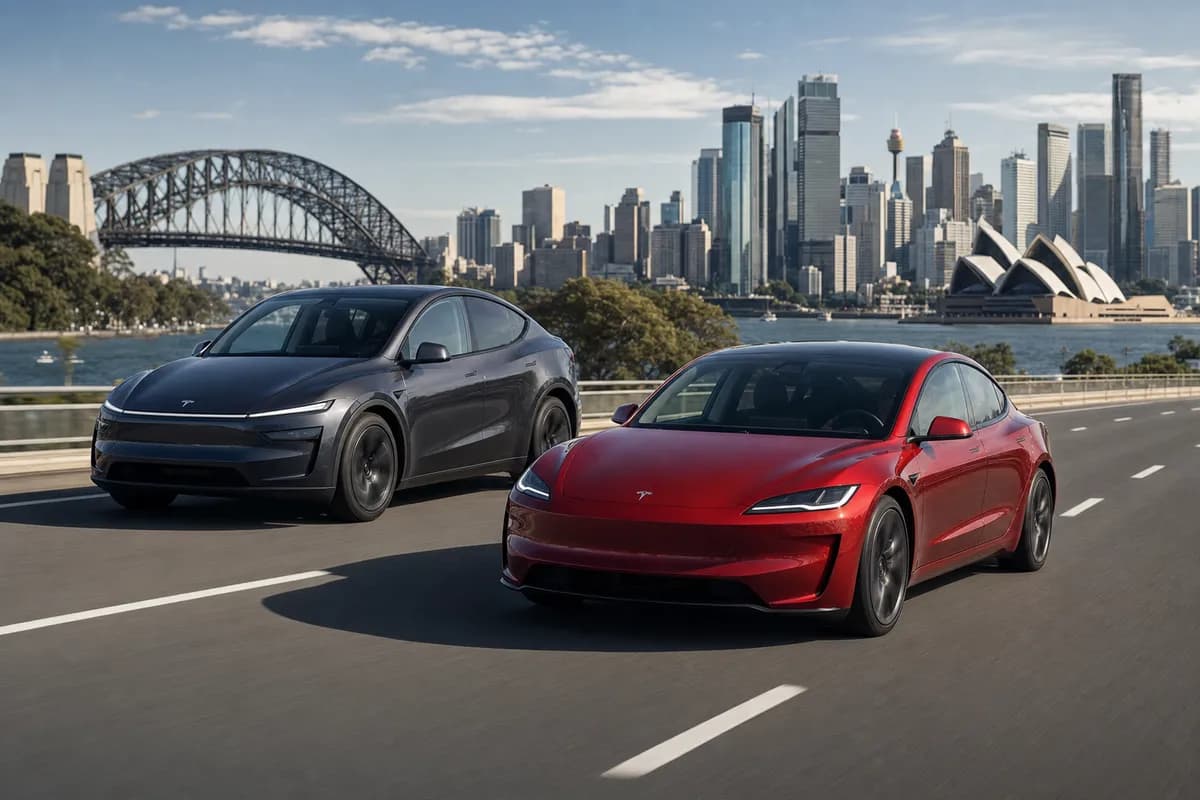
Tesla’s record month in Australia in June 2026 signals EV demand is still accelerating as Model Y and Model 3 surge against BYD and MG.
Tesla has posted its strongest month in Australia in years, and the timing matters. June 2026 was not just a rebound for the brand’s local business; it was a sharp signal that Australia’s EV market is still growing, still price-sensitive, and still highly responsive to product updates and supply swings.
The headline was simple: Tesla Australia sales June 2026 surged on the back of the Model Y and Model 3. But the bigger story is what that jump says about demand, the pressure now facing BYD and MG, and whether Australia is again becoming one of Tesla’s most important growth markets outside North America and Europe.
Tesla’s June 2026 result was big, and it changed the tone of the market
After a choppy 2025 and an uneven start to 2026, Tesla’s June performance reset expectations. The company delivered a record monthly result in Australia, driven overwhelmingly by the Model Y Australia 2026 lineup and supported by renewed Model 3 momentum.
That matters because Tesla’s local sales have often been shaped by shipping cadence rather than clean month-to-month demand. When a major delivery wave lands, Tesla can dominate the rankings. But June 2026 looked bigger than a normal end-of-quarter push, because it landed into a market where buyers are still actively cross-shopping Tesla against newer Chinese rivals rather than simply defaulting to the cheapest EV available.
The mix also matters. The Model Y remains Tesla’s volume anchor in Australia, as it is in many global markets, while the updated Model 3 has helped restore some sedan demand. Together, those two vehicles still define Tesla’s local business.
- Model Y: Tesla’s clear volume leader in Australia, benefiting from SUV demand and broad mainstream appeal.
- Model 3: Regained traction after updates, especially among buyers seeking a lower entry price than the Model Y.
- Brand effect: A strong June lifted Tesla’s share of the EV market and put it back at the center of the 2026 sales conversation.
For the broader Australia EV market 2026, this was a reminder that Tesla is still capable of moving the national numbers on its own. When Tesla has stock, competitive pricing, and fresh product, the market feels it immediately.
Why Tesla is rebounding in Australia in 2026
Several factors appear to be driving Tesla’s local rebound. The first is product alignment. Australian buyers continue to favor compact and mid-size SUVs, and the Model Y remains one of the most recognizable EVs in that space.
Second, Tesla has benefited from stronger value positioning. In Australia, EV demand is no longer driven by early adopters alone. Buyers are comparing finance costs, resale expectations, charging access, running costs, and equipment levels much more closely than they did two or three years ago.
That comparison still plays to Tesla’s strengths in several areas:
- Charging: The Supercharger network remains a major advantage for regional travel and first-time EV buyers.
- Software and efficiency: Tesla still leads on energy consumption and user experience in many real-world comparisons.
- Brand confidence: Even with more rivals in the market, Tesla retains a strong reputation for EV-specific engineering rather than conversion-platform compromise.
- Fleet and novated lease appeal: Tesla remains highly visible in salary-packaging channels that have become increasingly important in Australia.
The Model 3 sales Australia story is especially notable. Sedans are a smaller slice of the market than SUVs, but the Model 3 still has a loyal buyer base and remains one of the most recognizable EV nameplates in the country. With pricing pressure across the segment and a more mature charging ecosystem, the Model 3 has become easier to justify for buyers who want Tesla ownership without stepping up to a higher-priced SUV.
Another reason Tesla is recovering is simple: Australia remains an EV market where supply swings can quickly alter rankings. A strong delivery month can sharply boost results, but that does not make the demand unreal. It means brands that can land cars at the right time, in the right trim mix, are rewarded quickly.
What BYD and MG are doing as Tesla surges
The June result does not mean Tesla is running away with the market. If anything, it sharpens the fight. The central competitive story in Australia now is still BYD vs Tesla Australia, with MG also playing a critical role in pushing affordability lower.
BYD has built real momentum by doing what Tesla does not always prioritize: offering more visible value at multiple price points. In Australia, BYD has expanded from the Atto 3 into a broader lineup that speaks to both private buyers and fleets. It has also benefited from a dealer-backed retail presence that some consumers still prefer over Tesla’s direct-sales approach.
MG’s role is slightly different. It is less about matching Tesla on tech or charging and more about dragging entry prices down. For many households, MG is the brand that keeps EVs in the conversation at all.
Here is how the key players stack up in 2026:
- Tesla Model Y: Strong brand pull, leading charging ecosystem, efficient packaging, proven resale strength.
- Tesla Model 3: Competitive sedan option, strong software experience, lower Tesla entry point.
- BYD Atto 3 and Seal: Aggressive value, broader showroom-style retail model, increasingly credible technology offering.
- BYD Sealion-family SUVs: Important because they target the same practical family buyer Tesla wants.
- MG 4 and related EVs: Price-led disruption, especially for buyers moving from small ICE hatchbacks and compact SUVs.
BYD is probably Tesla’s most serious strategic threat in Australia because it combines scale, rapid product rollout, and pricing flexibility. It does not need to beat Tesla on every metric. It only needs to make enough buyers question whether Tesla’s premium is still worth paying.
MG, meanwhile, broadens the market from below. That matters because it grows the overall EV buyer pool, but it also puts indirect pressure on Tesla by normalizing lower monthly repayments and cheaper entry points.
What this says about Australian EV demand in 2026
The June surge suggests Australian EV demand in 2026 is healthier than some softer recent periods implied. The market is not moving in a straight line, and EV adoption is still sensitive to interest rates, incentives, and shipping schedules. But buyers are still showing up when the product-and-price equation works.
That is the clearest takeaway from Tesla’s rebound. The problem in Australia was never simply a lack of EV interest. It was a mix of affordability pressure, rising competition, and a market shifting from novelty to scrutiny.
For buyers, that is mostly good news. More competition means stronger deals, more standard equipment, and faster product cycles. It also means Tesla can no longer rely on brand momentum alone.
Three things now define the Australia EV market 2026:
- Price discipline matters more than ever. Buyers are comparing EVs against hybrids and efficient ICE models, not just against other EVs.
- SUVs remain the volume center. That keeps the Model Y in a powerful position, but it also invites direct attacks from BYD and others.
- Infrastructure and ownership experience still matter. Public charging growth helps all brands, but Tesla continues to benefit most from its own mature network.
This also suggests Australia remains one of Tesla’s more strategically useful right-hand-drive markets. It is highly urbanized, relatively wealthy, and increasingly EV-aware. When Tesla executes well there, it can still generate standout growth quickly.
Verdict: Australia looks like a real Tesla growth market again, but not an easy one
Tesla’s record June 2026 sales month in Australia was a real statement. The Model Y is still the company’s local powerhouse, the Model 3 is contributing again, and demand remains strong enough to reward Tesla when it gets pricing, supply, and timing right.
But this is not a return to the old, lightly contested Tesla playbook. Australia in 2026 is far more competitive than it was during Tesla’s earlier growth waves. BYD is now a genuine volume threat, MG continues to push affordability lower, and buyers are much less willing to pay a premium without a clear reason.
The short version is straightforward: Tesla is rebounding because its core products still fit the Australian market extremely well. The longer-term question is whether it can keep that edge as Chinese brands expand faster and attack more parts of the market.
For now, though, the June result says Tesla is not fading in Australia. It says the company still has room to grow there, and that Australia may once again be one of Tesla’s strongest growth markets, provided it keeps defending the value case as aggressively as its rivals are attacking it.
Affiliate disclosure: This article contains affiliate links. RevvedUpCars may earn a small commission on qualifying purchases at no extra cost to you.