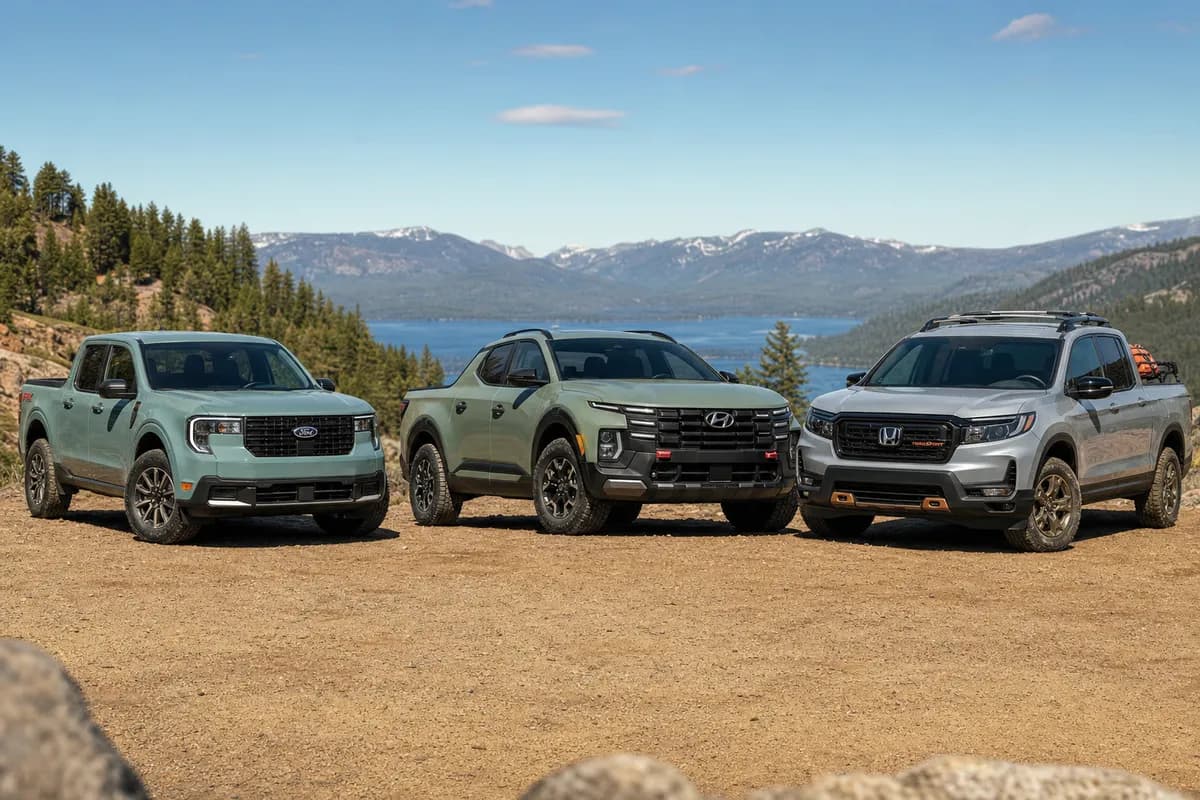
Owners of the Maverick Hybrid AWD, Santa Cruz XRT, and Ridgeline TrailSport are building practical OEM-plus DIY trucks for work, camping, and light trails.
Something interesting is happening in driveways, apartment parking decks, and Home Depot lots. The new compact-truck crowd is building a DIY scene around useful upgrades, and the stars are the 2026 Ford Maverick Hybrid AWD, 2027 Hyundai Santa Cruz XRT, and 2026 Honda Ridgeline TrailSport.
These owners are not chasing bro-dozer looks or SEMA cosplay. They want bed power, smarter tires, easy brake service, and clean OEM-plus mods that make daily trucks better at hauling mulch, camping on weekends, and tackling mild dirt roads without turning into tacky project rigs.
A New Kind of Truck Enthusiast Scene
For years, truck culture often split into two camps: work trucks kept bone stock and full-size customs built to be noticed from orbit. Compact lifestyle trucks have opened a third lane. Buyers want the footprint, fuel economy, and ease of use of a crossover, but with a bed and enough capability to do real truck stuff.
The Maverick Hybrid AWD is the big signal here. A hybrid compact truck with all-wheel drive tells you exactly where this market is going: practical first, fun second, and still customizable. The Santa Cruz XRT adds a factory adventure look with a unibody platform that drives more like an SUV, while the Ridgeline TrailSport leans into proven comfort, smart packaging, and Honda reliability.
What makes this community different is the mod philosophy. The best builds are reversible, well-integrated, and designed to preserve daily comfort, warranty friendliness, and resale value. That is the core of compact truck OEM plus upgrades.
Why Bed Power Is Becoming the First Real Mod
Ask owners what they actually use, and bed power climbs to the top fast. These trucks are being used for tailgates, campsite lighting, tire inflators, battery charging, mini fridges, and power tools. A useful bed setup beats a fake beadlock wheel every time.
The Maverick has always appealed to DIY-minded owners because the bed architecture invites customization. Ford’s FLEXBED idea, with slots, tie-down options, and accessory-friendly mounting points, helped normalize the idea that you can build smart utility into a small truck without a welder and a fabrication shop.
For Santa Cruz and Ridgeline owners, the formula is similar even though the bed layouts differ. The goal is clean, weather-resistant power delivery with secure cable routing and zero hack-job wiring.
Best DIY truck bed power and tire load guide starting points
- 12-volt fused bed outlet: Great for inflators, camp lights, and charging gear. Keep wiring loomed and fused close to the battery.
- Portable power station mount: Better than hardwiring an inverter if you want reversibility. Strap it securely and protect it from moisture.
- Low-draw bed lighting: LED strip or pod lighting under rails or caps makes night loading much easier.
- Quick-disconnect air setup: A portable compressor with a clean mount saves space and helps with trail tire adjustments.
The shop rule here is simple: size the system for actual use. Running a phone charger and a tire inflator is one thing. Running a hot plate, power saw, and camp heater is another. Most owners are better off with a modest 12-volt circuit, weatherproof connectors, and a portable power unit than a giant inverter install they never use.
Tire Load Strategy Matters More Than Aggressive Tread
Tires are where a lot of otherwise smart builds go wrong. Owners see “all-terrain” and think tougher is automatically better. On these compact trucks, especially unibody models, the wrong load rating and sidewall stiffness can hurt ride quality, braking feel, wet-weather manners, and fuel economy in a hurry.
That is why a DIY truck bed power and tire load guide should always include payload reality. If your truck spends 90 percent of its life empty, you probably do not need a heavy E-load tire designed for a three-quarter-ton diesel. You need a tire that can support occasional cargo while still riding well on a Monday commute.
Smart tire strategy for these trucks
- Ford Maverick Hybrid AWD: Favor lighter all-weather or mild all-terrain tires in the stock diameter or one size up at most. Weight matters here because it affects hybrid efficiency and acceleration.
- Hyundai Santa Cruz XRT: The XRT look invites chunkier rubber, but keep load rating sensible. A P-metric or light-duty XL tire is often the sweet spot for daily use and forest roads.
- Honda Ridgeline TrailSport: The Ridgeline tolerates mild all-terrain tires well, but avoid over-tiring it. A quality all-terrain with good wet braking is a better real-world choice than the most aggressive tread you can fit.
Here is the practical test I give customers: if you regularly carry motorcycles, bed fulls of pavers, or tongue weight from a trailer, step up carefully and check placard pressures and actual axle loads. If your “truck stuff” is bikes, camping gear, garden supplies, and Costco runs, do not sabotage the truck with unnecessarily heavy tires.
Unsprung weight is the hidden tax on these builds. Add a heavier wheel-and-tire package and you ask more from the brakes, dampers, wheel bearings, and driveline. On a compact truck, that penalty shows up fast.
Brake Service Is the Maintenance Topic This New Community Actually Talks About
One reason this DIY compact-truck scene feels healthy is that owners are talking maintenance, not just appearance mods. Brake service comes up a lot because these trucks do mixed-duty use. Stop-and-go commuting, loaded weekend runs, mountain drives, and dusty access roads all affect pad life and rotor condition.
The good news is that none of these trucks demand exotic brake work for normal service. The bad news is that neglected slide pins, overheated pads, or cheap aftermarket friction can make a good daily truck feel terrible. If you are looking into 2026 Honda Ridgeline TrailSport maintenance, or similar service planning on the Maverick and Santa Cruz, brakes should sit near the top of the list.
DIY brake service habits that pay off
- Inspect pad taper and slide-pin movement at every tire rotation. Uneven wear often points to hardware issues before the driver feels it.
- Measure rotor thickness and check for heat spotting. Do not assume a visual glance tells the whole story.
- Flush brake fluid on schedule, especially for humid climates. Moisture-contaminated fluid lowers boiling resistance and can corrode internals.
- Choose quality pads matched to the truck’s use. Daily-driven trucks with occasional hauling usually want low-dust, stable friction, and quiet operation, not race-compound heroics.
On the Ridgeline, clean and consistent brake feel is part of what makes the truck so easy to live with. On the Maverick Hybrid AWD, regeneration can reduce some friction brake use, but that also means hardware can get sticky if inspections are skipped. On the Santa Cruz XRT, owners adding heavier tires should pay even closer attention to pad and rotor wear rates.
The best DIY builds are boring in the best way. They start every morning, stop straight, carry what you need, and never make you apologize for a bad modification.
The OEM-Plus Mod Formula That Actually Works
The strongest trend in 2026 Ford Maverick Hybrid AWD mods and 2027 Hyundai Santa Cruz XRT DIY projects is restraint. Owners are choosing parts that look factory, fit properly, and improve how the truck works. That usually means no giant lifts, no cheap LED glare bombs, and no decorative accessories that reduce utility.
Done right, OEM-plus upgrades make these trucks feel like a more thoughtful version of themselves. They should look clean enough that a non-enthusiast assumes the truck came that way.
OEM-plus upgrades worth doing
- Bed mats and tailored storage: Prevent damage, reduce sliding cargo, and keep daily-use tools organized.
- Factory-style tie-down additions: More anchor points are always useful if they are mounted correctly.
- Mud flaps that actually fit: They protect paint and rockers without screaming aftermarket.
- Low-profile all-weather floor liners: Boring, yes. Also one of the best ownership upgrades you can buy.
- Improved bed lighting: A practical mod you will use more than any light bar.
- Simple recovery points and a compact air kit: Ideal for light trails and winter weather without pretending the truck is a rock crawler.
There is also a social side to this trend. Owners are sharing wiring diagrams, tire-size fitment notes, brake pad reviews, and bed setup ideas instead of posting only glamour shots. That creates a more useful enthusiast space, especially for first-time truck buyers who are comfortable with a socket set but not interested in cutting up a brand-new vehicle.
Verdict: Useful Mods Are Creating a Better Truck Culture
The compact-truck wave is not just about sales numbers. It is building a smarter, more approachable enthusiast community around trucks people actually use. The 2026 Ford Maverick Hybrid AWD, 2027 Hyundai Santa Cruz XRT, and 2026 Honda Ridgeline TrailSport each bring a slightly different personality, but all three support the same idea: improve the truck without ruining the truck.
If you are planning upgrades, start with bed power, tire load strategy, and baseline brake service. Then add OEM-plus touches that make loading easier, camping simpler, and daily driving cleaner. That formula may not dominate a show field, but it will absolutely win the parking lot at Home Depot, the campground, and the trailhead.
And honestly, that is why this new DIY scene works. It is less about being seen and more about making a good small truck even better.
Affiliate disclosure: This article contains affiliate links. RevvedUpCars may earn a small commission on qualifying purchases at no extra cost to you.