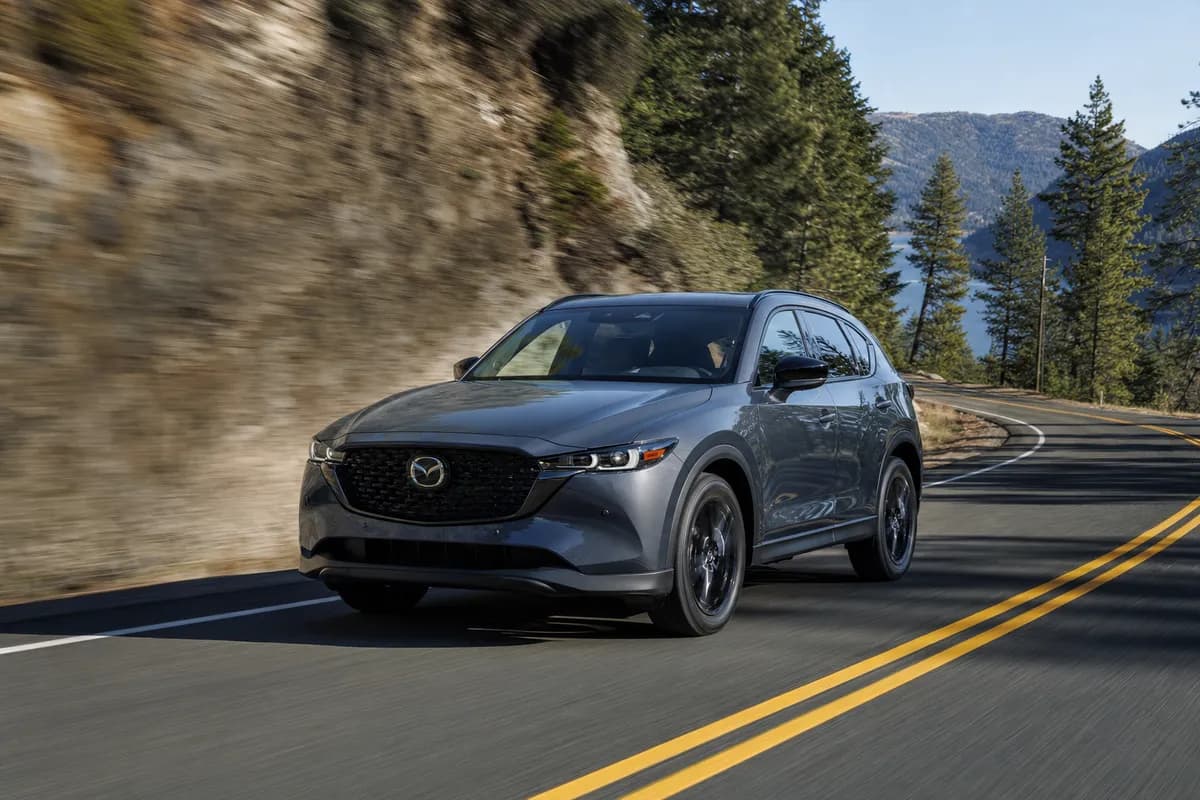
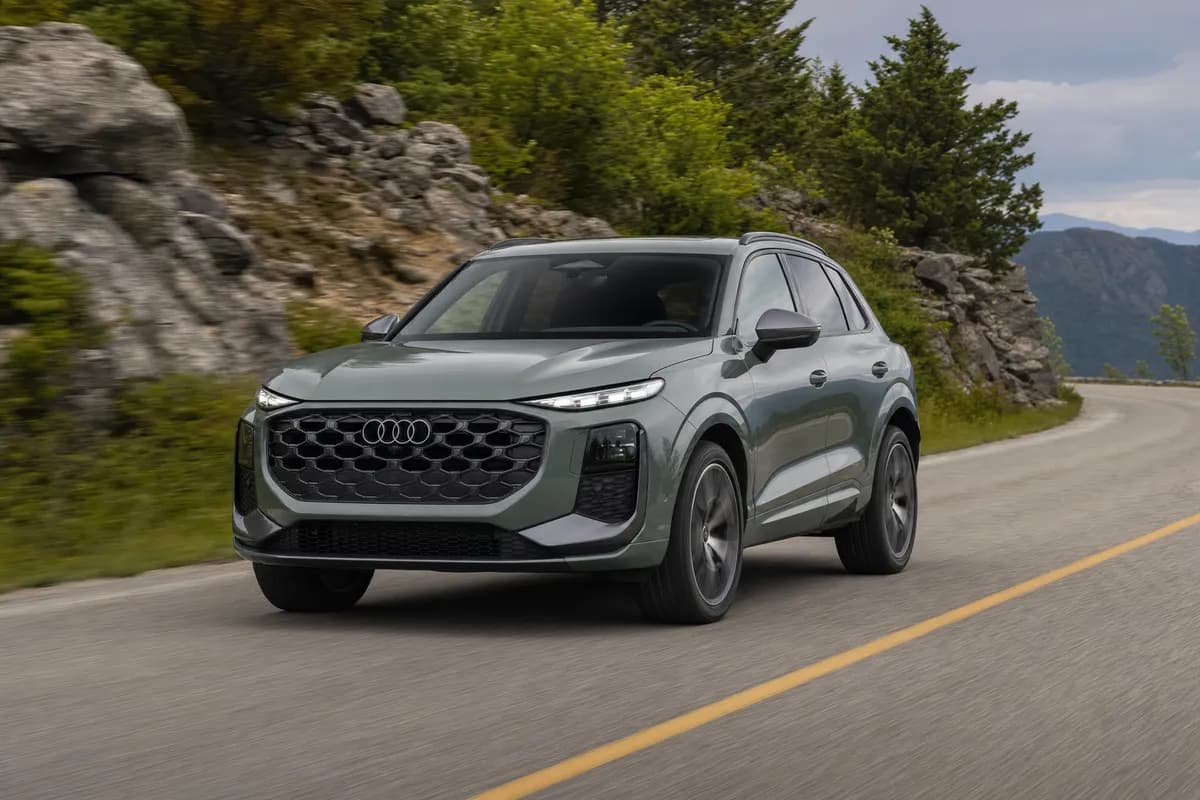
The 2026 Mazda CX-5 feels more driver-focused than its rivals, adding cleaner tech and richer refinement as it takes aim at hybrid value.
Mazda keeps trying to outclass the compact-SUV establishment instead of out-selling it. The 2026 Mazda CX-5 doubles down on that strategy with cleaner tech, richer refinement, and the same quietly athletic character that has long made rivals feel a bit beige.
That timing matters. Early drives have put the refreshed CX-5 back into the conversation, and this 2026 Mazda CX-5 first drive review asks the blunt question: is this still the stylish driver’s choice, or has the hybrid-heavy competition simply moved the game on?
What’s New for 2026: Smarter Cabin, Sharper Execution, Same Core Mission
The 2026 CX-5 is not a ground-up reinvention. Mazda has instead tightened the formula with updated infotainment, improved driver-assistance calibration, fresher trim details, and a more polished cabin experience meant to justify its near-premium positioning.
That sounds incremental, because it is. But compact SUVs are won and lost on execution, and Mazda has spent years making the CX-5 feel expensive in ways a Toyota RAV4 and Subaru Forester often do not.
Expect the familiar lineup structure to continue, from naturally aspirated four-cylinder models to turbocharged upper trims with standard all-wheel drive. Based on current positioning, 2026 Mazda CX-5 pricing and features should land around the low-$30,000 range to start, with well-equipped turbo models climbing into the low-to-mid $40,000 bracket before options and destination.
- Expected base pricing: about $31,000-$33,000
- Likely top trims: roughly $40,000-$44,000
- Key features: larger center display, wireless smartphone integration, upgraded safety tech, premium interior materials, available turbo power, available AWD or standard AWD on higher trims
Mazda’s trick is familiar: give you a cabin and driving experience that feel one class above, then charge just enough to make a loaded mainstream rival look less sensible than it should.
On the Road: Still the Compact SUV for People Who Actually Like Driving
Here’s the CX-5’s party piece. Even after years on the market, it still feels more buttoned-down and more willing than most compact crossovers when the road stops being straight.
The steering remains nicely weighted, body motions are disciplined, and the suspension avoids the soggy, over-assisted character that plagues plenty of rivals. Mazda has long understood that “comfortable” does not have to mean “half asleep,” and the 2026 update preserves that rare balance.
The standard 2.5-liter four-cylinder remains adequate rather than exciting. In current form it makes 187 horsepower, and that is enough for commuting, errands, and family duty, but no one will confuse it with brisk.
The turbocharged 2.5-liter is where the CX-5 earns its attitude. In recent spec, it delivers up to 256 horsepower and 320 lb-ft on premium fuel, or 227 horsepower and 310 lb-ft on regular, and those are still stout numbers in this class.
More important than the raw output is how the Mazda deploys it. The six-speed automatic is old-school compared with the ever-growing crowd of CVTs and hybrid e-CVTs, but that is exactly why the CX-5 feels more natural in real driving.
It downshifts cleanly, responds predictably, and never turns hard acceleration into a droning public nuisance. The Honda CR-V Hybrid is smoother than many hybrids, but the Mazda still feels more mechanical in the best possible way.
Verdict from the driver’s seat: The CX-5 remains the most satisfying mainstream compact SUV this side of a BMW X1, and it does that without pretending to be sporty in some ridiculous body-kit sense.
Mazda CX-5 vs Honda CR-V Hybrid, Toyota RAV4 Hybrid, and Subaru Forester
This is where the CX-5’s case gets complicated. It wins on style and road manners, but the compact SUV battlefield in 2026 is ruled by brutally competent rivals that major in space, efficiency, and resale-proof logic.
Mazda CX-5 vs Honda CR-V Hybrid
The Mazda CX-5 vs Honda CR-V Hybrid matchup is the most difficult for Mazda. Honda’s hybrid system is one of the best in the segment, delivering around 40 mpg combined in current form, along with a roomy cabin, excellent rear-seat comfort, and cargo space that embarrasses the Mazda.
The CR-V Hybrid is not thrilling, but it is deeply polished. If you are buying with your head, the Honda makes a devastatingly rational case.
The Mazda fights back with a richer interior, better steering, more personality, and an available turbo engine that feels significantly stronger in highway passing. If your compact SUV has to be more than an appliance, the CX-5 still lands the emotional punch the CR-V never quite throws.
Mazda CX-5 vs Toyota RAV4 Hybrid
The Mazda CX-5 vs Toyota RAV4 Hybrid debate is a classic heart-versus-spreadsheet affair. Toyota’s hybrid returns around 39-40 mpg combined, offers strong resale value, and has built a reputation for durability that could survive a meteor strike.
But the RAV4 Hybrid is not exactly a masterclass in finesse. Its interior quality is functional rather than lovely, and its road manners are competent without ever becoming memorable.
The Mazda feels more expensive and more cohesive. Yet Toyota’s fuel economy advantage is not minor; it is the kind of difference that adds up every week, every month, every family road trip.
Mazda CX-5 vs Subaru Forester
The Forester takes a different angle. It majors on visibility, practicality, standard all-wheel drive, and a reassuringly honest character, but it is also one of the least polished vehicles here from a cabin-materials and powertrain-refinement standpoint.
Subaru’s boxer four and CVT combo gets the job done, though not with much charm. The Mazda is quieter, classier, and far more enjoyable on a back road.
- Best to drive: Mazda CX-5
- Best fuel economy: Honda CR-V Hybrid / Toyota RAV4 Hybrid
- Best cargo and family packaging: Honda CR-V Hybrid
- Best rugged-image practicality: Subaru Forester
- Best interior ambience: Mazda CX-5
Interior, Space, and Features: Premium Taste, Family-Sized Compromises
The CX-5’s interior remains one of its strongest assets. Materials, switchgear, seat comfort, and overall design still punch above the mainstream class, and the 2026 updates should only widen that advantage if Mazda has cleaned up screen usability and connectivity the way early drives suggest.
There is, however, a catch. The CX-5 is not the roomiest entrant in the segment, and that has always been the tax you pay for its sleeker proportions and more intimate cockpit.
Rear-seat space is adequate, not generous. Cargo capacity trails the roomier Honda CR-V and Toyota RAV4, which matters if this SUV will spend its life hauling strollers, dogs, airport luggage, or all three at once.
Expected feature highlights should include wireless Apple CarPlay and Android Auto, a digital instrument display on upper trims, available Bose audio, heated and ventilated front seats, a surround-view camera, and Mazda’s full suite of active safety gear. That is competitive equipment, though rivals often package hybrid efficiency with similarly broad feature sets.
Real-World Value: Can Refinement Still Beat a 40-mpg Hybrid?
This is the question that defines the best compact SUV 2026 conversation. The CX-5’s value is not about giving you the most cubic feet or the fewest fuel stops; it is about giving you a more upscale, more enjoyable ownership experience for mainstream money.
That argument works if your priorities are design, cabin quality, and driving feel. It weakens if you log huge annual miles, need maximum rear-seat room, or want the clear operating-cost advantage of a hybrid returning close to 40 mpg.
Mazda’s problem is not that the CX-5 lacks merit. Its problem is that the CR-V Hybrid and RAV4 Hybrid have become so complete, so efficient, and so easy to recommend that a non-hybrid compact SUV now needs a stronger hook than “nice to drive.”
The CX-5 still has that hook, to a point. It feels special in a class full of aggressively competent white goods.
Verdict: Stylish, Smart, and Still Great to Drive — But Buy It for the Right Reasons
The 2026 Mazda CX-5 remains one of the most appealing compact SUVs on the market. It is handsome, refined, and genuinely enjoyable in a segment where too many vehicles drive like they were tuned by committee during a lunch break.
But let’s not get sentimental. If efficiency, space, and family-first pragmatism top your list, the Honda CR-V Hybrid is probably the better buy, and the Toyota RAV4 Hybrid remains the safer long-term spreadsheet champion.
If you want your everyday SUV to feel a bit more expensive, a bit more alive, and a lot less anonymous, the Mazda makes a compelling case. In this 2026 Mazda CX-5 first drive review, the verdict is simple: it is still the enthusiast’s compact SUV, just no longer the class default.
That means the CX-5 does not beat the CR-V Hybrid, RAV4 Hybrid, and Forester at everything. It beats them where style, road manners, and tactile quality still matter — and for plenty of buyers, that will be more than enough.