Advanced EV owners are building DIY track routines for brakes, tires, and battery preconditioning—keeping Model 3, Ioniq 5 N, and EV6 GT fast longer.
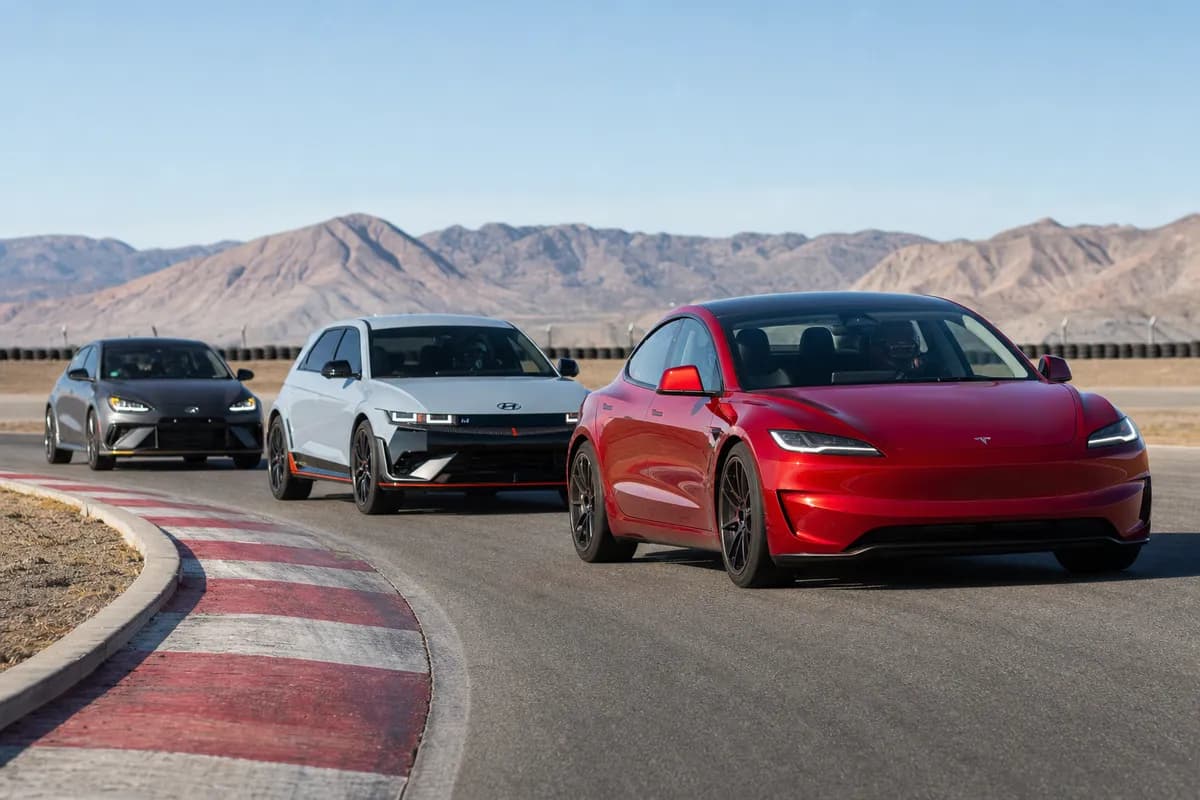
The quick cars in the advanced group are getting quieter. A Tesla Model 3 Performance can chase down dedicated track toys, while the Hyundai Ioniq 5 N and Kia EV6 GT bring family-car practicality to the paddock.
That changes the DIY conversation. Owners are spending less time on wings and wraps, and more time on brake fluid, tire temperatures, charging plans, and upgrades they can remove before the Monday commute.
The New EV Track-Day Paddock Is Built Around Consumables
The 2026 EV track day prep checklist looks familiar to anyone who has tracked a turbocharged street car. Tires, brake pads, fluid, alignment, and heat management still decide whether the day is fun or frustrating. The big difference is that battery state of charge and powertrain temperature now belong on the same checklist.
Tesla’s Model 3 Performance remains the compact, sharp-edged option. The Ioniq 5 N is the more theatrical choice, with its N e-Shift simulation, active sound modes, and dedicated performance menus. Kia’s EV6 GT brings similar E-GMP hardware in a lower, sleeker package, with huge straight-line pace and a chassis that responds well to careful brake and tire work.
| Model |
Output |
Claimed 0-60 mph |
Track-day strength |
Primary consumable concern |
| Tesla Model 3 Performance |
Tesla does not publish a consistent U.S. horsepower figure; independent estimates commonly place it around 450-500 hp |
2.9 seconds |
Low mass for its performance level, strong acceleration, broad aftermarket support |
Tire shoulder wear and brake temperature on repeated hard laps |
| Hyundai Ioniq 5 N |
Up to 641 PS (about 632 hp) with N Grin Boost |
3.25 seconds |
Purpose-built thermal systems, track-oriented N modes, highly adjustable character |
Heavy curb weight means rapid pad, fluid, and tire heat buildup |
| Kia EV6 GT |
Up to 601 hp on current updated versions; earlier GTs made 576 hp |
About 3.4 seconds |
Devastating roll-on power and practical charging architecture |
Factory brakes and all-season-oriented tire choices can be the limiting factor |
Exact output, battery capacity, tire fitment, and software features can vary by market and model year. Before ordering parts for a 2026 or 2027 vehicle, confirm the build date, brake package, wheel diameter, and current service information for that specific car.
Brake Fluid and Tires: The Unflashy Upgrades That Save a Track Day
Brake fluid is the first job I would do on any fast EV headed for circuit work. Regenerative braking reduces friction-brake use in normal driving, but it cannot absorb every hard stop at track pace. Once the battery is cold, full, or constrained by conditions, the hydraulic system may be asked to do far more work than a new owner expects.
A quality DOT 4 racing fluid with a high dry boiling point offers useful margin, provided it is compatible with the car and changed correctly. Flush the system before the event, use a pressure bleeder if the manufacturer procedure calls for one, and do not ignore electronic brake-service steps or diagnostic requirements. EVs still use conventional calipers, hoses, pads, and fluid, but their brake control systems are not always conventional.
- Inspect pad thickness before the event. Do not arrive with 3 mm remaining and expect a full day of sessions.
- Check rotor condition. Look for heat checking, deep grooves, blue discoloration, or a lip that suggests the rotor is near replacement.
- Use a proven high-temperature fluid. Fresh fluid matters more than a fancy fluid that has been open on a shelf for two years.
- Torque wheels cold. Recheck after the first session once the wheels have cooled enough to handle safely.
- Bring a pressure gauge. Tires can gain several psi during a session, and EV weight makes that change meaningful.
Tires are where many first-time EV track drivers lose the plot. These cars are heavy, immediate, and capable of delivering full torque before the chassis has fully settled. A street tire may feel excellent for two laps, then become greasy as shoulder temperature climbs.
Start with the manufacturer’s cold-pressure recommendation, then make small adjustments based on hot pressures, wear patterns, and lap-to-lap consistency. Do not chase one hero lap by dropping pressures until the sidewalls roll over. On a Model 3 Performance, a square wheel-and-tire setup is popular because it can reduce understeer and allows tire rotation; confirm clearance, load rating, and insurance implications before changing sizes.
At a grassroots event, the driver who checks pressures, records temperatures, and cools the car properly usually gets more laps than the driver with the loudest modification list.
Battery Preconditioning and Charging Logistics Are Part of the Setup
Battery preconditioning is not a magic “track mode” button. It is a thermal preparation process that helps put the pack in a useful operating range before high load. Use the factory navigation system to route to a compatible fast charger when that is how the vehicle initiates preconditioning, and learn the track-focused menus before leaving home.
For a Hyundai Ioniq 5 N track day, spend time with N Battery Preconditioning, N Track Manager, and the relevant N driving modes before the first session. The car gives the driver more tools than most EVs, but those tools only help when the driver understands what each one prioritizes: maximum power, endurance, charging performance, or battery temperature.
The Tesla Model 3 Performance has its own advantage in the Supercharger network and track-oriented software ecosystem. Its navigation-based preconditioning can simplify road-trip charging, while Track Mode gives useful access to stability settings, powertrain behavior, and performance data. Still, do not confuse access to data with unlimited thermal capacity; use cool-down laps and watch warnings rather than driving through them.
The EV6 GT’s 800-volt architecture can make highway charging impressively quick at a suitable DC fast charger. At the circuit, though, charger availability is the real issue. A car that can theoretically charge rapidly is still waiting if the nearest reliable DC station is 25 miles away and occupied by three other drivers.
- Plan the route and charging stops before the event. Identify at least one backup fast charger in each direction.
- Arrive with enough charge for registration, the first session, and an unexpected detour. Do not roll in at 8 percent hoping the paddock has an available outlet.
- Set a conservative session plan. Two or three clean laps, a temperature check, then a cool-down lap beats one overheated 20-minute attack.
- Charge when the schedule allows. Lunch and the gap before the final session are often better than waiting until every driver leaves at once.
- Leave battery margin for the trip home. Track consumption is dramatically higher than highway consumption, especially in cold or very hot weather.
Reversible Track Modifications Make More Sense Than Permanent Builds
The best Tesla Model 3 Performance track modifications are often boring on a forum photo and brilliant on a stopwatch. Track-capable brake pads, fresh fluid, a second wheel set, and a track-focused alignment can transform consistency without turning the car into an unpleasant daily driver. Keep the factory components labeled and stored so returning to stock is straightforward.
For the Kia EV6 GT brake upgrade conversation, start with the basics before shopping for giant calipers. Better fluid, track-oriented pads, properly bedded rotors, and cooling time between sessions can solve the problem for many intermediate drivers. If repeated events reveal genuine fade or pad consumption, then a vehicle-specific big-brake kit or improved rotor solution becomes easier to justify.
Alignment is another high-value, reversible change. More negative front camber can preserve outer tire shoulders and improve turn-in, particularly on a heavy EV that works its outside front tire hard. The tradeoff is often faster inner-edge wear on the street, so record the original settings and have a plan for a road-friendly alignment after the event.
- Good first upgrades: high-temperature fluid, appropriate pads, a spare wheel set, quality gauge, torque wrench, and alignment.
- Useful second-step upgrades: track-capable tires, brake cooling where proven for the platform, and more durable rotors.
- Think carefully before permanent changes: aggressive coilovers, stripped interiors, extreme aero, or electrical modifications that complicate service and warranty discussions.
DIY electric performance car maintenance also means respecting the high-voltage system. Owners can inspect tires, brakes, suspension fasteners, coolant levels where accessible, and underbody damage. Leave orange-cable repairs, battery enclosure work, and high-voltage diagnostic procedures to trained technicians with the proper equipment and service information.
Verdict: Drive the EV You Own, but Prepare It Like a Track Car
The new EV track-day community is growing because these cars are legitimately quick, not because they are novelties. The Model 3 Performance offers an accessible entry point, the Ioniq 5 N brings unusually serious factory track intent, and the EV6 GT rewards owners who address its braking and tire needs honestly.
Start with maintenance, data, and consumables. Build a charging plan, refresh the brake fluid, manage tire heat, and make reversible changes one at a time. That approach keeps the car enjoyable on track, civilized on the road, and far less likely to end a weekend on a tow truck.
Frequently Asked Questions
For a first novice event at a low-speed circuit, fresh factory-spec fluid may be sufficient if the system is in excellent condition. For repeated hard lapping, a fresh high-temperature DOT 4 fluid is inexpensive insurance against a soft pedal caused by boiling fluid. Follow Tesla’s service procedures and use a shop if you are not comfortable bleeding an electronically controlled brake system.
What should I do before a Hyundai Ioniq 5 N track day?
Check brake pad thickness, tire condition, cold pressures, wheel torque, and charge level before leaving home. Learn the N battery and track settings in advance, then use shorter initial sessions while watching temperatures and energy use. Bring a charging plan that includes a backup DC fast-charging location.
Is a Kia EV6 GT brake upgrade necessary for track days?
Not always. Fresh fluid, suitable pads, healthy rotors, and disciplined cool-down laps are the right first steps for most drivers. If you repeatedly experience fade, excessive pad wear, or inconsistent pedal feel after addressing those basics, a purpose-designed brake upgrade becomes a sensible next move.
Can I charge an EV to 100 percent before a track day?
You can, but do not leave the car sitting at 100 percent longer than necessary, and follow the manufacturer’s battery guidance. A very full battery can also limit regenerative braking early in the session, placing more demand on the friction brakes. Time the final charge so you arrive with usable energy while leaving room for the car’s thermal and regen strategies to work.
Get the latest car reviews in your inbox
Join thousands of car enthusiasts. No spam, unsubscribe any time.





Comments
Leave a comment