DIY owners are building a cleaner, capable overland setup by doing payload-and-tire math, smart bed-rack planning, and OEM-plus mods that stay legal.
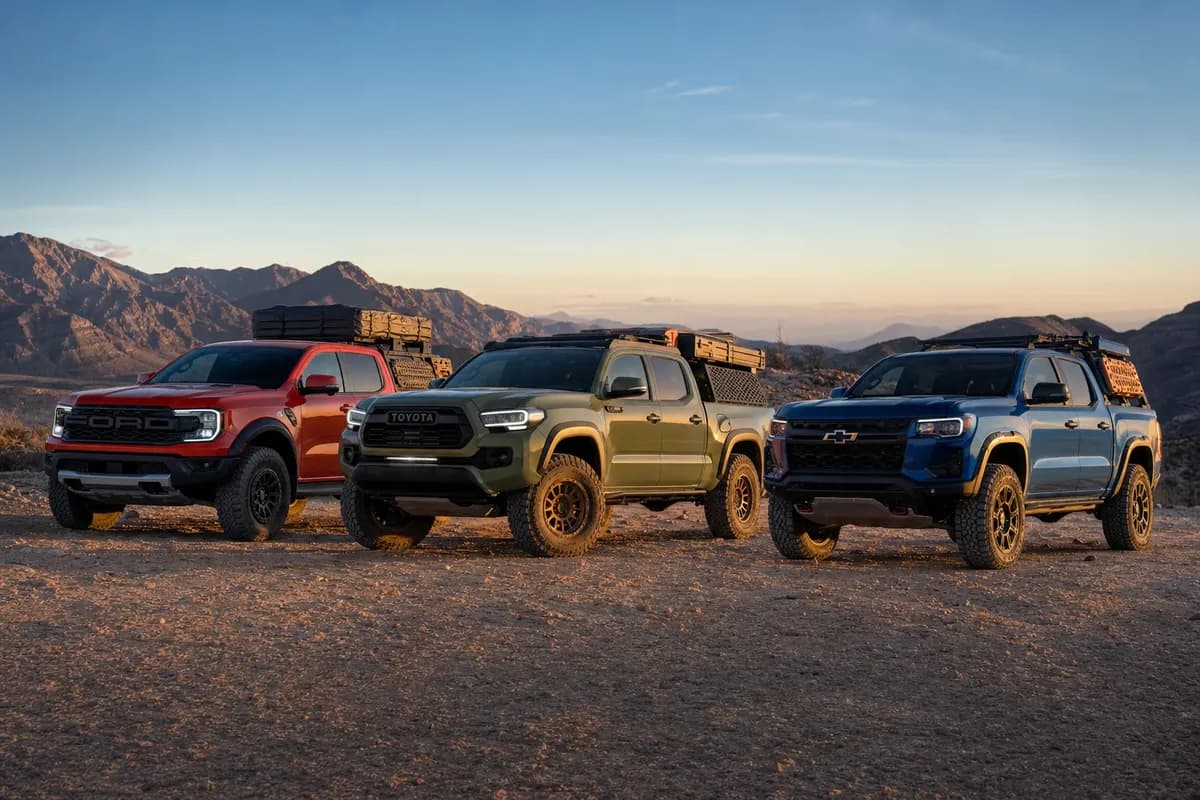
The newest wave of midsize trail trucks looks factory-tough right out of the box. That is exactly why a growing DIY crowd around the 2026 Ford Ranger Raptor, 2027 Toyota Tacoma Trailhunter, and 2026 Chevrolet Colorado ZR2 is skipping the chrome catalog and getting serious about payload math, shock service, and clean OEM-plus upgrades.
The shift is bigger than style. Owners are figuring out that the best overland build is not the tallest one in the parking lot. It is the truck that stays legal, rides well, carries its weight honestly, and still works on Monday.
The New Midsize Overland Crowd Is Chasing Function, Not Flex
A few years ago, the social-media truck formula was easy to spot: giant tires, sketchy offset wheels, a bed rack loaded like a safari truck, and bolt-ons that looked dramatic but hurt drivability. In 2026, more owners are pushing back. They want trucks that feel engineered, not improvised.
The Ranger Raptor, Tacoma Trailhunter, and Colorado ZR2 helped create that shift because they already arrive with real hardware. Ford gives the Ranger Raptor 33-inch all-terrains, live-valve Fox dampers, front and rear lockers, and serious desert-truck tuning. Toyota pitches the Tacoma Trailhunter as a turn-key overland rig, while Chevy’s Colorado ZR2 remains one of the most balanced factory off-roaders with Multimatic DSSV dampers, front and rear lockers, and strong underbody protection.
That factory baseline changes the modification conversation. Owners are no longer asking, “How do I make this look off-road?” They are asking smarter questions: How much payload do I really have after passengers and gear? When do these shocks need service? Can I add a rack, tent, fridge, and bigger tires without killing ride quality or breaking weight ratings?
Payload and Tire Math Matter More Than Another Light Bar
This is where many overland builds go sideways. Midsize trucks are capable, but they are not half-ton pickups. Once you add steel accessories, recovery gear, camping kit, water, fuel, and passengers, payload disappears fast.
Sticker numbers vary by trim and equipment, but the basic rule does not. Check the payload sticker on your driver-door jamb, then subtract everything you add. That includes people, bed racks, rooftop tents, coolers, tools, drawer systems, bumpers, and tongue weight if you tow.
Where weight adds up fast
- Bed rack: roughly 60 to 150 pounds, depending on material and height
- Rooftop tent: often 100 to 180 pounds before bedding
- Fridge and slide: 70 to 120 pounds loaded
- Recovery gear: 40 to 100 pounds is common
- Water: about 8.3 pounds per gallon
- Extra fuel: about 6 to 6.3 pounds per gallon, plus container weight
- Two adults and a dog: easily 350 to 450 pounds total
Do the math on a typical midsize overland setup and you can burn through 700 to 1,000 pounds before the trip even starts. That is why midsize truck payload and tire load ratings have become hot topics in owner forums. The smartest builds are now lighter builds.
Tire choice is part of the same equation. Bigger and heavier tires look right, but they affect acceleration, braking, steering, transmission behavior, and fuel economy. They also need the correct load index, especially once you add real cargo.
Smart tire-upgrade rules
- Match or exceed the truck’s required load rating.
- Do not assume “E-load” is automatically better for a midsize truck.
- Consider tire weight, not just size.
- Recalibrate speedometer and shift logic if tire diameter changes significantly.
- Leave enough clearance at full lock and full compression, not just in the driveway.
On these trucks, a modest jump within the factory mission usually works best. A well-chosen 33-inch all-terrain or a light 34 can outperform a giant, heavy mud-terrain in the real world. Less unsprung weight means better control, less shock abuse, and fewer headaches.
Shock-Service Awareness Is the New Badge of a Serious Owner
If there is one area where this DIY community is getting much smarter, it is suspension maintenance. Fancy off-road dampers are not lifetime parts. They are wear items, and the harder you use them, the more they need inspection and service.
That matters because all three of these trucks use premium hardware. The Ranger Raptor’s Fox setup, the Tacoma Trailhunter’s off-road suspension package, and the Colorado ZR2’s Multimatic DSSV dampers all deliver real performance. They also cost real money when neglected.
What owners are learning to watch for
- Oil seepage or wet shock bodies
- Fading damping on washboard roads
- Nose-diving or extra body motion after repeated hits
- Uneven tire wear from tired dampers
- New clunks, rattles, or top-out noises
Service intervals depend on use. A truck that lives on pavement with mild forest-road duty can go a long time with inspections and basic care. A truck that sees heat, speed, corrugations, and loaded travel will need attention much sooner. This is one reason 2026 Chevrolet Colorado ZR2 DIY maintenance and Ranger Raptor suspension threads are getting so much traction online.
Owners are also learning a simple truth from desert racers and shock tuners: accessories are cheap compared with suspension control. A truck with fresh dampers, correct spring support, and properly set tire pressures will outperform a badly overloaded “build” every time.
Bed-Rack Weight Planning Separates Good Builds From Tacky Ones
The bed rack has become the symbol of modern overlanding, and also the easiest place to get carried away. A tall rack stacked with a rooftop tent, traction boards, shovel, awning, fuel cans, and camp lights may look adventurous. It also raises the center of gravity, hurts emergency handling, and can overload the bed and rack itself.
That is why the OEM-plus crowd is rethinking rack height and placement. Lower is usually better. So is keeping heavy gear in the bed, between the axles, and as close to the floor as possible.
Better bed-rack planning for a midsize truck
- Choose the lightest rack that meets the actual load need.
- Verify both dynamic and static rack ratings.
- Keep heavy items off the roof when possible.
- Mount fuel and water low, not up high for the photo.
- Remember that bed racks, tents, and cargo still count against payload.
This is especially relevant for buyers chasing a 2027 Toyota Tacoma Trailhunter overland setup. The Trailhunter already starts with a cohesive factory package, so the best modifications usually support that mission instead of overpowering it. A low-profile rack, a quality bed platform, proper tie-downs, and one well-mounted power solution beat six universal gadgets every time.
OEM-Plus Mods That Actually Improve These Trucks
The legal-versus-tacky debate gets loud because there is plenty of bad hardware on the market. Some mods create glare, excessive noise, tire poke, unsafe tow points, or emissions headaches. The better path is legal OEM-plus truck modifications that improve durability, usability, and control without making the truck miserable to live with.
High-value, low-drama upgrades
- Load-rated all-terrain tires sized for the truck’s gearing and suspension travel
- Quality skid plates where the factory protection is lacking
- Bed organization such as drawers, rails, or modular storage that stays light
- Air system upgrades for faster airing up and down
- Alignment-friendly suspension tuning instead of huge lifts
- Legal auxiliary lighting wired correctly and aimed properly
- Brake-pad and fluid upgrades for loaded travel and mountain descents
For 2026 Ford Ranger Raptor mods, the sweet spot is usually restraint. The truck already has the visual drama. Owners get better results from underbody protection, practical bed management, and tire choices that preserve the Raptor’s ride and steering.
The Colorado ZR2 responds well to the same thinking. DSSV-equipped trucks especially reward owners who keep added weight reasonable and stay ahead of maintenance. And on the Tacoma Trailhunter, the smartest builders are treating Toyota’s factory concept as a foundation, not a challenge to see how many things they can bolt on by the weekend.
The new DIY overland status symbol is not a crowded accessory list. It is a truck that still feels coherent after 20,000 miles of real travel.
Verdict: The Best Midsize Overland Builds Are the Ones That Stay Honest
The Ranger Raptor, Tacoma Trailhunter, and Colorado ZR2 have created a better kind of enthusiast community because they reward discipline. Owners are finding out that payload spreadsheets, shock inspections, tire-load charts, and careful rack planning matter more than cosplay expedition gear.
That is good news for anyone who actually uses a trail truck. A clean, legal, OEM-plus build is cheaper to own, easier to maintain, safer on the highway, and usually better off-road too. The 2026 and 2027 midsize overland scene is maturing fast, and frankly, it is about time.