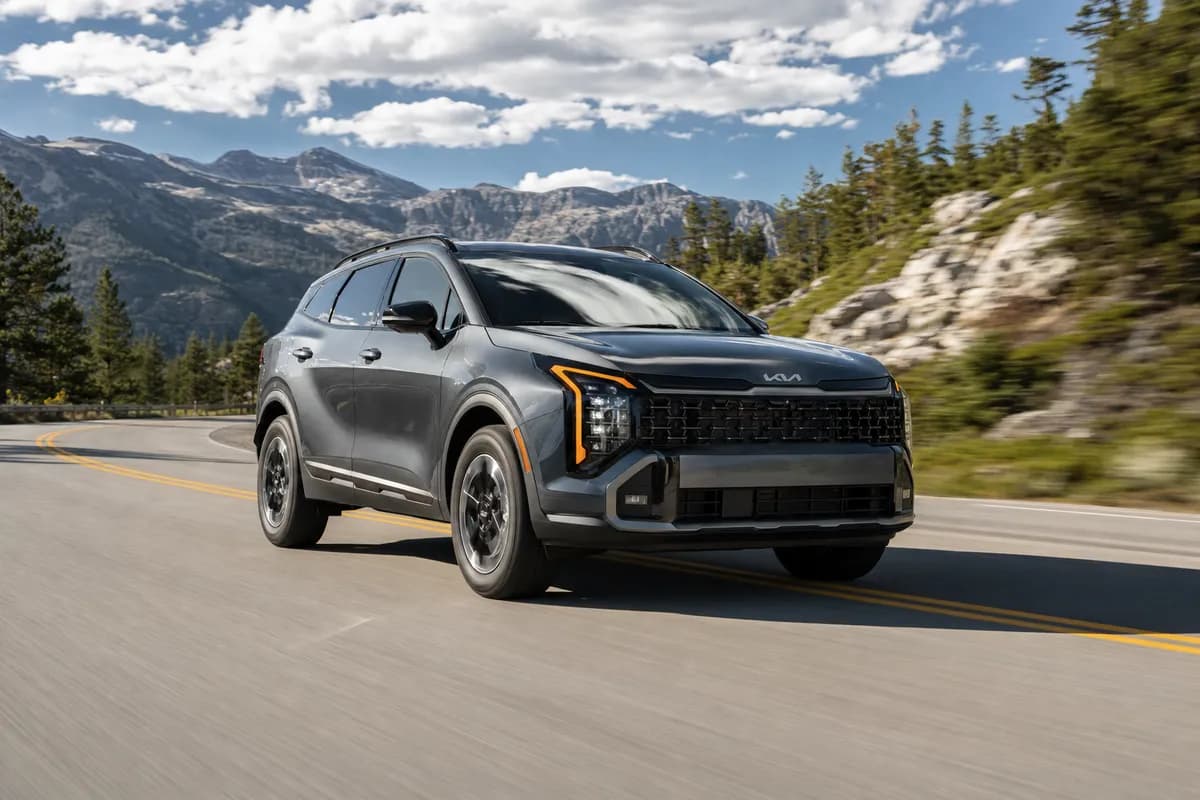
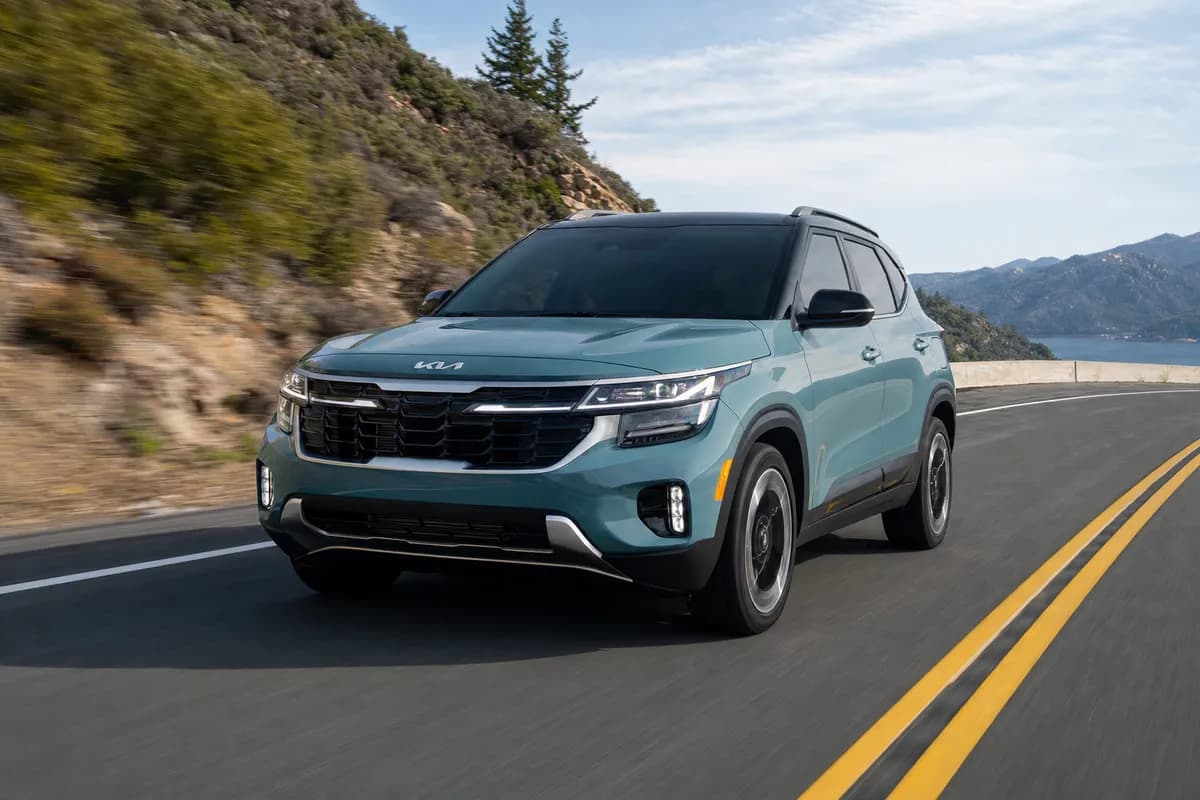
The 2026 Kia Sportage Hybrid nails family-SUV space and efficiency, making the CR-V and RAV4 feel less necessary.
The hybrid family-SUV class is where good intentions usually go to die in a swamp of dullness. The 2026 Kia Sportage Hybrid avoids that trap by being roomy, efficient, and blessedly easy to live with — while undercutting the idea that you need a Honda or Toyota badge to make the smart choice.
A sharper answer to the family-SUV brief
The 2026 Kia Sportage Hybrid doesn’t reinvent Kia’s compact crossover formula. It refines it where buyers actually care: smoother hybrid calibration, strong packaging, solid standard tech, and pricing that still makes sense in a market addicted to trim inflation.
Power comes from Kia’s familiar turbocharged 1.6-liter four-cylinder paired with an electric motor and a six-speed automatic. Total system output sits at 227 horsepower and 258 lb-ft of torque, which puts the Sportage Hybrid in a useful middle ground: stronger than a Toyota RAV4 Hybrid’s 219 hp, but shy of the 204-hp Honda CR-V Hybrid’s calmer, less punchy delivery on paper only because the Kia feels meatier in real traffic thanks to that torque-rich drivetrain.
Front-wheel drive remains standard on lower trims, while all-wheel drive is available or standard depending on spec. That matters because some rivals quietly force you up the ladder for the good stuff. Kia, to its credit, still understands that value shoppers read window stickers.
How it drives: better than expected, still not pretending to be a hot hatch
Let’s be realistic. Nobody is buying a Sportage Hybrid to attack an apex. But among compact hybrid crossovers, this Kia is one of the less anesthetized options.
The turbo-hybrid setup delivers stronger step-off response than the Honda CR-V Hybrid, especially from low speeds. Where the Honda’s two-motor system is ultra-smooth but slightly rubbery under heavier throttle, the Kia feels more direct because it uses a conventional automatic instead of a droning e-CVT-style setup. That alone will win over drivers who still want a crossover to feel like a normal car.
The downside is that the six-speed can occasionally hesitate during quick transitions. Ask for a sudden gap in traffic and the Sportage Hybrid sometimes takes a beat to coordinate engine, motor, and gearbox. The Toyota RAV4 Hybrid is noisier and less refined when pushed, but its power delivery is cleaner. The Hyundai Tucson Hybrid, meanwhile, shares much of Kia’s hardware and lands very close dynamically, though the Kia feels slightly tidier and less floaty over undulating pavement.
Ride quality is well judged. It absorbs broken suburban pavement without the hollow crashing you get in some big-wheel trims, and body control is decent enough that passengers won’t get seasick on a curvy back road. Steering is light, numb, and perfectly acceptable. Which is a polite way of saying nobody in this class does steering well, so don’t pretend the CR-V is a Cayman.
Space, comfort, and usability: this is where the Sportage Hybrid gets dangerous
If your shortlist starts and ends with rear-seat room, the 2026 Kia Sportage Hybrid deserves to be near the top. It remains one of the roomiest entries in the segment, with excellent legroom in back and a cargo area that makes many rivals feel wasteful with their exterior footprint.
Kia quotes roughly 39.5 cubic feet of cargo space behind the second row in hybrid form, expanding to about 73.7 cubic feet with the seats folded. That comfortably beats the Toyota RAV4 Hybrid, which offers about 37.6 cubic feet behind the rear seat, and it runs neck-and-neck with the Hyundai Tucson Hybrid depending on measurement method and trim packaging. The Honda CR-V Hybrid remains a cargo champ in some configurations, but the gap is small enough that the Kia’s packaging still counts as a win.
More importantly, the space is usable. The rear doors open wide, the load floor is low enough to avoid daily back strain, and there are enough bins, cupholders, and family-life details to suggest Kia has met actual children instead of just reading about them in a boardroom deck.
- Rear-seat comfort: Excellent legroom and good headroom for adults
- Cargo area: Large, square, and easy to load
- Cabin storage: Smart center-console design and useful small-item bins
- Visibility: Good forward view, slightly busier rear-quarter sightlines
The interior design still looks modern without trying too hard. Kia’s curved display layout gives the cabin a near-premium vibe in higher trims, and material quality is competitive with the CR-V Hybrid and better than many RAV4 Hybrid trims, which are starting to feel old. The touch-sensitive climate/audio panel remains clever in concept and mildly annoying in practice. It works, but physical buttons would still be better. Sometimes progress is just a designer picking a fight with your fingertips.
Efficiency, pricing, and the numbers that actually decide the sale
Efficiency is where hybrid family SUVs earn their keep, and the Sportage Hybrid posts the kind of figures that put it squarely in the conversation for the best hybrid family SUV 2026. Expect EPA ratings around 42 mpg city, 44 mpg highway, and 43 mpg combined for front-wheel-drive versions, with all-wheel-drive models typically landing at about 38 mpg combined depending on trim.
Those are strong numbers, but this is where the Toyota RAV4 Hybrid still throws elbows. A typical AWD RAV4 Hybrid is rated around 39 to 40 mpg combined, which gives Toyota a slight edge once you compare similarly equipped all-wheel-drive versions. The Honda CR-V Hybrid usually lands around 37 to 40 mpg combined depending on drivetrain and trim, while the Hyundai Tucson Hybrid sits close to 37 or 38 mpg combined in AWD form.
So the Kia doesn’t always win the efficiency crown outright. What it does better is balance fuel economy with space and drivability. That’s a more meaningful real-world victory than chasing one extra mpg while listening to a coarse engine howl through an overworked CVT.
Pricing should remain one of the Sportage Hybrid’s strongest cards. While exact 2026 trim walk may vary by market, expect a starting point in the low-to-mid $30,000 range, with well-equipped trims stretching into the upper $30,000s. That keeps it directly in the fight with the Honda CR-V Hybrid Sport and Sport-L, Toyota RAV4 Hybrid XLE and XLE Premium, and Hyundai Tucson Hybrid SEL Convenience and Limited.
- 2026 Kia Sportage Hybrid: 227 hp, up to about 43 mpg combined, huge interior
- Honda CR-V Hybrid: 204 hp, up to about 40 mpg combined, superb refinement
- Toyota RAV4 Hybrid: 219 hp, up to about 40 mpg combined AWD, proven efficiency leader
- Hyundai Tucson Hybrid: 226 hp, about 37-38 mpg combined, similar hardware with softer tuning
Kia Sportage Hybrid vs Honda CR-V Hybrid, Toyota RAV4 Hybrid, and Hyundai Tucson Hybrid
In a proper 2026 compact hybrid SUV comparison, each rival has a clean argument. The Honda CR-V Hybrid is the polished one. The Toyota RAV4 Hybrid is the dependable efficiency machine. The Hyundai Tucson Hybrid is the stylish cousin with many of the same genes.
The Sportage Hybrid’s case is broader. It offers more visual personality than the Honda, a more modern cabin than the Toyota, and slightly sharper everyday road manners than the Hyundai. It also avoids any major own-goal. That matters in this class, where one irritating flaw can become a daily grievance for the next six years.
If you’re cross-shopping Kia Sportage Hybrid vs Honda CR-V Hybrid, choose the Honda for maximum smoothness and resale confidence. Choose the Kia if you want more torque, more visual drama, and a roomier-feeling cabin for the money.
If the debate is Kia Sportage Hybrid vs Toyota RAV4 Hybrid, the Toyota still wins on long-haul reputation and slightly better hybrid efficiency. The Kia counters with a fresher interior, a quieter driving experience, and a packaging advantage that families will notice every single day.
Verdict: one of the smartest family-SUV buys of 2026
This 2026 Kia Sportage Hybrid review lands in a simple place: Kia has built one of the most complete compact hybrid crossovers on sale. It is not the most efficient, not the sportiest, and not the most prestigious. It is, however, one of the least compromised.
For buyers who need real rear-seat room, a genuinely useful cargo hold, strong fuel economy, and a driving experience that doesn’t feel like a punishment, the Sportage Hybrid absolutely deserves to sit at the top of the test-drive list. The Honda CR-V Hybrid is smoother. The Toyota RAV4 Hybrid is still the mpg folk hero. But the Kia might be the one you actually want to own.
Bottom line: The 2026 Kia Sportage Hybrid hits the family-SUV sweet spot with uncommon precision. If you want one hybrid crossover that does nearly everything well without charging you extra for the privilege, this is it.