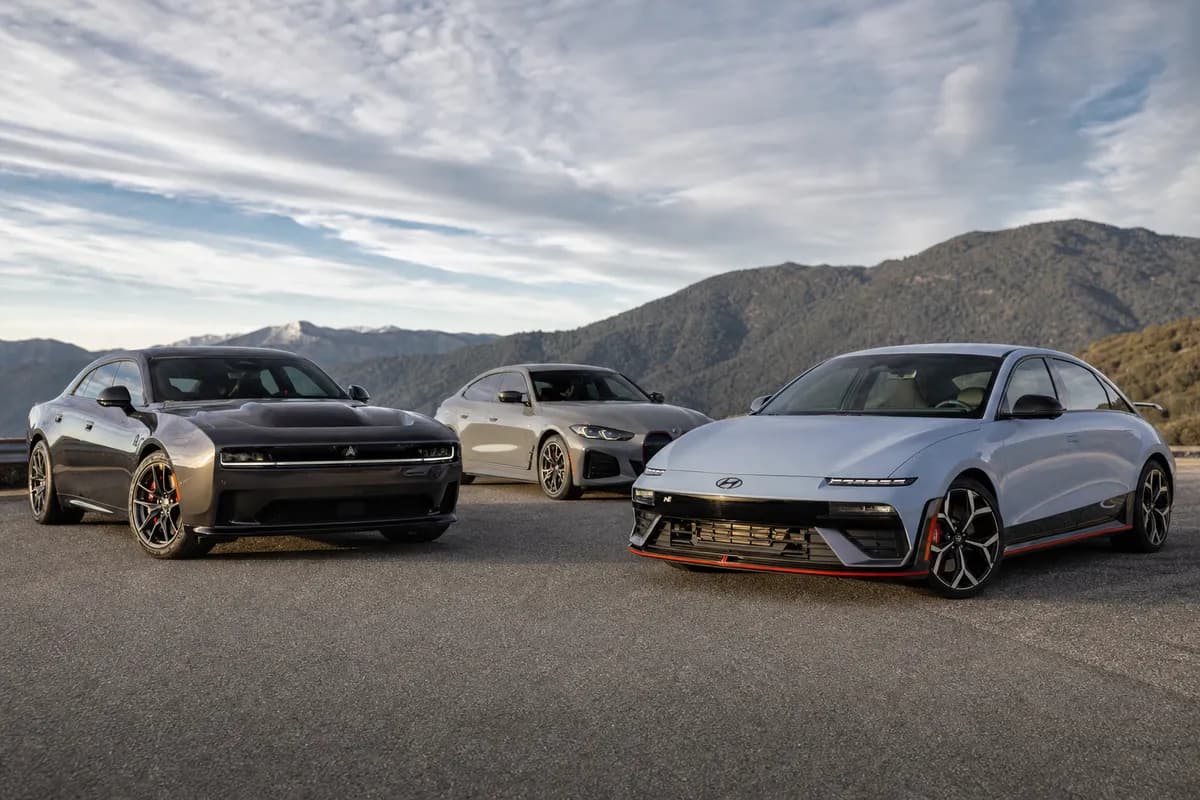
EV performance is getting quieter and smarter. Here’s how Charger Daytona, i4 M50, and Ioniq 6 N owners tune tires, brakes, and 12V health for track nights.
The old performance recipe was simple: more air, more fuel, more noise. But a new wave of owners is proving that fast EV culture in 2026 and 2027 is being built in garages, paddocks, and group chats around tires, brake fluid, 12-volt health, and charger installs. That shift is giving the 2026 and 2027 Dodge Charger Daytona, BMW i4 M50, and Hyundai Ioniq 6 N a real enthusiast identity without leaning on fake drama.
The new garage language of EV performance
The emerging 2026 EV enthusiast community does not look like the import scene of the 2000s or the V-8 street crowd of the 2010s. Owners still compare lap times, wheel specs, and launch feel, but the real garage talk is more practical. They are discussing tire heat cycles, front pad taper, preconditioning routines, and whether the factory 12-volt battery is ready for another summer.
That makes sense when you look at the cars. The BMW i4 M50 remains one of the quickest real-world sport sedans on sale, with roughly 536 horsepower in boost and a curb weight north of 5,000 pounds depending on spec. The Dodge Charger Daytona arrives with muscle-car visuals and EV thrust, while the Hyundai Ioniq 6 N is expected to follow the Ioniq 5 N formula by blending serious thermal management, track-focused software, and actual driver engagement.
What is different is the mod path. Instead of exhausts, mid-pipes, and cam swaps, owners are focusing on upgrades that make these cars faster, more durable, and easier to live with. That is why searches for 2026 Dodge Charger Daytona DIY mods, BMW i4 M50 maintenance and upgrades, and Hyundai Ioniq 6 N track day prep are rising alongside interest in local autocross nights and HPDE events.
Tire strategy is the new horsepower conversation
If you own a heavy, torque-rich EV, tires are no longer a background consumable. They are the first real tuning decision. Compound, sidewall stiffness, treadwear rating, and wheel width can change the personality of a Charger Daytona or i4 M50 more than most owners expect.
That is especially true because these cars hit the tire hard at low speed. Instant torque, high curb weight, and aggressive stability systems can chew through rear shoulders and overheat all-seasons in a hurry. The result is a new kind of driveway tuning culture centered on alignment checks, rotation schedules, and selecting the right tire for street versus track use.
What owners are learning quickly
- Staggered setups look great but limit rotation. That matters on cars like the BMW i4 M50, where front-to-rear wear can get expensive fast.
- Square wheel-and-tire packages are gaining popularity. They simplify tire rotation, reduce understeer, and usually make more sense for frequent track-night use.
- Ultra-high-performance summer tires wake these cars up. They sharpen steering and improve braking, but range drops and wear rates rise.
- Track-capable 200-treadwear tires are not magic. They need heat, can get greasy on very heavy EVs, and often create more road noise than owners expect.
For the EV brake service and tire strategy crowd, the practical move is often boring but effective: get a performance street tire, monitor pressures obsessively, and run a conservative alignment that preserves shoulders. A tenth gained with the right hot pressure is worth more than an accessory catalog full of cosmetic add-ons.
The Ioniq 6 N will likely become a leader here if it follows Hyundai N tradition. The brand has already shown with the Ioniq 5 N that software, e-diff tuning, and chassis balance matter as much as headline power. That means owners will likely spend their first money on wheels, tires, and brake fluid before they touch anything else.
Brake service and 12-volt reliability are the real DIY gateway mods
Talk to technicians who see performance EVs after a couple of years, and two subjects come up over and over: neglected brake systems and weak 12-volt batteries. Regenerative braking helps pad life, but it can also hide mechanical neglect. Caliper slides still need attention, rotors still rust, and brake fluid still absorbs moisture.
That is why smart owners are making baseline service part of the hobby. A brake fluid flush before track season, cleaning and lubricating slide pins where applicable, checking pad taper, and bedding in fresh friction material is now the EV equivalent of a tune-up. It is not glamorous, but it keeps a 5,000-plus-pound performance sedan consistent when the pace rises.
DIY checks owners should not skip
- Inspect pad thickness at all four corners. Regen can mask uneven wear until a track event exposes it.
- Flush brake fluid on time. Heavy EVs generate real heat, and old fluid goes soft fast on repeated hard stops.
- Listen for sticking hardware. Long periods of light brake use can leave rotors crusty and hardware unhappy.
- Test the 12-volt battery annually. EVs still depend on it for startup logic, contactors, and accessory systems.
- Keep software current. Charging behavior, thermal management, and battery conditioning often improve through updates.
The 12-volt issue deserves more attention than it gets. Across the industry, EV owners have learned that a weak auxiliary battery can create strange faults, charging problems, and no-start situations even when the high-voltage pack is full. In enthusiast circles, that has turned a simple battery tester and a smart maintainer into must-have garage tools.
The most useful mod for many EV performance owners is not flashy. It is a healthy 12-volt battery, fresh brake fluid, and tires that match how the car is actually driven.
Charging prep is becoming part of the build sheet
Performance EV culture in 2026 is also changing what counts as a “home mod.” A Level 2 charger install, load management setup, or garage heat-mitigation plan is now part of the ownership conversation. For Charger Daytona, i4 M50, and Ioniq 6 N owners, charging prep is not just convenience. It is readiness.
The BMW i4 M50, for example, can take advantage of strong home charging habits because preconditioning and daily top-offs make the car easier to enjoy spontaneously. Dodge owners stepping into EV muscle are learning the same lesson. If the car is meant to be used hard, having a reliable charging routine matters as much as fuel availability once did for a tuned street car.
Popular garage and charging upgrades
- 48-amp Level 2 wall charger installation for faster overnight recovery
- Dedicated circuit and panel check before adding other shop equipment
- Wi-Fi energy monitoring to track charge costs and off-peak savings
- Battery preconditioning habits before fast charging or track sessions
- Portable tire inflator and torque wrench station near the charger for pre-event checks
This sounds mundane until you spend a summer attending local lapping nights. Then it becomes obvious that a prepared garage shortens turnaround time, reduces stress, and makes the car feel like a real hobby machine. That is part of why the 2026 EV enthusiast community feels more hands-on than outsiders assume.
Track-night mods that add character without fake noise
Not every owner wants synthesized shifts, pumped-in engine sounds, or speaker-generated drama. Plenty of enthusiasts would rather make the car feel distinct through grip, seating position, braking consistency, and thermal stability. That approach is producing a cleaner, smarter kind of personalization.
For the 2026 Dodge Charger Daytona DIY mods crowd, that may mean lighter wheels, better pads, and a second wheel set instead of artificial sound packages. For the BMW i4 M50 maintenance and upgrades audience, it often means maximizing repeatability with camber-friendly alignments, track-capable tires, and careful brake prep. For likely Hyundai Ioniq 6 N track day prep, expect owners to lean hard into software modes, cooling strategy, and seat-and-control upgrades that improve confidence.
Mods that actually improve the experience
- Second wheel set for events so track tires do not ruin daily comfort
- High-temperature brake fluid and track-oriented pads for repeated hard laps
- Performance alignment with enough camber to protect outer shoulders
- Better seat support through factory accessory options or approved aftermarket solutions
- Data logging apps and OBD-based monitoring to track temperatures, state of charge, and consistency
- Quality detailing and paint protection because these cars pick up rubber and debris quickly at events
What does not belong on the list? Cheap aesthetic gimmicks, fake vents, and canned sound add-ons that try too hard to imitate combustion cars. EV performance sedans already have their own identity. The sharp whine of reduction gears, the thump of sticky tires over curbing, and the quiet violence of an exit pull are character enough.
Verdict: this is how EV enthusiast culture gets real
The Charger Daytona, BMW i4 M50, and Hyundai Ioniq 6 N are helping define a new kind of enthusiast ownership. It is less about theatrical noise and more about competence. Owners are building culture through tire choices, EV brake service and tire strategy, charging prep, and smart maintenance that keeps these heavy, fast machines reliable.
That may sound less romantic than the old exhaust-and-dyno formula, but it is more honest. Real character comes from a car that is ready for the commute, the back road, and the Wednesday-night track session without drama. If that is where performance enthusiasm is heading in 2026 and 2027, it looks healthy to me.
Affiliate disclosure: This article contains affiliate links. RevvedUpCars may earn a small commission on qualifying purchases at no extra cost to you.