Learn the car recall process and how to respond when a stop-sale notice is issued. Save money and stay safe with this DIY community guide by Mike Wrenchworth.
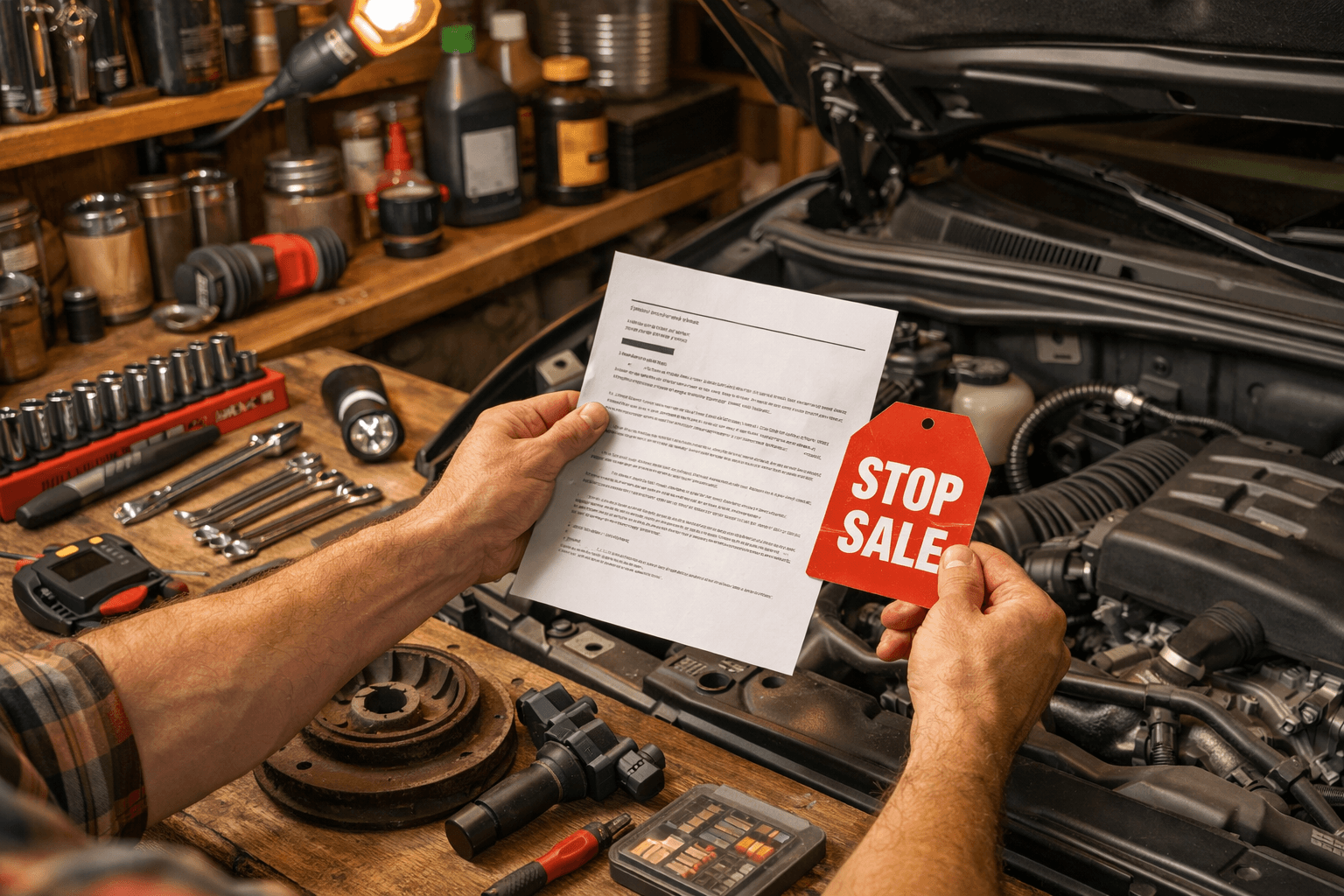
You go in for an oil change, grab a bad cup of dealership coffee, and suddenly the service writer says, “We can’t sell or release your vehicle — it’s under a stop-sale.” Your stomach drops. That’s when the car recall process gets real.
A stop-sale isn’t just paperwork. It can affect your safety, your resale value, and whether you can even drive off the lot in that shiny 2026 SUV. Today I’m breaking down how recalls actually happen, what a stop sale notice explained in plain English really means, and what you should do next so you don’t get stuck — or ripped off.
I’ve helped customers through everything from airbag recalls to fuel pump failures. You’ll learn the NHTSA recall steps, how vehicle safety compliance works behind the scenes, and how to protect your wallet while staying safe.
What You'll Need
- Tools: 17-digit VIN (from dash or registration), smartphone or computer
- Parts/Materials: None — recall repairs are legally free
- Time: 10 minutes to check status; repair time varies (1–4 hours typical)
- Difficulty: 🔧 (1/5 — paperwork, not wrenching)
- Dealer Cost: $0 (recall work is free) vs DIY Cost: $0 — You Save: $300–$2,000 depending on repair
Why This Matters
Recalls aren’t for squeaky cupholders. They’re issued for safety defects — think airbags that don’t deploy, fuel pumps that fail at highway speed, or seat belts that don’t latch. In 20 years of wrenching, I’ve seen “minor” defects turn into major accidents.
If you ignore a recall, you’re gambling. Best case? Nothing happens. Worst case? You’re stranded or hurt — and your insurance company starts asking uncomfortable questions.
The car recall process is triggered when a manufacturer or the National Highway Traffic Safety Administration (NHTSA) determines a vehicle doesn’t meet federal safety standards. Once that happens, the automaker must fix it for free — parts and labor — no matter how old the car is.
And if there’s a stop-sale order? Dealers legally cannot sell that vehicle until it’s repaired. Period. That’s vehicle safety compliance in action.
Before You Start
⚠️ WARNING: If your recall involves brakes, steering, fuel leaks, or airbags — limit driving until it’s fixed. Some defects are “park it now” serious.
Here’s how to check your status:
- Locate your 17-digit VIN (driver-side dash near windshield).
- Enter it at NHTSA.gov.
- Call your local dealer’s service department with that VIN.
If you’re buying new or used off a lot, ask directly: “Are there any open recalls or stop-sale notices on this VIN?” Get it in writing.
For deeper protection steps, check out our Car Recall Checklist: Protect Yourself Today. It’s the cheat sheet I wish every customer had.
Step-by-Step Guide
How Recalls Actually Happen (The Inside Baseball)
- Problem shows up. Customers complain, warranty claims spike, or crash data reveals a pattern. Engineers start digging.
- Investigation begins. NHTSA may open a formal investigation. Manufacturers test components and review supplier data.
- Defect determination. If it’s safety-related, the automaker files paperwork with NHTSA outlining affected models (say, 2025–2026 model years).
- Recall announcement. Owners are notified by mail. Dealers get repair instructions.
- Stop-sale issued (if serious). Unsold vehicles on dealer lots are frozen until fixed.
That’s the car recall process in a nutshell. It’s not random — it’s structured and federally regulated.
What a Stop Sale Notice Explained Simply Means
Think of it like a restaurant health violation. Until the kitchen passes inspection, no food gets served. A stop-sale notice explained in garage terms? The car can’t legally change hands until repaired.
If you already own the vehicle, you can usually keep driving it unless the notice says otherwise. If you’re mid-purchase? The dealer must fix it before delivery — no exceptions.
We saw a textbook example with the Hyundai Palisade Recall: Steps to Fix Seat Belt Issue. Dealers couldn’t release affected SUVs until the seat belt repair was completed.
- Verify the recall. Check NHTSA’s database yourself — don’t rely only on a phone call.
- Schedule ASAP. Parts shortages happen. Book early.
- Ask about loaner vehicles. For major safety recalls, many dealers provide one free.
- Keep documentation. Save repair orders for resale value.
Pro Tip: If parts are unavailable and the car is unsafe to drive, ask the manufacturer’s customer service line about reimbursement or buyback options. Be polite but persistent.
Common Mistakes to Avoid
- Ignoring the letter. I’ve seen engines destroyed because owners brushed off fuel system recalls.
- Paying for recall work. If it’s recall-related, it’s free. No “diagnostic fee.”
- Assuming used cars are exempt. Recalls follow the VIN, not the owner.
- Not checking before buying. Especially in today’s market — see our Car Prices 2026: Buyer's Market? guide before signing anything.
- Confusing recalls with TSBs. Technical Service Bulletins aren’t free fixes unless under warranty.
I’ve seen this in the shop a hundred times — someone pays $600 for a repair that was actually covered under recall. That’s grocery money for a month.
When to Call a Professional
Here’s the honest truth: you generally can’t DIY recall repairs. Manufacturers require certified documentation for vehicle safety compliance.
If a shop tries to charge you for recall labor, push back. Call the manufacturer’s customer line. You can also file a complaint through NHTSA if needed.
A fair price for recall repair? $0. If additional unrelated work is suggested, ask:
- “Is this related to the recall?”
- “Is this required for safety?”
- “Can you show me the worn part?”
Red flags: pressure tactics, vague explanations, or refusal to provide paperwork.
If you’re shopping during a stop-sale situation — especially with hot models like those featured in our BMW iX3 World Car: 2026 Win Shakes EV Market article — confirm recall clearance before putting money down.
Recommended Products
- OBD2 Scanner (BlueDriver, ~$120): Not for recall fixes, but great for monitoring related warning lights.
- Vehicle Service Manual ($25–$40): Helps you understand systems involved.
- CarFax Report ($45): Confirms recall completion history when buying used.
- Document Folder ($15): Keep recall paperwork organized for resale.
What I use in my own garage? A simple VIN check twice a year and a file folder labeled “Don’t Toss This Stuff.” Boring — but it works.
Do This
- Check recalls twice a year at NHTSA.gov
- Schedule repairs immediately
- Keep all recall paperwork
- Ask for loaner cars when applicable
Don't Do This
- Ignore safety-related notices
- Pay for recall-covered repairs
- Buy a car without checking VIN status
- Assume “no news” means no recall
DIY Difficulty: 🔧 1/5
Money Saved: $300–$2,000 per recall repair
The car recall process isn’t something to fear — it’s a safety net. But you’ve got to participate. Check your VIN, respond quickly, and don’t let anyone charge you for what’s legally free.
You’ve got this. Ten minutes online can save you thousands and maybe keep your family safer on the road. Drop your questions below — I read every one.
Stay safe under there, and remember — a $20 repair manual saves a $2,000 repair bill.
Disclosure: This article may contain affiliate links. If you make a purchase through these links, we may earn a small commission at no extra cost to you. This helps support RevvedUpCars.com and keeps Mike's toolbox stocked.
Learn more.
Get the latest car reviews in your inbox
Join thousands of car enthusiasts. No spam, unsubscribe any time.





Comments
Leave a comment