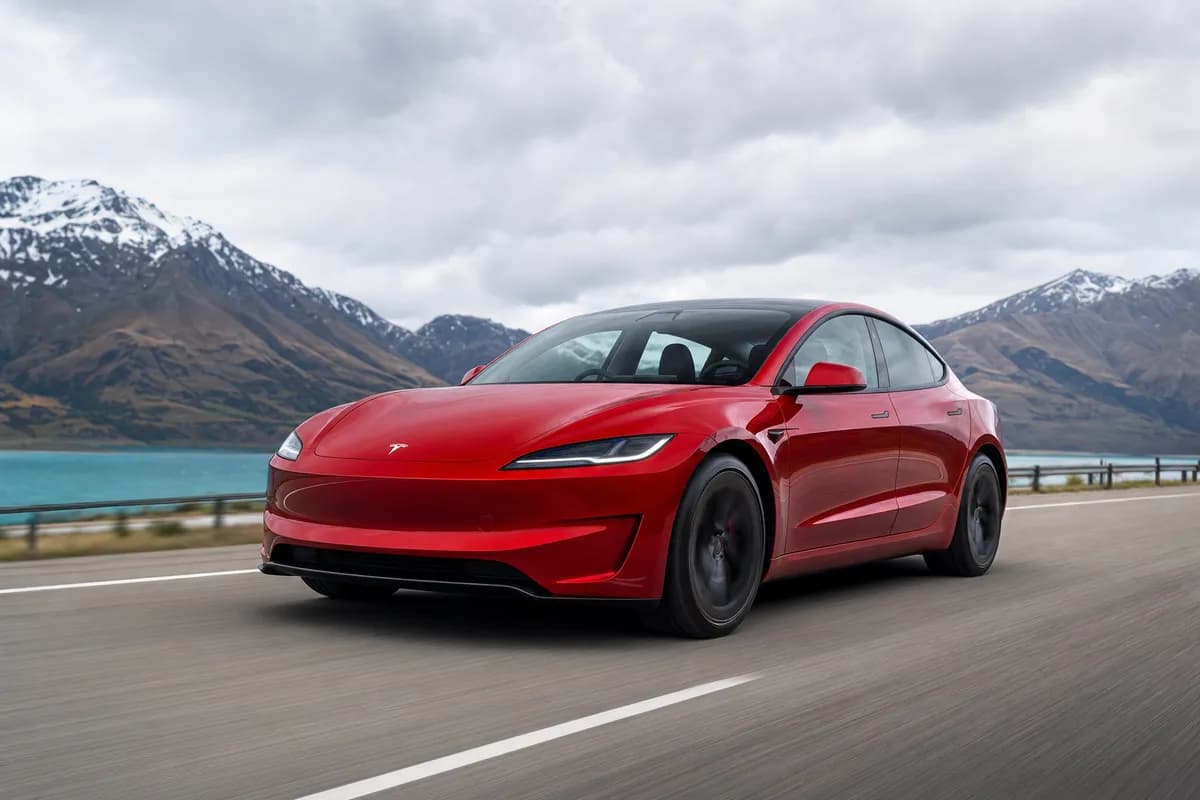
A brutally quick electric sports sedan with a practical edge—this 2026 Tesla Model 3 Performance review explains why affordable EV speed is real.
The 2026 Tesla Model 3 Performance remains the EV equivalent of bringing a railgun to a knife fight. It is brutally quick, surprisingly usable, and still priced low enough to make several premium-brand performance EVs look faintly ridiculous.
Fast Enough to Embarrass Proper Sports Sedans
The headline number is simple: Tesla claims 0-60 mph in 2.9 seconds for the Model 3 Performance. That is supercar-adjacent acceleration from a compact four-door sedan with a trunk, rear seats, and no need to explain to your accountant why you bought it.
Tesla does not publish an official horsepower figure, as usual, but independent estimates put the dual-motor setup around 460 hp. More relevant is the delivery. Floor it from 30 mph and the Model 3 Performance does not build speed so much as delete distance.
The refreshed car is more than a Long Range model with a bigger ego. It gets revised adaptive damping, upgraded brakes, forged 20-inch wheels, sport seats, a carbon-fiber lip spoiler, and a Track Mode that now offers more detailed powertrain and stability-control adjustment.
- 0-60 mph: 2.9 seconds, Tesla claim
- Top speed: 163 mph
- Drivetrain: Dual-motor all-wheel drive
- Estimated output: Approximately 460 hp, not officially published by Tesla
- EPA range: Up to 303 miles
- Wheels: 20-inch forged alloys with performance tires
That 163-mph top speed matters less than the way this electric sports sedan attacks a back road. The old Model 3 Performance was fast but a touch stiff-kneed, as if its suspension had been tuned by someone whose only road reference was a billiard table. The current car is better controlled and more mature.
It still is not a Porsche Taycan. The steering is accurate but filtered, and the brake pedal can feel artificial during low-speed regenerative transitions. But the chassis no longer collapses into vague body motions when you start driving it with intent.
Range and Charging: The Practical Part Actually Works
Performance EVs usually force an annoying compromise: buy the fast one and accept miserable range, or buy the efficient one and pretend 5.8-second acceleration is exciting. The 2026 Tesla Model 3 Performance largely avoids that trap with an EPA-rated 303 miles of range.
Real-world range depends heavily on weather, speed, and whether you enjoy using 460-ish horsepower as intended. Expect roughly 250 to 280 miles in mixed driving on the 20-inch wheels, with highway range dropping further in cold weather. That is still respectable for a car capable of humiliating a BMW M3 at stoplights.
The Supercharger network remains Tesla’s strongest practical advantage. The Model 3 can charge at up to 250 kW on compatible DC fast chargers, and Tesla says a 15-minute stop can add as much as 175 miles of range under ideal conditions.
The phrase “under ideal conditions” is doing some work there. Battery temperature, charger availability, and state of charge all matter. Still, Tesla’s route planner and tightly integrated charging network make road trips less stressful than in many rival EVs, even as other brands gain access to Tesla’s North American Charging Standard network.
The Model 3 Performance is not merely quick for an EV. It is quick enough that range, charging, and normal-life usefulness had better be sorted. Fortunately, they mostly are.
The Tesla Model 3 price remains the weapon. In the U.S., the Model 3 Performance starts around $54,990 before destination charges, incentives, taxes, and Tesla’s usual price-adjustment roulette. That makes it substantially cheaper than several electric performance alternatives.
The Hyundai Ioniq 5 N is the most entertaining rival here, with synthetic shifts, fake engine sounds, and an absurd willingness to behave like a hot hatch. The BMW i4 M60 feels more premium and more conventional. Both cost significantly more, and neither can match Tesla’s mix of range, acceleration, and charging convenience.
| Model |
Starting Price |
0-60 mph |
EPA Range |
Key Advantage |
| 2026 Tesla Model 3 Performance |
About $54,990 |
2.9 sec |
303 miles |
Price, range, charging network |
| Hyundai Ioniq 5 N |
About $66,200 |
2.8 sec |
221 miles |
Best driver engagement |
| BMW i4 M60 xDrive |
About $70,000 |
3.7 sec |
Up to 232 miles |
Cabin quality and refinement |
| Polestar 2 Performance Pack |
About $65,000 |
3.9 sec |
Up to 276 miles |
Clean design and solid road manners |
The numbers make the Tesla case brutally clear. The Ioniq 5 N is more playful but gives up around 80 miles of rated range and asks for more than $11,000 extra. The BMW i4 is a more traditional luxury sedan, but its price premium buys better materials rather than better performance value.
There is one caveat: Tesla’s feature list can become expensive quickly. Enhanced Autopilot and Full Self-Driving Capability remain costly options, and neither is a substitute for an attentive human driver. Do not let a slick software demo convince you that the car has become chauffeur-ready. It has not.
The Cabin Is Better, Not Luxurious
The Highland refresh improved the Model 3 cabin where it needed help. There is better sound insulation, more polished trim, ambient lighting, ventilated front seats, a rear touchscreen, and a cleaner overall presentation. At highway speed, this is a much calmer car than the old Model 3.
But “better” does not mean “premium for the money.” A BMW i4 has richer materials, more supportive ergonomics, and actual physical controls for common functions. Tesla still routes too much through the central touchscreen, including functions that should be handled by a stalk, button, or dial.
The missing turn-signal stalk remains a spectacularly unnecessary act of interface stubbornness. Tesla puts the indicators on the steering wheel, which is tolerable until you are navigating a roundabout with the wheel rotated. It is a solution to a problem that did not exist.
Rear-seat space is good for a compact sedan, and the front trunk adds useful extra cargo room. The low roofline and conventional trunk opening make it less versatile than an Ioniq 5 or Kia EV6, but it is still easy to live with every day.
The 2026 Tesla Model 3 Performance is the best affordable performance EV for buyers who want devastating speed without turning daily ownership into a compromise. It combines sub-three-second acceleration, more than 300 miles of EPA range, effective fast-charging access, and a starting price that undercuts premium rivals by thousands.
It is not the most tactile driver’s car. Buy the Hyundai Ioniq 5 N if you want simulated gear changes, rowdy track-day personality, and a car that actively encourages juvenile behavior. Buy the BMW i4 M60 if cabin quality and conventional controls matter more than outright value.
But for most buyers shopping for an electric sports sedan, the Tesla is still the answer. The Model 3 Performance is fast enough to be thrilling, efficient enough to travel, and practical enough to use every day. Its quirks are real, but its value is even more real.
Frequently Asked Questions
The Tesla Model 3 Performance price is approximately $54,990 in the U.S. before destination fees, taxes, incentives, and options. Tesla changes pricing more often than traditional automakers, so check the configurator before treating any number as permanent.
Tesla quotes a 0-60 mph time of 2.9 seconds for the Model 3 Performance. That puts it ahead of many gasoline sports sedans and within striking distance of considerably more expensive EVs.
The Tesla is the better all-round ownership choice because it costs less, goes farther on a charge, and has easier access to the Supercharger network. The Ioniq 5 N is the more entertaining car on a track or twisty road, with more expressive handling and clever simulated shifting.
The 2026 Tesla Model 3 Performance has an EPA-estimated range of up to 303 miles. Real-world results will be lower during cold weather, sustained high-speed driving, or repeated enthusiastic acceleration—which, frankly, will be difficult to resist.
Get the latest car reviews in your inbox
Join thousands of car enthusiasts. No spam, unsubscribe any time.



Comments
Leave a comment