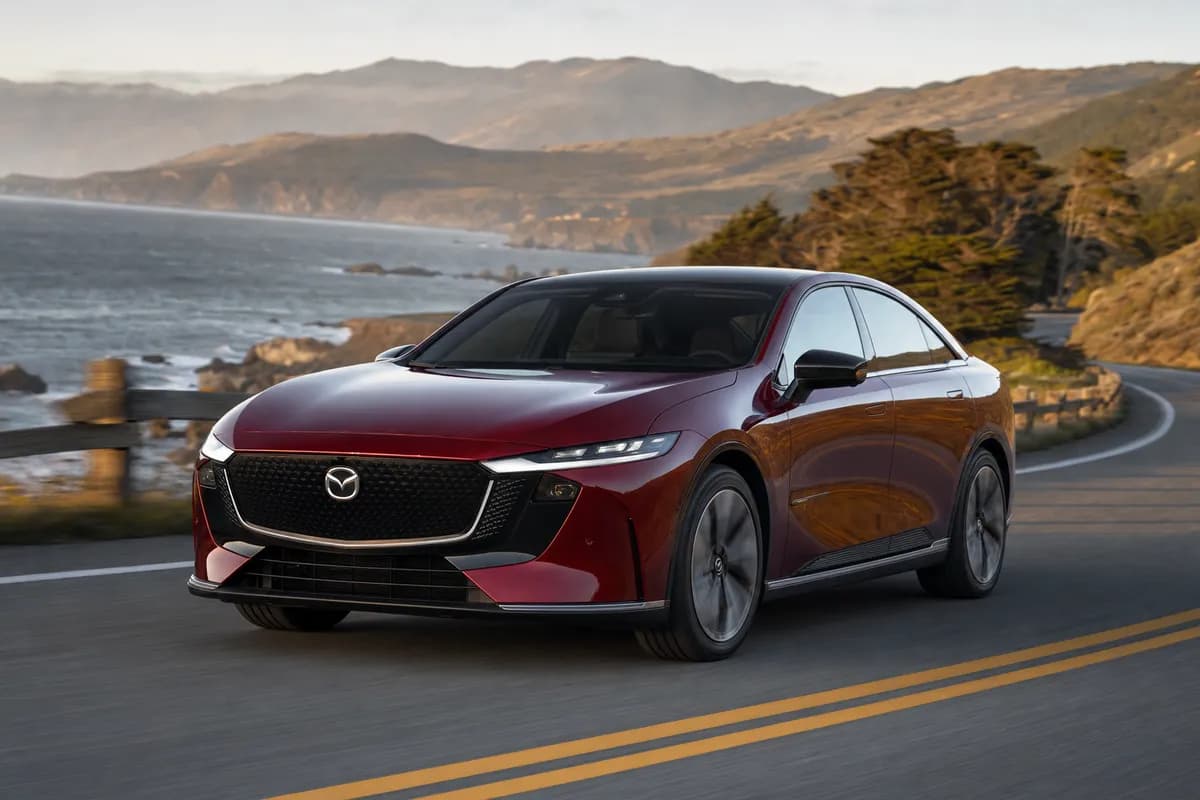
Volvo’s ES90 aims for 500 miles, but the real story is how quietly it delivers comfort, range confidence, and everyday usability.
Volvo says the 2026 ES90 can go as far as 500 miles on a charge. That number alone puts the luxury EV establishment on notice. After a first drive, the bigger surprise is this: the ES90 doesn’t feel like a science project chasing a headline figure, but a calm, clever flagship that understands what real-world luxury actually means.
A Volvo flagship that finally feels like a proper electric one
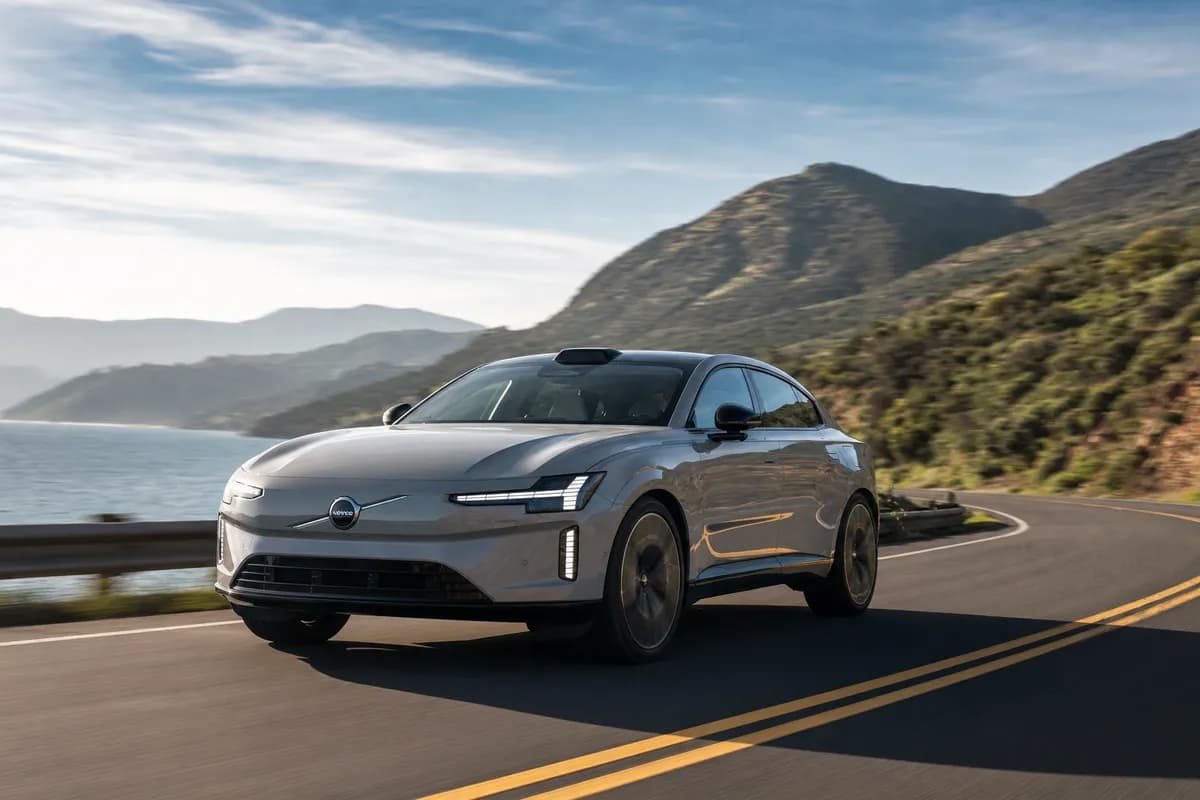
The 2026 Volvo ES90 is not a traditional three-box sedan in the old S90 mold. It sits somewhere between a fastback sedan, a liftback, and a slightly raised grand tourer, which sounds like design-team indecision until you use it. Then it makes sense.
This is Volvo leaning hard into what buyers actually want from a premium EV: easy access, strong visibility, a useful hatch opening, and a cabin that feels expensive without screaming for attention. If the Mercedes-Benz EQE looks like it was shaped entirely by a wind tunnel and the BMW i5 still clings to old-sedan packaging, the ES90 lands in a sweet spot between elegance and usability.
Built on Volvo’s latest 800-volt architecture, the ES90 arrives with the kind of numbers luxury buyers now expect. Depending on market and battery spec, Volvo is quoting up to 500 miles of range on the WLTP cycle for the longest-range version. Real-world American EPA figures will be lower, of course, but even after the usual translation, this thing should still land in seriously competitive territory against the BMW i5, Mercedes-Benz EQE, and even some Lucid Air variants.
Range, charging, and why the headline number matters
Let’s address the big claim. A “500-mile electric car” sounds like marketing confetti, and on some EVs it is. Here, it matters because Volvo has paired the big range number with fast charging and a platform that should make distance driving less annoying, not just theoretically possible.
The ES90’s 800-volt system allows DC fast-charging rates of up to 350 kW, according to Volvo. In ideal conditions, that means a 10 to 80 percent charge stop in around 20 minutes. That does not beat every Lucid Air on paper, but it is right in the top tier and comfortably ahead of older 400-volt luxury EVs that start feeling slow once the battery warms up and the curve tapers off.
Against key rivals, the Volvo makes a strong first impression:
- 2026 Volvo ES90: up to 500 miles WLTP, 800-volt architecture, up to 350 kW DC charging
- BMW i5 eDrive40: EPA range around 295 miles in current U.S. spec, 205 kW peak charging
- Mercedes-Benz EQE 350+: EPA range around 300-plus miles depending on trim, roughly 170 kW DC charging
- Lucid Air Touring: EPA range well over 400 miles in current form, peak charging that remains among the class benchmarks
The Lucid Air still looks like the range king if your sole metric is maximum distance between plugs. But the Volvo’s packaging is less weird, its interface is less alienating, and its brand of luxury feels more human. That matters if you are spending six figures and don’t want your car to behave like a startup founder’s fever dream.
On the road, the ES90 also feels efficient in the way that actually counts. It slips quietly through traffic, coasts cleanly, and manages its regenerative braking with more polish than many rivals. Some EVs force you to choose between mushy brake blending and abrupt one-pedal behavior. The Volvo feels natural almost immediately, which is not glamorous but absolutely helps daily usability.
Comfort first, but not soft in the lazy sense
Volvo has always been good at seats, and the ES90 continues that streak. The front chairs are superb: supportive, broad-backed, and shaped for long-haul comfort rather than showroom theatrics. After a few hours behind the wheel, they feel like one of the car’s best features, which is exactly how a flagship should work.
The ride quality is equally on-brand. The ES90 does not isolate you from the world in the floaty, over-assisted way a Mercedes-Benz EQE sometimes can. Instead, it delivers disciplined body control, low road noise, and a settled, expensive gait that makes the BMW i5 feel a touch more eager but also more restless.
That is the key character distinction. The BMW i5 remains the driver’s choice if you want your luxury EV to pretend it’s a sports sedan, especially in M60 form. The Volvo is not chasing that brief. It aims straight at serenity, and in everyday driving, that’s the better call for most buyers.
Still, this is not a numb barge. Dual-motor versions should offer properly brisk acceleration, and even if Volvo avoids absurd horsepower wars, instant electric torque means the ES90 gets moving with the kind of effortless shove premium buyers expect. It feels secure, planted, and calm at speed, which is more impressive in a flagship than a juvenile 0-60 bragging rights contest.
Cabin design and real-world usability beat flashy gimmicks
The inside of the ES90 is classic modern Volvo: clean lines, restrained materials, and none of the nightclub lighting or gratuitous screen clutter infecting some rivals. If the EQE interior can feel like a luxury airport lounge designed by algorithm, the ES90 feels like expensive Scandinavian furniture that happens to move very quickly.
Volvo’s Google-based infotainment remains one of the better systems in the business. Native Google Maps, clear route planning, logical voice control, and fewer layers of nonsense make the ES90 easier to live with than the Mercedes MBUX maze and less distracting than BMW’s sometimes overcomplicated interface logic.
More importantly, the shape works. That liftback-style rear opening is a gift in a class still obsessed with sedan silhouettes. Loading bulky luggage, strollers, or airport gear should be much easier than in the BMW i5 or Mercedes EQE, and rear-seat access benefits from the taller roofline.
Why the ES90 feels smarter than its rivals:
- Better cargo usability than most traditional luxury sedans thanks to the hatch-style opening
- Cleaner UX than the EQE’s overcooked tech presentation
- More understated luxury than the BMW i5’s occasionally busy interior design
- Less compromise in day-to-day driving than the lower, more exotic Lucid Air
There is, however, one caveat. Like most modern premium EVs, the ES90 still pushes too many functions into the touchscreen. Volvo does this more elegantly than most, but physical controls remain better for climate and quick adjustments. Carmakers keep relearning this lesson the hard way.
Volvo ES90 vs BMW i5, Mercedes-Benz EQE, and Lucid Air
If you are cross-shopping the obvious alternatives, each rival has a clear pitch. The BMW i5 is the sharpest to drive, the Mercedes-Benz EQE majors in plush isolation and tech spectacle, and the Lucid Air still owns the nerd bragging rights for efficiency and range. The Volvo ES90 wins by feeling the most complete.
In a Volvo ES90 vs BMW i5 matchup, the Volvo gives up a bit of handling sparkle but counters with more imaginative packaging, potentially much greater range, and a calmer cabin. The i5 is excellent, but it also feels like BMW adapted a familiar formula for the EV age. The ES90 feels conceived as an EV from the start, and it shows.
Against the Mercedes-Benz EQE, the Volvo is simply more handsome and easier to recommend. The EQE has improved since launch, but its blobby proportions and occasionally awkward interface still make it feel like a transitional product. The ES90 looks and operates like a cleaner answer.
The Lucid Air remains the toughest comparison because it is genuinely brilliant in several key areas. It is faster in many versions, more efficient, and devastating on a long run. But Lucid’s usability quirks, lower-volume dealer footprint, and occasionally fussy interface give Volvo an opening. For many buyers, trust, ergonomics, and simplicity still matter more than winning the spreadsheet war.
Verdict: one of the best luxury electric sedans of 2026
The 2026 Volvo ES90 review boils down to this: Volvo has built a flagship EV that attacks the problem from the right end. It does not chase novelty for its own sake. It focuses on range, charging speed, comfort, packaging, and design restraint, which is exactly what premium EV buyers should demand.
Is it perfect? No. We still want more physical controls, and final U.S.-spec pricing and EPA range figures will determine just how hard it hits the segment. But on first drive, the ES90 already looks like a more coherent luxury EV than the Mercedes-Benz EQE and a more distinctive one than the BMW i5.
As a Volvo ES90 first drive, this is an encouraging debut. If the production specs hold up and the real-world range lands where it should, the ES90 has every chance of becoming the best luxury electric sedan 2026 for buyers who value comfort, class, and actual usability over empty tech theater. The Lucid Air may still be the number-chaser’s hero, but the Volvo feels like the one a sane person would actually want to own.
Affiliate disclosure: This article contains affiliate links. RevvedUpCars may earn a small commission on qualifying purchases at no extra cost to you.