Owners of the new 4Runner, Land Cruiser, and Lexus GX are building a quieter, smarter overland DIY community with suspension, tire, armor, and upkeep mods.
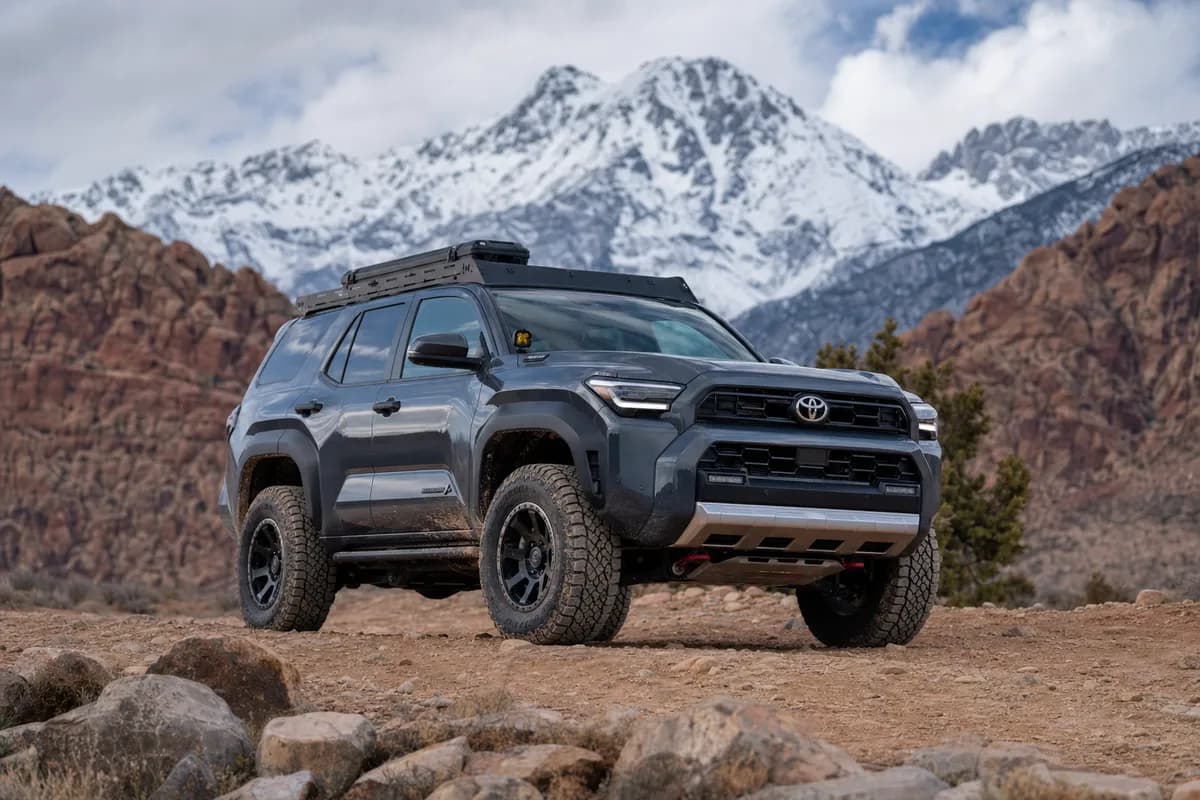
The new Toyota and Lexus truck trio changed the overland conversation fast. By 2026, owners of the latest 4Runner, Land Cruiser, and Lexus GX are building smarter rigs, not louder ones. The goal is simple: go farther, break less, and keep these turbocharged 4x4s pleasant to live with every day.
A new kind of overland crowd is forming around Toyota’s turbo truck platform
The old overland formula was easy to spot: huge lift, 35-inch tires, steel everywhere, and a roof load that made the truck feel top-heavy before the first dirt road. The new crowd around the 2026 Toyota 4Runner mods scene and the 2027 Land Cruiser overland build world is pulling in a different direction. Owners are watching payload, preserving factory geometry, and choosing upgrades that work with modern electronics instead of fighting them.
That shift makes sense. The new-generation 4Runner, Land Cruiser, and Lexus GX all ride on Toyota’s TNGA-F body-on-frame platform. They also share modern turbocharged powertrains, more sensors, more cooling demands, and more integrated driver-assistance systems than the old trucks ever had.
Depending on trim and market, buyers are choosing between Toyota’s 2.4-liter turbocharged i-FORCE four-cylinder and the hybrid i-FORCE MAX setup, while the Lexus GX 550 runs the twin-turbo 3.4-liter V6. That means more torque at low rpm, but it also means more heat management, tighter packaging, and less tolerance for sloppy modifications. The community gets that, and it shows in the builds.
The modern Toyota overland recipe is no longer “maximum parts.” It is “minimum compromise.”
Suspension and tire choices are getting smarter, not taller
If you spend any time around these owners, one trend jumps out right away: moderate suspension setups are winning. Most practical builds stay in the 1.5- to 2.5-inch lift range, often with quality coilovers or matched spring-and-shock packages tuned for extra gear weight. That keeps CV angles, steering feel, and electronic calibration closer to where Toyota intended.
On a new 4Runner or Land Cruiser, that approach matters more than ever. These trucks are heavier than the stripped-down rigs people remember from 20 years ago, and the factory suspension already works well. A small lift with proper damping often improves control on washboard roads more than a towering setup ever will.
What owners are choosing now
- Suspension: 1.5-2.5 inch lift, remote-reservoir shocks only when the use case justifies them
- Tires: 33-inch all-terrain tires are the sweet spot for most builds
- Wheels: conservative offset to avoid excessive scrub radius and fender trimming
- Alignment: immediate post-lift alignment with caster set for stability and tire clearance
Tire choice may be the biggest sign of the new mindset. Instead of jumping straight to 35s, many owners are running 285/70R17-sized tires or their metric equivalent. That gives a useful bump in sidewall and ground clearance without crushing acceleration, fuel economy, braking feel, and transmission behavior.
It also helps preserve reliability. Bigger, heavier tires increase load on wheel bearings, brakes, steering racks, tie rods, and driveline components. On a turbo 4x4, they can also force the powertrain to work harder in heat, especially when climbing slowly with camping gear aboard.
Armor is becoming selective, legal, and weight-conscious
There was a time when “built” meant bolting steel to every available surface. The 2026 overland community is far more selective. Owners are learning that a full catalog build can eat up payload in a hurry, especially once passengers, water, tools, and recovery gear join the party.
That is why the most respected builds are using armor where it counts. Skid plates for the engine, transmission, and transfer case make sense. Rock sliders make sense if the truck sees actual rocky trails. A 140-pound rear bumper with dual swing-outs does not make sense for a vehicle that spends 90 percent of its time commuting and taking family road trips.
Priority armor for modern Toyota and Lexus SUVs
- Skid plates: protect low, expensive components and pay for themselves quickly off-road
- Rock sliders: useful if the truck is driven on technical trails, not just forest roads
- Recovery points: quality, rated, and accessible points matter more than cosmetic add-ons
- Hidden winch solutions: popular because they preserve approach angle and factory styling
Legal, tasteful builds are also part of this new culture. Owners want rigs that pass inspection, keep airbags and sensors happy, and do not blind oncoming traffic with poorly aimed auxiliary lights. That means better wiring, proper switch integration, and lighting used within local laws instead of “because it looks cool.”
The real hot topic is maintenance, cooling, and turbo 4x4 reliability mods
This is where the new community feels genuinely mature. A lot of the best forum threads and meetup conversations are not about flex shots or rooftop tents. They are about service intervals, cooling performance, dust control, and how to protect expensive modern hardware on long trips.
These vehicles are not fragile, but they are less forgiving of neglect than an old naturally aspirated truck with a four-speed automatic. Turbo engines create more heat. Hybrid systems add complexity. Direct injection, intercooling, electric fans, and tighter underhood packaging all reward owners who stay ahead of maintenance.
Reliability-first upgrades owners actually trust
- Frequent oil service: many enthusiasts shorten intervals well below the maximum factory schedule when towing, wheeling, or driving in dust
- Air filtration attention: regular filter inspection matters on convoy trips and desert routes
- Transmission and transfer case fluid service: earlier service is cheap insurance for vehicles that see heat and load
- Differential fluid changes: especially after water crossings or sustained off-road use
- Intercooler and radiator protection: mesh or guard solutions that do not choke airflow
- Battery management: critical for accessory-heavy builds and especially relevant on modern electronics-packed platforms
- Scan tools: basic diagnostic capability is now part of smart trail prep
The Lexus GX DIY maintenance crowd has been especially vocal here. GX owners tend to spend real money on parts, but many are equally interested in doing baseline service themselves and documenting it carefully. That attitude is spreading across the 4Runner and Land Cruiser communities, where the badge matters less than the shared platform logic.
One of the smartest trends is keeping intake, cooling, and exhaust modifications conservative. Owners have seen enough modern turbo vehicles to know that chasing tiny power gains with questionable tuning can create long-term headaches. For most travelers, factory power is already more than enough, while stable coolant temps and clean filtration matter every single mile.
Community knowledge is replacing catalog-building
What really defines the overland community 2026 is how owners are sharing information. Instead of blindly copying show builds, they are comparing real weights, fuel economy changes, tire measurements, and alignment specs. They are posting part failures too, which may be the healthiest sign of all.
This has led to more honest comparisons between the three SUVs. The 2026 4Runner is attracting buyers who want broad trim choice and a simpler path to trail-oriented modifications. The Land Cruiser appeals to people who want heritage, strong factory engineering, and a balanced daily-driver-to-adventure ratio. The GX 550 brings premium comfort and serious capability, but its owners are often the quickest to talk about protecting expensive components and staying on top of service.
Why these trucks respond well to restraint
- They already start with strong factory capability
- They are heavy enough that every added pound matters
- Modern ADAS, cameras, and sensors complicate reckless modifications
- Turbocharged drivetrains reward cooling and maintenance more than flashy bolt-ons
That is why the best builds today look almost understated. They sit a little taller, wear sensible all-terrains, carry proper protection underneath, and have a maintenance log that is as impressive as the accessory list. For experienced off-roaders, that is a very familiar formula. The difference is that a new generation is finally embracing it from the start.
Verdict: the best 2026 and 2027 Toyota and Lexus builds are the ones that stay usable
The smartest turbo 4x4 reliability mods are not glamorous. They are quality suspension tuned to the load, tires that fit the mission, armor that protects without crushing payload, and maintenance practices that respect heat and complexity. That is exactly why this movement has legs.
If you are planning 2026 Toyota 4Runner mods, sketching out a 2027 Land Cruiser overland build, or diving into Lexus GX DIY maintenance, the winning strategy is clear: build for the trip, not the comments section. Keep it legal, keep it light, and keep it serviced. Modern Toyota and Lexus SUVs will reward that discipline with the thing every overlander actually wants—confidence far from pavement.
Affiliate disclosure: This article contains affiliate links. RevvedUpCars may earn a small commission on qualifying purchases at no extra cost to you.