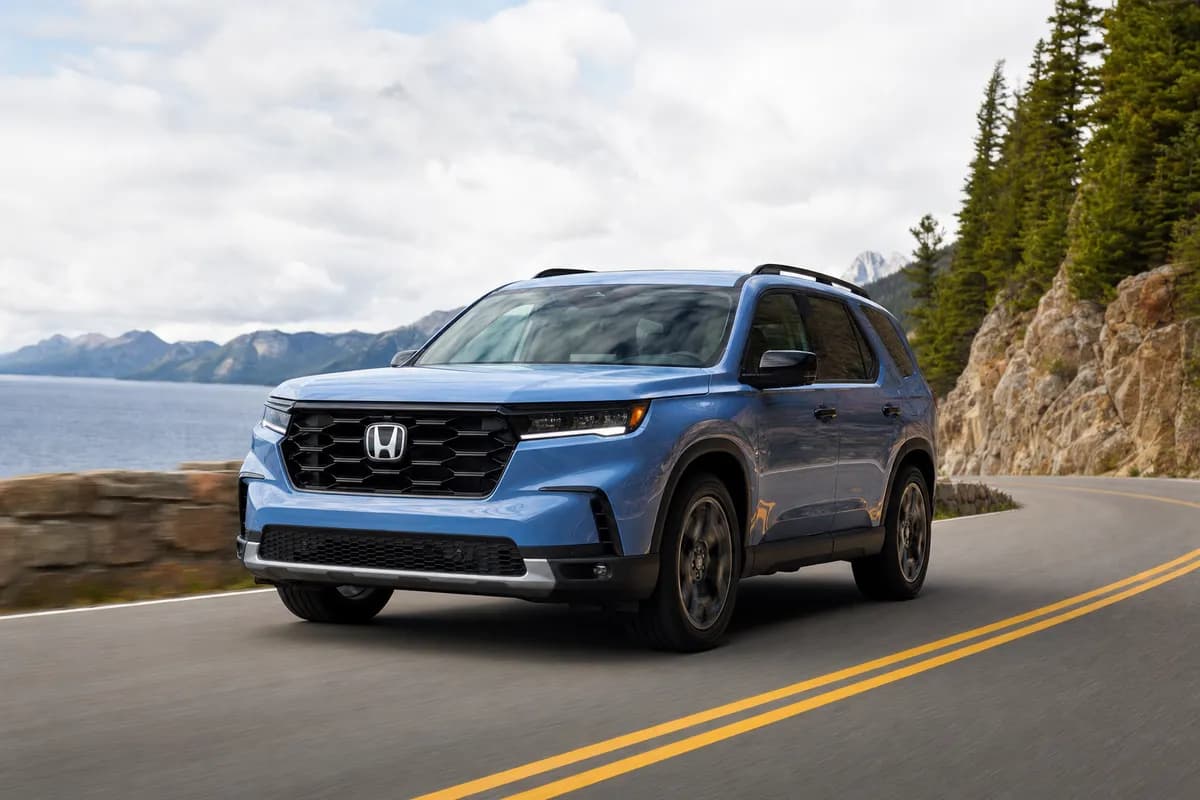
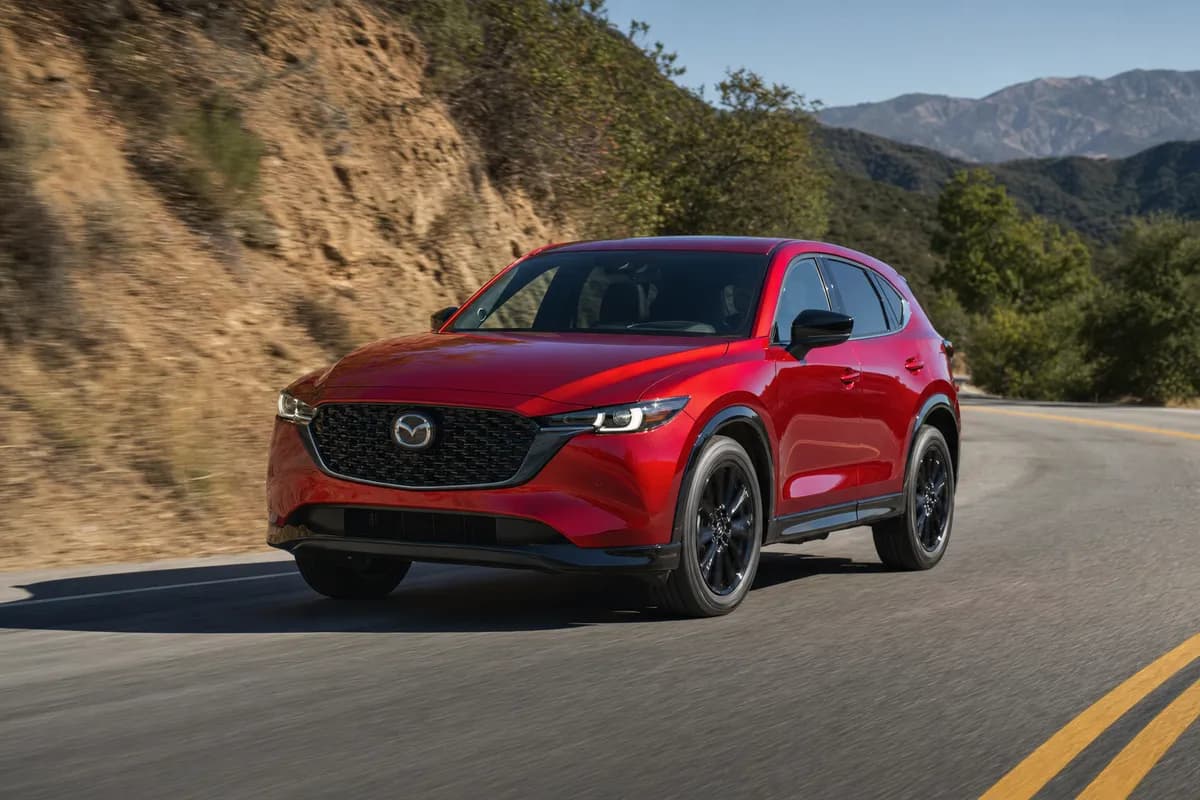
The 2026 Honda Pilot adds a hybrid option, sharpens infotainment, and upgrades the cabin to take on the Telluride and Grand Highlander.
Honda’s Pilot has spent too long being the sensible pick that nobody got excited about. The 2026 update aims straight at the family-SUV pressure points: fuel economy, infotainment, cabin quality, and the general feeling that a Kia Telluride or Toyota Grand Highlander gives you more for the money.
After an early drive, the big question isn’t whether the Pilot suddenly became flashy. It didn’t. The real question is whether Honda finally fixed the stuff buyers actually complain about, and whether the new hybrid makes this three-row SUV more than just the practical default.
The Big News: Hybrid Power Finally Arrives
The headline for any serious 2026 Honda Pilot review is simple: Honda finally gives its three-row family hauler a hybrid option. That matters because the outgoing Pilot’s naturally aspirated 3.5-liter V6, while smooth and stout at 285 horsepower, always looked thirsty next to newer rivals chasing 30-plus mpg.
In hybrid form, the 2026 Pilot uses Honda’s latest two-motor system, paired with a 2.0-liter four-cylinder. Final U.S. specs were still being framed around the launch window, but the target is roughly 280 horsepower combined, with a meaningful torque bump over the V6 at lower speeds. That matters more in daily driving than a spec-sheet horsepower flex.
The payoff should be efficiency. Honda is targeting fuel economy in the neighborhood of 34 mpg combined for front-wheel-drive hybrid trims, with all-wheel drive likely landing a few mpg lower. If that number holds, the Honda Pilot hybrid 2026 instantly becomes more relevant in a segment where gas bills are a family budget issue, not a trivia stat.
That would still leave some daylight between the Pilot and a Toyota Grand Highlander Hybrid, particularly in its more efficiency-focused versions. But it would finally drag the Honda out of the fuel-economy penalty box, and that alone changes the buying conversation.
- 2026 Honda Pilot V6: 285 hp, traditional 10-speed automatic, expected combined economy still in the low 20s
- 2026 Honda Pilot Hybrid: about 280 hp combined, stronger low-end torque, expected up to roughly 34 mpg combined
- Kia Telluride: 291-hp 3.8-liter V6, EPA-rated up to 22 mpg combined in FWD form
- Toyota Grand Highlander Hybrid: 245 hp in standard hybrid form, up to mid-30s mpg combined depending on trim
On the road, the hybrid feels like the smarter setup. It is quieter leaving a stop, smoother in traffic, and less busy when the family grind turns into endless suburb-to-highway slogs. The V6 still sounds more natural when pushed, but family buyers don’t care what your crossover sounds like at 5,500 rpm. They care how often they stop for gas.
Driving Impressions: Still More Honda Than Hype
This is where the Pilot has always had an advantage over some rivals. Honda understands steering calibration, brake feel, and body control better than most mainstream brands, and the 2026 model keeps that intact.
The steering is direct without being nervous. The ride is composed, with better damping over broken pavement than some Telluride trims that can thump harder than you’d expect on large wheels. The Pilot still does not pretend to be sporty, but it feels lighter on its feet than a three-row SUV this size has any right to.
If you’re shopping this class, that matters. The Telluride majors in style and value, but the Pilot often feels more polished in the basic mechanics of driving. The Toyota Grand Highlander, meanwhile, wins points for serenity and efficiency, yet it can feel larger and less tidy in corners.
Honda also appears to have refined low-speed drivability in the updated Pilot. Throttle response is cleaner, and the transition between regenerative and friction braking in the hybrid is smoother than some early Honda systems managed. That sounds minor until you spend an hour in stop-and-go traffic with kids in the back and a coffee in the cupholder.
Cabin and Tech: Honda Fixes What Needed Fixing
The old criticism of the Pilot interior was never that it was bad. It was that it was merely fine in a segment where “fine” no longer cuts it. Telluride set the benchmark for perceived richness, and Grand Highlander pushed hard on family usability.
The 2026 Pilot answers with better materials, a cleaner dash layout, and a noticeable tech upgrade. The new infotainment system is faster, more legible, and less likely to make you stab at the screen twice just to change an audio source. That alone is a quality-of-life improvement.
Honda’s larger center display now looks properly contemporary instead of apologetically adequate. Wireless Apple CarPlay and Android Auto are standard on more trims, the digital instrument display is clearer, and the camera system has sharper resolution. None of this is sexy. All of it matters every single day.
- What’s improved inside the 2026 Pilot:
- Quicker infotainment response
- Cleaner menu structure
- Better soft-touch materials on key contact points
- Improved center-console storage and family-use ergonomics
- More convincing premium feel on upper trims
Space remains one of the Pilot’s strongest cards. The third row is adult-usable in shorter bursts, and access is straightforward. Cargo room behind the third row stays competitive, though the Grand Highlander still has an edge if maximum people-and-stuff hauling is your entire personality.
Honda’s packaging is clever, too. Family buyers will appreciate wide-opening rear doors, sensible cupholder placement, and seat controls that do not require an engineering degree. The Pilot still feels designed by people who have met children.
Honda Pilot vs Kia Telluride vs Toyota Grand Highlander
This is the comparison that matters, and Honda knows it. A serious 2026 Honda Pilot first drive means measuring the updated Pilot against the two most relevant benchmarks, not pretending it lives in a vacuum.
Honda Pilot vs Kia Telluride comes down to personality versus polish. The Telluride still looks more expensive, and its feature-per-dollar story remains excellent. But the Pilot now counters with a likely huge hybrid advantage, tidier road manners, and tech that no longer feels a half-step behind.
The Honda Pilot vs Toyota Grand Highlander argument is trickier. Toyota owns the efficiency narrative, especially in hybrid form, and the Grand Highlander is a monster on interior volume. But the Honda feels more cohesive from behind the wheel, and if the final hybrid pricing stays sane, it could hit the sweet spot between driving refinement and family practicality.
If the old Pilot was the competent kid in the class, the 2026 version finally shows up with better shoes, a sharper laptop, and a much stronger GPA.
- Choose the Pilot if you want: better steering feel, a more refined drive, smart packaging, and now a credible hybrid option
- Choose the Telluride if you want: bolder styling, strong value, and an interior that still punches above its price
- Choose the Grand Highlander if you want: maximum interior space and hybrid efficiency above all else
Verdict: Yes, the Pilot Is Finally a Real Contender
The best thing about the updated Pilot is that Honda did not chase gimmicks. It attacked the obvious weak spots. The hybrid closes the efficiency gap, the tech upgrades fix a real annoyance, and the cabin improvements make the SUV feel less like the rational choice you settle for.
That does not mean Honda suddenly blows past every rival. The Telluride still has showroom swagger, and the Grand Highlander remains brutally effective for big families who prize space and mpg above all else. But for the first time in a while, the Pilot no longer feels like it enters this fight carrying extra weight.
So here’s the blunt take: if you’re buying a 2026 Pilot, do the hybrid. That is the version that turns Honda’s already-solid three-row SUV into a genuinely compelling alternative instead of a merely competent one.
As a complete package, the updated Pilot is now what it should have been earlier: efficient enough, roomy enough, tech-savvy enough, and pleasant enough to drive that it deserves a spot at the top of any family SUV shortlist. For shoppers cross-shopping Honda Pilot vs Kia Telluride or Honda Pilot vs Toyota Grand Highlander, that is no small win. It is the difference between being in the conversation and actually deserving to win it.
Affiliate disclosure: This article contains affiliate links. RevvedUpCars may earn a small commission on qualifying purchases at no extra cost to you.