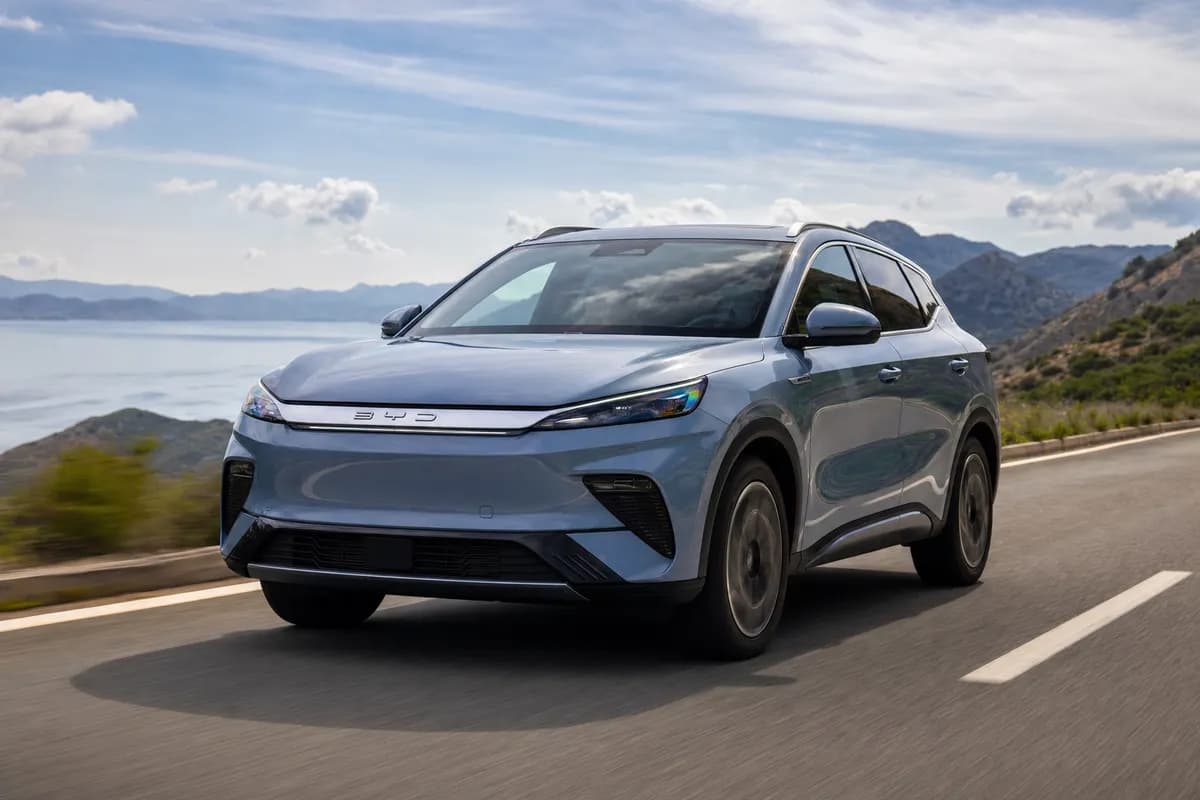
BYD’s Atto 3 Evo upgrades the tech and sharpens the fight, but does it genuinely rival the Kia EV5 and Tesla Model Y?
The BYD Atto 3 was never hard to recommend. It was cheap, roomy, and cheerfully weird. But the 2026 BYD Atto 3 Evo arrives with a sharper question hanging over it: has BYD merely polished a bargain, or built a proper rival to the Kia EV5 and Tesla Model Y?
After a first drive, the answer is more interesting than BYD’s old value-first formula. The Atto 3 Evo is still not the class athlete, but it is now far closer to a mainstream family EV crossover than its price tag suggests.
What’s Actually New in the 2026 BYD Atto 3 Evo?
The Evo update is not a lazy facelift. BYD has gone after the areas that mattered most in the old car: software speed, driver-assistance smoothness, charging consistency, cabin tech, and ride polish. That matters, because the outgoing Atto 3 felt like a good hardware package occasionally tripped up by rough calibration.
Power still comes from a single front-mounted motor, now producing around 160kW and 330Nm, up slightly from before depending on market spec. Expect 0-100km/h in the mid-7-second bracket, which is perfectly adequate rather than remotely exciting. The bigger story is battery and thermal management tuning, with BYD claiming better real-world DC charging stability and less performance fade under repeated fast-charge use.
Battery choices are expected to center on BYD’s latest Blade battery chemistry, with usable capacities around 50kWh and 62kWh. Official range figures will vary by market and wheel size, but think roughly 430-510km WLTP. That puts the Atto 3 Evo in the thick of the budget electric SUV 2026 fight, though still short of the longest-range Tesla Model Y variants.
- Motor: Single front motor, about 160kW/330Nm
- Battery options: Approx. 50kWh and 62kWh Blade battery packs
- Claimed range: Roughly 430-510km WLTP
- DC fast charging: Improved peak and sustained charging, expected up to around 110-150kW depending on pack
- Key upgrades: New software stack, revised ADAS tuning, updated infotainment, improved ride isolation
That spec sheet still does not scream giant-killer. But numbers alone miss the point. BYD’s 2026 push is about making the Atto 3 feel less like a “good for the money” car and more like a car you would choose even if you never saw the price list.
On the Road: Better Damping, Better Refinement, Less Cheap-EV Energy
The old Atto 3 drove competently, but never cohesively. The Evo is better sorted. The suspension remains comfort-biased, yet there is more control over secondary body movements, and less of the float-and-thump routine that afflicted the earlier car on broken urban surfaces.
Steering is still light and not especially chatty, but it is cleaner off-center and more predictable on fast sweepers. Push hard and the front tires will remind you this is a family crossover, not an Ioniq 5 N in disguise. Still, it no longer falls apart when you ask more of it than the school run.
Refinement is where the Evo makes its strongest first impression. Road noise suppression is improved, and BYD has clearly attacked wind rustle around the mirrors and A-pillars. At highway pace, it now feels closer to a Kia EV5 than the old Atto 3 did, even if the Tesla Model Y still has the cleaner high-speed body control.
The powertrain is smoother too. Throttle calibration is better judged at low speeds, so parking and creeping in traffic no longer feel like a negotiation with an overeager torque map. Regenerative braking also blends more naturally, though Tesla still does one-pedal driving with more conviction and polish.
Cabin and Tech: Finally Playing in the Big Leagues
The Atto 3’s cabin was always memorable, if not always tasteful. The Evo keeps the space and practical layout, but upgrades the parts you touch and the screens you stare at. Material quality is improved in key contact points, and the switchgear feels less toy-like, which is a relief because not everyone wants their family EV styled like a karaoke lounge.
BYD’s latest infotainment software is the real breakthrough. The rotating touchscreen remains, because BYD will apparently defend that gimmick to the death, but the interface is now faster, cleaner, and less likely to bury basic functions under layers of cartoon logic. Wireless Apple CarPlay and Android Auto integration are smoother, and voice control finally feels usable rather than experimental.
Driver assistance is also less annoying, which may be the most valuable tech upgrade of all. Lane centering is calmer, adaptive cruise no longer brakes with the panic of a learner driver spotting a pigeon, and the warning systems are easier to customize. That alone fixes one of the biggest frustrations buyers had with earlier BYD products.
- Better infotainment response: Faster menus, improved graphics, fewer lag spikes
- Smarter ADAS tuning: Less intrusive lane assist, smoother adaptive cruise
- More polished cabin: Better touchpoints, cleaner UX, improved perceived quality
- Family-friendly packaging: Flat floor, good rear legroom, useful cargo area
Space remains one of the Atto 3 Evo’s strongest cards. Rear-seat accommodation is generous for the class, and the cargo area is square and usable even if it is not segment-leading. As a best family EV crossover candidate, it now has fewer obvious weak spots.
BYD Atto 3 Evo vs Kia EV5 and Tesla Model Y
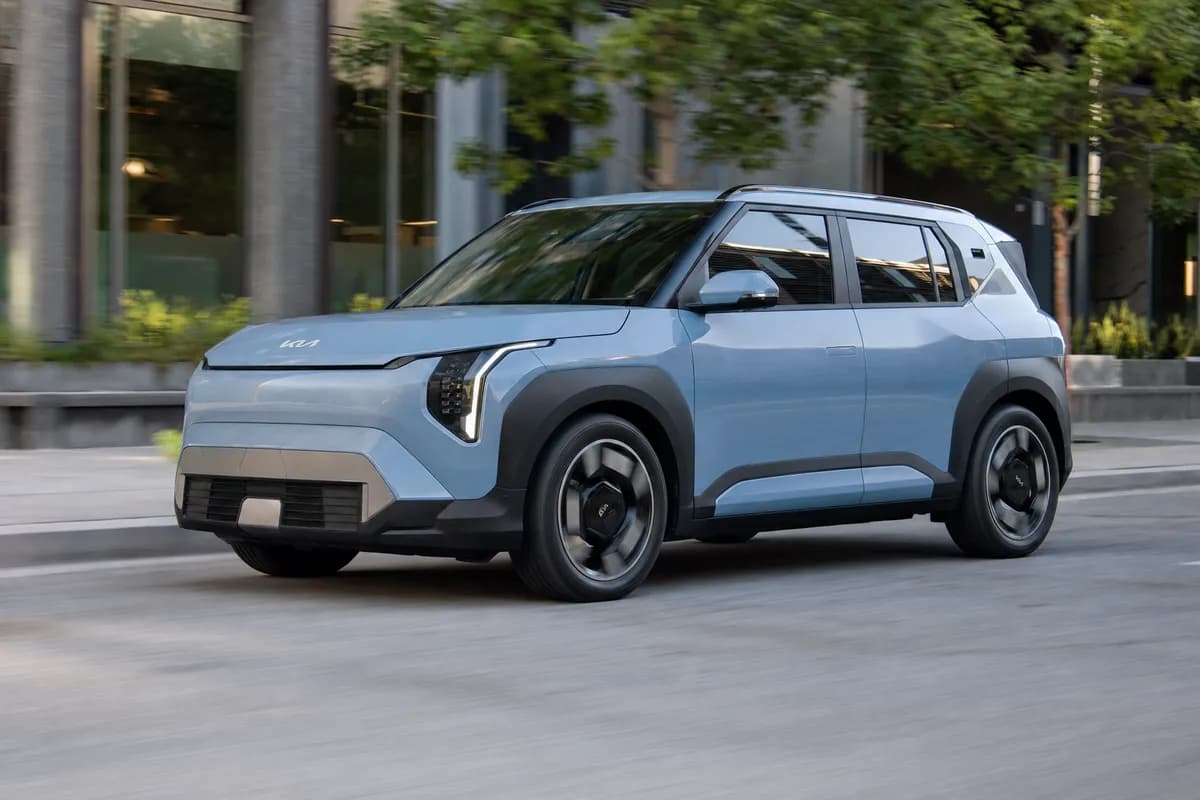
This is where the BYD Atto 3 Evo vs Kia EV5 debate gets serious. The Kia EV5 still looks and feels like the more mature, more premium product. It offers stronger road presence, superior seat comfort, and in most versions a more settled chassis, plus Kia’s software and ergonomics are still easier to live with day to day.
But the gap has narrowed. If the EV5 is the safer, more polished choice, the Atto 3 Evo is no longer the compromised budget alternative. It is now the one that asks a dangerous question: why pay several thousand more if your priorities are family space, decent range, good tech, and low running costs?
Against the Tesla Model Y, the story is different. Tesla still wins on charging network integration, software sophistication, efficiency, and straight-line pace. A rear-drive Model Y feels quicker, more rear-biased, and more complete as a powertrain package, while Long Range versions simply operate in another performance-and-range league.
Yet Tesla’s dominance is not absolute here. The Atto 3 Evo counters with a lower likely entry price, friendlier ride quality at city speeds, and a more conventional interior layout for buyers who are tired of Tesla’s “everything through the screen” minimalism. There are people who do not want their indicators and wipers turned into an ideology.
- Atto 3 Evo vs Kia EV5: BYD likely cheaper; Kia still more polished and premium
- Atto 3 Evo vs Tesla Model Y: Tesla faster, more efficient, better charging ecosystem
- Atto 3 Evo advantage: Strong value, improved comfort, better cabin usability than before
- Biggest BYD weakness: Still front-wheel drive, still not a standout to drive hard
Should You Buy One?
The BYD Atto 3 Evo first drive review verdict is simple: this update matters. BYD has fixed enough of the rough edges that the Atto 3 no longer feels like a talented budget car with caveats. It feels like a genuine family EV crossover that happens to be aggressively priced.
That does not make it class-leading everywhere. The Kia EV5 is still the more rounded all-rounder, and the Tesla Model Y remains the benchmark for drivetrain efficiency, charging convenience, and software integration. If money is no object, both still make stronger cases in specific areas.
But that is not how this segment works. People buy family EVs with calculators in one hand and child seats in the other. On those terms, the 2026 BYD Atto 3 Evo is now a real threat, because it finally combines value with enough engineering maturity to stop feeling like a compromise.
Verdict: The 2026 BYD Atto 3 Evo has evolved from smart buy to serious contender. It is not as polished as a Kia EV5 or as technically complete as a Tesla Model Y, but it is close enough in the areas that matter most, and likely cheaper by a meaningful margin. For buyers hunting the best-value family EV crossover in 2026, this BYD deserves a place very near the top of the shortlist.
Affiliate disclosure: This article contains affiliate links. RevvedUpCars may earn a small commission on qualifying purchases at no extra cost to you.