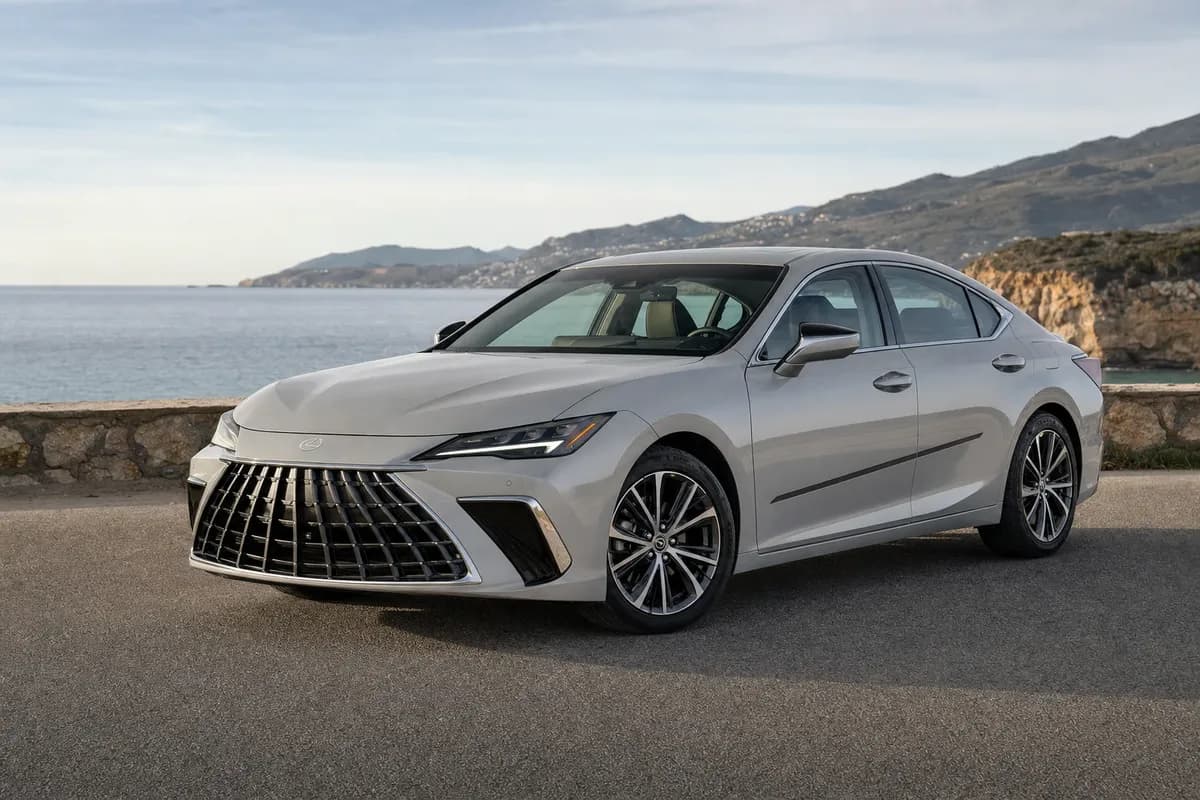
Some revivals feel inevitable. Others feel suspiciously like a boardroom trying to monetize your adolescence. The 2026 Honda Prelude lands somewhere in between.
Some revivals feel inevitable. Others feel suspiciously like a boardroom trying to monetize your adolescence. The 2026 Honda Prelude lands somewhere in between. It arrives with a famous badge, coupe proportions, a hybrid powertrain, and the sort of internet hype usually reserved for cars with either six cylinders or a manual transmission. This has neither. So the obvious question for this Honda Prelude first drive is brutally simple: has Honda built a genuinely desirable modern coupe, or is this just nostalgia wrapped around a sensible commuter drivetrain? After a first drive, the answer is encouragingly complicated — and better than the cynics expected.
The new Prelude is not a successor to the old car in the way a GR Supra revives the Supra formula or a Nissan Z replays the old hits. It is not rear-wheel drive. It is not a hard-edged sports car. It is, instead, a front-drive hybrid coupe based around Honda’s latest two-motor Honda e:HEV system, tuned to feel more engaging than the average electrified appliance. That might not sound romantic. But on the right road, this 2026 sports coupe reveals something Honda has been at risk of misplacing lately: charm.
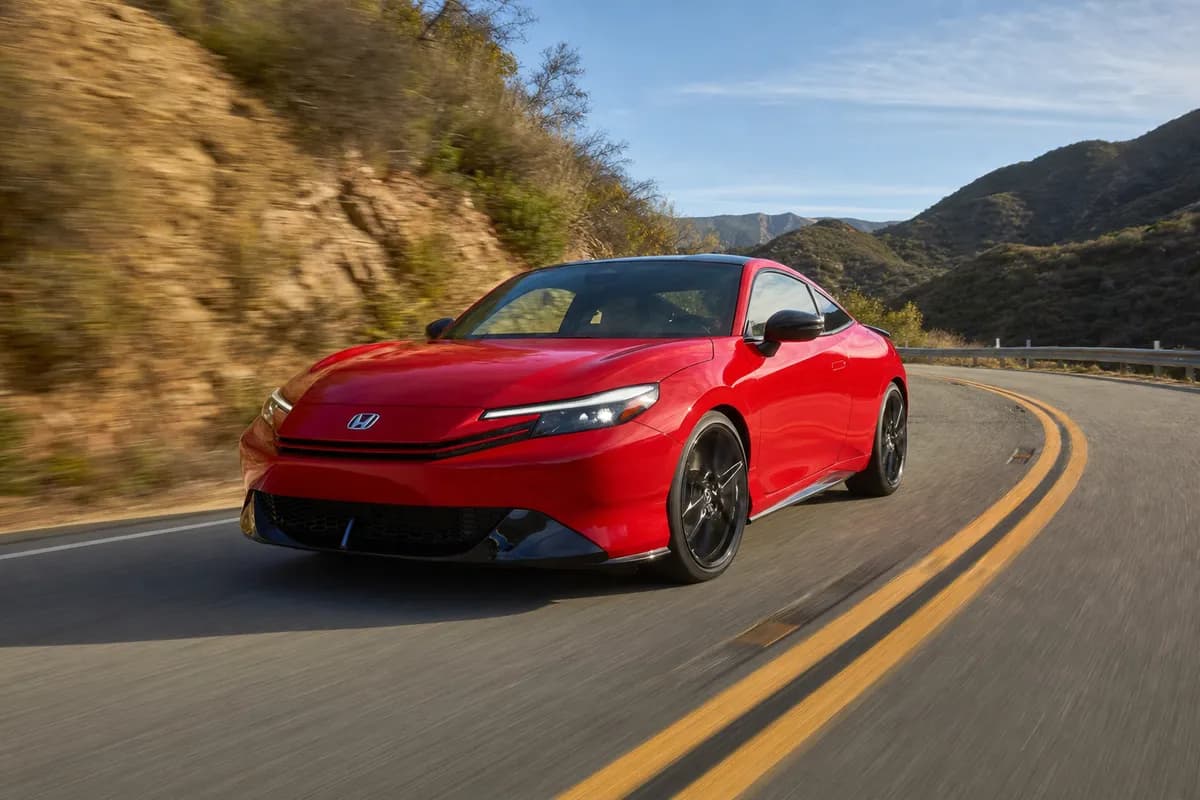
It Looks Like a Prelude Should — Low, Clean, and Light on Gimmicks
Let’s start with the good news: Honda hasn’t botched the styling. In an era when every other new car appears to have been designed by an algorithm fed on anime and air vents, the Prelude is refreshingly disciplined. It’s low, wide-looking, crisp, and restrained. The nose is clean, the roofline is properly coupe-like, and the surfacing avoids the creased-to-death nonsense that plagues too many “sporty” cars trying too hard.
It also looks like a Honda, which matters. There’s enough visual DNA here to tie it to the current Civic and Accord family, but the Prelude sits lower and appears more tightly drawn. Compared with the Toyota GR86 and Subaru BRZ, the Honda looks more grown-up and expensive. Compared with the Toyota Prius — another coupe-ish hybrid that has become the internet’s favorite surprise thirst trap — the Prelude looks less theatrical and more coherent.
The proportions do a lot of the heavy lifting. This is not a hatchback pretending to be a coupe. The hood is long enough, the cabin is tucked neatly into the body, and the rear haunches carry some visual tension without becoming cartoonish. Honda also deserves credit for not overcomplicating the details. Slim lighting, a modest grille, and clean side treatment make the car look contemporary without screaming for attention.
Inside, the relation to Honda’s current compact lineup is obvious, but that is mostly a compliment. The dashboard design is tidy and logical, visibility is better than in many coupes, and the driving position is low enough to feel special without demanding yoga flexibility. Materials are solid if not exactly Audi-grade, and switchgear remains one of Honda’s quiet strengths. You touch things in this cabin and they feel engineered, not merely sourced.
Rear-seat room is predictably compromised. If you’re shopping for a coupe and expecting limousine utility, buy an Accord and stop wasting everyone’s time. The back seats are best treated as occasional-use space for smaller passengers or soft bags. Up front, though, the Prelude feels airy enough for daily use, which matters because this car clearly aims to bridge the gap between weekend toy and everyday transport.
The Hybrid Setup Isn’t a Cop-Out — But It Isn’t a Type R in Disguise Either
The headline engineering story is the Prelude’s electrified powertrain. Honda has confirmed it uses a version of its latest e:HEV hybrid architecture, and in practice that means a 2.0-liter four-cylinder working with a two-motor system to deliver strong low-speed response and impressive efficiency. Final market specs vary by region, but expect output in the neighborhood of 200 horsepower, placing it above the Civic Si and in the same broad conversation as entry-level sporty coupes, though below the 315-hp Civic Type R by a country mile.
That number alone will trigger some disappointment. Prelude is a sacred name in Honda lore, and enthusiasts have spent years fantasizing about a turbocharged, manual, VTEC-soaked hero coupe. This is not that car. Honda has instead pursued a different target: a hybrid coupe review contender with enough urge and polish to feel entertaining in the real world, while returning fuel economy no conventional sports coupe can touch.
And that part works. Around town, the electric motor’s immediate torque gives the Prelude a welcome crispness off the line. Throttle response is sharper than you expect from a hybrid, and because Honda’s two-motor system often lets the electric side do the initial heavy lifting, the car feels smoother and more eager in stop-and-go driving than many small turbocharged rivals. Where a turbo four can hesitate, the Prelude simply goes.
Official fuel economy figures were not finalized at the time of our drive, but if the production car lands near the 44 to 48 mpg range achieved by Honda’s latest 2.0-liter hybrid sedans in mixed driving, that would make it exceptionally frugal for anything wearing coupe sheetmetal. For context, a Toyota GR86 is rated at 20 mpg city and 27 mpg highway. A Mazda MX-5 Miata does better, at up to 26/34 mpg, but it’s smaller, less practical, and not especially generous on torque. The Prelude’s efficiency case is not subtle.
The less romantic part is what happens when you bury your right foot. Like other applications of Honda’s e:HEV system, hard acceleration doesn’t deliver the layered, mechanical crescendo of a traditional sport coupe. Instead, the engine joins the party more as a power generator and supporting actor, and while Honda has worked to improve sound and response, there is still a degree of synthetic smoothness to the experience. It is quick enough to satisfy most buyers, but if you want the spine-tingle of a high-revving Honda engine chasing redline, this car serves a different religion.
Honda has tried to inject more emotional texture through software, including simulated stepped responses under acceleration. Usually, these tricks are embarrassing. Here, they’re reasonably well judged. The Prelude doesn’t pretend to be a manual-transmission Integra Type R. It just tries to avoid feeling like a refrigerator with sport seats, and mostly succeeds.
On a Good Road, the Chassis Is the Real Story
The pleasant surprise is not the powertrain. It’s the chassis. This is where the 2026 Honda Prelude starts to justify itself as more than a nostalgia exercise.
Honda says the car has been tuned specifically for coupe duty, and you can feel it. Steering is quick enough to make the car feel alert, body control is tight without becoming abusive, and the front end bites with more confidence than most front-drive hybrids have any right to. The Prelude is not feral, but it is fluent. You place it into a corner, lean on the outside tire, and the car responds with the sort of tidy precision that used to be Honda’s default setting.
That matters because the competitive set is awkwardly split. The Toyota GR86/Subaru BRZ twins remain the enthusiast benchmark under $35,000 thanks to rear-drive balance, low mass, and unfiltered feedback. If your idea of a proper coupe includes oversteer on demand and a manual gearbox, those cars still have the Prelude covered. At the other end, stylish hybrids like the Toyota Prius deliver economy and decent pace but don’t genuinely invite a back-road detour.
The Prelude aims for the middle and, unusually, finds it.
On winding roads, it feels lighter than it probably is. Expect curb weight somewhere around the 3,200- to 3,400-pound range depending on trim — heavier than a GR86, lighter than many midsize hybrids, and entirely reasonable given the battery and electric hardware. Honda manages that mass well. Turn-in is crisp, transitions are clean, and mid-corner corrections don’t upset the car. There’s enough front-end grip to encourage commitment, and the rear follows obediently rather than washing out in the first sign of enthusiasm.
Equally important, ride quality remains civil. Many modern “sporty” cars confuse stiffness with sophistication. The Prelude doesn’t. It absorbs rough pavement with enough compliance to remain livable every day, which broadens its appeal beyond the sort of person who happily memorizes tire compound codes for fun.
Braking performance during our first drive was solid, with a natural pedal progression despite the hybrid’s regenerative system. That’s not a trivial win. Too many electrified cars feel as if the brake pedal is negotiating with three different software departments before deciding whether to stop. The Prelude’s setup is more coherent, making it easier to drive smoothly and with confidence.
If there’s a dynamic limitation, it’s the one you’d expect: this is a front-drive coupe built to be engaging, not obsessive. Push very hard and the chassis prioritizes neatness over hooliganism. There’s no dramatic rotation, no rear-drive adjustability, and no sense that Honda secretly built a cut-price Cayman. Good. That was never realistic. What Honda has built is something arguably more useful: a coupe that is enjoyable at sane road speeds, not just on a track day or in your imagination.
Where the Prelude Fits in the 2026 Coupe Market
This is where the review gets practical, because sentiment doesn’t sign finance agreements.
The Prelude’s likely rivals are not all direct, but buyers will absolutely cross-shop them:
- Toyota GR86/Subaru BRZ: cheaper thrill-per-dollar champions, rear-wheel drive, available manual transmission, less refined, less efficient, less practical.
- Mazda MX-5 Miata: the purist’s choice if you can live with two seats and minimal cargo room.
- Toyota Prius: surprisingly stylish and efficient, but not nearly as satisfying to drive.
- Acura Integra: more practical hatchback layout, available manual on some versions, but less visually distinct.
- Civic Hybrid hatchback or sedan: likely close on efficiency and possibly closer than Honda would like on everyday usability.
That last point is important. The Prelude must avoid becoming the answer to a question nobody asked. If it’s too expensive relative to a well-equipped Civic Hybrid or Acura Integra, buyers may admire it and then rationalize themselves into four doors. Honda needs this car to feel special enough, look exclusive enough, and drive distinctly enough to justify the compromise in rear-seat access and cargo flexibility.
Price will be critical. If the Prelude lands in the low-to-mid $30,000 range, it has a compelling case as a stylish, efficient, premium-leaning coupe with genuine driver appeal. If it climbs too close to $40,000, the math gets ugly fast. At that point, buyers start looking at lightly used performance machinery, better-equipped Acuras, or simply deciding that a GR86 plus a lot of gasoline is a more entertaining way to spend the money.
Still, as a concept for 2026, the Prelude makes more sense than some purists will admit. The market for affordable coupes has shrunk. Emissions rules are tighter. Fuel economy matters again. Insurance costs aren’t exactly dropping. In that context, a 2026 sports coupe that offers strong real-world pace, handsome design, and hybrid efficiency is not an act of cowardice. It’s a realistic survival strategy.
Verdict: A Smart, Stylish Honda That Earns the Badge — Even if It Rewrites the Formula
So, does the revived Prelude deliver real driver appeal or just nostalgia?
Mostly, it delivers.
Not in the way the badge’s loudest fans demanded, and not with the old-school mechanical theater some of us still miss. The new Prelude is not a back-to-basics sports coupe. It is not a mini NSX. It is not a hybrid Civic Type R in fancy shoes. Anyone expecting that should recalibrate immediately and probably dramatically.
But judged for what it is, the Prelude is one of Honda’s most convincing recent efforts. It looks right, feels thoughtfully engineered, and drives with more poise and personality than most hybrid coupes have any business possessing. The Honda e:HEV powertrain won’t make your neck hairs stand up, but it does make the car responsive, smooth, and potentially impressively efficient. More importantly, the chassis has been given enough attention that this doesn’t feel like a cynical trim package or a design exercise built around a sensible commuter platform.
That alone is worth celebrating.
The old Prelude built its reputation on technical cleverness and everyday usability wrapped in a sporty two-door body. In that sense, this new car is more faithful to the name than the internet’s fan fiction would suggest. It updates the formula rather than reenacting it. Some enthusiasts will hate that. Some always planned to. Their loss.
If final pricing is sensible, the 2026 Honda Prelude should appeal to buyers who want more style and involvement than a sedan, more efficiency than a traditional sports coupe, and more maturity than a boy-racer special. It won’t replace a GR86 for the track-day faithful, and it won’t satisfy manual-gearbox romantics still praying at the altar of 1990s Honda. But for everyone else, this is shaping up to be a genuinely appealing machine rather than a cynical nostalgia product.
And in 2026, that may be the smartest kind of revival there is.
Affiliate disclosure: This article contains affiliate links. RevvedUpCars may earn a small commission on qualifying purchases at no extra cost to you.