The compact hybrid SUV class is where good intentions go to get mugged by reality. You can talk about design, screens, “lifestyle versatility,” and whatever other brochure fluff marketing departments dream up, but in this segment the brief is brutally simple: deliver 40-ish mpg…
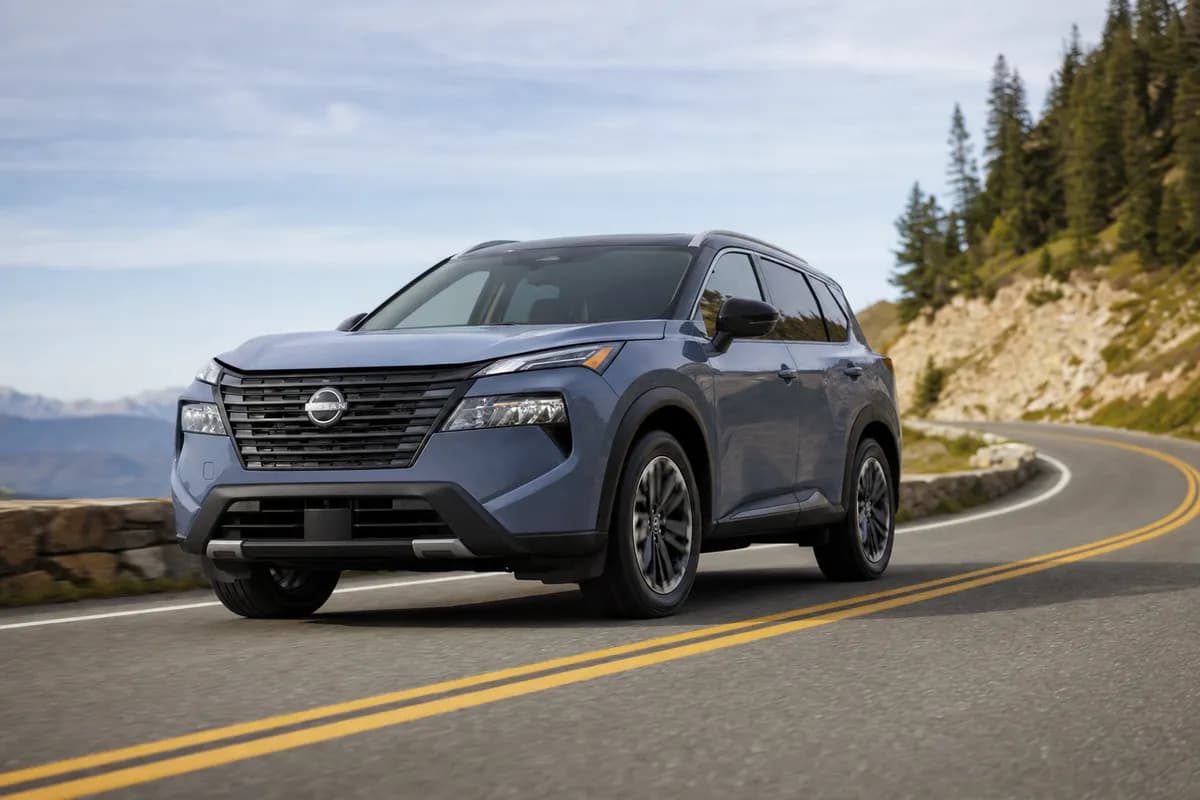
The compact hybrid SUV class is where good intentions go to get mugged by reality. You can talk about design, screens, “lifestyle versatility,” and whatever other brochure fluff marketing departments dream up, but in this segment the brief is brutally simple: deliver 40-ish mpg, enough shove to merge without prayer, a back seat that doesn’t punish adults, and pricing that doesn’t drift into luxury-car nonsense. For years, Nissan’s Rogue has sold on comfort and packaging while the Toyota RAV4 Hybrid and Honda CR-V Hybrid cleaned up on efficiency and drivetrain polish. Now the 2027 Nissan Rogue Hybrid arrives with far less room for excuses. After an early drive, the good news is Nissan has finally built a hybrid compact SUV that belongs in the conversation. The bad news? In this class, “belongs in the conversation” is not the same thing as “wins it.”
Nissan Finally Gives the Rogue the Powertrain It Needed
The headline for this Nissan Rogue Hybrid first drive is straightforward: Nissan has stopped trying to out-clever the market and has instead delivered a mainstream hybrid tuned for mainstream buyers. That sounds obvious, but for Nissan it’s meaningful. The outgoing Rogue, especially with the variable-compression 1.5-liter turbo three-cylinder, was perfectly adequate on paper and frequently underwhelming in practice. It was efficient enough, but it never felt like the best answer in a segment increasingly dominated by hybrids that were both quicker and thriftier.
The 2027 Nissan Rogue Hybrid changes the equation with a 2.0-liter four-cylinder paired with Nissan’s latest two-motor hybrid system. Combined output is around 210 horsepower, putting it right in the thick of the segment. That means it lands close to the Toyota RAV4 Hybrid’s 219 horsepower and in the same neighborhood as the Honda CR-V Hybrid’s 204 horsepower. More importantly, it feels competitive from behind the wheel, which is where Nissan has previously left points on the table.
Off-the-line response is immediate in the way buyers now expect from electrified crossovers. Around town, the Rogue Hybrid is smoother than the old turbo Rogue and noticeably less fussy in stop-and-go traffic. The electric motor does the heavy lifting at lower speeds, and transitions between battery-assisted propulsion and gasoline power are mostly clean. Not class-leadingly invisible, perhaps, but no longer something you tolerate because the price is right.
Nissan is also targeting fuel economy in the high-30-mpg to low-40-mpg combined range depending on trim and drivetrain. Early estimates suggest front-wheel-drive models could approach 41 mpg combined, with all-wheel-drive versions landing around 37 to 39 mpg combined. Those are serious numbers, and crucially, they’re not fake-serious numbers padded by an unusable powertrain. If those estimates hold in independent testing, Nissan will have done what it needed to do: make the Rogue Hybrid a rational alternative rather than a consolation prize.
That still leaves a problem. Toyota and Honda have been doing this for years, and they’re annoyingly good at it.
How the 2027 Rogue Hybrid Drives: Better, Quieter, More Confident
The standard Rogue has long been one of the softer, more comfort-oriented options in the segment, and the hybrid mostly preserves that character. This is not a secretly sporty crossover; if you want that, go look at a Mazda CX-50 Hybrid when it arrives, or accept that “sporty compact SUV” is often code for “firmer ride and no real payoff.” The Rogue Hybrid instead leans into refinement, and that’s the right call.
Ride quality is a genuine strength. On patched pavement and broken suburban roads, the Nissan rounds off impacts with a composure the RAV4 Hybrid still doesn’t quite match. Toyota’s bestseller remains competent, but there’s a brittle edge to its chassis over sharp hits that Nissan avoids. The Honda CR-V Hybrid is still the benchmark for steering consistency and overall chassis cohesion, but the Rogue Hybrid closes the gap enough that this no longer feels like a one-sided fight.
The steering is light, accurate, and almost entirely devoid of joy. That sounds harsher than it is. In a family crossover, numb but predictable is better than artificially weighted nonsense, and Nissan wisely doesn’t pretend this is a back-road hero. Body control is tidy, grip is acceptable, and the brake pedal blends regenerative and friction braking more smoothly than expected. Again, not best-in-class, but finally in the same weight class.
Where the new hybrid really improves the Rogue is in power delivery at everyday speeds. The old 1.5-liter turbo could sound coarse and strained under load, particularly when paired with Nissan’s CVT tuning. The hybrid setup is calmer and more natural. There’s still some engine drone when you ask for full acceleration, because physics and cost accounting remain undefeated, but there’s less of that rubber-band sensation that used to define too many Nissans.
In early driving, expect 0-60 mph in the mid-7-second range for well-equipped all-wheel-drive versions. That would place the Rogue Hybrid squarely in the segment’s competitive band, roughly even with the CR-V Hybrid and close enough to the RAV4 Hybrid that no sane buyer will care about the tenth or two separating them. The bigger win is drivability: passing response is stronger, low-speed operation is smoother, and the whole vehicle feels less like it’s negotiating with itself.
Cabin, Space, and Tech: Rogue Strengths Mostly Survive Electrification
If Nissan had built a solid hybrid system and then ruined the cabin packaging, this article would get a lot meaner. Fortunately, the Rogue remains one of the roomier, more family-friendly options in the class. Rear-seat space is genuinely adult-usable, and Nissan’s Zero Gravity seats continue to be among the best in the segment for long-haul comfort. They don’t sound exciting. Neither does lower back pain, yet one of those matters more on a 300-mile road trip.
Material quality in upper trims is respectable, though not transformative. The Rogue Hybrid’s dashboard design is clean, practical, and easy to understand. That alone deserves some praise in an era where automakers confuse screen acreage with good UX. Depending on trim, expect a 12.3-inch digital instrument cluster, a 12.3-inch center touchscreen, wireless Apple CarPlay and Android Auto, available Google built-in functionality, and the usual spread of USB-C ports, wireless charging, and connected services.
Nissan’s infotainment interface is improved, if still not quite as slick as Honda’s logically simple setup or as familiar as Toyota’s latest system. It’s fast enough, legible enough, and mostly stays out of your way. That’s all many buyers want. Physical controls for major climate functions remain, and thank goodness for that. Nobody buying a family hybrid crossover wants to dig through menus to turn down the fan speed while a child is yelling about crackers.
Cargo space remains competitive, though hybrid packaging can nibble away at underfloor storage. Early specs suggest the Rogue Hybrid retains roughly 35 to 36 cubic feet behind the second row, expanding to around 70 cubic feet with the rear seats folded. That keeps it right in the hunt, even if the CR-V’s cargo hold remains one of the smartest and most usable in the class.
Safety tech is, naturally, comprehensive. Expect Nissan Safety Shield 360 as standard, with features including:
- Automatic emergency braking with pedestrian detection
- Blind-spot warning
- Rear cross-traffic alert
- Lane departure warning
- Adaptive cruise control
- Available ProPILOT Assist with lane centering
ProPILOT remains one of Nissan’s better brand assets. It’s not magic, and it’s certainly not an excuse to stop paying attention, but for highway drudgery it’s useful and confidence-inspiring.
RAV4 Hybrid vs Rogue Hybrid vs CR-V Hybrid: Where Nissan Still Trails
This is the section that matters, because nobody shops the 2027 Rogue Hybrid review in a vacuum. They shop it against the class leaders.
Start with efficiency. If Nissan’s estimated 41 mpg combined for front-drive trims holds, it becomes genuinely competitive, but the Toyota RAV4 Hybrid still sets a stubborn benchmark with its established 39 mpg combined for AWD models in current form. Toyota’s advantage is not just the EPA sticker; it’s trust. Buyers believe the RAV4 Hybrid will deliver. Nissan is still asking them to take a chance.
The Honda CR-V Hybrid competitor argument is more nuanced. The CR-V Hybrid doesn’t always win on outright numbers, but it remains the most polished all-rounder in the class. Its hybrid system is exceptionally smooth, its interior packaging is excellent, and its road manners feel expensive in a way most mainstream compact SUVs don’t. The Rogue Hybrid gets close on ride comfort and front-seat friendliness, but Honda still feels like the more thoroughly resolved product.
Then there’s resale and reputation, where Nissan has work to do. Toyota and Honda buyers know exactly what they’re getting: proven hybrid systems, strong long-term value, and a dealership sales pitch that basically writes itself. Nissan needs the Rogue Hybrid to be not merely good, but consistently good over time. One competent first impression won’t erase years of playing catch-up.
Pricing will be critical. If Nissan gets greedy, this thing is dead on arrival. To have a real shot, the 2027 Nissan Rogue Hybrid needs to undercut similarly equipped CR-V Hybrid and RAV4 Hybrid trims or at least deliver noticeably better equipment for the money. A starting point in the low-$30,000 range for front-wheel-drive trims and a climb into the mid-$30,000s for well-equipped AWD versions would make sense. Push beyond that, and buyers will simply default to the brands they already trust.
Here’s the competitive snapshot:
- 2027 Nissan Rogue Hybrid: Estimated 210 hp, around 37-41 mpg combined, smooth ride, roomy cabin, still proving itself
- Toyota RAV4 Hybrid: 219 hp, about 39 mpg combined AWD, proven efficiency, tougher resale, less refined ride
- Honda CR-V Hybrid: 204 hp, about 37-40 mpg combined depending on trim/drivetrain, best all-round polish, excellent packaging
So where does Nissan slot in? Right in the middle, which is both progress and a reminder of how hard this segment is.
Verdict: The Best Rogue Yet, but Not Quite the New Class King
The 2027 Rogue Hybrid is the version of the Rogue Nissan should have built years ago. It is smoother, more efficient, more responsive, and better aligned with what compact SUV buyers actually want. Most importantly, it no longer feels like a vehicle with a glaring strategic omission. In a market where hybrid demand keeps rising and gas-only entries increasingly look like they missed the invitation, that matters a lot.
This early drive suggests Nissan has produced a credible rival to the heavyweights. The Rogue Hybrid rides well, has enough power, keeps the Rogue’s practical cabin strengths, and posts fuel economy numbers that should finally stop Toyota and Honda owners from smirking quite so hard. It is, in other words, a real contender.
But let’s not get carried away. The RAV4 Hybrid vs Rogue Hybrid matchup still favors Toyota on proven efficiency, reputation, and resale. The Honda CR-V Hybrid remains the more polished and cohesive machine overall. Nissan has not detonated the class hierarchy here. It has simply, and importantly, earned a seat at the grown-ups’ table.
If pricing is sharp and real-world fuel economy matches the promise, the Rogue Hybrid could become the smart pick for buyers who find the RAV4 too coarse and the CR-V too expensive. That’s a valuable lane. It’s just not the same as being the benchmark.
Bottom line: The 2027 Nissan Rogue Hybrid is finally competitive enough to recommend without caveats the size of New Jersey. It’s the best Rogue yet, a legitimate alternative to the segment leaders, and exactly the hybrid Nissan needed. But if you want the safest bet, the Toyota RAV4 Hybrid and Honda CR-V Hybrid still have the upper hand. For now, Nissan has built a contender, not a conqueror.
Affiliate disclosure: This article contains affiliate links. RevvedUpCars may earn a small commission on qualifying purchases at no extra cost to you.