The compact SUV class has become the automotive equivalent of a knife fight in a phone booth. Nobody can coast. Not Toyota with the newly redesigned RAV4, not Honda with the ever-sensible CR-V, not Hyundai with the sharp-selling Tucson, and certainly not Mazda, whose CX-5 has…
The compact SUV class has become the automotive equivalent of a knife fight in a phone booth. Nobody can coast. Not Toyota with the newly redesigned RAV4, not Honda with the ever-sensible CR-V, not Hyundai with the sharp-selling Tucson, and certainly not Mazda, whose CX-5 has long survived by being the one mainstream crossover that remembered driving should involve more than merely tolerating the trip. The 2026 Mazda CX-5 arrives with exactly the sort of updates buyers demanded—new tech, a cleaner and richer cabin, and at last a proper hybrid option—but this is not a revolution. It is a careful, calculated sharpening of a very good blade. The question is whether that is enough in a segment where rivals are getting better, roomier, and more efficient by the month. After a first drive, the answer is mostly yes—but with a few caveats that keep the CX-5 from simply strolling to the top of the class.
A Familiar Formula, Smarter and Better Resolved
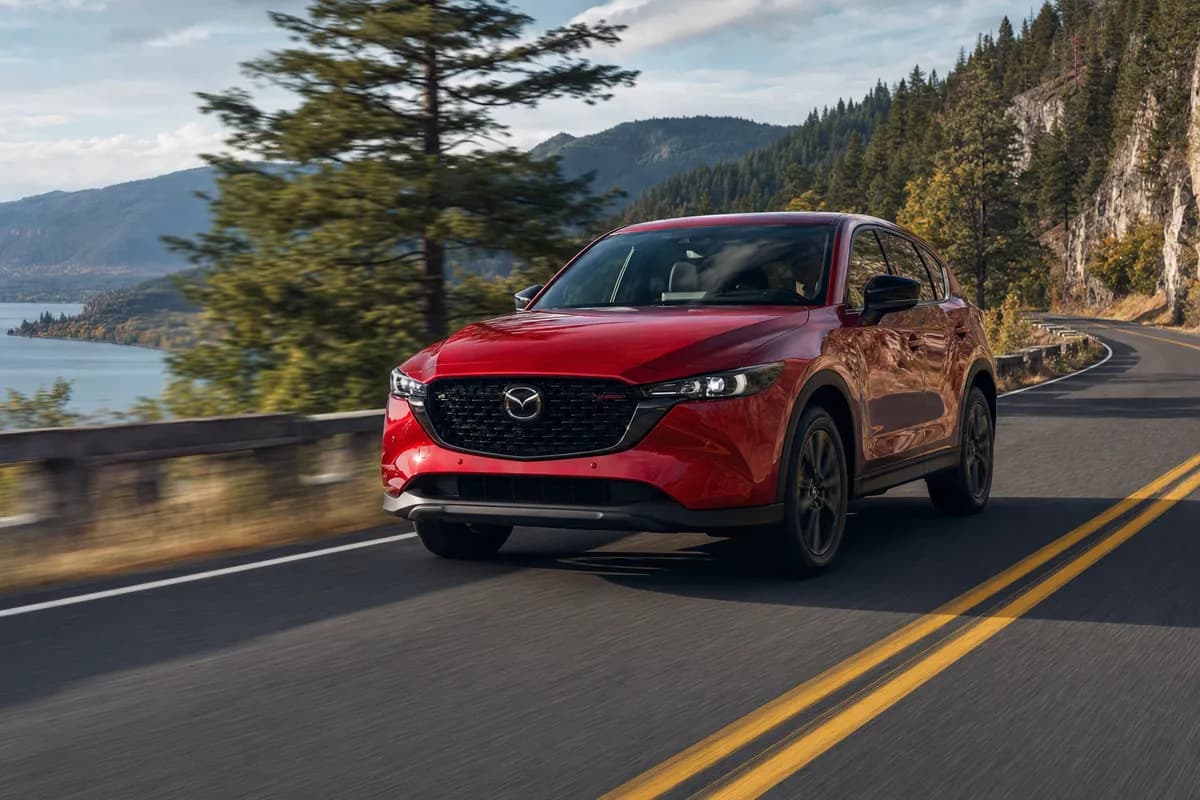
At a glance, the 2026 CX-5 does not scream redesign so much as evolution with a gym membership. Mazda has wisely resisted the temptation to turn its best-selling crossover into an overstyled science project. The proportions remain tidy and athletic, with a long hood, a cab-rearward stance, and sheetmetal that still looks more expensive than the badge on the nose suggests. This matters. In a world of bloated compact SUVs, the CX-5 continues to look like it was drawn by people who understand tension, surfacing, and restraint.
Dimensionally, Mazda has nudged the package forward where it counts. The wheelbase is up modestly, overall length stretches a bit, and rear-seat packaging has been reworked to free up legroom and improve cargo access. It still is not the airiest box in the class—if maximum family-hauler utility is your religion, the Honda CR-V and Kia Sportage remain more practical apostles—but the new CX-5 no longer gives up quite so much usability in exchange for style and road manners.
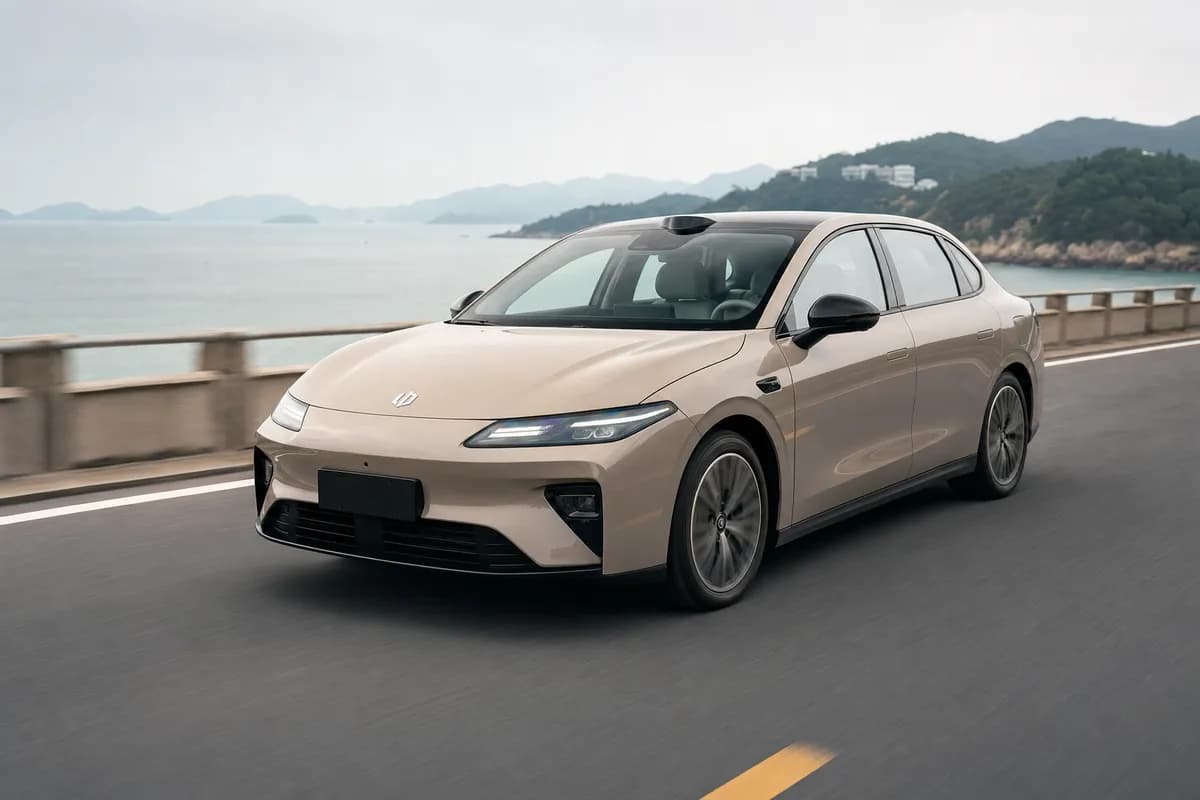
The big visual changes are concentrated up front and inside. Slimmer lighting, a wider grille treatment, and cleaner lower-body surfacing make the 2026 model look lower and more planted. It is recognizably a CX-5, which is exactly the point. Mazda is not trying to win the “most different” award; it is trying to preserve what has made this crossover such an easy recommendation for buyers who hate the generic feel of most compact utility vehicles.
That said, there is one strategic risk in this restrained redesign: in a compact SUV comparison 2026, subtlety can be mistaken for stagnation. The Hyundai Tucson and Kia Sportage still look more futuristic. The Ford Escape, while older, still majors on space efficiency. The Toyota RAV4 Hybrid still brings bulletproof mainstream appeal. Mazda’s approach is more grown-up, but buyers who shop with their eyes first may need a closer look to appreciate what changed.
The Cabin Finally Gets the Tech It Needed
If the old CX-5 had one glaring weakness, it was the interior technology. The materials were excellent, the design was handsome, but the interface increasingly felt like it belonged to an earlier era of smartphones and thinner expectations. Mazda has fixed that, and not before time.
The 2026 cabin is still classic Mazda: horizontal lines, tasteful trim, and fewer gimmicks than the average CES concept on wheels. But now there is a larger center display, faster processing, sharper graphics, and a much better native infotainment experience. Wireless Apple CarPlay and Android Auto are standard or widely available depending on trim, the digital instrument cluster is more configurable, and the head-up display is clearer and more useful. Higher trims add richer ambient lighting, improved seat ventilation, and upgraded materials that push the CX-5 even closer to entry-luxury territory.
The crucial thing is not simply that the tech is newer. It is that it finally feels integrated into the car’s personality instead of bolted onto it. Menus are cleaner, common functions are easier to reach, and Mazda has not completely surrendered to touchscreen chaos. Physical controls still exist where they should—climate functions especially—and that alone makes the CX-5 more pleasant to use every day than some rivals that insist every interaction should feel like updating a tablet.
Rear-seat comfort is improved enough to notice on a first drive. The seatback angle is better judged, ingress and egress are easier, and small-item storage is more thoughtfully arranged. Cargo room also benefits from the revised packaging, though exact class standing still leaves the CX-5 behind the roomiest entries. The CR-V and Tucson are still better if your life involves strollers, dogs, airport runs, and the sort of Costco trips that require logistical planning. But the gap is no longer large enough to be an automatic deal-breaker.
Where Mazda still leads is perceived quality. In this price band, the CX-5’s switchgear, stitching, seat comfort, and general visual polish embarrass several competitors. A nicely trimmed CX-5 feels like a bargain alternative to an Audi Q3 or BMW X1 in a way a Toyota RAV4 simply does not. That is not badge-snobbery; it is an honest reflection of how much nicer the Mazda feels when your hands actually touch the thing.
Notable 2026 CX-5 cabin and tech upgrades
- Larger infotainment display with quicker response times and cleaner graphics
- Wireless Apple CarPlay and Android Auto availability
- Updated digital gauge cluster and improved head-up display
- Better rear-seat packaging with improved comfort and access
- Higher-grade materials and more premium trim execution on upper models
Hybrid Power Changes the Conversation—But It Doesn’t Rewrite Mazda’s Character
The headline mechanical update is obvious: the arrival of a Mazda CX-5 hybrid 2026 model. And frankly, it had to happen. In 2026, a compact SUV without an electrified powertrain is showing up to a gunfight with a tasteful fountain pen. The RAV4 Hybrid, CR-V Hybrid, Hyundai Tucson Hybrid, and Kia Sportage Hybrid have already taught the market to expect meaningful fuel-economy gains without sacrificing drivability. Mazda could no longer rely on “but ours is nicer to steer” as a complete answer.
The good news is that the hybrid system feels well matched to the CX-5’s mission. It delivers smoother low-speed response, quieter operation in town, and noticeably better efficiency than the non-hybrid gasoline model. Exact final EPA figures will determine just how competitive it is on paper, but it is clear from the first drive that this is no half-hearted compliance special. The transition between electric assistance and engine power is well managed, and the throttle tuning is more natural than in some rivals that still feel rubber-bandy under load.
The standard gasoline engine remains in the lineup, and depending on market and trim, Mazda continues to offer naturally aspirated and turbocharged options. The turbo, unsurprisingly, remains the enthusiast’s pick if you value effortless midrange punch over fuel bills. With premium fuel, Mazda’s turbocharged 2.5-liter four-cylinder has historically delivered up to 256 horsepower and 320 lb-ft of torque, and that broad torque curve still gives the CX-5 the easy, muscular feel many rivals lack. A CR-V Hybrid is efficient. A CX-5 Turbo is satisfying. Those are not the same thing.
The hybrid, though, is where the volume will be—and probably should be. In mixed driving, it delivers the sort of calm, low-effort motion that suits a compact crossover perfectly. More importantly, it does so without sucking all the personality out of the chassis. Some hybrids become appliance-grade the moment engineers chase the last fractional mpg. Mazda has resisted that. The steering still has actual weighting, the brake pedal is better blended than average for a regen-equipped crossover, and the vehicle still reacts to driver inputs with more polish than the class norm.
Still, the CX-5 hybrid does not obliterate the segment on efficiency. The Toyota RAV4 Hybrid remains the benchmark until proven otherwise, often returning around 40 mpg combined depending on configuration. The Honda CR-V Hybrid is also deeply competitive in real-world use. If the Mazda lands in the mid-to-high 30s, that will be respectable and probably good enough for most buyers, but not class-leading. In other words, Mazda’s hybrid should broaden the CX-5’s appeal; it does not instantly make every rival irrelevant.
How the 2026 CX-5 stacks up on powertrain appeal
- Best for efficiency: Toyota RAV4 Hybrid, Honda CR-V Hybrid
- Best blend of efficiency and style: 2026 Mazda CX-5 Hybrid
- Best for punchy acceleration: CX-5 Turbo, still one of the more charismatic options in the class
- Best for value-focused electrified alternatives: Hyundai Tucson Hybrid, Kia Sportage Hybrid
Still the Driver’s Compact SUV? Mostly, and That Still Matters
This is where the 2026 Mazda CX-5 first drive earns its keep. Plenty of compact SUVs have become more competent in recent years. Very few have become more enjoyable. Mazda still cares about things the rest of the class treats as rounding errors: steering feel, body control, pedal calibration, and the way a suspension settles after a mid-corner bump.
On a good road, the new CX-5 remains one of the rare crossovers that shrinks around you. The steering is direct without being twitchy, turn-in is crisp, and the chassis has the sort of tied-down composure that encourages confidence rather than merely suppressing complaints. Mazda has tuned out a bit of harshness compared with the previous model, and ride comfort is better over broken pavement, but crucially it has not gone soft and anonymous in the process.
This is the balance Mazda has spent years mastering: enough compliance for everyday life, enough discipline that you do not resent driving it hard when the road turns interesting. A Tucson feels distant by comparison. A RAV4 can feel upright and utilitarian. The CR-V is polished and friendly but still not quite as eager. The CX-5 remains the compact SUV for people who notice these things—and yes, some of us still do.
Noise isolation has also improved. Wind and road noise are down at highway speeds, and the overall sense of refinement now edges even closer to premium-brand territory. That helps justify the likely pricing, which will almost certainly not undercut the class in stripper-trim terms. Mazda has long played the “near-luxury mainstream” card, and the 2026 model doubles down on it.
There are, however, a few realities to acknowledge. If you prioritize maximum cargo volume, expansive rear legroom, or the absolute best fuel economy, another crossover may fit your life better. If you care mainly about long-term resale, dealer footprint, and default suburban respectability, the RAV4 and CR-V remain brutally strong picks. And if you want the most features for the least money, the Koreans still know how to stuff a window sticker like a Christmas stocking.
The 2026 CX-5 does not win by being the biggest, cheapest, or most efficient compact SUV. It wins by feeling like someone bothered.
Verdict: Enough New Tricks to Stay Relevant, Enough Old Mazda Magic to Stay Desirable
So, does the 2026 Mazda CX-5 review end with a class victory lap? Not quite. But it comes very close.
Mazda has addressed the old CX-5’s biggest weaknesses with admirable precision. The technology is no longer behind the times. The cabin is roomier and even richer. The hybrid powertrain brings the CX-5 into the modern compact-SUV fight without watering down its personality. And perhaps most importantly, it still drives with a level of grace and cohesion that many rivals simply do not match.
That makes the CX-5 one of the most compelling entries in the flood of 2026 crossover updates. It is not the rational default choice, and that is exactly why it remains appealing. The Toyota RAV4 Hybrid is likely still the safest bet for efficiency and ubiquity. The Honda CR-V may still edge it for family-friendliness and interior space. The Hyundai Tucson and Kia Sportage continue to offer huge value and bold styling. But if you want a compact SUV that feels expensive, drives properly, and now finally offers the electrified option it always needed, the Mazda belongs at the very top of your shortlist.
The real verdict is this: the 2026 CX-5 stays ahead of the pack not by reinventing itself, but by fixing the right things without ruining the good ones. In today’s crossover market, that counts as rare discipline. And from behind the wheel, it still counts as something better than sensible. It counts as satisfying.
Affiliate disclosure: This article contains affiliate links. RevvedUpCars may earn a small commission on qualifying purchases at no extra cost to you.