There’s a reason the paddock at beginner HPDE events in 2026 looks different than it did a decade ago. Alongside dedicated track toys and battered E36s, you’ll now see rows of daily-driven Toyota GR86s, Honda Civic Type Rs, Hyundai Elantra Ns, and Mazda Miatas wearing masking…
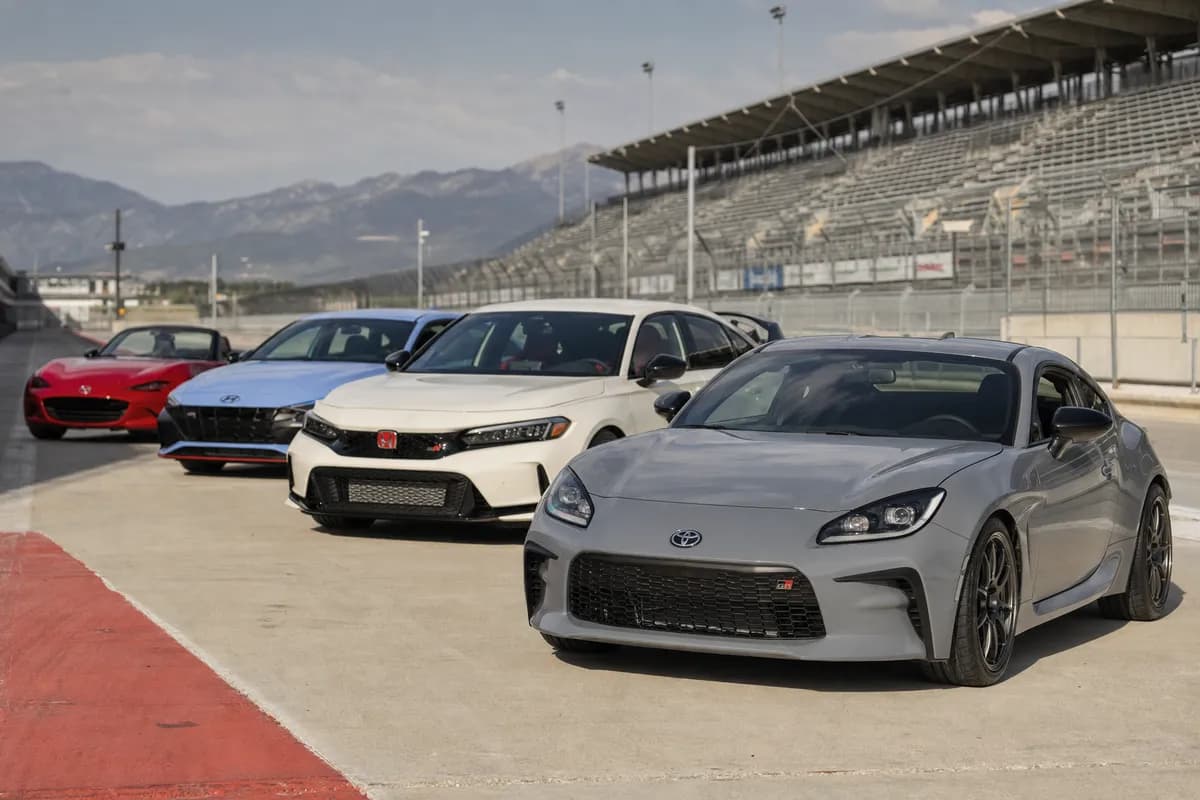
There’s a reason the paddock at beginner HPDE events in 2026 looks different than it did a decade ago. Alongside dedicated track toys and battered E36s, you’ll now see rows of daily-driven Toyota GR86s, Honda Civic Type Rs, Hyundai Elantra Ns, and Mazda Miatas wearing masking tape numbers, stock seats, and license plates that still have bugs from Monday’s commute. For a growing wave of enthusiasts, track driving is no longer reserved for purpose-built cars or deep-pocketed veterans. It’s a weekend hobby built around practical prep, smart maintenance, and a simple goal: have fun, learn something, and drive home without cooking your brakes or your budget. This 2026 track day guide is aimed squarely at that crowd—the first-timer figuring out daily driver track prep without turning a reliable street car into a fragile project.
The New Beginner Track-Day Formula in 2026
If you spend any time in owner groups, club forums, or local cars-and-coffee conversations, the trend is obvious: affordable modern performance cars are now the backbone of entry-level HPDE. The recipe makes sense. Cars like the GR86, FL5 Civic Type R, Elantra N, and ND Miata come from the factory with strong chassis tuning, real cooling capacity, decent tire options, and communities that have already sorted out the common failure points.
They also hit a sweet spot in the current market. A new or lightly used GR86 and Miata remain relatively accessible, while the Civic Type R and Elantra N give front-drive drivers a serious performance ceiling without immediately demanding race-car money. Instructors like them because they’re predictable. New drivers like them because they can be driven to work all week, then survive a novice session on Saturday with the right prep.
That last part matters. Reliability-minded owners in 2026 have largely moved away from the old “mod everything first” mindset. The community advice now is far more disciplined: make the car safe, keep the fluids fresh, improve brake endurance, monitor temperatures, and leave big power alone until the driver becomes the limiting factor. That’s especially true for first-timers searching for beginner HPDE tips 2026. The fastest route to a good track day is rarely an intake, a tune, or sticky 200-treadwear tires bolted onto a neglected maintenance schedule.
The current best practice for novice track prep is simple: maintenance first, brake confidence second, driver education third, and lap-time chasing dead last.
What Each Popular Beginner Car Needs Before Its First HPDE
The basic checklist is shared across platforms, but each of the big four enthusiast favorites has its own known strengths and weak points. Understanding those differences is the key to smart daily driver track prep.
Toyota GR86 / Subaru BRZ
The GR86 remains one of the most popular beginner cars because it rewards smooth inputs, communicates grip well, and doesn’t need huge speed to feel exciting. It also teaches momentum driving better than almost anything sold new today. But by 2026, experienced owners are very clear about one thing: oil management matters.
For novice use, most owners stick to conservative prep:
- Fresh high-quality oil in the correct viscosity for expected ambient temps and event use
- A careful check of oil level before every session
- High-temp brake fluid and beginner-friendly track-capable pads
- Alignment with a bit more front negative camber if possible
- Cooling system inspection and clean radiator/condenser fins
The community still debates the “how much is enough” question around oiling modifications, but nearly everyone agrees on the basics: don’t arrive with old oil, don’t overfill blindly, and don’t ignore data if you’re running an OBD monitor or logger. For first-timers, the smartest move is often running in intermediate pace on streetable performance tires, not jumping immediately to ultra-grippy rubber that raises sustained load and heat.
Honda Civic Type R
The FL5 Civic Type R is arguably the easiest modern front-drive car for a novice to take to an HPDE. It’s stable, confidence-inspiring, and from the factory has excellent seats, braking feel, and track-friendly chassis balance. The challenge is that it’s also heavy enough and fast enough to stress consumables quickly.
Owners prepping a Civic Type R for beginner track duty usually focus on:
- Brake fluid flush with a proven high-boiling-point fluid
- Track-oriented pads, especially for front axle endurance
- Tire inspection and pressure management between sessions
- Coolant and intercooler system health checks
- Wheel torque checks after every session
The FL5’s factory cooling is better than many earlier turbo hot hatches, but repeated novice sessions in summer heat can still drive intake and coolant temps upward. The experienced crowd’s advice is boring but effective: leave the tune alone, do cooldown laps properly, and don’t sit heat-soaking in grid with the car idling forever.
Hyundai Elantra N
The Elantra N has earned a real following because it brings serious capability, excellent electronic differential tuning, and strong value to the table. It’s one of the few modern sport compacts that feels like it was developed by people who genuinely wanted owners to use it on track. In stock or near-stock form, it’s exceptionally competent.
Its beginner prep is similar to the Civic’s, with a little extra attention paid to wear items:
- Fresh brake fluid and pads before the event, not after the problem appears
- Careful tire pressure checks, because these cars can get greasy quickly on overinflated street tires
- Inspection of brake rotor condition and pad thickness
- Verification that all factory track-related settings and drive modes are understood before the event
- Engine oil and transmission fluid condition checks for higher-mileage cars
One thing the Elantra N community has gotten good at in 2026 is helping new owners avoid “hero laps” in the first session. The car encourages confidence quickly, but that doesn’t mean the driver is ready to use all of it. Like the Civic Type R, it can eat front tires and brakes if you show up overdriving.
Mazda Miata (ND)
The ND Miata remains the patron saint of track-day beginners. It’s light, forgiving, and cheap on consumables relative to the others here. It also punishes sloppy maintenance less expensively, which is a nice way of saying mistakes usually cost brake pads instead of whole weekends.
Still, Miata prep isn’t just “send it.” The common 2026 advice includes:
- Fresh fluid everywhere it matters—engine oil, brake fluid, and often transmission and diff fluid on higher-mileage cars
- Brake pads with real heat tolerance, because stock-oriented pads can fade surprisingly fast
- Alignment focused on preserving front tire shoulders
- Soft-top and cabin loose-item inspection, especially at tracks with stricter tech standards
- Cooling system and accessory belt inspection
The Miata’s biggest strength is transparency. It tells you what it’s doing early. That makes it a terrific classroom for first-timers and a benchmark for anyone cross-shopping the GR86 Civic Type R Elantra N Miata crowd for HPDE use.
The DIY Track Day Maintenance Checklist That Actually Matters
Ask ten instructors what causes the most beginner track-day problems, and you’ll hear the same answer in different forms: neglected basics. A good DIY track day maintenance checklist is not glamorous, but it prevents most of the failures that turn a fun day into a tow bill.
Essential pre-event checks
- Brake fluid: If you don’t know when it was last changed, flush it. On track, old fluid becomes a soft pedal fast.
- Pads and rotors: Make sure pad thickness is healthy and rotors are free of major cracks or heavy lip wear.
- Tires: Check age, tread depth, sidewall condition, and pressures cold. Don’t show up on dry-rotted “plenty of tread” tires.
- Engine oil: Fresh oil, correct level, and no mystery leaks.
- Coolant: Verify level, hose condition, and fan operation.
- Wheel torque: Torque to spec before the event and recheck during the day.
- Battery security: A loose battery can fail tech instantly.
- Loose items: Empty the cabin and trunk completely. Floor mats out unless the organizer specifically allows secured OEM mats.
- Suspension and steering: No clunks, torn boots, or obvious ball-joint and tie-rod play.
- Lights and visibility: Windshield clear, wipers functional, brake lights working.
What to bring to the event
- Tire pressure gauge
- Torque wrench and correct socket
- Brake fluid and engine oil
- Basic hand tools
- Painters tape for numbers
- Helmet meeting the organizer’s current standard
- Water, snacks, sunscreen, and a folding chair
That last line sounds almost too simple, but dehydration and fatigue are constant beginner problems. Drivers make mistakes when they’re overheated, rushed, and underfed. Reliability applies to the human operating system too.
Mods That Help, Mods That Hurt, and Where Beginners Waste Money
By now the owner communities around these cars have reached a practical consensus: a few smart upgrades go a long way, and many first-timers spend money in exactly the wrong places.
The best first upgrades for a daily-driven HPDE car
- Brake fluid: The best dollar-for-dollar upgrade on this list.
- Track-capable brake pads: Especially front pads on heavier front-drive cars.
- Alignment: Extra negative camber can dramatically improve tire wear and consistency.
- Good tires: Not necessarily the stickiest tires—just healthy, suitable, and predictable ones.
- Seat time and instruction: Still the highest-performance upgrade available.
For the GR86 and Miata, moderate wheel and tire packages can help, but there’s a strong argument for keeping the car close to stock until the driver has several events under their belt. For the Civic Type R and Elantra N, pad selection and front tire management are often more important than any power add-on.
The most common beginner mistakes
- Installing aggressive 200TW tires immediately: More grip means more brake load, more heat, and often less warning at the limit for a novice.
- Tuning before tracking: More power can introduce heat and reliability problems without improving learning.
- Ignoring alignment: Outer shoulder tire destruction is often an alignment problem disguised as “hard driving.”
- Using bargain brake parts: Cheap pads and mystery fluid are false economy.
- Skipping cooldown discipline: Hot laps are easy; managing heat is what keeps the car happy.
If your car is your commuter Monday morning, reliability mods beat performance mods almost every time.
That’s the center of the 2026 track-day mindset. The goal is not building a race car one credit-card swipe at a time. The goal is building a dependable, repeatable routine that lets you attend more events and improve consistently.
Beginner HPDE Tips for Driving Home Happy
The best beginner HPDE tips 2026 aren’t always mechanical. A lot of track-day success comes down to pace, self-control, and understanding what novice events are actually for.
Drive at 7/10ths, not 10/10ths
Your first event is not a qualifying session. Running slightly under your limit gives you space to process flags, mirrors, braking points, and instructor feedback. It also gives the car an easier life.
Manage tire pressures all day
Street tires can gain pressure quickly. That changes balance, reduces grip consistency, and accelerates wear. Check hot pressures after each session and adjust methodically rather than guessing.
Use cooldown laps correctly
A proper cooldown lap means less brake heat soak, less thermal abuse, and happier wheel bearings, pads, and rotors. Don’t set your fastest lap, dive into pit lane, and hold the brakes at a stop.
Inspect the car between sessions
Look at pads, tire shoulders, fluid levels, and anything that smells, leaks, or feels different. Small issues caught early stay small.
Listen to the instructor and the community veterans
The owner who has done 20 events in a nearly stock Elantra N or ND Miata is usually more useful to a beginner than the internet loudest voice with the biggest dyno number. The modern HPDE community is full of people who genuinely want newcomers to succeed without breaking stuff.
Verdict: The Smartest 2026 Track Day Guide Is Still the Simplest One
For new enthusiasts, the most encouraging truth in this 2026 track day guide is that modern affordable performance cars are already good enough. A daily-driven GR86, Civic Type R, Elantra N, or Miata does not need a dramatic transformation to survive and thrive at beginner HPDE events. It needs fresh fluids, honest inspection, quality brake prep, sensible tire management, and a driver willing to learn before trying to impress anyone.
If there’s one takeaway from the current community wisdom, it’s this: reliability and track fun are not opposing goals. In fact, for first-time drivers, they’re the same goal. The owners getting the most out of their cars in 2026 are the ones doing disciplined daily driver track prep, sticking to a realistic DIY track day maintenance checklist, and making measured upgrades only when experience justifies them.
That’s how you enjoy your first HPDE in a GR86, FL5 Civic Type R, Elantra N, or ND Miata without ruining reliability. Prep the car. Respect the heat. Leave some pace in reserve. Then drive it home, let it cool off, and start planning the next one.
Affiliate disclosure: This article contains affiliate links. RevvedUpCars may earn a small commission on qualifying purchases at no extra cost to you.