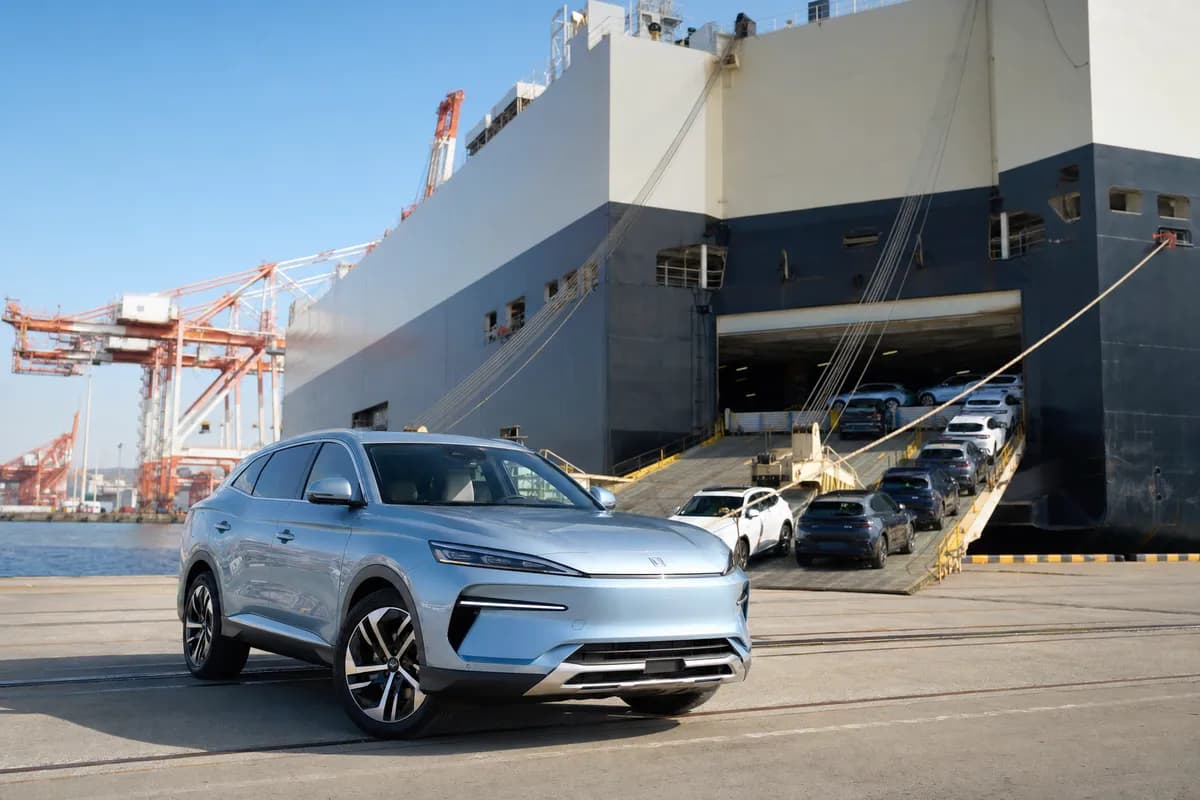
For the first time, China is on track in 2026 to export more battery-electric and plug-in hybrid vehicles than gasoline-powered cars, a milestone that says as much about global demand as it does about China’s industrial scale. The headline matters well beyond trade charts.
For the first time, China is on track in 2026 to export more battery-electric and plug-in hybrid vehicles than gasoline-powered cars, a milestone that says as much about global demand as it does about China’s industrial scale. The headline matters well beyond trade charts. It points to a global EV market shift that is already changing where automakers source batteries and software, how aggressively they price mainstream crossovers and city cars, and which 2027 models get approved for production. For U.S. EV buyers, the effects will be indirect but real: more pressure on prices, faster feature rollouts, and tougher competition in segments that legacy brands once treated as safe.
China EV exports 2026: Why this milestone matters now
China has been the world’s largest auto exporter by volume since 2023, but 2026 marks a different threshold. What is changing is not just total exports, but the mix. Battery-electric vehicles and plug-in hybrids now account for a larger share of outbound shipments than conventional gasoline models, reflecting three overlapping trends: weakening growth in some domestic segments, expanding overseas demand for lower-cost electrified vehicles, and the increasing maturity of Chinese brands and joint-venture export programs.
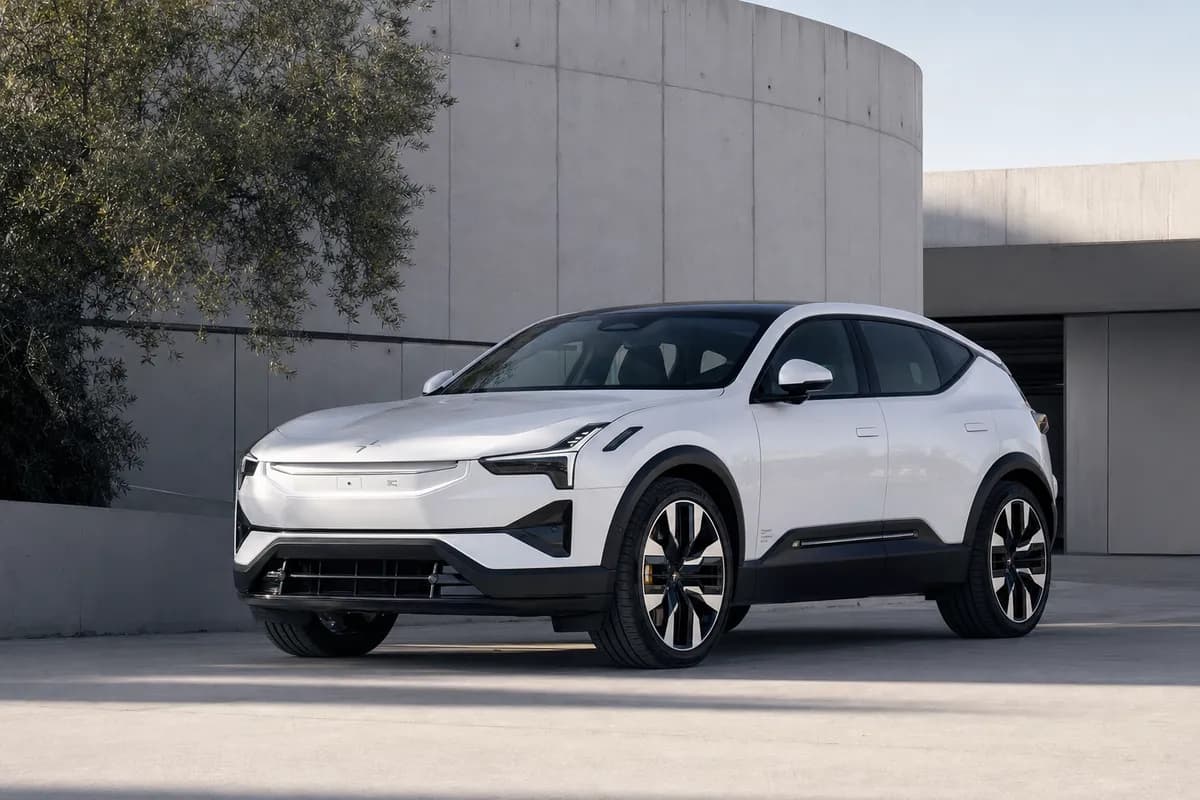
The key point is that China is no longer simply exporting inexpensive small cars. It is exporting a broad portfolio: compact EV hatchbacks, midsize crossovers, plug-in hybrid SUVs, premium sedans, and even pickup-adjacent utility vehicles for select markets. Companies including BYD, SAIC, Geely, Chery, Great Wall Motor, and Tesla’s Shanghai operation have all helped scale outbound volume. Models such as the BYD Dolphin, BYD Atto 3, BYD Seal, MG4, Zeekr X, Volvo EX30, and Tesla Model 3 built in Shanghai have become reference points for how quickly Chinese production can move from local success to global presence.
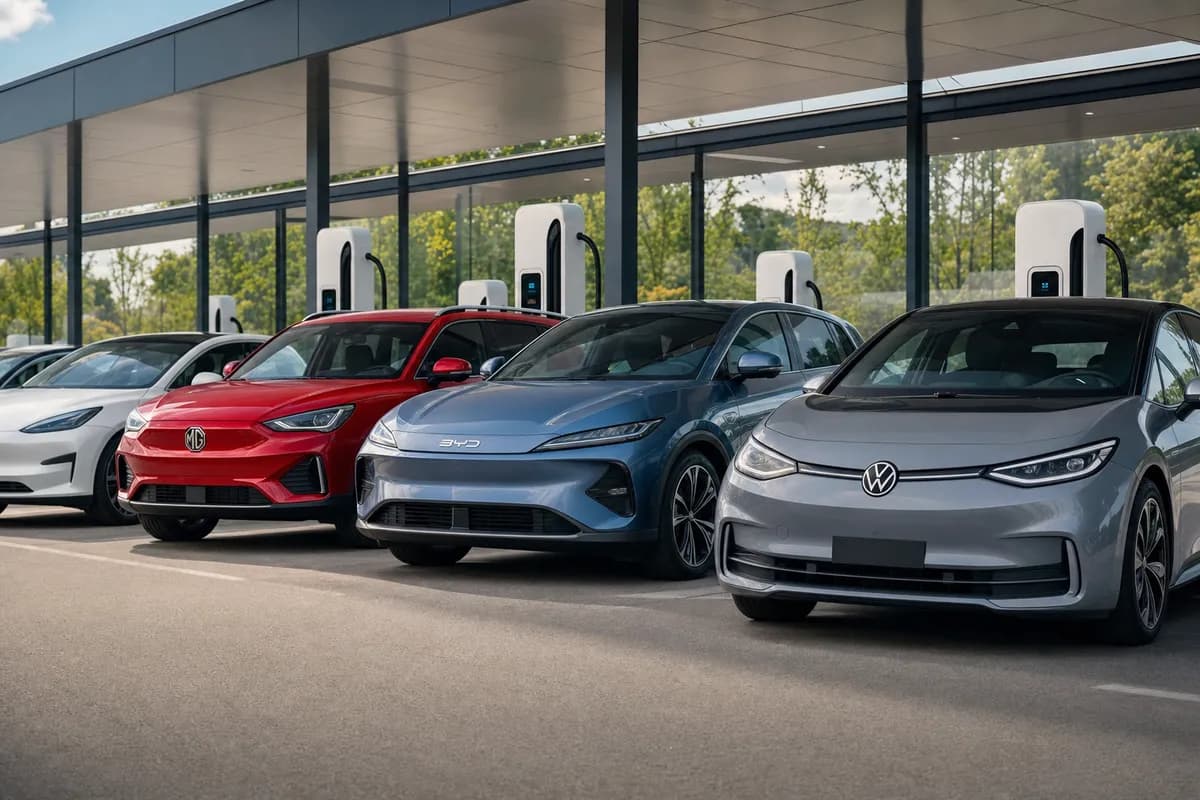
In Europe, Latin America, Southeast Asia, Australia, and the Middle East, that has translated into visible showroom pressure. In many markets, Chinese-made EVs now undercut established rivals on price while matching or beating them on infotainment, charging speed, driver-assistance hardware, and standard equipment. A compact electric crossover that might have been a niche product in 2022 is, in 2026, increasingly a volume play.
That matters because export composition tells automakers where profit pools and growth opportunities are moving. If China can export more EVs than gas cars, it signals that electrification is no longer confined to policy-heavy pilot markets. It has become an industrial export strategy, and one that rivals must answer with products, pricing, and factory decisions of their own.
What it means for global automakers: pricing pressure, sourcing shifts, and faster product cycles
The biggest implication for incumbents is simple: price discipline is gone. Chinese manufacturers have demonstrated that they can bring a well-equipped EV to market quickly and often at a price point that leaves traditional automakers with uncomfortable choices. Either they cut prices and accept lower margins, or they hold prices and risk losing share.
That dynamic is already visible in Europe’s compact and midsize EV classes. The MG4 has become the standard example of a car that forced established brands to reconsider what buyers expect for the money. The BYD Seal has challenged vehicles like the Tesla Model 3, Hyundai Ioniq 6, and some premium-brand sedans by bundling strong range, modern software, and aggressive pricing. The Volvo EX30, while wearing a European badge, has further demonstrated how Chinese manufacturing can enable a highly competitive global EV package.
For automakers outside China, the response is moving along four tracks:
- Localize more production: Carmakers are accelerating EV assembly and battery-pack localization in Europe, North America, and emerging markets to reduce tariff exposure and logistics risk.
- Redesign cost structures: Expect wider adoption of LFP batteries in lower and mid-priced models, fewer trims, simpler option structures, and more software-defined architectures that can be updated over time.
- Shorten refresh cycles: Chinese brands have normalized fast feature updates. That puts pressure on rivals to bring mid-cycle changes earlier, especially for screens, ADAS, charging, and cabin technology.
- Reassess brand strategy: Some automakers will lean harder into premium positioning, while others will defend the mass market with lower-cost EV lines or new sub-brands.
This is where 2027 automaker strategy starts to take shape. Product plans for 2027 are being locked in now, and executives have fresh evidence that the market will punish over-engineered, overpriced EVs. A vehicle that looked viable 18 months ago may no longer pencil out if a Chinese rival can offer similar range and more standard equipment for thousands less.
That likely means more emphasis on the $25,000 to $40,000 equivalent price bands globally, particularly for compact crossovers and hatchbacks. It also supports a broader shift toward dedicated EV platforms with lower parts complexity, battery chemistry flexibility, and greater commonality across body styles.
There is another strategic consequence: more partnerships. Legacy automakers that once preferred in-house development are becoming more open to technology tie-ups, joint battery sourcing, and regional manufacturing alliances. Volkswagen’s software and EV platform efforts, Stellantis’ multi-brand affordability push, Renault’s Ampere strategy, Hyundai Motor Group’s continuing E-GMP development, and Ford and GM’s renewed attention to lower-cost architectures all reflect the same reality. The benchmark is no longer just Tesla. It is now Tesla plus a fast-expanding field of Chinese competitors.
What U.S. EV buyers should watch, even if many Chinese cars never reach American showrooms
For U.S. consumers, the most immediate effect of the China EV exports 2026 milestone is not a flood of cheap Chinese cars at local dealers. Tariffs, policy restrictions, sourcing rules, and political scrutiny make a direct large-scale entry into the U.S. market difficult for many Chinese brands. But that does not mean Americans are insulated.
The U.S. market will feel the effects in at least five ways.
1. More pricing pressure on established brands
If automakers are forced to sharpen pricing in Europe, Southeast Asia, or Latin America to hold share against Chinese EVs, they will look for cost savings everywhere. That can help U.S. buyers if global programs are redesigned around lower bill-of-materials costs. More affordable battery chemistries, better manufacturing efficiency, and simplified trim walks can eventually lower U.S. sticker prices or increase standard equipment.
In practical terms, that could benefit buyers cross-shopping vehicles like the Chevrolet Equinox EV, Ford Mustang Mach-E, Hyundai Kona Electric, Kia EV5 where offered, Tesla Model Y, and next-generation compact electric crossovers expected for the 2027 model year.
2. Faster rollout of features buyers now expect
Chinese EVs have raised the bar for digital cabins, over-the-air updates, heat-pump efficiency, battery preconditioning, camera systems, and integrated navigation-charging tools. U.S. buyers should expect more of those features to move from high trims into mainstream versions. If rival automakers want to justify higher prices, they will need to show obvious value in daily usability, not just headline range.
3. More attention to sourcing and incentives
The sourcing side could become even more important in the U.S. than the badge on the hood. Federal and state incentive eligibility, battery-material origin, and domestic assembly rules already shape purchase decisions. As the industry reacts to China’s export strength, buyers will hear more about localized battery plants, cathode and anode supply deals, and North American assembly commitments. These are not abstract supply-chain stories; they influence tax-credit eligibility, delivery timing, and long-term parts support.
4. Plug-in hybrids could gain momentum
One underappreciated part of China’s export surge is the strength of plug-in hybrids. In several global markets, PHEVs are growing because they offer lower fuel consumption without relying entirely on charging infrastructure. U.S. buyers should watch whether automakers expand PHEV lineups for 2027 as a hedge against uneven EV demand. Expect renewed attention to electrified SUVs and crossovers where buyers still want road-trip flexibility.
5. More indirect Chinese influence through global brands
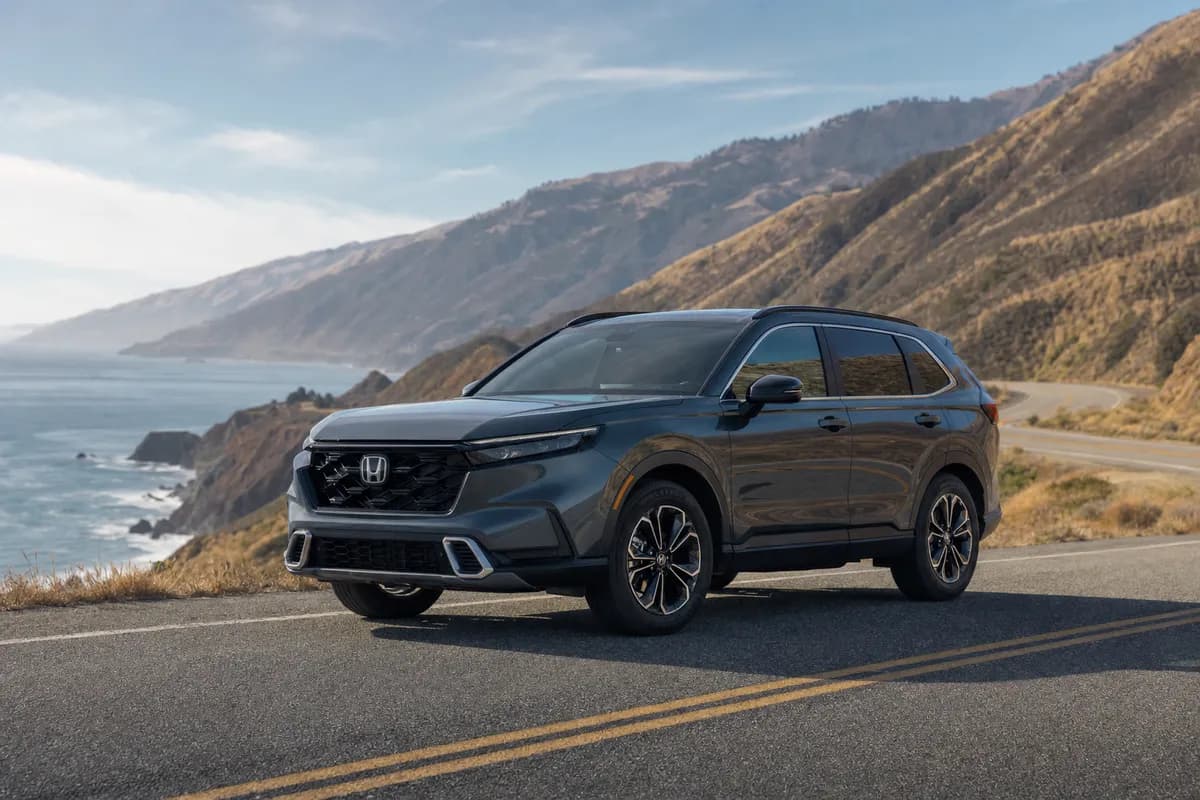
Even if a U.S. buyer never sees a BYD or MG dealership nearby, Chinese engineering and manufacturing can still shape what lands in the driveway. Some models sold by Western or Japanese brands use China-based supply chains, software development, or vehicle assembly for non-U.S. markets. That global competition influences how those same companies spec and price vehicles in America.
How the 2027 model-year playbook is changing
If there is one lesson automakers are taking from May 2026, it is that scale and speed now matter as much as brand heritage. A slow product cadence and a high-cost EV architecture are dangerous liabilities in a market where Chinese exporters can move quickly from one segment to the next.
For 2027, expect several industry-wide themes.
- Smaller, cheaper EVs get serious attention again. For a period, many automakers chased larger, more profitable electric SUVs and pickups. That remains important in North America, but the export data from China reinforces the need for compelling entry and mid-market EVs. Compact hatchbacks and crossovers are back at the center of planning discussions.
- LFP becomes more mainstream. Lithium iron phosphate batteries are already common in China and increasingly accepted elsewhere for standard-range models. Their lower cost and improved durability make them attractive for the volume end of the market.
- PHEVs stay in the plan longer. Brands that expected to move quickly to all-BEV lineups may keep plug-in hybrids alive deeper into the decade, especially in regions with charging gaps or softer EV demand.
- Software and user interface become competitive necessities. Buyers are comparing charging route planning, app integration, voice controls, screen responsiveness, and OTA update quality with far more scrutiny than before.
- Regional manufacturing footprints will diversify. To reduce exposure to tariffs and trade disputes, automakers will add more localized production in Europe, North America, Southeast Asia, and potentially Mexico, Turkey, and other export hubs.
This is also likely to influence portfolio rationalization. Some low-volume EVs may be canceled or combined into fewer, more scalable programs. Carmakers are under pressure to spread development costs across multiple brands and regions, while keeping enough differentiation to preserve pricing power.
Tesla remains a major part of this story. Its Shanghai plant helped prove that China could be a global EV export base at scale, and Tesla still sets the pace on efficiency and cost in several areas. But the competitive field is broader now. BYD in particular has moved from being viewed mainly as a battery and domestic-market player to a full-spectrum global exporter with credible mainstream and premium products. That shift alone has changed how every established automaker thinks about 2027 planning.
Verdict: a global milestone with local consequences
The fact that China is exporting more EVs than gasoline cars in 2026 is not just an industry curiosity. It is a marker that the center of gravity in auto manufacturing and product planning continues to move toward electrified vehicles, lower-cost architectures, and faster competition cycles. That does not mean every market will adopt EVs at the same speed, or that Chinese brands will dominate everywhere. Trade barriers, consumer preferences, charging infrastructure, and politics will all shape the outcome.
But the direction is clear. For global automakers, the message is that the old timetable no longer works. Products aimed at 2027 must be cheaper to build, quicker to update, and better aligned with what buyers actually value. For suppliers, it means battery chemistry flexibility, regional sourcing, and software capability are now strategic assets. For policymakers, it underscores how tightly industrial policy and vehicle competitiveness are linked.
And for U.S. EV buyers, the takeaway is practical. Even without a direct wave of Chinese-branded imports, this EV industry news May 2026 story will affect the vehicles arriving over the next 18 months. Expect harder pricing battles, more standard technology, stronger competition in compact and midsize segments, and a bigger focus on affordability. In short: China’s export milestone will not just change the global scoreboard. It will help shape the cars, crossovers, and plug-in hybrids Americans shop for in 2026 and 2027.
Affiliate disclosure: This article contains affiliate links. RevvedUpCars may earn a small commission on qualifying purchases at no extra cost to you.