Formula 1 enters 2024 with the biggest calendar in its history and, unusually, no new drivers on the opening grid. The sport has stretched to 24 grands prix, brought China back after a five-year absence, restored Imola after last year’s flood cancellation, and shuffled several…
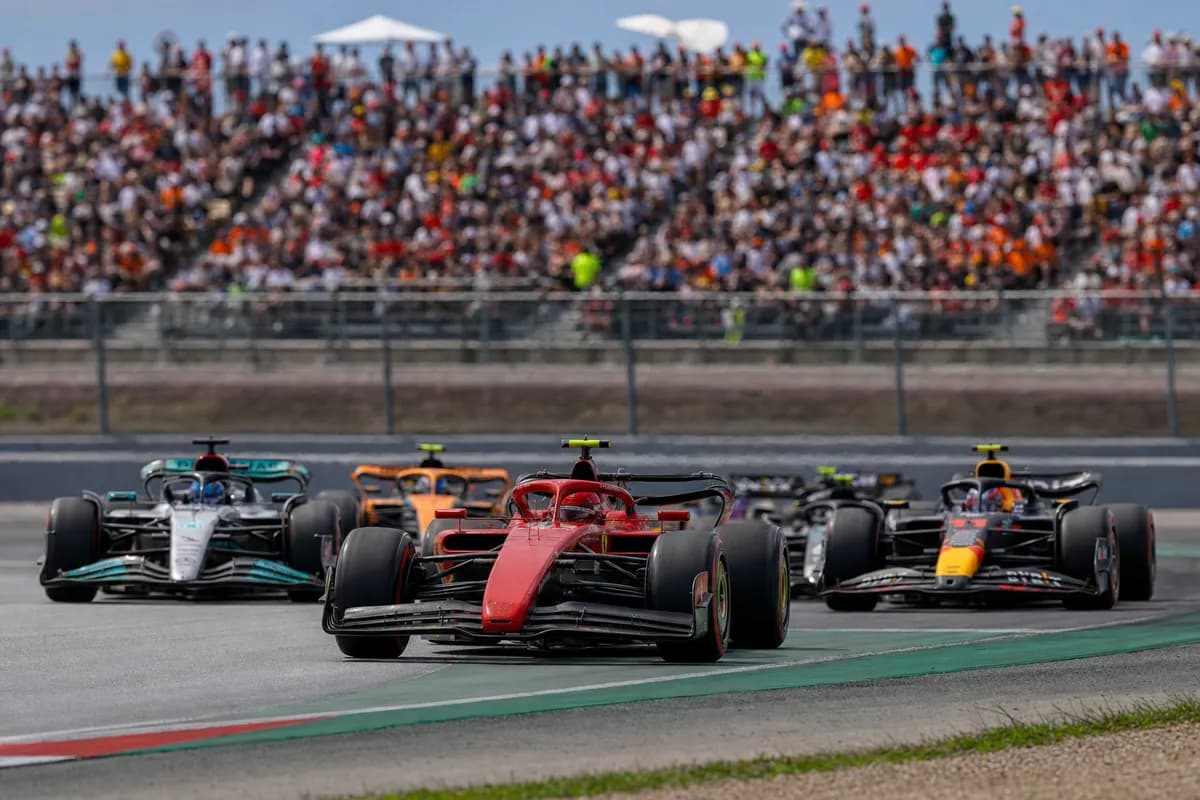
Formula 1 enters 2024 with the biggest calendar in its history and, unusually, no new drivers on the opening grid. The sport has stretched to 24 grands prix, brought China back after a five-year absence, restored Imola after last year’s flood cancellation, and shuffled several races in an attempt to reduce some of the most inefficient travel patterns. On the team side, the driver market stayed frozen, but the grid still looks different: AlphaTauri has become RB, Alfa Romeo’s naming deal has ended, and Haas has changed leadership. The result is a season that is stable in the cockpit but significant in structure.
A record 24-race calendar, with Saturday starts to open the season
The headline change for 2024 is scale. Formula 1 has scheduled 24 races, the largest championship calendar the series has ever attempted. That number was originally targeted for 2023, but the Emilia-Romagna Grand Prix at Imola was cancelled because of flooding in northern Italy, leaving last season at 22 races after China had already fallen off the calendar.
This year, the season begins with two unusual Saturday grands prix. The Bahrain Grand Prix is set for Saturday, March 2, followed by the Saudi Arabian Grand Prix on Saturday, March 9. The shift is tied to the start of Ramadan, with the Jeddah race moved forward by one day and Bahrain also moving to Saturday to preserve the required gap between events.
That makes the opening round feel more like a standalone event than a typical Formula 1 weekend. Practice takes place on Thursday, qualifying on Friday, and the race on Saturday. For teams, it compresses the rhythm of the first two events immediately after pre-season testing, which also takes place in Bahrain. For fans, it means the championship begins on a different cadence before returning to the more familiar Friday-Saturday-Sunday format.
The 2024 calendar includes the following races:
- Bahrain Grand Prix — Sakhir, March 2
- Saudi Arabian Grand Prix — Jeddah, March 9
- Australian Grand Prix — Melbourne, March 24
- Japanese Grand Prix — Suzuka, April 7
- Chinese Grand Prix — Shanghai, April 21
- Miami Grand Prix — Miami, May 5
- Emilia-Romagna Grand Prix — Imola, May 19
- Monaco Grand Prix — Monte Carlo, May 26
- Canadian Grand Prix — Montreal, June 9
- Spanish Grand Prix — Barcelona, June 23
- Austrian Grand Prix — Spielberg, June 30
- British Grand Prix — Silverstone, July 7
- Hungarian Grand Prix — Budapest, July 21
- Belgian Grand Prix — Spa-Francorchamps, July 28
- Dutch Grand Prix — Zandvoort, August 25
- Italian Grand Prix — Monza, September 1
- Azerbaijan Grand Prix — Baku, September 15
- Singapore Grand Prix — Marina Bay, September 22
- United States Grand Prix — Austin, October 20
- Mexico City Grand Prix — Mexico City, October 27
- São Paulo Grand Prix — Interlagos, November 3
- Las Vegas Grand Prix — Las Vegas, November 23
- Qatar Grand Prix — Lusail, December 1
- Abu Dhabi Grand Prix — Yas Marina, December 8
The most important operational point is not just the total number of races, but where they sit. Formula 1 has tried to group some events more logically by region, though the calendar is still far from a clean east-to-west or region-by-region tour.
China and Imola return, while Japan and Azerbaijan move
The Chinese Grand Prix is the most notable returning race. Shanghai last hosted Formula 1 in 2019, before pandemic restrictions kept the event off the schedule for four consecutive seasons. Its return gives the championship a major market presence again in China, where Zhou Guanyu remains the country’s first full-time Formula 1 driver.
For Sauber, Zhou’s home race matters commercially as much as competitively. For Formula 1, Shanghai is also a reminder that the sport’s growth is not limited to the United States and the Middle East. China is one of the world’s largest car markets, a global center for electric vehicle manufacturing, and a strategically important country for every major automaker. Even though Formula 1’s current technical rules are built around hybrid combustion power units rather than battery-electric vehicles, its manufacturers and sponsors care deeply about visibility in markets where future mobility is being shaped.
Imola also returns after the 2023 Emilia-Romagna Grand Prix was cancelled because of severe flooding in the region. The race resumes its place in the European leg of the season, sitting between Miami and Monaco. Imola’s old-school layout, narrow track surface and limited overtaking opportunities make qualifying especially important, unlike newer venues such as Miami or Las Vegas where longer straights and DRS zones create more passing chances.
Two date changes stand out. The Japanese Grand Prix moves from its traditional late-season slot to April. That puts Suzuka closer to Australia and China, creating a more coherent early-season Asia-Pacific stretch. It also changes the competitive context of the race. In recent years, Suzuka has often arrived when championships were nearing their decisive phase. In 2024, it comes early enough to serve as one of the first real tests of whether winter development has shifted the competitive order.
Azerbaijan moves in the other direction, from spring to September. Baku now sits immediately before Singapore, creating a demanding street-circuit double-header. The two venues are very different: Baku combines a long full-throttle section with tight 90-degree corners, while Singapore is a high-downforce, high-heat, high-concentration night race. But both punish mistakes, and both can produce safety cars that scramble strategy.
Qatar also shifts later in the year, pairing with Abu Dhabi in the final phase of the season after the Las Vegas Grand Prix. That creates a punishing late-season run: Las Vegas, Qatar and Abu Dhabi over three weekends, with major time-zone changes and very different circuit characteristics. Las Vegas is a cool-weather street race with long straights; Lusail is a high-speed permanent circuit with heavy tire loads; Yas Marina is a polished modern venue where traction and race management are central.
The calendar is more regional than before, but not truly regionalized. Formula 1 has reduced some obvious inefficiencies, yet the 2024 schedule still asks teams, freight and personnel to cover an enormous global footprint across nine months.
The 2024 grid: same drivers, new identities for two teams
The driver market delivered a rarity for 2024: the season starts with the same 20 drivers who finished 2023. No rookie has been promoted, no veteran has been dropped, and no front-running seat has changed hands. That stability is unusual in modern Formula 1, where at least one team typically reshuffles its lineup over the winter.
The full 2024 team and driver list is:
- Red Bull Racing: Max Verstappen and Sergio Pérez
- Mercedes: Lewis Hamilton and George Russell
- Ferrari: Charles Leclerc and Carlos Sainz
- McLaren: Lando Norris and Oscar Piastri
- Aston Martin: Fernando Alonso and Lance Stroll
- Alpine: Esteban Ocon and Pierre Gasly
- Williams: Alex Albon and Logan Sargeant
- RB: Daniel Ricciardo and Yuki Tsunoda
- Sauber: Valtteri Bottas and Zhou Guanyu
- Haas: Nico Hülkenberg and Kevin Magnussen
Red Bull begins the year as the benchmark after one of the most dominant seasons in Formula 1 history. Max Verstappen won 19 of 22 races in 2023, and Red Bull won 21 as a team. The RB20 therefore carries a different kind of pressure: it does not need to reinvent the category, but it must avoid giving rivals a development opening. Sergio Pérez remains under scrutiny because the performance gap to Verstappen was often large in 2023, particularly in qualifying.
Mercedes continues with Lewis Hamilton and George Russell in the W15, but the team enters 2024 knowing Hamilton will leave for Ferrari in 2025. That move, announced before the season, does not change the immediate lineup, but it changes the backdrop. Mercedes needs to show that its post-2021 slide is reversible, while Hamilton has one final season with the team that delivered six of his seven drivers’ championships.
Ferrari keeps Charles Leclerc and Carlos Sainz in the SF-24. Leclerc remains one of the grid’s strongest qualifiers, while Sainz was the only non-Red Bull driver to win a race in 2023, taking victory in Singapore. Ferrari’s task is familiar: improve race pace, tire management and strategic execution. Over one lap, the team was often close enough to matter last year. Over a full race distance, Red Bull usually had a margin.
McLaren may be the most closely watched challenger. The MCL60 began 2023 poorly but became a podium-capable car after a major upgrade package. Lando Norris and Oscar Piastri give McLaren one of the strongest long-term pairings on the grid, and Piastri’s rookie season was particularly impressive for its composure. If the MCL38 starts near the level where last year’s car finished, McLaren could be a consistent threat to Ferrari and Mercedes.
Aston Martin keeps Fernando Alonso and Lance Stroll. The team’s 2023 season was split in two: Alonso scored a series of early podiums, but Aston Martin lost ground as rivals developed faster. The 2024 car needs a broader operating window and better upgrade correlation if Aston Martin wants to rejoin the fight at the front of the midfield or trouble the top four.
RB, Sauber and Haas bring the biggest off-track changes
While the driver list is unchanged, the team identities are not. AlphaTauri has been rebranded as RB, formally entered as Visa Cash App RB Formula One Team. The name has drawn attention, but the racing question is more practical: how close can the team move toward Red Bull’s technical ecosystem while staying within the rules?
Daniel Ricciardo and Yuki Tsunoda continue as RB’s drivers. Ricciardo returned during 2023 after Nyck de Vries was dropped, then missed races with a hand injury before coming back late in the year. Tsunoda is entering his fourth Formula 1 season and needs to turn speed and experience into more consistent points. The team’s VCARB 01 is expected to use permitted Red Bull-supplied components, making its performance a key point of interest in the midfield.
Sauber also has a new public identity after Alfa Romeo’s title partnership ended. The team races in 2024 as Stake F1 Team Kick Sauber, with the C44 chassis, while it continues the transition toward becoming Audi’s factory entry in 2026. Valtteri Bottas and Zhou Guanyu remain in place, giving Sauber continuity before a much larger strategic shift. The immediate challenge is to move out of the lower midfield after finishing ninth in the 2023 constructors’ standings.
Haas keeps Nico Hülkenberg and Kevin Magnussen but has changed leadership. Ayao Komatsu replaced Guenther Steiner as team principal in January. Steiner was central to Haas’s public identity, especially after the team’s exposure through Drive to Survive, but Haas’s competitive results had stalled. The team finished last in the 2023 constructors’ championship, and its most persistent weakness was tire degradation on race stints. Hülkenberg frequently qualified well, but the car often went backward on Sundays.
That makes Haas one of the clearer case studies for 2024. The VF-24 does not need to win races; it needs to convert qualifying pace into race points. In a midfield where one or two positions can decide millions in prize money, operational clarity and tire performance are not small details.
What the changes mean for the competitive picture
The 2024 season is shaped by a technical rules cycle that is now mature. The current ground-effect regulations were introduced in 2022, and teams have had two full seasons to understand the aerodynamic platform. That usually compresses the field, because the biggest early gains become harder to find and weaker teams can copy broad concepts that work.
But convergence is not guaranteed. Red Bull’s 2023 advantage was large enough that even a meaningful step from rivals may not be sufficient. The more realistic early question is whether Ferrari, Mercedes, McLaren or Aston Martin can regularly get close enough to pressure Red Bull on strategy, tire degradation or qualifying track position.
Calendar structure could influence that fight. Early races at Bahrain, Jeddah, Melbourne, Suzuka and Shanghai cover a wide range of demands: rear tire management, high-speed efficiency, braking stability, aerodynamic load and front-end response. A car that performs across those five venues is likely to be genuinely strong, not just suited to one track type.
The return of China adds uncertainty because teams have limited recent data from Shanghai with the current generation of cars. The circuit’s long Turn 1-2 sequence stresses the front tires, while the long back straight rewards efficient aerodynamics and power-unit deployment. It is a useful all-round test, and it arrives before the European upgrade race fully begins.
The expanded calendar also increases the importance of reliability and human performance. Twenty-four races mean more parts management, more freight complexity, more simulator preparation and more pressure on mechanics. Cost-cap restrictions make it harder to simply spend through problems, and crash damage can affect development budgets. A team that starts the year with a fragile car or repeated operational errors will feel the consequences quickly.
For drivers, the unchanged grid creates direct year-on-year comparisons. Russell against Hamilton, Sainz against Leclerc, Piastri against Norris, Stroll against Alonso, Tsunoda against Ricciardo, and Sargeant against Albon are all known benchmarks. With few excuses available, internal team battles will carry extra weight.
Verdict: stability in the cockpit, pressure everywhere else
Formula 1’s 2024 season is not defined by a dramatic driver-market reset. It is defined by scale, schedule management and the pressure on teams to make mature regulations work in their favor. The 24-race calendar is a commercial achievement for the sport, but it is also a logistical and sustainability challenge. Moving Japan to April and Azerbaijan to September is a step toward a more rational route map, yet the season still asks an enormous amount of people and equipment.
On track, the lack of driver changes should sharpen the competitive picture. Teams cannot lean on adaptation time or new-driver bedding-in periods. Red Bull remains the target, McLaren carries momentum, Ferrari and Mercedes need cleaner execution and stronger race pace, and Aston Martin must prove its early-2023 form was not a one-off. Behind them, RB, Sauber, Williams, Alpine and Haas are fighting for small but valuable gains in a crowded midfield.
The simplest reading is this: 2024 gives Formula 1 more of everything — more races, more travel, more commercial reach and more pressure — but not more seats for new drivers. The calendar has changed more than the grid. Whether the competitive order changes as much will determine whether this record-length season feels like a fresh chapter or an extended test of Red Bull’s control.
Affiliate disclosure: This article contains affiliate links. RevvedUpCars may earn a small commission on qualifying purchases at no extra cost to you.