Cadillac has crossed 100,000 cumulative electric-vehicle sales, a milestone that turns GM’s luxury brand from an EV experiment into a real participant in the luxury EV market.
Cadillac has crossed 100,000 cumulative electric-vehicle sales, a milestone that turns GM’s luxury brand from an EV experiment into a real participant in the luxury EV market. The number is still modest next to Tesla’s global scale and behind the broad electric portfolios of BMW and Mercedes-Benz, but it matters because Cadillac is no longer relying on one halo model or a compliance strategy. With the Cadillac Lyriq gaining volume, the smaller Optiq arriving to widen the funnel, and the Escalade IQ targeting the most profitable end of the luxury SUV business, Cadillac is building an EV lineup with the shape of a serious long-term contender.
Cadillac’s EV milestone is more than a headline number
For Cadillac, topping 100,000 EV sales is a credibility marker. Luxury buyers tend to move slowly when a brand asks them to rethink powertrains, charging habits and resale assumptions. That makes the first 100,000 customers important: they represent early proof that Cadillac can sell electric vehicles beyond concept cars, dealer demos and limited-production flagships.
The timing also matters. GM has spent years reshaping its EV strategy after a slower-than-planned ramp of Ultium-based products, battery-cell bottlenecks and changing demand signals across the broader market. Cadillac was given a central role in that transition, with the brand previously outlining plans to become an all-electric marque over time. The market has since become more complicated, and GM has given itself more flexibility. But Cadillac’s direction is still clear: its most important new products are electric.
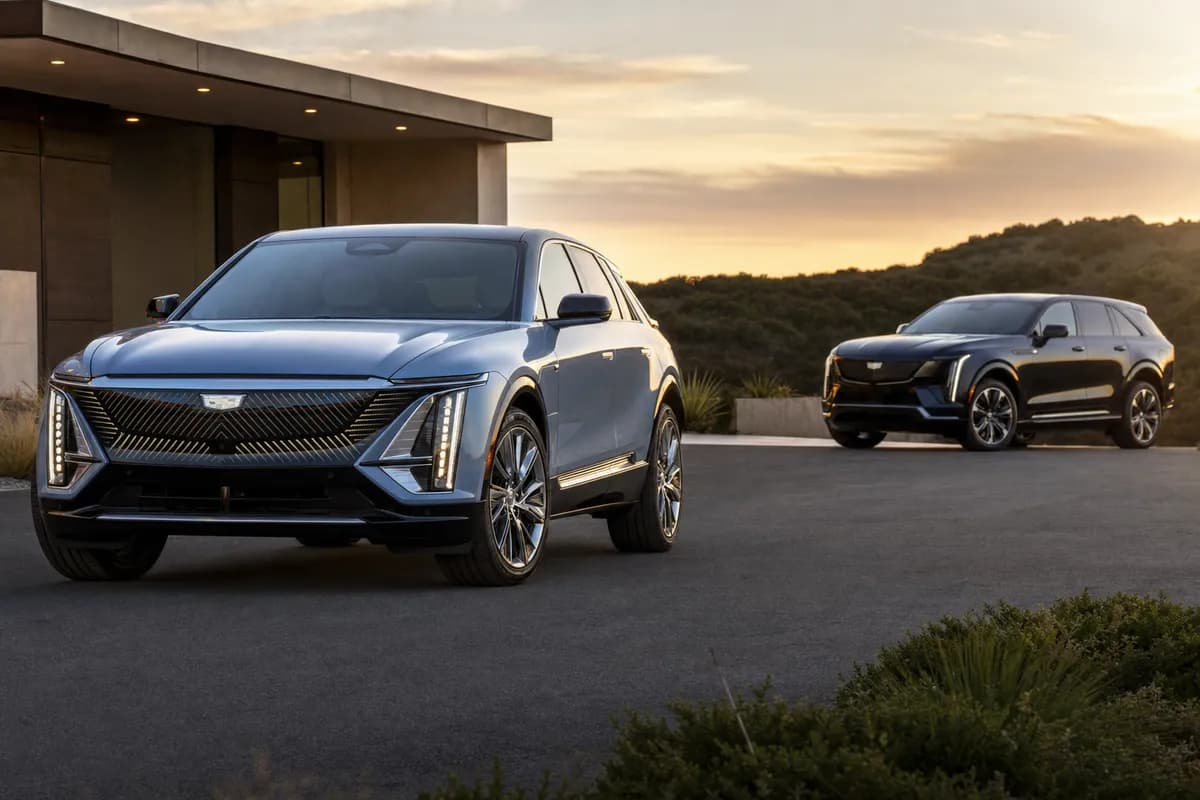
The Cadillac EV sales milestone has been driven primarily by the Lyriq, the midsize luxury electric SUV that gave the brand its first meaningful EV volume. In the U.S., Lyriq sales climbed sharply after early production constraints eased. GM reported 28,402 Lyriq deliveries in the U.S. in 2024, up from 9,154 in 2023, a sign that demand improved once supply, pricing and dealer readiness began to align.
That does not make Cadillac a Tesla-scale EV brand. Tesla delivered more than 1.7 million vehicles globally in 2024, and the Model Y remains the benchmark for electric SUV volume. But Cadillac is not trying to match Tesla on mass-market numbers. Its opportunity is narrower and potentially more profitable: convincing buyers shopping BMW, Mercedes-Benz, Lexus, Range Rover, Rivian and high-trim Teslas that an electric Cadillac belongs on the same list.
The Lyriq gave Cadillac a foundation, not just a first step
The Cadillac Lyriq is the most important vehicle in Cadillac’s current EV push because it sits in the heart of the luxury SUV market. It is not a niche coupe, a six-figure flagship or a city car. It is a midsize crossover with usable range, recognizable Cadillac design and pricing that overlaps with premium gas SUVs and established electric rivals.
Depending on configuration, the Lyriq offers more than 300 miles of EPA-rated range, with rear-wheel-drive and all-wheel-drive versions available. The all-wheel-drive model produces 500-plus horsepower, while the cabin centers on Cadillac’s curved 33-inch LED display. The Lyriq also offers available Super Cruise, GM’s hands-free driver-assistance system for compatible roads, which remains one of the brand’s strongest technology differentiators.
That combination has allowed the Lyriq to compete against a wide set of vehicles rather than one direct rival. Its buyer may cross-shop the Tesla Model Y, BMW iX, Mercedes-Benz EQE SUV, Genesis Electrified GV70, Audi Q8 e-tron and Rivian R1S, depending on budget and priorities. The Cadillac is not the sportiest of that group, and Tesla still has advantages in charging integration and software simplicity. But the Lyriq’s strengths are clear: ride comfort, interior presentation, range and a more traditional luxury feel.
It also gives Cadillac something BMW and Mercedes-Benz have had for longer: an EV that can generate repeat showroom traffic. A luxury EV strategy cannot be built only on halo products. Dealers need a model that customers can test-drive, compare, finance and actually receive. The Lyriq has become that model for Cadillac.
There is still work to do. Cadillac’s EV ownership experience must be consistent across dealers, especially for customers new to home charging, public charging apps and EV service intervals. Luxury buyers are often less forgiving of friction than mainstream buyers. A strong product can get them in the door, but delivery quality, charging support and software reliability will decide whether they come back.
Optiq and Escalade IQ stretch Cadillac’s EV lineup in both directions
The next phase of Cadillac’s electric push depends on coverage. The brand now has a portfolio taking shape rather than a single EV nameplate. That is where the Optiq and Escalade IQ become important.
The Optiq is Cadillac’s smaller electric SUV and is positioned as a more accessible entry point into the brand’s EV lineup. It is expected to deliver roughly 300 miles of range, standard dual-motor all-wheel drive, about 300 horsepower and a cabin built around Cadillac’s 33-inch display architecture. Its job is straightforward: bring younger and first-time luxury EV customers into the Cadillac showroom before they default to a Tesla Model Y, BMW iX1 or iX3 in global markets, Mercedes-Benz GLA/GLB-related EV offerings, or premium trims from Hyundai, Kia and Genesis.
Optiq matters because the luxury EV market is not only about six-figure flagships. Volume is increasingly concentrated in crossovers that are premium but still attainable. A smaller Cadillac EV gives GM a better chance of competing in markets where Lyriq pricing is too high or its size is not ideal. It also gives dealers a lower step-in point as incentives, lease programs and battery costs continue to shift.
At the other end of the range is the Escalade IQ, the electric version of Cadillac’s most valuable nameplate. This is arguably the most consequential EV in Cadillac’s lineup from a brand perspective. The gas-powered Escalade has long been Cadillac’s status symbol and profit engine. Moving that identity into an electric format tests whether the brand’s most loyal high-end customers are ready to follow.
The Escalade IQ is not merely an Escalade with a battery. It rides on GM’s dedicated EV architecture, offers an estimated range of up to about 460 miles, and delivers up to 750 horsepower and 785 lb-ft of torque in its maximum-output mode. It also leans heavily into spectacle, with a sweeping 55-inch display, available executive-style second-row seating, 24-inch wheels and the kind of road presence Escalade buyers expect.
Its rivals are not only other electric SUVs. The Escalade IQ will be measured against the Mercedes-Benz EQS SUV and Maybach EQS SUV, BMW i7 and upcoming high-end electric SUVs, Range Rover buyers considering plug-in or future electric models, and the Rivian R1S for affluent customers who want a large three-row EV with a distinct identity. It will also compete indirectly with the Tesla Model X, though Cadillac is clearly targeting a more traditional luxury customer than Tesla’s minimalist approach.
Cadillac’s planned EV lineup also includes the Vistiq, a three-row electric SUV positioned below the Escalade IQ, and the ultra-luxury Celestiq, a hand-built flagship with pricing expected to start around $340,000. Together, these models give Cadillac a ladder: Optiq at the entry point, Lyriq in the core luxury SUV segment, Vistiq for family-sized premium EV buyers, Escalade IQ at the top of the SUV range, and Celestiq as the image-builder.
How Cadillac stacks up against Tesla, BMW, Mercedes-Benz and Rivian
Cadillac’s biggest advantage is that it understands luxury SUVs. That sounds simple, but it matters. The global premium market has moved decisively toward SUVs, and Cadillac’s strongest brand equity is in large, comfortable, visually assertive utility vehicles. Electrification changes the propulsion system, but it does not erase what many luxury buyers want: space, quietness, presence, technology and status.
Against Tesla, Cadillac has a different challenge. Tesla still leads on EV mindshare, charging confidence and software-led ownership. The Model Y remains a default choice for many buyers because it is efficient, quick, familiar and supported by the Supercharger network. Tesla also benefits from years of data, over-the-air update experience and simplified retail processes.
Cadillac counters with design, cabin richness and a dealer network that can appeal to customers who prefer a conventional luxury purchase and service experience. GM’s access to Tesla’s Supercharger network through adapters, and future North American Charging Standard integration, should also reduce one of Tesla’s biggest practical advantages. But Cadillac must prove its software experience can be as dependable as its interiors are attractive.
BMW presents a different benchmark. BMW has built a broad EV lineup without abandoning its combustion models, offering vehicles such as the i4, i5, i7 and iX. Its advantage is product breadth and a loyal global customer base. Cadillac’s EV range is more SUV-heavy, which fits the U.S. market especially well, but it lacks BMW’s electric sedan depth and global premium scale.
Mercedes-Benz has moved aggressively into electric luxury with the EQE SUV, EQS SUV, EQS sedan and ultra-luxury Maybach variants. Its challenge has been styling and market positioning; some EQ models have struggled to replicate the emotional pull of Mercedes’ best gas-powered vehicles. Cadillac can learn from that. EVs need aerodynamic efficiency, but luxury buyers still want identity. The Lyriq and Escalade IQ are recognizably Cadillacs, which may help them avoid the “anonymous EV” problem.
Rivian is the most interesting comparison because it has captured affluent SUV buyers with a new kind of premium image: outdoorsy, software-forward and adventure-oriented. The R1S is a strong three-row electric SUV with real brand heat. Cadillac is not chasing that same personality. Its pitch is more urban, more polished and more traditional. That gives both brands room, but it also means the Vistiq and Escalade IQ must deliver range, charging and packaging good enough to keep Rivian from owning the premium three-row EV conversation.
- Tesla: strongest charging ecosystem and EV software reputation, but less traditional luxury feel.
- BMW: broad premium EV portfolio and strong driving dynamics, but less focused on large American-style luxury SUVs.
- Mercedes-Benz: deep luxury credentials and multiple EQ models, but mixed response to some EV design choices.
- Rivian: strong three-row EV credibility and lifestyle branding, but smaller scale and a more adventure-focused identity.
- Cadillac: growing SUV-led EV lineup, strong design identity and GM manufacturing depth, but still proving software, charging and consistency.
Verdict: Cadillac is becoming a real luxury EV rival, but the hard part starts now
Cadillac’s move past 100,000 EV sales is not a declaration of victory. It is evidence that GM’s luxury brand has cleared the first major hurdle: getting real customers into electric Cadillacs in meaningful numbers. The Lyriq created the base, Optiq should expand the audience, and Escalade IQ gives the brand a high-margin flagship with genuine showroom gravity.
The bigger test is whether Cadillac can turn early EV adoption into durable loyalty. Luxury EV buyers expect more than range and horsepower. They expect seamless route planning, dependable public charging, intuitive software, fast service, strong resale values and a purchase experience that feels premium from start to finish. Those areas will determine whether Cadillac can convert curiosity into conquest sales from Tesla, BMW, Mercedes-Benz and Rivian.
GM has the manufacturing scale, battery investment and dealer reach to make Cadillac a serious electric player. Cadillac has the design language and SUV heritage to make those vehicles desirable. The missing piece is consistency. If the brand can deliver smooth software, reliable charging support and steady production quality across Lyriq, Optiq, Vistiq and Escalade IQ, it can become one of the most credible luxury EV challengers in the market.
For now, the milestone is a meaningful signal. Cadillac is no longer talking about an electric future from the sidelines. It is selling into it, one luxury SUV at a time.
Affiliate disclosure: This article contains affiliate links. RevvedUpCars may earn a small commission on qualifying purchases at no extra cost to you.