Honda’s $9 billion EV writedown in May 2026 is more than an accounting shock. It is a reset of one of the industry’s most closely watched transition plans, and it lands at a moment when U.S. buyers are trying to figure out which electric Hondas and Acuras are real.
Honda’s $9 billion EV writedown in May 2026 is more than an accounting shock. It is a reset of one of the industry’s most closely watched transition plans, and it lands at a moment when U.S. buyers are trying to figure out which electric Hondas and Acuras are real, which ones are delayed, and whether the company is now betting bigger on hybrids instead. Reuters’ report that Honda posted its first annual loss in years while abandoning earlier electric-vehicle sales targets gives American shoppers a clearer, if less ambitious, picture: the brand is not walking away from EVs, but it is changing the pace, the priorities, and likely the products that arrive in 2026 and 2027.
For U.S. consumers, that matters because Honda had been expected to move from the GM-based Honda Prologue and Acura ZDX into a broader family of in-house EVs. Now the key questions are narrower and more practical. Which models are still coming? What happens to the expected Honda Prologue successor news? And does Honda’s new emphasis on hybrids make a fully electric Honda feel farther away for mainstream American buyers?
What Honda’s May 2026 writedown actually means
The headline figure is large, but the strategic meaning is larger. Reuters reported that Honda booked a roughly $9 billion EV writedown in May 2026 and scrapped prior EV sales goals as the company reassessed demand, investment timing, and profitability. In plain terms, Honda is acknowledging that the market is not developing as quickly or as evenly as many automakers expected when they set aggressive late-2020s EV targets.
That puts Honda in a broader industry pattern. Several automakers have slowed dedicated EV spending, delayed battery plants, or pushed product launches deeper into the decade as consumer demand has proven strong in some segments but softer in others, especially where pricing, charging access, and incentives remain obstacles. What makes Honda’s move notable is that it comes after the company entered the U.S. volume EV market relatively late and leaned heavily on partnerships to get there.
Honda’s near-term electric strategy had two distinct phases:
- First, launch U.S.-market EVs quickly using General Motors underpinnings, resulting in the Honda Prologue and Acura ZDX.
- Second, transition to Honda-developed EVs on a dedicated architecture, often discussed under the 0 Series umbrella and linked to an in-house software and manufacturing push.
The writedown does not necessarily cancel that second phase, but it strongly suggests Honda is stretching timelines, reducing assumptions about volume, and giving more weight to hybrids as the practical bridge. That matters because Honda’s previous public messaging had implied a faster and broader electric rollout than the market now appears to justify.
Which 2026–2027 Honda and Acura electric models are still coming?
For American shoppers looking ahead to 2027 Honda electric vehicles and Acura EV plans 2026, the answer is mixed: some vehicles remain likely, but the once-clear growth path looks less certain.
Honda Prologue and Acura ZDX remain the current anchors
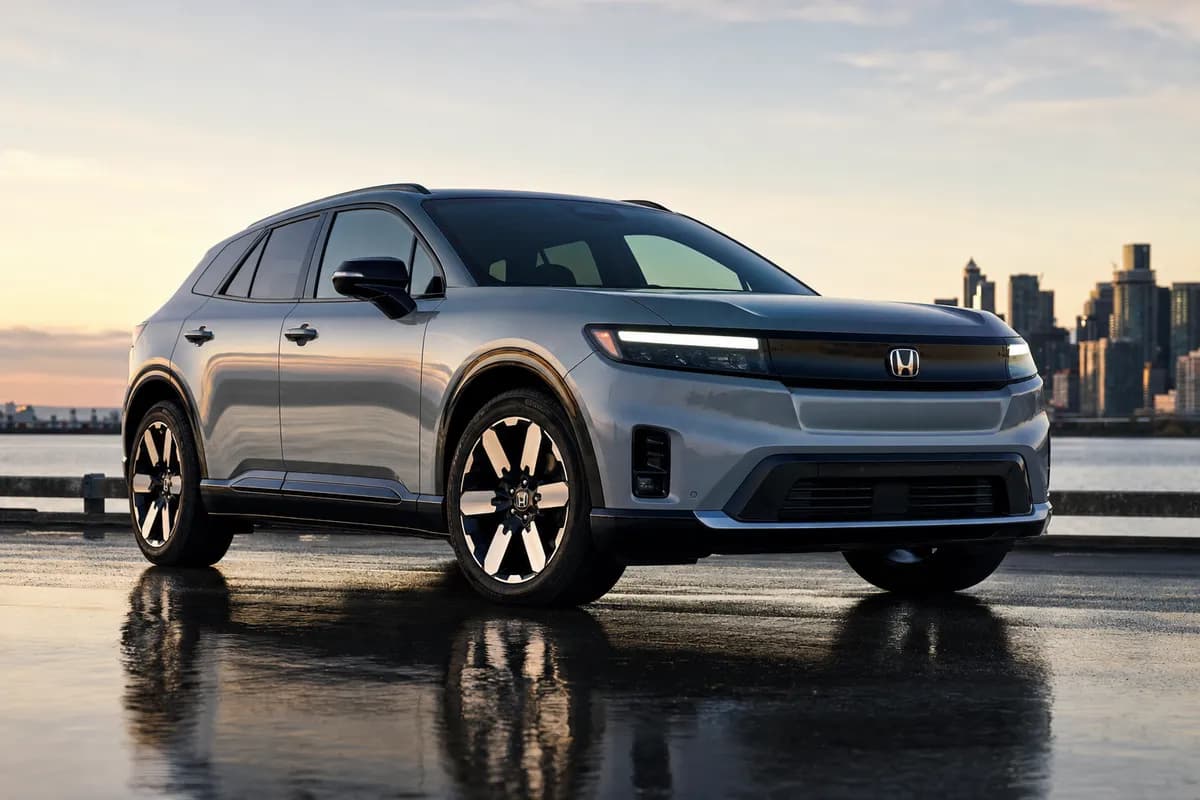
In the U.S., Honda’s most visible EV is still the Honda Prologue, while Acura’s equivalent role is played by the ZDX. Both arrived using GM Ultium-based technology rather than Honda’s own EV platform. That gave Honda and Acura a faster entry into the American EV market, particularly in the midsize crossover space where demand is strongest.
The Prologue’s importance should not be underestimated. It gave Honda dealers an electric product in a segment U.S. buyers already understand, and it allowed the brand to test pricing, lease demand, charging behavior, and conquest sales without waiting for its in-house EV architecture. The ZDX did the same for Acura, though at a more premium price point and with lower expected volume.
What is less clear now is whether these GM-based models get direct, straightforward successors on the same logic Honda originally envisioned. The old expectation was that they would act as stepping stones to a broader family of Honda-developed EVs. After the writedown and target cuts, that handoff may be slower and less comprehensive.
Honda 0 Series models still matter, but timing is now the issue
Honda has spent years previewing a next generation of dedicated EVs, centered on lower-weight packaging, improved efficiency, new software, and a cleaner interior design approach. Those vehicles have been central to the company’s long-term electric story, including future U.S. production plans.
As of mid-2026, the most realistic reading is this:
- A next-wave Honda-branded EV for the U.S. is still likely for the 2026–2027 window, but production and launch cadence may be slower than previously expected.
- Acura is still likely to receive follow-on EV product because the premium market is more tolerant of higher prices and lower volume.
- Honda may concentrate on one or two strategic EV launches rather than a broad lineup expansion.
That means shoppers expecting multiple electric Hondas to suddenly fill showrooms by 2027 should temper expectations. A couple of halo or strategic models remain plausible. A full electric family replacing large parts of Honda’s gasoline crossover lineup by then now looks much less likely.
What about a true Prologue successor?
This is where the Honda Prologue successor news becomes most consequential. Honda has several options, and the writedown makes some more likely than others.
- A delayed in-house replacement: Honda could let the Prologue continue longer than originally planned, then replace it with a Honda-developed crossover once costs and demand align better.
- A reworked continuation strategy: Honda could maintain a Prologue-like slot in the lineup without a clean, immediate “second-generation Prologue” reveal, effectively bridging with updates and pricing changes.
- A narrowed EV portfolio: Honda could decide that one mainstream EV crossover plus one or two Acura EVs are enough for the late-2020s U.S. market while hybrids do most of the heavy lifting.
For now, the third option looks increasingly plausible. Honda still needs an electric presence in the U.S., especially in California and other ZEV-focused states. But after writing down billions and dropping sales targets, it has little incentive to flood the market with expensive, low-margin EVs before buyers are ready.
Why hybrids are now central to Honda’s U.S. strategy
If there is one clear winner in Honda’s revised roadmap, it is the hybrid. The company has long been strong in fuel-efficient gasoline vehicles, and its two-motor hybrid system has become a more important asset as EV demand growth has normalized from its earlier surge. That is why Honda hybrid strategy 2026 is not just a backup plan; it is likely the company’s core profit and volume strategy for the next several years.
Honda’s hybrid logic is straightforward:
- Hybrids deliver major fuel-economy gains without requiring home charging or public fast-charging familiarity.
- They are easier to sell nationwide, not just in EV-heavy coastal markets.
- They typically avoid some of the affordability problems that still limit EV adoption.
- They fit Honda’s mainstream customer base, which values reliability, low running costs, and easy ownership.
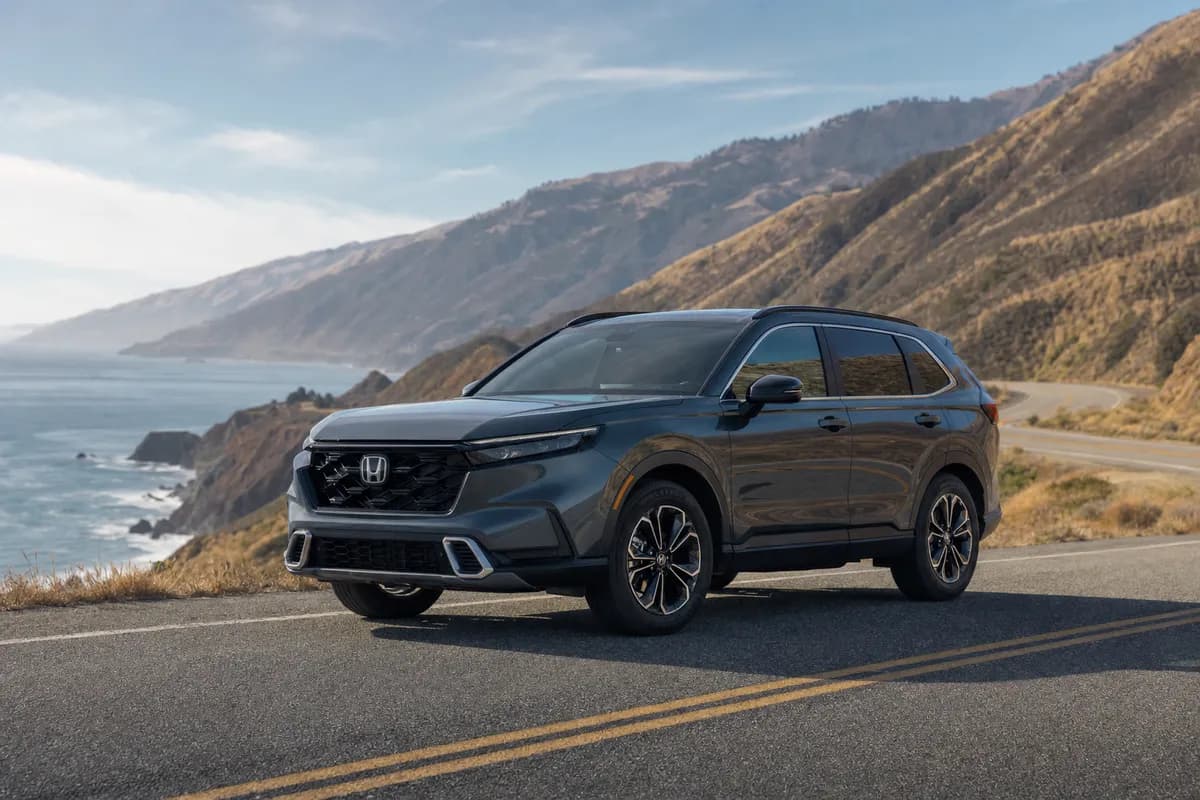
In practical terms, this means U.S. buyers should expect Honda to keep expanding hybrid availability across high-volume nameplates rather than rushing all-electric replacements. For many customers, especially those shopping Civic, Accord, CR-V, or future crossover variants, the “electrified Honda” they actually buy in 2026 or 2027 is more likely to be a hybrid than a battery-electric vehicle.
That is not a retreat from electrification in the broad sense. It is a change in method. Honda appears to be aligning its product plan with what American buyers are consistently purchasing today: efficient crossovers and sedans with familiar ownership patterns, not necessarily full EVs at any price.
This strategy also gives Honda time. Time to improve battery sourcing, time to localize production, time to adjust to U.S. policy shifts, and time to launch dedicated EVs without forcing dealers and buyers into products that may not yet deliver the right margin or market fit.
What the reset means for Acura, competitors, and U.S. buyers
For Acura, the reset may actually be less damaging than it looks. Premium brands often have more flexibility because buyers are more open to technology-focused products, and lower sales volume can still make strategic sense if the vehicle supports brand positioning. The Acura EV plans 2026 therefore remain relevant even if they become more selective. Acura still needs a credible electric story, especially against BMW, Mercedes-Benz, Audi, Cadillac, and Lexus.
But for Honda, the comparison set is different. Mainstream rivals are also recalibrating:
- Toyota has leaned heavily on hybrids while taking a more measured EV approach.
- Ford has slowed some EV investments while emphasizing hybrid demand in trucks and SUVs.
- General Motors continues expanding EVs, but not without launch delays and profitability pressure.
- Hyundai and Kia remain among the most aggressive in U.S. EV execution, giving Honda more competitive pressure in electric crossovers.
That context matters. Honda’s reset does not make it an outlier; it arguably makes it more conventional. The company is following the market signal that affordability, charging confidence, and consumer readiness still limit EV volume outside specific regions and price bands.
For U.S. buyers, the implications are relatively clear:
- If you want a Honda or Acura EV soon, the Prologue and ZDX remain the most concrete options.
- If you were waiting for a rapid expansion of Honda EV choices in 2026 and 2027, expect a slower rollout than earlier messaging suggested.
- If you want an electrified Honda with lower fuel use but fewer lifestyle compromises, the hybrid lineup is likely where the strongest near-term value will be.
There is also a dealer-level effect. Honda retailers can still market electrification, but they may do so increasingly through hybrid trims and high-volume models rather than through a broad battery-electric push. That is a more conservative path, but it may also be the one that better matches customer demand in large parts of the U.S.
Verdict: Honda is not abandoning EVs, but 2026–2027 now looks like a bridge era
The cleanest way to read the Honda EV writedown May 2026 is this: Honda is not quitting on electric vehicles, but it is abandoning the idea that it needs to chase aggressive EV volume on the old timeline. That distinction is important.
The company still needs EVs for regulation, technology development, and long-term competitiveness. It still needs Acura to have a premium electric presence. And it still needs a successor path beyond the current GM-based products. But after a $9 billion writedown and the removal of earlier sales goals, the immediate mission is no longer expansion at all costs. It is disciplined rollout, selective model planning, and heavier reliance on hybrids to carry the business.
So which 2027 Honda electric vehicles are still coming? Most likely, fewer than once expected, and with more caution around timing and volume. What do the abandoned goals mean for the Prologue’s future? Probably that Honda will treat the model less as the first step in a fast-moving parade and more as a practical bridge until its own EV economics improve. And what should U.S. buyers expect? More hybrids, a narrower EV menu, and a Honda that is trying to meet the market where it is rather than where forecasts once said it would be.
That may disappoint buyers hoping for a rapid all-electric Honda lineup. But it is also a realistic response to the market conditions automakers are actually facing in 2026. In that sense, Honda’s reset may be less a failure of electrification than a reminder that the transition is proving slower, more regional, and more hybrid-led than many companies planned.
Affiliate disclosure: This article contains affiliate links. RevvedUpCars may earn a small commission on qualifying purchases at no extra cost to you.