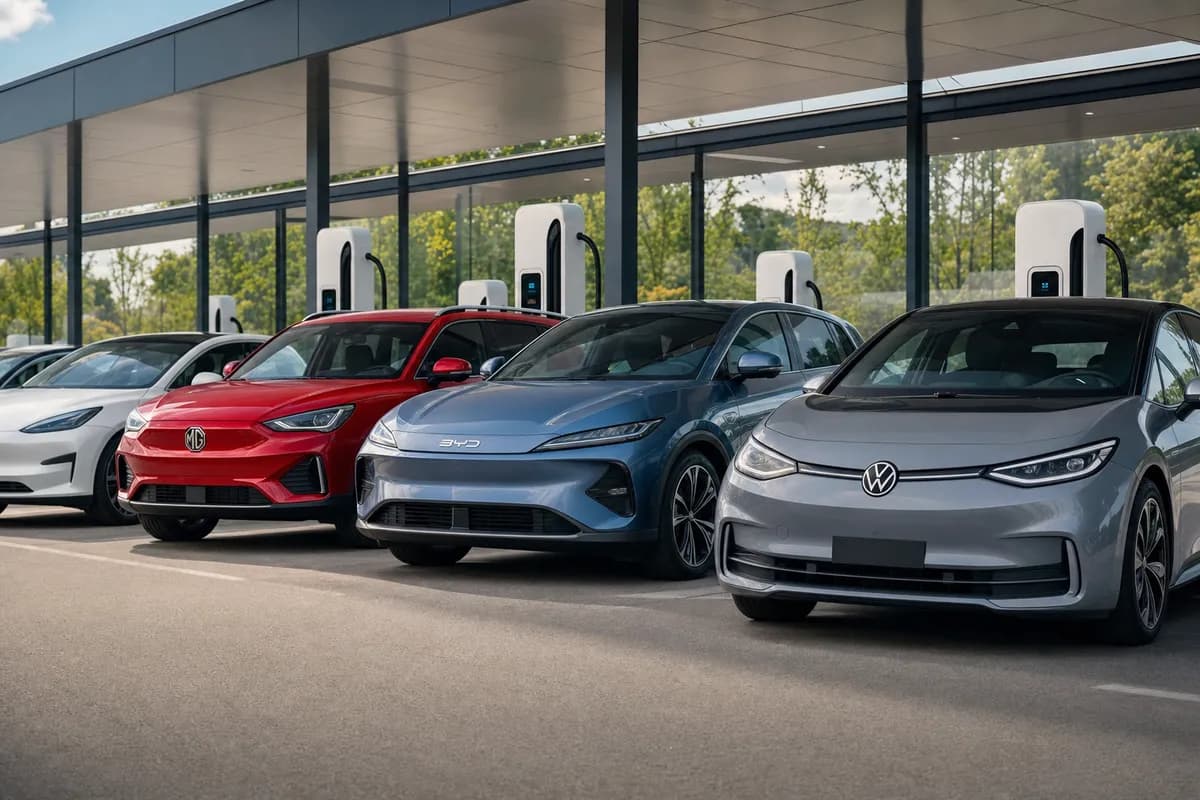
Washington’s campaign against Chinese-connected vehicles is moving from broad warning to concrete rulemaking, and that shift could matter for what Americans can actually buy in 2026 and 2027.
Washington’s campaign against Chinese-connected vehicles is moving from broad warning to concrete rulemaking, and that shift could matter for what Americans can actually buy in 2026 and 2027. Lawmakers and federal agencies are now focused less on traditional tariffs alone and more on the software, sensors, telematics hardware, and data links inside modern vehicles. That matters because even if a low-cost EV from BYD, MG, Geely, or another Chinese automaker never establishes a large U.S. dealer network, proposed restrictions could still block certain imports, limit software use, and tighten the path for any vehicle with Chinese-connected systems. For buyers, the result could be fewer low-cost EV choices, slower price pressure on established brands, and a U.S. market that increasingly favors Ford, GM, Tesla, Hyundai, and other manufacturers with cleaner supply-chain and software compliance stories.
Why Chinese EV restrictions in 2026 are now about software, not just tariffs
The political case against Chinese vehicles in the U.S. has been building for years, but the 2026 debate is more specific than earlier calls for broad trade retaliation. At issue is the idea that modern connected vehicles are not just cars but rolling data platforms. They collect location information, driver behavior, camera feeds, biometric inputs in some cases, and detailed telemetry from batteries, motors, and onboard networks. U.S. officials increasingly argue that vehicles with Chinese-linked hardware or software could create national-security risks if that data is accessed remotely or if critical systems can be manipulated through over-the-air updates.
That concern accelerated after the Biden administration’s 2024 move to sharply increase tariffs on Chinese EVs, pushing the effective tariff rate on many Chinese-made electric cars to more than 100 percent. That tariff wall already made direct imports of mass-market Chinese EVs commercially unrealistic. But tariffs alone do not address connected vehicle architecture, and that is why proposed connected vehicle rules have become the next front.
By May 2026, pressure in Congress is centered on two related questions:
- Should the U.S. prohibit or restrict connected vehicle software and hardware sourced from Chinese entities?
- Should vehicles using those systems be blocked from import, sale, or operation in certain forms?
The broad target is not just finished cars wearing Chinese badges. It could also include vehicles assembled elsewhere but using Chinese-developed telematics control units, advanced driver assistance software, cellular modules, cameras, lidar or radar components, or cloud-connected infotainment systems.
That makes this more consequential than a standard trade fight. The next round of restrictions could shape which cars enter the U.S., how they are configured, and whether automakers must redesign vehicles specifically for the American market.
Which BYD, MG, and other vehicles could realistically be blocked
For American shoppers, the most obvious question is simple: which models could actually be kept out? The short answer is that BYD U.S. ban has become political shorthand, but the issue extends well beyond BYD and far beyond any one badge.
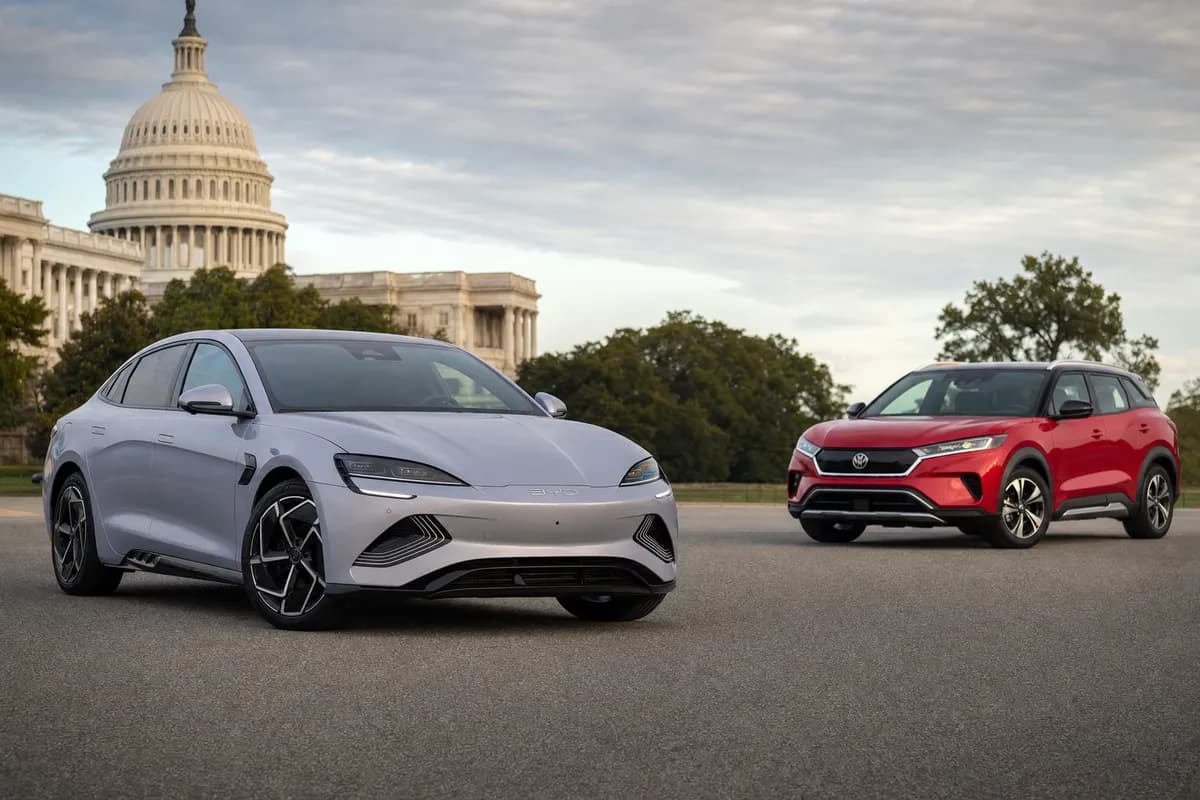
BYD: the headline name, but not a current retail player in the U.S.
BYD is the world’s largest EV maker by volume when battery-electric and plug-in hybrid sales are combined, and it has become a symbol of China’s manufacturing scale and low-cost battery advantage. Models like the Seagull, Dolphin, Atto 3, Seal, Seal U, and Song Plus have demonstrated how aggressively Chinese automakers can price EVs in Europe, Latin America, Southeast Asia, and Australia.
But BYD still does not sell passenger EVs directly in the U.S. retail market. In practical terms, steep tariffs already make a direct consumer-market entry highly unlikely in 2026. New connected vehicle restrictions would make that path even harder by adding software and hardware compliance barriers on top of tariffs.
That means vehicles most likely to be affected include:
- BYD Seagull/Dolphin, if BYD ever explored a U.S. entry through imports
- BYD Seal and Atto 3, which would face both tariff and connectivity scrutiny
- BYD commercial vehicles, especially buses or fleet products with telematics systems, depending on procurement and security rules
In other words, BYD is politically central but commercially limited in the U.S. for now. The restrictions matter because they keep it that way.
MG, Geely brands, and Chinese-built vehicles from global groups
MG, controlled by China’s SAIC, is another brand often mentioned whenever the U.S. discusses Chinese EV imports. MG has had success in Europe, Australia, and other markets with models such as the MG4 EV and ZS EV. Those vehicles are exactly the kind of relatively affordable imports that could disrupt the U.S. market if trade and regulatory barriers were lower.
Under a tougher 2026 rule framework, vehicles that could be blocked or rendered commercially nonviable would likely include:
- MG4 EV, a compact hatchback seen globally as a value-focused Tesla Model 3 alternative
- MG ZS EV, a lower-cost electric crossover
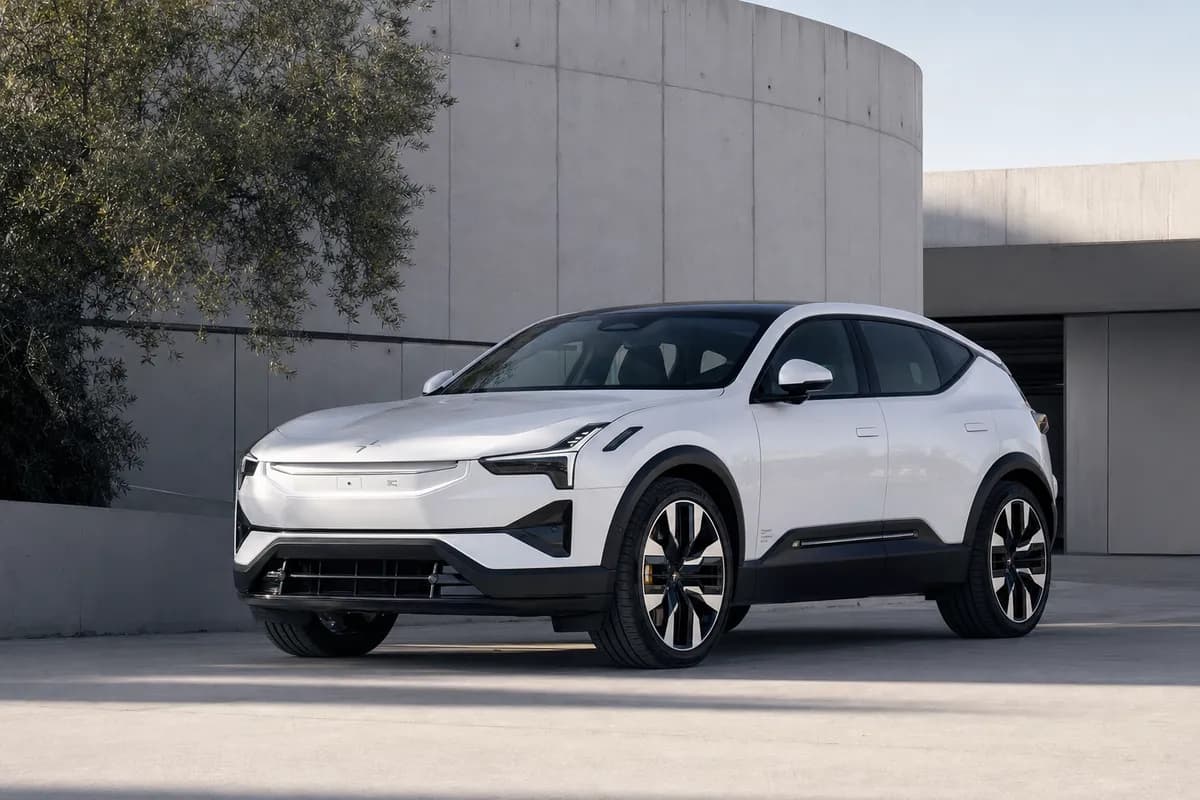
- Polestar models with Chinese production or software exposure, depending on sourcing details and final rule language
- Volvo or Lotus vehicles with certain Chinese-connected components, if restrictions are broad enough to reach systems rather than brand nationality alone
- Future Geely, Zeekr, NIO, Xpeng, or Chery exports should any attempt direct U.S. entry
This is where the debate becomes more complicated. A vehicle does not have to be built in China by a Chinese brand to be caught in a regulatory net. If the rules focus on “connected vehicle” systems, regulators may look at the origin of software stacks, communication modules, cloud back-end links, or supplier ownership.
The most important distinction for 2026–2027 may not be whether a car is “Chinese” in a branding sense, but whether regulators classify its digital architecture as tied to a prohibited foreign adversary supply chain.
How proposed rules could affect 2026–2027 buyers in the real world
For consumers, this is not just a Washington policy story. It affects price, model choice, and timing.
1. Fewer cheap EVs at the bottom of the market
If Chinese brands were able to enter the U.S. without major barriers, they would likely target the most underserved part of the EV market: affordable compact cars and crossovers. That is where U.S. shoppers still face thin choices. As of 2026, many mainstream EVs from American and Korean brands still transact well above the level where a true mass-market shift happens, even after incentives.
Chinese automakers have shown globally that they can profitably sell smaller EVs at prices that undercut Western rivals. Keeping those vehicles out means U.S. buyers in 2026 and 2027 are more likely to face a market dominated by:
- Tesla Model 3 and Model Y at the lower end of the premium-mainstream band
- Chevrolet Equinox EV and Blazer EV in the crossover space
- Ford Mustang Mach-E and F-150 Lightning at higher average transaction prices
- Hyundai Kona Electric, Ioniq 5, Kia EV6, and Kia EV9 from Korean manufacturers
The result is less downward price pressure than might exist in a more open market.
2. Some vehicles may need U.S.-specific software and hardware
Even automakers that are not primarily identified as Chinese could be forced to create special U.S. configurations if they rely on Chinese-origin telematics, connectivity modules, or advanced software integration. That could raise costs, delay launches, or lead brands to skip the U.S. entirely for some models.
For buyers, that means 2027 model-year vehicles may arrive later, with different features, or in narrower trims if automakers decide the engineering burden is too high.
3. Used and gray-market imports remain unlikely
Some consumers assume that if a vehicle is blocked from mainstream sale, it might still appear through smaller import channels. That is improbable for modern EVs if software and connectivity rules become central. Compliance would not just be about crash or emissions certification. It could involve digital systems that regulators view as noncompliant by design.
4. Buyer attention will shift toward sourcing transparency
In the gasoline era, most consumers paid limited attention to the country of origin of a vehicle’s software stack. In the 2027 EV market, that may change. Buyers may increasingly hear about whether their car’s connectivity systems, autonomous-driving features, or cloud services rely on suppliers from China, even if the vehicle itself is assembled in North America.
What it means for Ford, GM, Tesla, and the broader American EV market
For American automakers, tougher restrictions create both protection and pressure.
Ford and GM gain breathing room, but not a free pass
Ford and GM have a clear short-term interest in keeping ultra-low-cost Chinese EV competition out of the U.S. market. Neither company is currently positioned to match the kind of small-car EV pricing BYD or SAIC can achieve in overseas markets. Restricting Chinese-connected vehicles reduces the risk of a sudden price war at the bottom end of the segment.
That breathing room matters because both automakers are still balancing EV investment against slower-than-once-expected adoption rates. GM is scaling Ultium-based products including the Chevrolet Equinox EV, Chevrolet Silverado EV, GMC Sierra EV, Cadillac Lyriq, and Cadillac Escalade IQ. Ford is leaning on the Mustang Mach-E, F-150 Lightning, E-Transit, and next-generation low-cost EV plans still in development.
But protection is not the same as competitiveness. If Chinese brands are blocked, Ford and GM still need to solve the affordability problem themselves. Otherwise, the U.S. market remains supply-constrained in the very segment policymakers say they want to expand.
Tesla benefits from reduced import pressure, but faces its own China exposure
Tesla is in a more nuanced position. On one hand, keeping BYD, MG, NIO, Xpeng, and others out of the U.S. preserves Tesla’s relative strength in EV scale and pricing. The Model 3 and Model Y remain difficult benchmarks for legacy automakers to match on margin and volume.
On the other hand, Tesla’s global business is deeply intertwined with China. Its Shanghai factory is central to exports and global production economics, and Tesla’s supply chain has significant exposure to Chinese battery materials and components. That does not make Tesla a primary target of a U.S. ban aimed at imported Chinese-branded connected vehicles, but it does illustrate a broader industry reality: fully disentangling from China is extremely difficult.
If new rules become expansive enough, every automaker with Chinese software, electronics, or supplier exposure could face compliance costs. Tesla may be better positioned than some rivals to adapt quickly, but it is not immune to the underlying complexity.
Hyundai, Kia, Rivian, and foreign automakers may also gain
The competitive upside is not limited to Detroit. Hyundai and Kia have built strong EV momentum in the U.S. with products that compete effectively on range, charging speed, and design. Rivian occupies a different segment, but it also benefits indirectly from a market with fewer imported Chinese challengers.
European and Japanese automakers could also benefit, assuming they can certify that their vehicles’ connected systems comply with U.S. rules. In that sense, the restrictions may not simply boost domestic manufacturers; they may strengthen any brand that can show low-risk digital sourcing and North American or allied-country production.
The bigger picture: security policy is now industrial policy
The most important context is that these restrictions are doing two jobs at once. Publicly, they are framed as national-security measures for connected vehicles. Economically, they also function as industrial policy, shaping who gets to compete in the U.S. auto market during the next phase of EV adoption.
That dual purpose explains why the debate has such momentum. Politically, it is easier to build bipartisan support around data security and remote-access risk than around straightforward market protection. But the market effects are real:
- Chinese automakers remain effectively locked out of the U.S. mainstream EV market.
- American and allied automakers retain more time to localize batteries, software, and assembly.
- Consumers likely face higher prices and fewer low-cost options in the near term.
- The industry accelerates the separation of critical vehicle software and electronics from Chinese suppliers.
That last point may prove the most durable. Over time, automakers selling in the U.S. may treat software provenance and telematics sourcing the way they already treat safety certification or emissions compliance: as a baseline requirement, not a political afterthought.
Verdict: expect a tighter U.S. market, fewer Chinese choices, and more scrutiny for every connected EV
The likely outcome of the 2026 push is not a dramatic last-minute showdown over BYD showrooms in America. It is a more systematic tightening of the rules around what kinds of connected vehicles can enter the U.S. and what components they can use. In practice, that means the chances of buying a new BYD, MG, NIO, Xpeng, or other mainstream Chinese EV in the United States by 2027 remain extremely low.
For shoppers, the near-term effect is mixed. Tighter rules may satisfy security concerns and support domestic manufacturing, but they also reduce the odds of a rapid wave of cheaper imported EVs forcing prices down. For Ford, GM, and Tesla, that is a strategic advantage, though not a substitute for building affordable, profitable EVs that Americans actually want.
The bottom line is straightforward: Chinese EV restrictions 2026 are increasingly about digital control, not just import duty. And as those rules harden, the American EV market heading into 2027 will likely be more protected, more fragmented by software origin, and still searching for the affordable mass-market breakthrough that Chinese competition might otherwise have accelerated.
Affiliate disclosure: This article contains affiliate links. RevvedUpCars may earn a small commission on qualifying purchases at no extra cost to you.