California’s latest move to electrify its truck market is not a modest tweak. In May 2026, state officials unveiled a new $1 billion electric truck rebate program aimed at cutting the upfront cost of battery-electric pickups and commercial trucks for individual buyers, small…
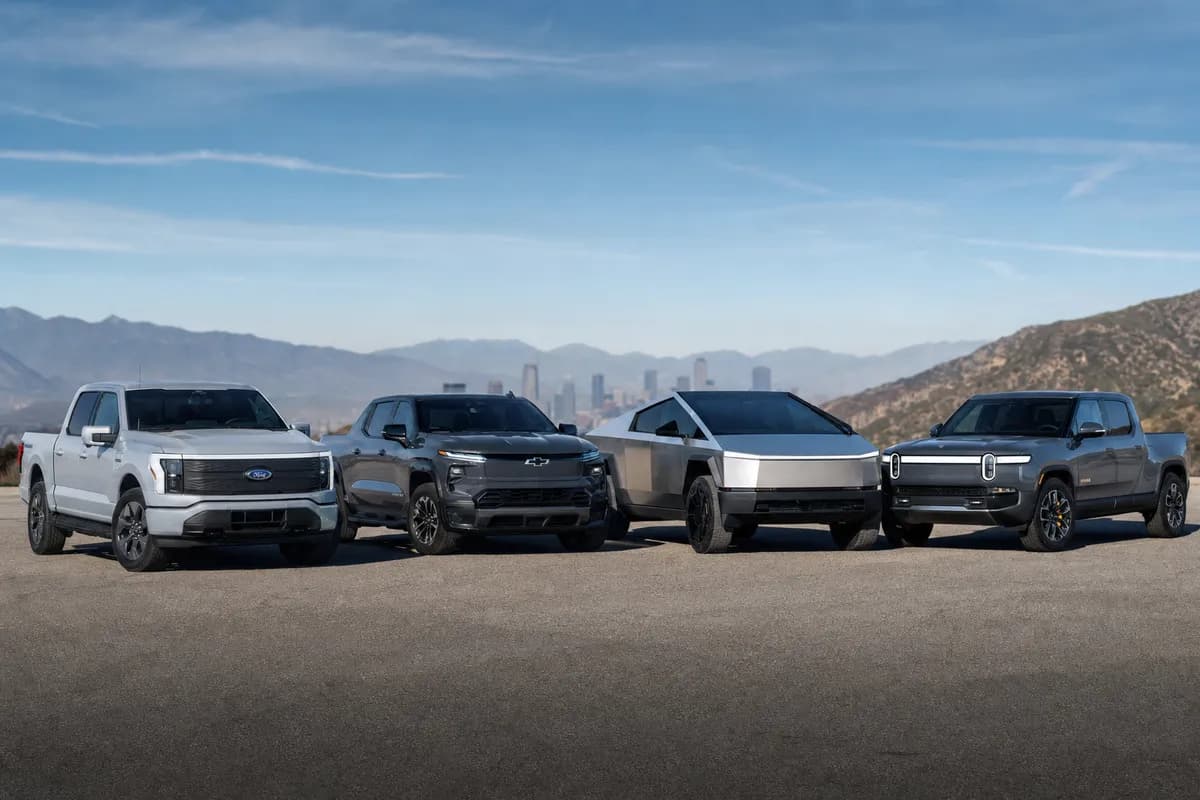
California’s latest move to electrify its truck market is not a modest tweak. In May 2026, state officials unveiled a new $1 billion electric truck rebate program aimed at cutting the upfront cost of battery-electric pickups and commercial trucks for individual buyers, small businesses, and larger fleets. For shoppers considering a Ford F-150 Lightning, Chevrolet Silverado EV, Tesla Cybertruck, or Rivian R1T, the program could significantly change the math. It also arrives at a pivotal moment: U.S. automakers are facing tougher price pressure from global EV competitors, while California continues to use its market size to steer the broader industry.
What California’s New $1 Billion Electric Truck Rebate Program Does
The new program, framed as a statewide incentive for zero-emission pickups and work trucks, is designed to accelerate adoption in one of the country’s most influential vehicle markets. California has long offered EV incentives through a mix of state, local, and utility-backed programs, but this initiative is notable for both its scale and its explicit focus on trucks.
At a basic level, the California electric truck rebate 2026 program reduces the purchase or lease cost of eligible battery-electric trucks sold to California residents and fleets. While final implementation details can vary by income bracket, business size, gross vehicle weight rating, and whether a truck is used for personal or commercial purposes, the structure announced by the state points to several key features:
- Point-of-sale or fast-processed rebates to reduce upfront cost rather than relying only on later tax filing.
- Higher incentive levels for commercial and high-mileage users, especially small businesses, contractors, delivery operators, municipalities, and public fleets.
- Additional support for lower-income households and disadvantaged communities, consistent with California’s broader clean transportation policy.
- Eligibility rules tied to vehicle price, emissions status, and likely domestic certification and registration requirements.
That means this is not simply another generic EV subsidy. It is a targeted effort to move more truck buyers—arguably the most difficult and strategically important part of the light-vehicle market—into electric models.
Why trucks? Because pickups are central to U.S. profits, fuel consumption, and brand loyalty. If California can materially lower the cost barrier for electric pickups, it can influence production plans, dealer strategy, charging investment, and future product planning well beyond the state’s borders.
Which 2026 and 2027 Electric Pickups Could Qualify
The biggest question for consumers is straightforward: which trucks are likely to qualify? The answer depends on final state rules, including MSRP caps, battery sourcing considerations where stacked with federal incentives, and vehicle classification. But based on the current electric pickup market, several major models are positioned to benefit from 2027 EV pickup incentives in California.
Ford F-150 Lightning
The Ford F-150 Lightning rebate California story is likely to be one of the most important. Ford’s electric pickup remains one of the best-known and most mainstream battery-electric trucks in the U.S. market. Its conventional design, broad dealer network, and strong brand recognition make it a natural candidate for both retail buyers and commercial operators.
Lower and mid-level Lightning trims are the most obvious fit for rebate eligibility, especially if California uses MSRP caps to concentrate incentives on more attainable configurations. Ford also has a strong case in fleet channels, where Pro versions of the Lightning have already attracted interest from utilities, municipalities, and service businesses.
If California allows commercial stacking with other regional or utility incentives, fleet buyers could see especially meaningful savings on work-spec Lightnings.
Chevrolet Silverado EV
The Chevrolet Silverado EV incentive outlook is similarly strong, particularly for WT and lower-cost fleet-oriented versions. GM has positioned the Silverado EV to serve both retail and work-truck buyers, and California’s new funding could boost its competitiveness in a state where total cost of ownership matters as much as badge loyalty.
Silverado EV variants with large battery packs and higher trims may face tighter eligibility if state rules include transaction-price or MSRP ceilings. But from a policy standpoint, California wants trucks that displace gasoline miles at scale, and the Silverado EV’s utility-focused versions fit that goal well.
Tesla Cybertruck
The Tesla Cybertruck Rivian R1T tax credit conversation becomes more complicated. The Cybertruck has generated enormous attention, but qualification under state rebate rules will likely depend on trim, weight classification, final sale price, and whether California excludes very high-priced vehicles from full benefits.
Entry versions could be better positioned than expensive dual-motor or tri-motor configurations if the state emphasizes affordability. California policymakers generally want broad market transformation, not public subsidies flowing primarily to luxury purchases. That does not automatically disqualify the Cybertruck, but it does make its incentive path less straightforward than for work-oriented trims of the Lightning or Silverado EV.
Rivian R1T
The Rivian R1T faces a similar challenge. It is one of the most capable and refined electric pickups on sale, but it has also typically occupied a more premium pricing tier. If California’s new rebate structure includes strict MSRP limits, some R1T variants may only partially qualify or miss out entirely.
Still, Rivian has an advantage in California brand visibility and EV-minded buyers. If the company introduces lower-cost 2026 or 2027 configurations, or if the state creates a carveout for trucks below certain equipment thresholds, the R1T could remain part of the incentive conversation.
Other 2026–2027 electric pickups to watch
California’s truck rebate program could also shape the prospects of newer or upcoming entrants, depending on launch timing and final certifications. Models to watch include:
- GMC Sierra EV, especially work-focused trims if priced competitively enough to qualify.
- Ram 1500 REV, if production and pricing align with California’s eligibility rules.
- Scout electric pickup, depending on launch timing and market positioning.
- Commercial electric pickups and chassis-cab derivatives aimed at contractors, local delivery, utilities, and municipal fleets.
In practical terms, the trucks most likely to benefit are the ones California policymakers most want to push: mainstream, high-volume, lower-priced, and heavily used vehicles.
How Much Drivers and Fleets Could Save
California has not framed the program as a one-size-fits-all discount, and that matters. The savings will likely vary widely depending on buyer type and truck class.
For individual buyers, rebates are expected to land in a range meaningful enough to influence monthly payments, especially when combined with financing, local utility support, and potentially federal incentives where available. For fleets, per-vehicle support could be much more substantial, particularly for commercial trucks that log high annual mileage and offer large emissions reductions.
That creates three likely tiers of benefit:
- Retail buyers of eligible electric pickups get a moderate but visible upfront discount.
- Income-qualified households and buyers in priority communities receive enhanced support.
- Commercial operators and fleets see the deepest savings, especially on work trucks with clear business use cases.
Here is where the market implications become sharper. A rebate of even a few thousand dollars can shift a truck buyer from “maybe later” to “now,” particularly when fuel and maintenance savings are added in. For fleets, multiplying that by dozens or hundreds of units can materially change procurement decisions.
Consider the operating-cost side. Electric pickups can offer lower energy costs than gasoline trucks when charged at favorable commercial or off-peak rates, and they generally reduce routine maintenance items such as oil changes and some brake wear. The biggest barrier has been upfront price. California’s $1 billion program is meant to attack that barrier directly.
For a fleet manager comparing an electric work truck with a gasoline half-ton pickup, the decision is increasingly about:
- Acquisition cost after rebates and credits
- Charging infrastructure costs
- Fuel savings over the vehicle’s duty cycle
- Maintenance and uptime
- Residual value and replacement planning
If the state rebate is generous enough, certain electric trucks could reach cost parity much sooner than expected. That would be a significant win for Ford and GM, whose electric pickup strategies depend not only on retail demand but on steady fleet volume.
Why This Matters for Ford, GM, Tesla, Rivian, and the Wider U.S. Truck Market
California’s influence extends well beyond its own borders. It is not just a large state market; it is a policy laboratory that often nudges automakers toward broader changes in product mix and compliance strategy.
For Ford, this program supports the argument that the F-150 Lightning can be more than an early-adopter product. If state incentives help bring more commercial and mainstream buyers into the fold, Ford gains a stronger base for scaling production, improving utilization, and defending its position in the electric truck race.
For General Motors, the timing is equally important. GM has been building out a wide EV portfolio, and California’s incentive push gives the Silverado EV a better shot in a market where range, usability, and total cost of ownership all matter. The company’s work-truck strategy could be a particular beneficiary if rebate rules favor fleet and business applications.
For Tesla, the picture is mixed. The Cybertruck’s brand power is undeniable, but California’s rebate approach may reward affordability and work utility more than image or performance. Tesla can still benefit from strong California demand, yet the company may not capture the same relative advantage if the most expensive configurations sit outside key thresholds.
For Rivian, the challenge is more fundamental. Rivian helped define the premium electric pickup segment, but California’s new program is likely to favor trucks that can move in larger numbers at lower prices. Unless Rivian broadens access with lower-cost trims or future products, the biggest public incentives may bypass much of its lineup.
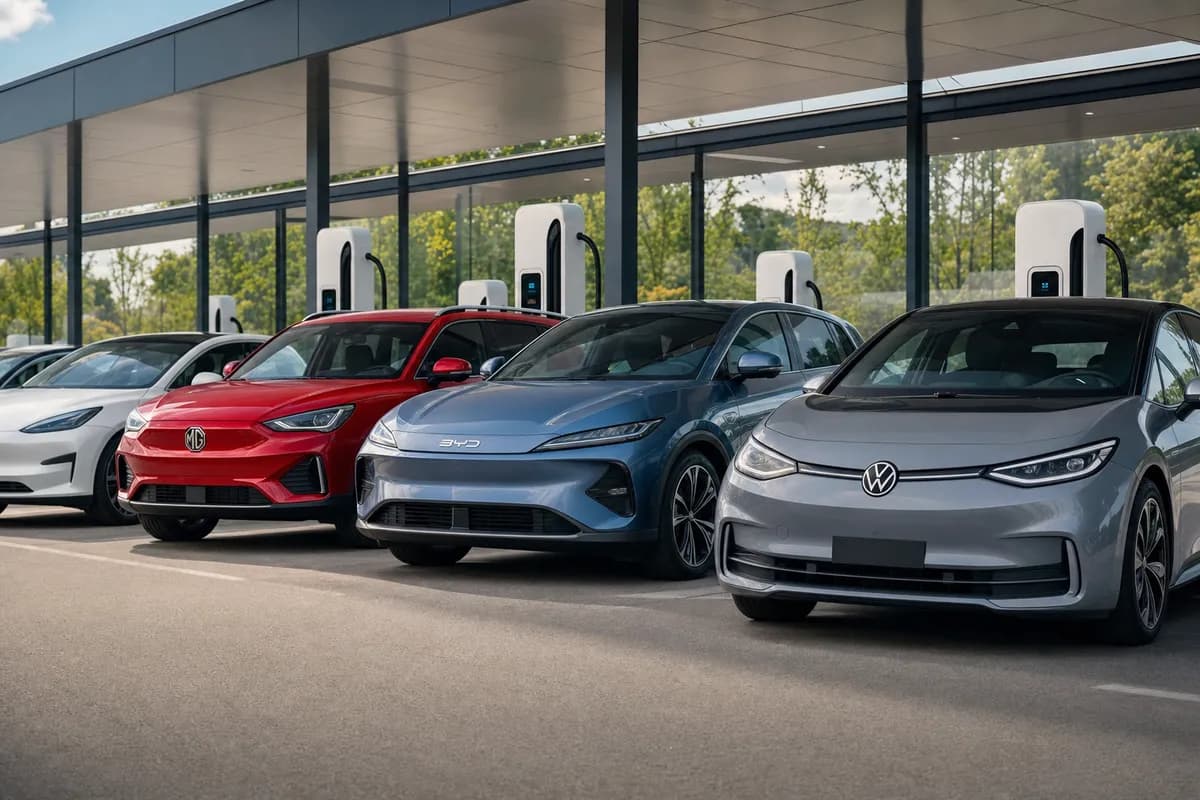
The broader strategic backdrop is rising global EV competition. Chinese manufacturers and other overseas players continue to push down battery and vehicle costs, even if tariffs and trade barriers limit direct U.S. entry. American automakers know the pressure is real. California’s rebate program effectively gives domestic and U.S.-market truck makers another tool to defend and accelerate their electric transition while the market is still forming.
It also sends a signal to suppliers, charging companies, and fleet operators: electric trucks are not a niche compliance exercise anymore. They are becoming a central battleground in the next phase of the U.S. auto market.
The Fine Print Buyers Should Watch Before Assuming They Qualify
As always with EV incentives, headline numbers do not tell the whole story. Buyers should pay close attention to the actual program rules before making a purchase decision. Several factors could determine whether a truck qualifies, and at what level:
- MSRP or transaction-price caps, which could exclude high-end trims.
- Vehicle classification rules, particularly for heavier trucks.
- Registration and residency requirements for California buyers.
- Commercial-use verification for fleet applicants.
- Income thresholds or enhanced rebates for qualifying households.
- Interaction with federal incentives, leases, and utility programs.
- Funding availability, since high-demand programs can be oversubscribed.
That means shoppers looking for a Ford F-150 Lightning rebate California deal or comparing a Chevrolet Silverado EV incentive against a Tesla Cybertruck Rivian R1T tax credit package should not assume every trim receives the same treatment.
In many cases, the best-value electric truck may not be the one with the biggest battery, fastest acceleration, or most expensive trim. It may be the configuration that lands under the rebate ceiling and delivers the best all-in ownership cost.
Verdict: A Big Incentive With the Potential to Redraw the EV Pickup Map
California’s new $1 billion truck rebate program is one of the most consequential state-level EV incentive moves in years. It matters because it targets the most profitable and politically important part of the U.S. vehicle market: pickups and work trucks.
In the near term, the clearest winners are likely to be mainstream and fleet-friendly models such as the Ford F-150 Lightning and Chevrolet Silverado EV, especially in lower-cost trims that fit the state’s affordability goals. The Tesla Cybertruck and Rivian R1T could still benefit, but their path depends more heavily on pricing and eligibility details.
The bigger takeaway is that California electric truck rebate 2026 policy is not just about helping a few buyers save money. It is about shaping what kinds of electric trucks get built, sold, financed, and deployed at scale. If the program works as intended, it could accelerate adoption, strengthen fleet demand, and push automakers toward more accessible truck pricing just as 2027 EV pickup incentives become a larger factor in purchase planning.
For consumers and fleets, the message is simple: this is the kind of policy that can turn an electric truck from an interesting option into the financially smarter one. And for the industry, it is another reminder that the next phase of the pickup wars will be fought on price, incentives, and real-world utility—not just headline specs.
Affiliate disclosure: This article contains affiliate links. RevvedUpCars may earn a small commission on qualifying purchases at no extra cost to you.