Honda’s latest financial results made headlines for a stark reason: the company posted its first annual loss in roughly 70 years, a stunning moment for one of the industry’s most disciplined manufacturers. But for U.S.
Honda’s latest financial results made headlines for a stark reason: the company posted its first annual loss in roughly 70 years, a stunning moment for one of the industry’s most disciplined manufacturers. But for U.S. car buyers, the more important story is what Honda does next. And the clearest answer so far is this: the company is leaning harder into hybrids for the 2026 and 2027 model years, even as it continues to talk about a longer-term battery-electric future. That shift matters because it will shape which versions of the Civic, CR-V, Accord, Pilot, and key Acura models get priority, how fast Honda expands electrified choices in America, and what buyers should realistically expect from the brand’s EV rollout plans.
Honda’s annual loss is the headline, but the hybrid pivot is the real product story
The phrase Honda annual loss 2026 is already becoming shorthand for a broader strategic reset. A historic loss does not automatically mean Honda is in crisis in the consumer sense. It does, however, force sharper product decisions. In Honda’s case, that means putting more weight behind vehicles and technologies that can deliver volume, margins, and regulatory compliance without asking mainstream buyers to make a full jump to battery EVs before the market is ready.
That is where hybrids come in. Honda has been clear in recent product planning and public messaging that hybrids are not a stopgap. They are now central to its medium-term U.S. strategy. The company has repeatedly signaled that hybrid variants will account for a much larger share of sales in core nameplates, especially in North America, where the Civic hybrid, Accord hybrid, and CR-V hybrid already sit close to the center of the brand’s volume story.
The logic is straightforward:
- Hybrids sell in meaningful volume today, especially in compact and midsize segments.
- They improve fleet fuel economy and help Honda manage tighter emissions rules.
- They preserve familiar ownership habits for buyers who are not ready for charging infrastructure, higher EV transaction prices, or range anxiety.
- They can be scaled across multiple models more quickly than a full EV lineup built around new dedicated architectures and supply chains.
For U.S. buyers, that makes the Honda hybrid pivot much more than a corporate finance response. It is the practical product strategy likely to define the 2026 and 2027 model years.
Which Honda models are most likely to benefit in 2026 and 2027
If Honda is going to extract more value from hybrids, it will do so first in the vehicles Americans already buy in large numbers. Some nameplates are obvious winners.
Civic: hybrid becomes a core version, not a niche trim
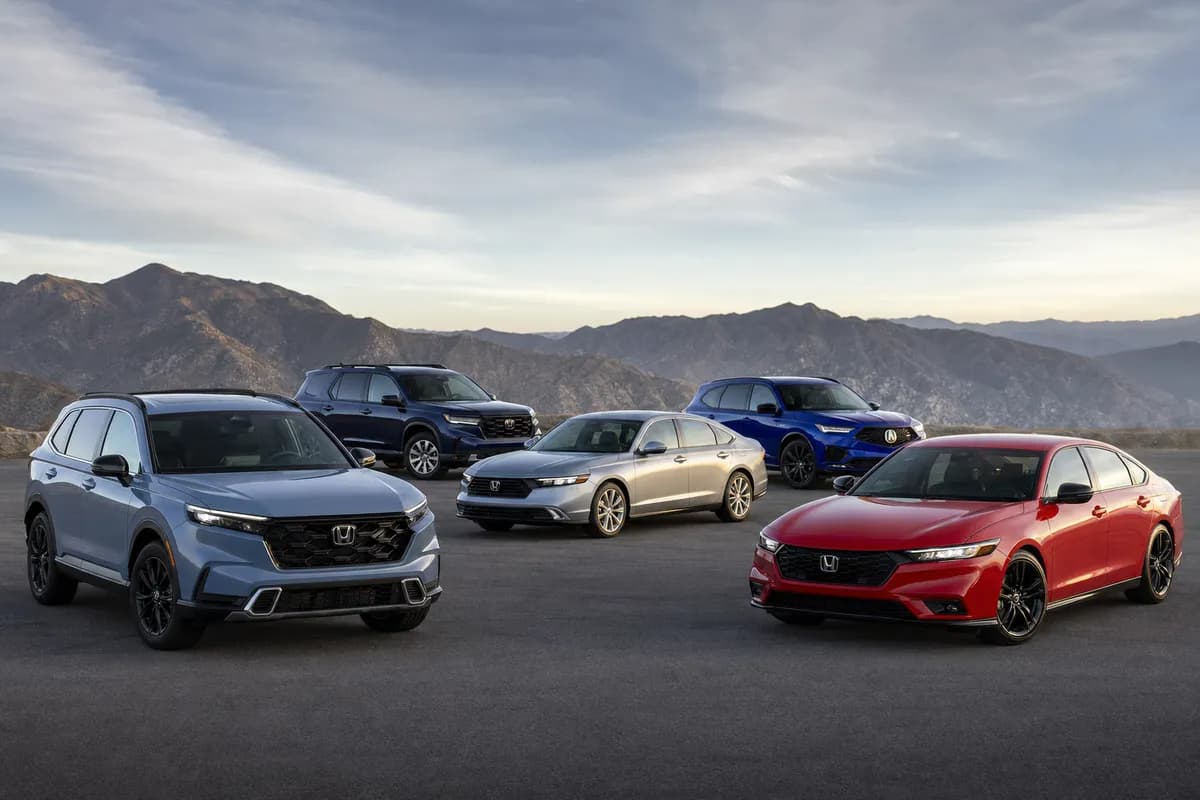
The Civic is one of the clearest beneficiaries. Honda already moved to make the Civic hybrid a major part of the lineup, not an experimental offshoot. That is significant because the compact-car segment has become increasingly difficult for automakers to profit from without either moving upscale or adding highly efficient electrified versions that justify pricing and improve regulatory performance.
For the 2026 model year, expect Honda to continue treating the Civic hybrid as one of the lineup’s headline variants in both sedan and hatchback form where applicable. The likely direction is simple: more production emphasis, broader dealer availability, and stronger positioning relative to non-hybrid trims. For buyers, that means the Civic hybrid is increasingly becoming the default “smart” Civic rather than the special one.
CR-V: perhaps the biggest winner of all
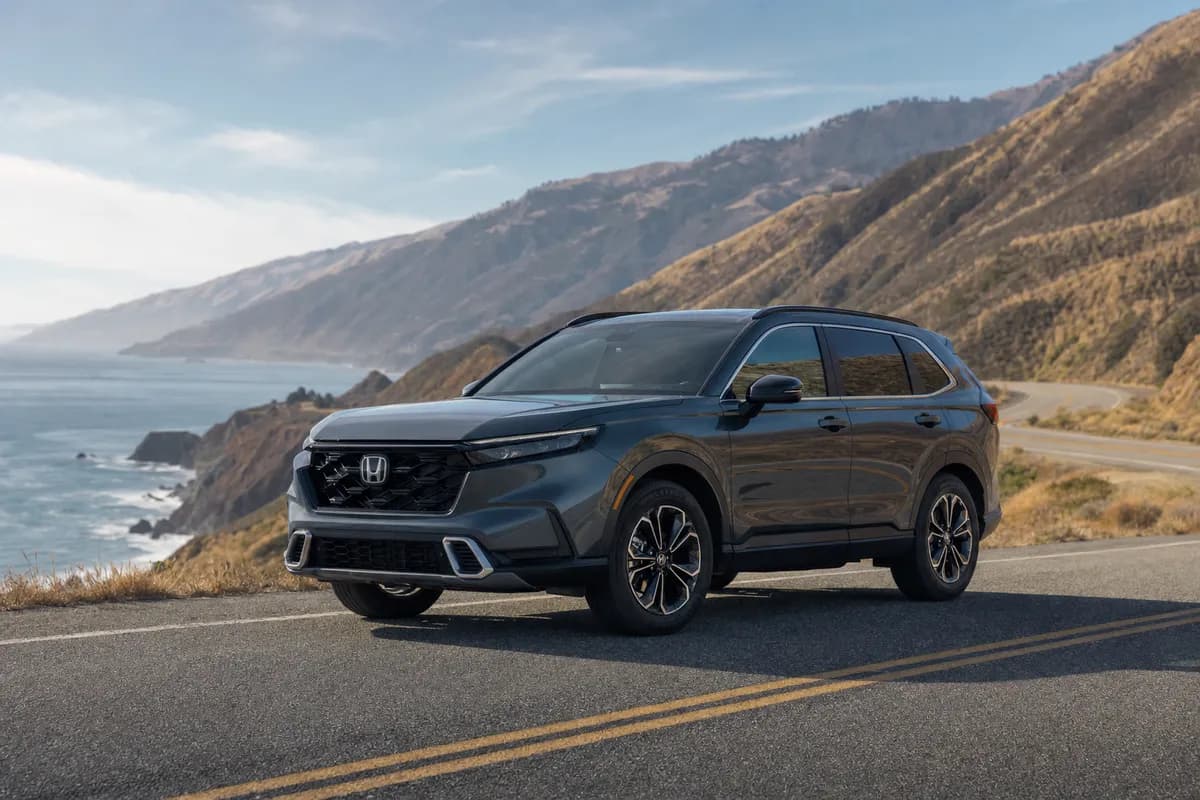
The CR-V is arguably the most important model in Honda’s U.S. portfolio, and it may be the strongest proof point for the company’s hybrid-first near-term plan. Compact SUVs remain the heart of the U.S. market, and a CR-V hybrid gives Honda a way to meet consumers where they are without forcing them into a full EV.
Expect the 2027 Honda models conversation to include an even bigger hybrid role for the CR-V, particularly if gas prices, emissions pressure, and consumer demand continue to support electrified crossovers. The CR-V hybrid already has a clear place in the lineup. What could change in 2026 and 2027 is not whether it exists, but how dominant it becomes within the model mix.
That matters because the CR-V sits at the intersection of profitability and compliance. It is exactly the kind of vehicle Honda needs to get right if it wants to stabilize earnings while still moving toward cleaner powertrains.
Accord: the sedan where hybrid can carry the lineup
The Accord is another natural fit for Honda’s renewed hybrid emphasis. In practical terms, the Accord hybrid already represents the most compelling version of Honda’s midsize sedan for many buyers, combining strong efficiency with the refinement expected in the segment.
For 2026, Honda is likely to keep pushing the Accord hybrid as the premium mainstream choice within the range. If the company decides to streamline future trim structures, the hybrid powertrain could take on even greater weight in the lineup. That would mirror the broader industry trend in which automakers use electrified variants to define the upper half of their core passenger-car offerings.
Pilot: less certain, but still worth watching
The Pilot is the wildcard in this discussion. Larger three-row SUVs are harder to electrify cost-effectively with hybrid systems while maintaining towing, packaging, and pricing targets. Honda has not made the Pilot a hybrid centerpiece in the same way it has with the CR-V or Accord.
Still, if the company is genuinely broadening its hybrid push for North America, the Pilot deserves attention. Whether that arrives as a full hybrid, a different electrified variant, or a delayed plan remains to be seen. U.S. buyers looking at 2026 and 2027 family SUVs should watch closely for product-planning signals here, because this is one of the biggest open questions in Honda’s lineup.
Acura: hybrids could matter almost as much as EVs
Acura is often discussed through the lens of EVs, but Honda’s financial pressure and hybrid recalibration could also affect how the premium brand evolves. Acura buyers tend to be more open to electrification, but they are also highly sensitive to performance, brand differentiation, and technology execution. That means hybrids can still play a strategic role, especially if Acura needs to bridge the gap between today’s internal-combustion portfolio and a slower-than-expected EV ramp.
What happens to Honda and Acura EV rollout plans now?
The key point is that Honda’s hybrid push does not mean EV plans disappear. It means timelines, priorities, and launch intensity may become more pragmatic. That distinction matters.
Honda has already shown a two-track approach to electrification. On one side, it has near-term EV programs, including vehicles developed with external partners. On the other, it has longer-range plans for in-house EV architectures, software, batteries, and manufacturing systems. The problem for every automaker right now is that the EV market is growing unevenly. Demand remains strong in some segments and regions, but mainstream adoption has not risen in a straight line. Pricing pressure, charging concerns, and softer-than-expected demand for some electric models have forced many brands to revisit cadence and capital allocation.
That brings us to Acura EV plans. Acura has already taken visible steps into EV territory, but the broader question is whether Honda accelerates additional premium EV launches or leans on hybrids and selective electrification while the market settles. Given the financial backdrop, the latter looks more likely in the short term.
Here is what U.S. buyers should expect:
- Honda is unlikely to abandon EVs, because regulatory, competitive, and long-term market forces still point in that direction.
- Honda may sequence EV launches more carefully, prioritizing segments and products with a better chance of acceptable margins and demand.
- Hybrids will likely carry more of the burden in 2026 and 2027, especially in high-volume mainstream models.
- Acura may continue as a technology-facing brand, but not necessarily with an aggressive all-at-once EV flood.
In other words, the most realistic outcome is not “Honda gives up on EVs.” It is “Honda slows the handoff and lets hybrids do more of the work.”
For buyers, the biggest near-term change is not the disappearance of EV ambition. It is the recognition that Honda’s most important electrified products in 2026 may still be hybrids, not battery-electric vehicles.
Why this matters for U.S. buyers more than the financial headline does
Consumers do not buy balance sheets. They buy products, monthly payments, fuel economy, reliability, and resale value. That is why the practical impact of Honda’s loss is more important than the symbolic shock of the headline.
For Honda U.S. buyers 2026, the hybrid strategy could actually produce a lineup better aligned with what the market currently wants. Consider the alternatives. A rapid EV expansion would require Honda to persuade mainstream buyers to accept higher prices and adapt to charging realities that still vary widely by location. A hybrid-heavy mix, by contrast, gives customers better fuel economy and lower emissions without changing the day-to-day ownership experience nearly as much.
There are several reasons this matters:
- Availability could improve for the most in-demand electrified trims, especially Civic, CR-V, and Accord hybrids.
- Pricing may remain more accessible than comparable EVs, even if hybrid trims carry a premium over base gasoline models.
- Resale strength could benefit if hybrids remain the sweet spot between fuel savings and usability.
- Honda’s reputation for efficiency and dependability is easier to extend through hybrids than through a rushed EV rollout.
There is also a competitive dimension. Toyota has spent years proving that a hybrid-centered strategy can deliver both scale and resilience, especially when EV demand is less predictable than some forecasts suggested. Honda’s latest pivot does not copy Toyota outright, but it does acknowledge the same market truth: many buyers still want electrification on familiar terms.
That puts pressure on rivals. Hyundai, Kia, Ford, Nissan, and others are all trying to balance hybrids, plug-in hybrids, and EVs across mixed demand conditions. If Honda sharpens its hybrid execution in core segments, it can defend share more effectively than if it tries to force an EV transition ahead of the market.
What to watch next for 2026 and 2027 Honda and Acura models
The next phase of this story will be less about one financial result and more about how Honda allocates engineering, production, and marketing resources. Buyers, dealers, and competitors should focus on a few concrete signals.
1. Hybrid mix in Civic, CR-V, and Accord sales
If Honda continues to raise the share of hybrid versions in these nameplates, that will confirm the pivot is not rhetorical. It will mean the company sees hybrids as the commercial backbone of its near-term U.S. strategy.
2. Whether Pilot or other larger Hondas gain meaningful electrification
This is one of the biggest product questions for 2027. If Honda extends hybrid technology further up the lineup, the pivot is broad. If it stays concentrated in cars and compact crossovers, Honda may be taking a more selective approach.
3. Acura’s balance between premium EVs and transitional electrification
Watch whether Acura’s future product announcements emphasize dedicated EV launches, hybrid bridges, or a mix of both. That will reveal how aggressively Honda is willing to fund premium EV expansion while under financial pressure.
4. Manufacturing and sourcing moves in North America
Product plans are only credible if Honda can build and source them efficiently. Keep an eye on battery investments, hybrid component supply, and North American production assignments. Those decisions will say more about Honda’s real priorities than any single press statement.
The verdict: Honda’s loss may speed a smarter transition, not a weaker one
Honda’s historic loss is unquestionably significant, and it raises hard questions about cost control, product timing, and capital discipline. But for shoppers, the most meaningful takeaway is not that Honda stumbled. It is that the company appears to be adjusting toward the part of the market that is actually working: hybrids.
That makes the near-term outlook for the Civic, CR-V, and Accord relatively clear. These are the models most likely to benefit from Honda’s renewed electrified focus, with the CR-V standing out as perhaps the single most important vehicle in the strategy. The Pilot remains a question mark, while Acura’s path will likely involve a more measured EV rollout than early industry hype once suggested.
So if you are tracking Honda annual loss 2026 headlines and wondering what they mean in your driveway, the answer is fairly practical. Expect more emphasis on hybrid trims, more realism around EV timing, and more attention to the high-volume models that can keep Honda competitive in the U.S. market. In 2026 and 2027, that may prove to be less dramatic than a wholesale EV sprint, but it is probably the more believable plan.
Affiliate disclosure: This article contains affiliate links. RevvedUpCars may earn a small commission on qualifying purchases at no extra cost to you.