The electric-vehicle market is no longer moving in one clean direction. Some automakers are delaying or rethinking battery-electric rollouts, while others are still pushing ahead with fresh products for 2026 and 2027.
The electric-vehicle market is no longer moving in one clean direction. Some automakers are delaying or rethinking battery-electric rollouts, while others are still pushing ahead with fresh products for 2026 and 2027. For shoppers, that split can be confusing: one brand is talking about “discipline” and hybrids, another is still adding dedicated EVs, and a third is quietly stretching launch timelines without canceling the vehicle outright. The result is a market where 2026 EV launches are still coming, but with more caution, more overlap with hybrids, and far more emphasis on getting pricing, demand, and production timing right.
That matters because the next two model years are shaping up to be a transition period rather than a straight-line EV surge. General Motors, Hyundai, Kia, Volvo, and Porsche still have important electric models either newly arriving, expanding, or expected to remain on track into 2026 and 2027. At the same time, a broader wave of automaker EV delays shows how quickly product plans can change when demand growth cools, charging concerns persist, and hybrids become a more profitable bridge.
For buyers, the key question is not whether EVs are “winning” or “slowing.” It is which vehicles are actually still likely to show up on time, what delays mean if you are waiting to buy, and how a more aggressive hybrid strategy 2026 could reshape the choices on dealer lots.
Why the EV market is splitting between new launches and pullbacks
The current divide is less contradictory than it looks. Automakers are not abandoning EVs wholesale; they are separating high-confidence programs from riskier ones. In practical terms, that means models based on already-funded platforms, existing battery supply chains, or plants that are already tooled up are more likely to stay on track. Programs requiring major new factory investment, uncertain volume, or premium pricing in a softer market are more vulnerable to delay.
Several factors are driving that shift:
- Demand growth has slowed from its earlier pace. EV sales are still rising in many markets, but not quickly enough to support every aggressive launch timetable set during the peak of the EV boom.
- Price pressure is intense. Tesla price cuts, Chinese competition in some markets, and higher incentives elsewhere have made margins harder to protect.
- Charging and infrastructure concerns remain real. Mainstream buyers are still more hesitant than early adopters.
- Hybrids are selling strongly. For many brands, hybrids now offer a profitable, lower-risk way to cut emissions and keep customers moving away from pure gasoline vehicles.
- Capital discipline is back. Automakers are now under pressure to match factory spending and battery investments to actual market demand rather than aspirational volume targets.
That is why 2026 and 2027 are likely to produce a mixed market: some important battery-electric launches will happen, but they will land alongside more hybrid additions and more flexible production planning.
Which upcoming GM, Hyundai, Kia, Volvo, and Porsche EVs are still on track
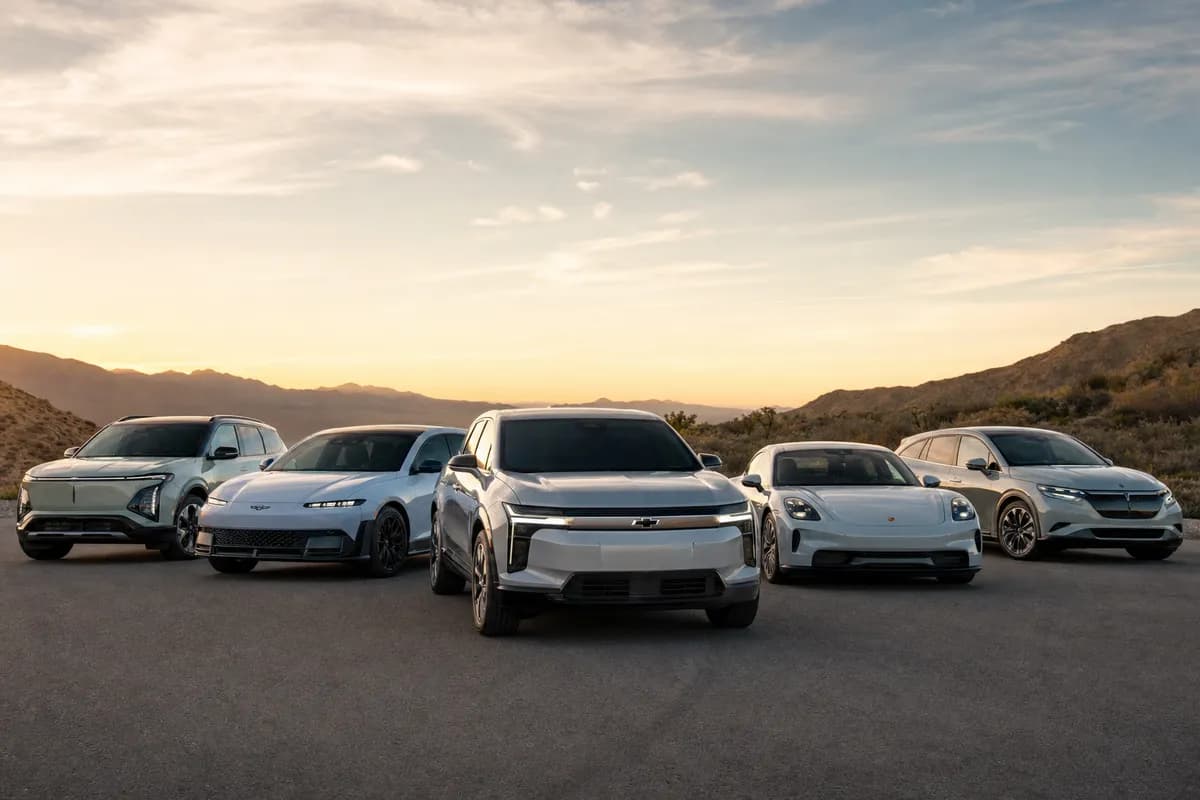
Among the major automakers, these five brands illustrate how the market is diverging. None is exiting the EV race. But each is adjusting differently.
GM: EV expansion continues, but with more measured pacing
GM remains committed to its Ultium-based EV strategy even after earlier launch hiccups and softer-than-expected EV demand in parts of the market. The key point for buyers is that GM still has multiple electric nameplates either arriving, ramping, or expanding into the 2026 window rather than pulling back completely.
Important GM EVs in the market pipeline include:
- Chevrolet Equinox EV, positioned as one of GM’s most important volume plays thanks to its mainstream crossover format and promised lower entry pricing.
- Chevrolet Blazer EV, now re-entering the market after its troubled initial launch and software-related pause.
- Cadillac Optiq, aimed at the compact luxury EV space.
- Cadillac Vistiq, a three-row EV expected to broaden Cadillac’s electric lineup.
- GMC Sierra EV, extending GM’s electric pickup strategy beyond the Hummer EV and Silverado EV.
For 2026 EV launches and carryover expansion, GM’s biggest advantage is that these programs are tied to a broad platform strategy it has already spent heavily to create. The company has clearly become more cautious about speed, but that is different from cancellation. Buyers looking at upcoming GM Hyundai Kia Volvo Porsche EVs should view GM as still committed, especially in crossovers and trucks, though launch timing and trim availability may continue to shift.
Hyundai: one of the most consistent mainstream EV players
Hyundai has been one of the steadier names in the market, thanks largely to its E-GMP architecture and a lineup that already spans multiple segments. That existing foundation makes it easier for Hyundai to keep future EV plans moving even as rivals slow down.
Models likely to remain central through 2026 and 2027 include:
- Hyundai Ioniq 5, including continued updates and regional production changes designed to improve availability and incentives.
- Hyundai Ioniq 6, a lower-slung sedan alternative in a crossover-heavy market.
- Hyundai Ioniq 9, the brand’s larger three-row electric SUV, expected to be an important family-oriented addition as the market moves into 2026.
Hyundai’s strength is not just product cadence. It also has one of the clearer technology stories in the market, with 800-volt architecture on key models enabling strong DC fast-charging performance. For buyers, that matters more than abstract EV promises. A vehicle that charges quickly and is built on an established platform has a better chance of launching with fewer compromises than one built under a rushed, brand-new plan.
Kia: closely aligned with Hyundai, but with its own high-priority launches
Kia remains one of the most credible mainstream EV brands heading into 2026. Like Hyundai, it benefits from E-GMP, and it has already shown that it can launch electric vehicles with competitive range, charging speeds, and design differentiation.
Kia’s near-term lineup is expected to center on:
- Kia EV6, which remains a core global EV product.
- Kia EV9, the large three-row electric SUV that has given Kia a strong presence in a segment where there are still relatively few direct rivals.
- Future EV models in lower price bands, depending on market and region, as Kia works to broaden access below the EV9.
For buyers tracking 2027 electric cars, Kia looks better positioned than many competitors because it already has EV credibility and does not need to prove the concept from scratch. If the industry slows, that may actually help established products like the EV6 and EV9 stand out more, especially if newer rivals are delayed.
Volvo: EV commitment remains strong, but timing flexibility has increased
Volvo has been among the more vocal legacy brands about electrification, but like much of the industry, it has had to adjust expectations around the pace of the transition. That does not mean its upcoming EVs are off the table. It does mean buyers should expect some schedule elasticity.
Key Volvo EVs in focus include:
- Volvo EX30, a smaller EV with major strategic importance because it targets a more accessible part of the premium market.
- Volvo EX90, the brand’s flagship three-row electric SUV, critical to Volvo’s upper-end EV positioning.
- Additional electric variants and lineup expansion tied to Volvo’s broader shift toward battery-electric offerings.
The EX90 in particular shows why the EV transition is not always smooth. Software integration, advanced safety systems, and premium feature execution have made some high-end EV launches more complicated than automakers first projected. Volvo still appears committed, but buyers should understand that “on track” in 2026 may sometimes mean “launching, but ramping gradually.”
Porsche: EV launches continue where margins and brand fit are strongest
Porsche’s EV strategy has been more selective than volume brands’, but it remains active. The company’s premium positioning gives it more room to continue with expensive EV programs, especially where electric performance supports the brand image.
Models central to Porsche’s 2026 and 2027 electric outlook include:
- Macan Electric, arguably Porsche’s most important EV launch because the Macan is such a key product line globally.
- Taycan, continuing as Porsche’s established EV flagship.
- Future electric sports and SUV programs, though timing on some projects may evolve as Porsche balances EV demand with continued interest in combustion and hybrid models.
Porsche also illustrates the market’s new realism. Even premium buyers have not moved to EVs at the exact pace some forecasts suggested. That likely means Porsche will continue launching EVs, but with more flexibility and less all-in rhetoric around replacing every combustion model on a fixed timetable.
What delays and slower rollouts actually mean for buyers
When automakers delay EV launches, buyers tend to hear it as bad news. In some cases, it is. If you are waiting for a very specific body style, battery size, or price point, a delay can leave you with fewer choices in the short term. But slower timing can also have benefits.
Here is what automaker EV delays usually mean in practical terms:
- More time for incentives and pricing to change. A delayed model may arrive into a more competitive market with better lease offers or lower effective prices.
- Software and quality issues may be reduced. Several recent EV launches showed the cost of rushing production before software, charging logic, or user-interface systems were ready.
- Some planned low-cost EVs may slip further out. This is the biggest downside for mainstream shoppers waiting for affordable electric crossovers and hatchbacks.
- Existing EVs may remain better deals for longer. If fewer all-new rivals arrive on time, current models can benefit from stronger support, incentives, and improved supply.
- Hybrids may become the default alternative. Buyers who are not ready to wait another year may find that automakers steer them toward hybrid versions instead.
For shoppers, the main lesson is simple: do not buy based only on a far-off product promise. If an automaker says a new EV is coming in 2026 or 2027, that may still be true, but timing can move, trims can change, and initial supply can be tight.
The next two years are likely to reward buyers who focus on vehicles that are already launching cleanly or are tied to proven platforms, not those that exist mostly as ambitious roadmap slides.
How hybrids are reshaping product plans for 2026
The biggest reason some battery-electric launches are being stretched out is not that automakers have lost interest in EVs. It is that hybrids suddenly look like a much stronger business than many executives expected a few years ago.
That shift is now influencing almost every major product-planning discussion. A strong hybrid strategy 2026 gives automakers several advantages:
- Lower buyer resistance. Hybrids avoid charging anxiety while still improving efficiency.
- Better margins in many segments. In some cases, hybrids can be easier to sell profitably than battery EVs priced for mainstream customers.
- Regulatory flexibility. They help reduce fleet emissions while buying more time for EV infrastructure and battery costs to improve.
- Broader market appeal. For buyers not ready to commit to full electrification, hybrids are a familiar step.
That does not mean EV programs vanish. It means automakers now have a more layered strategy: keep high-confidence EV launches moving, delay weaker ones, and fill gaps with hybrids or plug-in hybrids. For some brands, that may be the most realistic path through 2026 and into 2027.
Buyers should expect product portfolios to reflect that reality. Instead of seeing an EV replace every gasoline model on a one-for-one basis, the market may settle into a three-way mix of hybrids, plug-in hybrids, and EVs, especially in high-volume crossover segments.
Verdict: expect more EVs in 2026 and 2027, just not the all-at-once wave once promised
If you are shopping the next generation of EVs, the good news is that important models from GM, Hyundai, Kia, Volvo, and Porsche are still moving ahead. GM continues to build out its crossover, luxury, and truck EV lineup. Hyundai and Kia remain among the most reliable mainstream EV launchers. Volvo is still committed, even if timing is more flexible. Porsche continues to invest where EVs align with its premium-performance identity.
The less encouraging news is that the market has clearly shifted away from an all-out, every-segment EV blitz. 2026 EV launches and 2027 electric cars will still arrive, but the pace will be more selective, and some lower-volume or lower-confidence models will take longer to reach showrooms. That is especially true where affordability is uncertain or where automakers believe hybrids can cover demand more profitably.
For buyers, the smartest approach is to separate commitment from marketing. The EVs most likely to stay on track are those backed by existing platforms, active production plans, and strong strategic importance to the brand. On that basis, the strongest bets among upcoming GM Hyundai Kia Volvo Porsche EVs are the mainstream and premium crossovers already closest to production and sale, not the more speculative long-range promises further out.
In other words, the EV future is still coming. It is just arriving in a more disciplined, hybrid-shaped, buyer-tested way than the industry once expected.
Affiliate disclosure: This article contains affiliate links. RevvedUpCars may earn a small commission on qualifying purchases at no extra cost to you.