Plug-in hybrids are having a moment, and frankly, it’s not hard to see why. Plenty of buyers like the idea of EV commuting, but they’re not thrilled by public charging roulette, winter range drops, or planning road trips like military operations.
Plug-in hybrids are having a moment, and frankly, it’s not hard to see why. Plenty of buyers like the idea of EV commuting, but they’re not thrilled by public charging roulette, winter range drops, or planning road trips like military operations. That’s where the 2026 Toyota RAV4 PHEV barges in with its usual Toyota pragmatism, now wrapped in a sharper redesign, more tech, and the kind of straight-line pace that can embarrass a few supposedly sporty SUVs. The question isn’t whether Toyota knows how to build a sensible electrified crossover. It’s whether this new one is good enough to become the default recommendation for buyers stuck between a gas SUV and a full EV. After a first drive, the answer is annoyingly simple for Toyota’s rivals: this thing is very, very hard to argue against.
A Familiar Formula, Sharpened in All the Right Places
Toyota didn’t reinvent the RAV4 PHEV so much as tighten every screw on a formula that was already working. That’s probably wise. The outgoing RAV4 Prime was one of the most compelling plug-in hybrids on sale, pairing legitimately quick acceleration with useful electric range and everyday crossover practicality. For 2026, Toyota leans harder into that identity instead of chasing style-first nonsense.
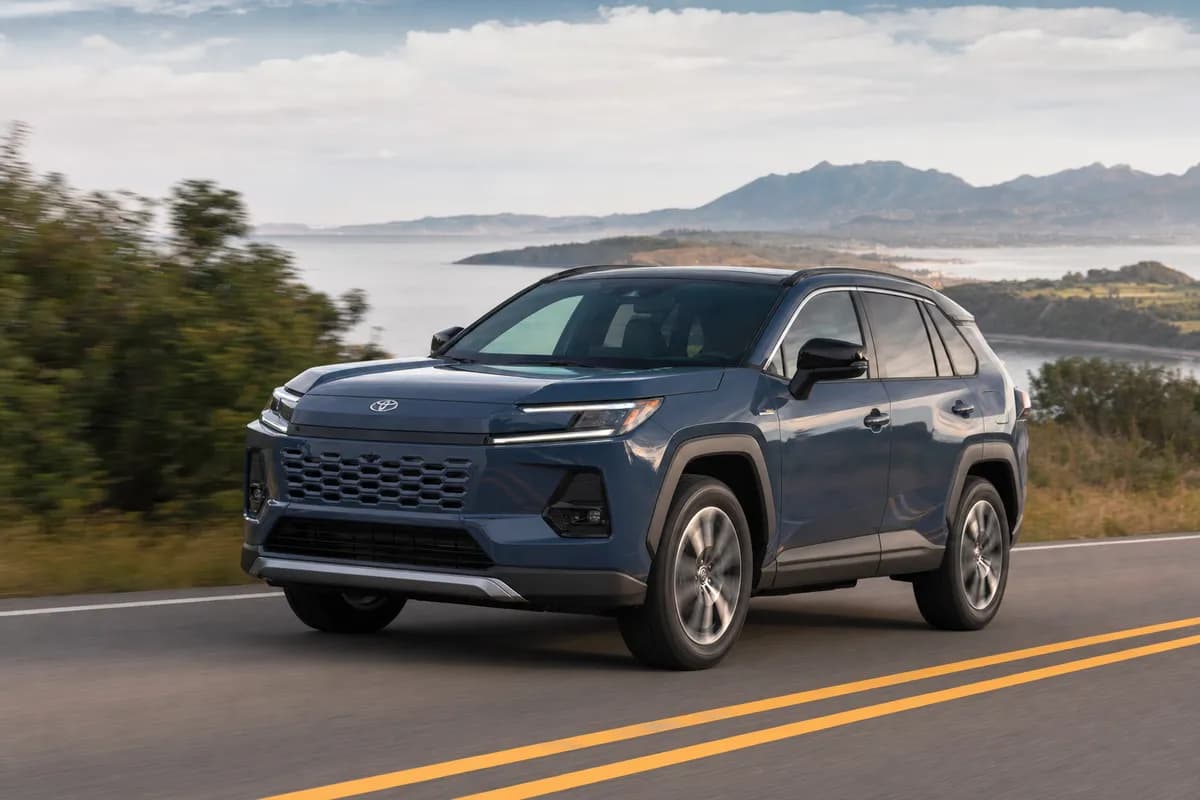
The redesigned body is cleaner and more upright, with a more technical front-end treatment, slimmer lighting signatures, and a cabin that finally looks like it belongs in the second half of this decade. Inside, the dashboard is more horizontal, materials are improved where your eyes and elbows actually notice them, and Toyota’s latest interface finally ditches some of the old-school clunkiness that used to make the brand’s infotainment systems feel like they were tested exclusively by accountants.
More importantly, the fundamentals remain exactly what buyers in this class want: a compact footprint, upright seating position, a usable cargo area, standard all-wheel drive, and enough electric capability to make many daily commutes gasoline-free. That matters more than design flourishes, because the Toyota RAV4 PHEV first drive experience is defined less by styling drama and more by how seamlessly it fits into normal life.
And that’s the sweet spot Toyota keeps aiming for. The Hyundai Tucson Plug-in Hybrid is handsome and impressively refined. The Kia Sportage Plug-in Hybrid offers a roomy cabin and sharp value. The Ford Escape PHEV remains efficient but lacks AWD. The Mitsubishi Outlander PHEV has a larger battery and a more rugged pitch, but it also feels heavier and less polished. The RAV4 PHEV’s trick is that it does nearly everything well while also being unexpectedly quick. That’s a powerful combination.
2026 RAV4 PHEV Specs: Still the Nerd’s Choice, Still the Fast One
Let’s get to the numbers, because in this segment they matter. Toyota’s plug-in setup continues to pair a gasoline four-cylinder with front and rear electric motors for electronic on-demand all-wheel drive. Combined output lands at around 320 horsepower, keeping the RAV4 PHEV near the top of the compact PHEV SUV pile for total punch. Toyota says the updated battery pack and power electronics improve both response and efficiency, and from behind the wheel that claim checks out.
Final 2026 RAV4 PHEV specs will vary slightly by trim, but the headline figures are what buyers care about:
- Powertrain: 2.5-liter four-cylinder plus dual electric motors
- Combined output: approximately 320 hp
- Drivetrain: standard electronic AWD
- Estimated EV range: roughly 45-50 miles
- Total driving range: around 550-600 miles combined
- 0-60 mph: about 5.5 seconds
- Charging: Level 1 and Level 2 AC charging capability
Those numbers put the Toyota right in the center of what makes a plug-in hybrid compelling. Around 45 to 50 miles of electric range means many owners can handle weekday driving without burning fuel at all, provided they charge regularly. That’s enough to cover the average American daily commute with room to spare. Yet unlike a full EV, you don’t have to care whether the fast charger at the highway rest stop is occupied by a rideshare driver eating chicken nuggets in a Hyundai Ioniq 5.
Performance remains a signature strength. Stab the throttle from a stop and the RAV4 PHEV launches with the instant shove buyers expect from an EV, followed by a smooth handoff as the gas engine joins the party. It’s not a sports SUV, let’s not get carried away, but in the real world it is properly quick. Quicker than the Tucson PHEV. Quicker than the Sportage PHEV. Quicker than the Outlander PHEV. And far quicker than the average compact crossover shopper expects from something wearing a Toyota badge and carrying reusable grocery bags.
That speed isn’t just pub ammo. It makes highway merges, two-lane passes, and loaded-up family duty notably easier. You press the pedal, and the answer is yes. In a segment where some rivals still feel like they need a committee meeting before overtaking a semi, that’s refreshing.
How the 2026 Toyota RAV4 PHEV Drives: Fast, Composed, and Happily Unsensational
If you’re hoping the new RAV4 PHEV turns into a back-road hero, keep shopping. If you want a plug-in hybrid SUV review that tells you the truth, here it is: Toyota has sensibly spent its engineering budget on making this thing easy, quiet, efficient, and confidence-inspiring rather than “fun” in the fake sporty crossover sense.
The steering is accurate and light without feeling video-game numb. Body control is well judged. The suspension keeps the mass of the battery pack in check better than some rivals, and that weight low in the chassis gives the RAV4 PHEV a planted feel through faster sweepers. It doesn’t lean excessively, and it doesn’t get upset over mid-corner bumps. In other words, it behaves itself. For a family crossover, that’s worth more than artificially heavy steering and black wheels.
In EV mode, the RAV4 PHEV is calm and quiet up to suburban and moderate highway speeds. Wind noise is well managed, and the power delivery is smoother than before. When the engine starts, it’s less intrusive than in older Toyota hybrids, though under hard acceleration the familiar four-cylinder drone still makes an appearance. That’s the tax you pay for Toyota’s efficiency-first CVT-like power delivery. It’s not charming, but it works.
Brake blending, often the Achilles’ heel of hybrids and EVs, is also improved. The transition between regenerative and friction braking is more natural than before, with fewer weird moments at parking-lot speeds. One-pedal driving fans won’t find a full EV-style setup here, but the regenerative settings are strong enough to make city traffic less tedious and help maximize electric efficiency.
Ride quality is another win. On broken pavement, the RAV4 PHEV absorbs sharp impacts without the occasional brittleness that creeps into some larger-wheel trims of the Tucson and Sportage. It’s tuned for actual roads, not studio photos. Again: Toyota understands the assignment.
Interior, Tech, and Daily Usability: Toyota Finally Catches Up
The outgoing RAV4 was practical but never exactly a showcase for cabin elegance. The 2026 model fixes much of that. The interior is still more durable than decadent, but the design is cleaner, storage is smarter, and the technology is no longer lagging behind the Koreans by a full product cycle.
A larger central touchscreen runs Toyota’s latest software, and the system is quicker, more logical, and less visually chaotic than before. Wireless Apple CarPlay and Android Auto are part of the package, and the available digital instrument cluster does a better job displaying power flow, charging status, hybrid operation, and navigation without making you feel like you need an engineering degree. Voice controls are improved too, though like most voice assistants, they remain best used with realistic expectations and low emotional investment.
Front seats are supportive enough for long drives, and rear-seat space remains one of the RAV4’s strongest practical assets. Adults fit comfortably in back, and the cargo area stays competitive despite the battery packaging. That’s crucial, because some PHEVs become packaging disasters once engineers start hiding cells under the floor. Toyota has avoided that trap. Luggage space is still genuinely useful, and the load floor remains low enough to make family hauling and dog duty painless.
Toyota also loads the 2026 RAV4 PHEV with a robust suite of driver-assistance features. Expect the latest Toyota Safety Sense package with:
- Adaptive cruise control
- Lane-keeping assistance
- Blind-spot monitoring
- Rear cross-traffic alert
- Automatic emergency braking
- Traffic sign recognition
- Available surround-view camera system
None of that is unique anymore, but Toyota’s systems tend to be calibrated with fewer false alarms and fewer hyperactive interventions than some competitors. That’s a compliment. Driver assists should assist, not nag like a sleep-deprived middle manager.
Efficiency, Charging, and Where It Sits Among the Best PHEV SUVs 2026
The whole point of a plug-in hybrid is that it has to make sense even when used by normal people rather than spreadsheet enthusiasts. The 2026 Toyota RAV4 PHEV does. Charge it nightly, and many owners will use almost no fuel during the week. Forget to plug it in, and it still functions as a highly efficient hybrid rather than turning into a dead-weight science experiment.
That’s what separates a good PHEV from a bad one. Some plug-in hybrids feel fantastic in a brochure and mediocre once the battery is depleted. Toyota’s hybrid expertise means the RAV4 remains competent and efficient even when operating like a conventional hybrid. That gives it a real-world edge over some rivals that lose their charm once the electrons are gone.
Charging remains straightforward. On a standard household outlet, a full recharge takes overnight. On a Level 2 home charger, the process is much quicker and easier to integrate into daily life. This isn’t a vehicle that demands expensive infrastructure or lifestyle changes; it rewards modest effort with significant fuel savings.
So where does it land in the best PHEV SUVs 2026 conversation?
- Toyota RAV4 PHEV: Best all-around mix of range, pace, usability, and resale confidence
- Hyundai Tucson Plug-in Hybrid: Smooth, stylish, and refined, but not as quick or as proven
- Kia Sportage Plug-in Hybrid: Roomy and value-rich, though less athletic and slightly less polished in power delivery
- Mitsubishi Outlander PHEV: Strong EV range and available third-row flexibility, but heavier and less efficient-feeling
- Ford Escape PHEV: Efficient, but front-wheel-drive only and not nearly as compelling dynamically or emotionally
Pricing will ultimately determine just how dominant Toyota can be here. If the 2026 RAV4 PHEV climbs too far upmarket, buyers may start cross-shopping entry EVs like the Tesla Model Y, Hyundai Ioniq 5, Chevrolet Equinox EV, or Honda Prologue. But for shoppers who want electric commuting without EV-only compromises, the Toyota’s value proposition remains extremely strong.
The genius of the RAV4 PHEV is that it doesn’t ask buyers to become early adopters, charging evangelists, or infrastructure hobbyists. It just lets them save fuel, drive quickly, and get on with their lives.
Verdict: The New Sweet Spot for the EV-Curious
After this Toyota RAV4 PHEV first drive, the verdict is pretty clear: yes, this is very likely the new sweet spot for buyers who want most of the benefits of an EV without swallowing the full commitment. It is quick enough to be genuinely enjoyable, efficient enough to make a financial and environmental case, and practical enough to function as a family’s only vehicle.
More importantly, it avoids the usual plug-in hybrid traps. It’s not compromised when the battery runs low. It’s not weird to operate. It’s not trying too hard to be futuristic. And unlike some rivals, it doesn’t force you to choose between electric capability and competent everyday SUV packaging.
Is it perfect? No. The engine note under load is still pure appliance. Some competitors offer flashier interiors. And depending on final trim pricing, a few buyers may decide that a full EV now makes more sense. But for the massive group of shoppers who are interested in electrification and still want a backup plan, the 2026 Toyota RAV4 PHEV is about as convincing as this category gets.
If you’re not ready to go fully electric, this Toyota makes a brutally strong case for not waiting around. In the crowded world of compact crossovers, that’s as close to a mic drop as Toyota ever gets.
Affiliate disclosure: This article contains affiliate links. RevvedUpCars may earn a small commission on qualifying purchases at no extra cost to you.